A closer look at the latest 3I/ATLAS image in X-ray light: What ESA's XMM-Newton observed
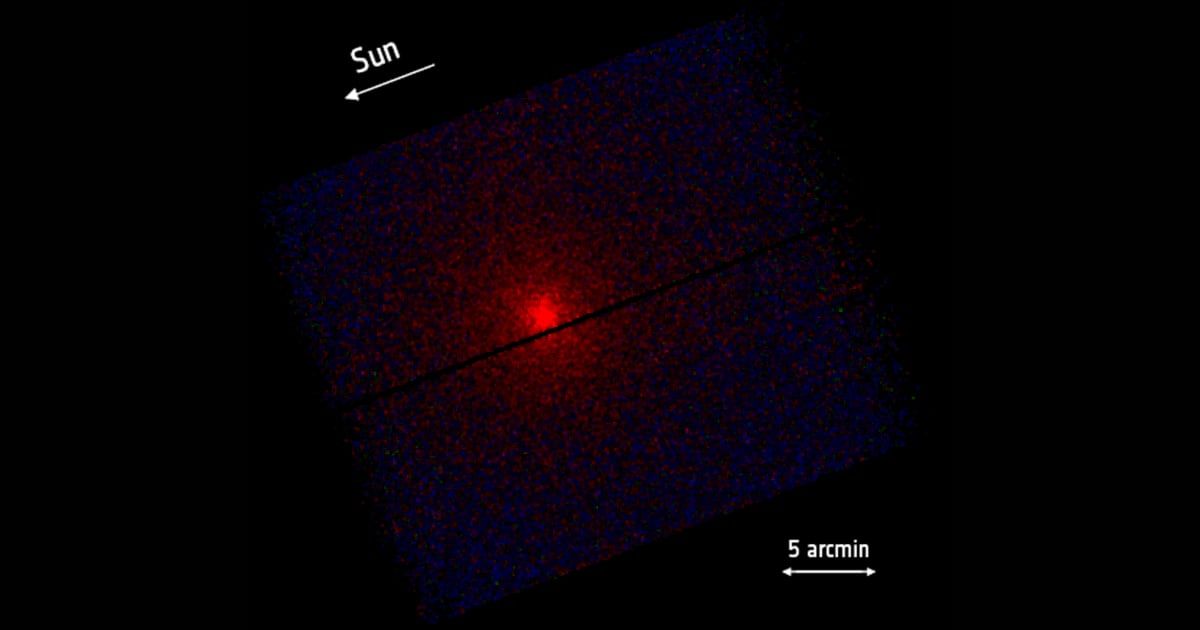
Just hours before the interstellar comet 3I/ATLAS reaches its closest point to Earth, astronomers are getting a second look at a striking new image that reveals the object's hidden chemistry. An image taken by the European Space Agency's XMM-Newton space observatory offers a rare glimpse of the comet in X-ray light, a perspective that could solve the mystery of what this deep-space traveler is actually made of, according to the European Space Agency.
ESA - XMM-Newton sees comet 3I/ATLAS in X-ray light..
— ESA XMM-Newton (@ESA_XMM) December 15, 2025
The European Space Agency’s X-ray space observatory XMM-Newton observed interstellar comet 3I/ATLAS on 3 December for around 20 hours. https://t.co/iaH4rzwrD6
While most telescopes see the dust and ice of a comet in visible light, the XMM-Newton utilized its ultra-sensitive EPIC-pn camera to track 3I/ATLAS for 20 hours. The resulting data reveals a distinct X-ray "glow," in red, produced by the comet's gases crashing into the solar wind. This X-ray signature, though, is a breakthrough with the researchers because it reveals elements that other famous telescopes simply cannot see. Though the instruments are excellent at finding water vapor and carbon dioxide, like the Hubble or the James Webb Space Telescope, XMM-Newton has the singular ability to detect hydrogen (H2) and nitrogen (N2), nearly invisible to optical and ultraviolet cameras.
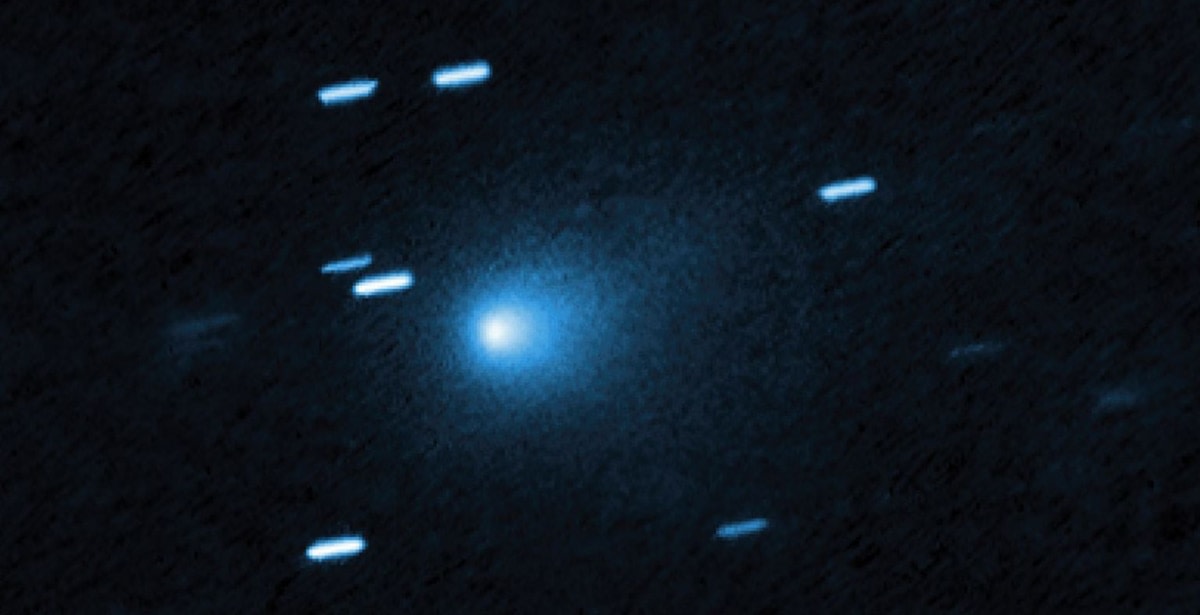
The search for nitrogen and hydrogen, however, is of particular interest to the scientific community. Ever since the first interstellar visitor, 'Oumuamua, zipped through our solar system in 2017, many experts have theorized that these objects might be composed of "exotic" nitrogen or hydrogen ice. Because 'Oumuamua moved too fast to be fully analyzed, 3I/ATLAS is giving scientists a second chance to test this theory. By combining these X-ray findings with data from the James Webb Space Telescope, astronomers hope to finally confirm whether these visitors from other star systems share the same chemical DNA as our own comets or if they are made of something much more rare.

Adding to this historic investigation, XRISM previously spent 17 hours tracking the comet in late November, per ESA. This mission made 3I/ATLAS the very first interstellar comet ever captured in X-ray light, finally answering a long-standing question: do these foreign objects shine the same way as comets born in our own Solar System? Using its Xtend telescope, XRISM scanned a gigantic area of 3 million square kilometers, detecting a glowing cloud of gas surrounding the comet's center and extending 400,000 km around it.
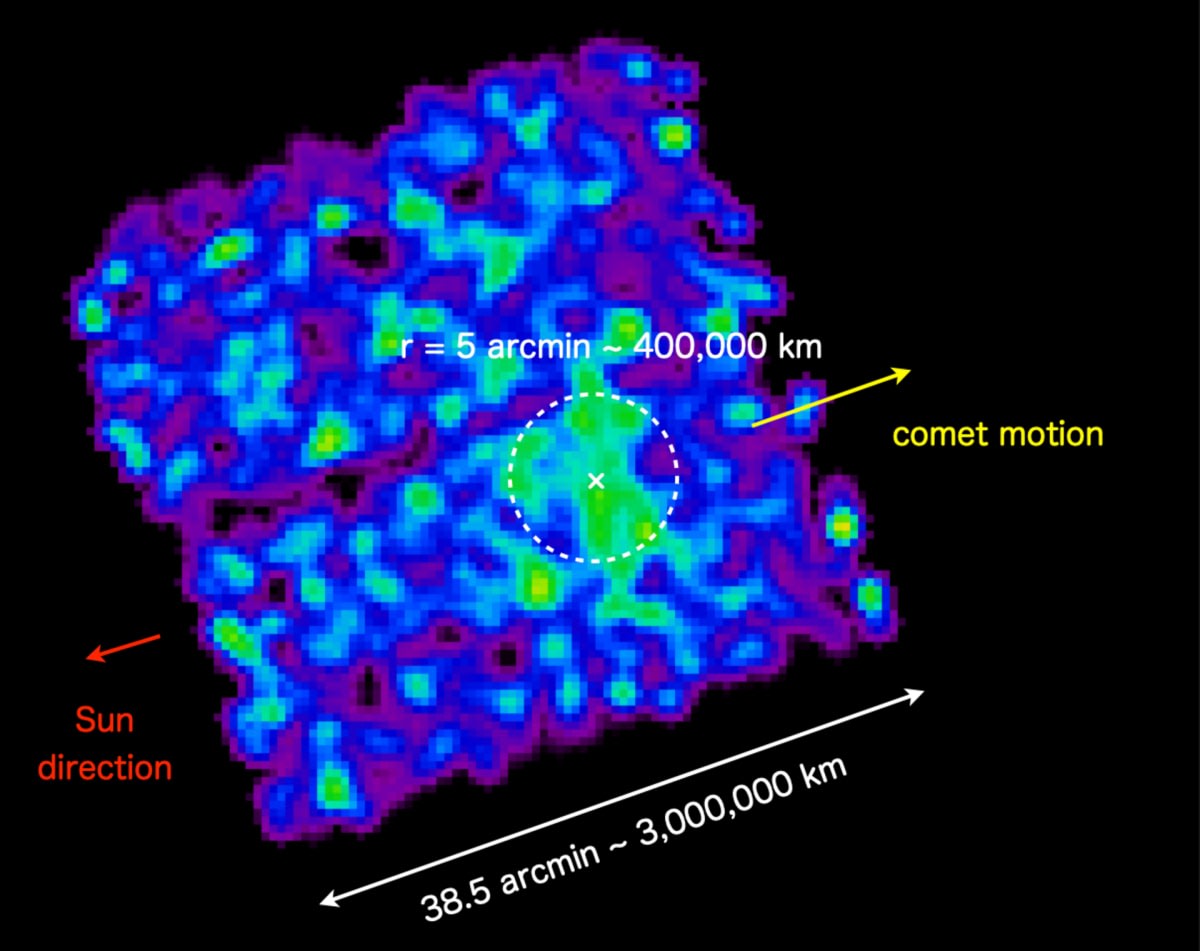
This observation offered profound chemical hints and validates the diffuse glow observed by XMM-Newton. The comet's nucleus is surrounded by traces of carbon, nitrogen, and oxygen, according to preliminary analysis of the XRISM data. These results imply that a massive, thinning cloud of gas surrounds 3I/ATLAS and is only visible when it interacts with the solar wind. Scientists are working quickly to compile this data as the comet approaches its final destination to create the most comprehensive profile of an object from beyond our sun to date.
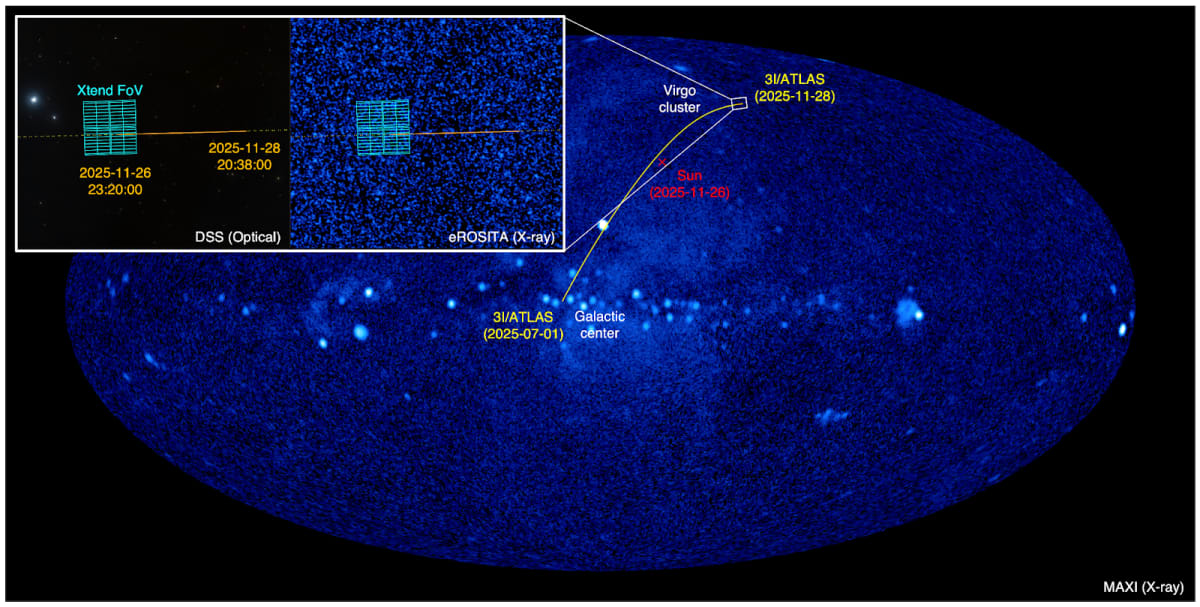
At approximately 1:00 a.m. EST (6:00 a.m. GMT), comet 3I/ATLAS will reach its perigee at a distance of 170 million miles, or nearly 700 times the distance between Earth and the Moon.
More on Starlust
3I/ATLAS update: First X-ray detection suggests the comet behaves like its solar system counterparts
Interstellar comet 3I/ATLAS's closest approach to Earth: Date, time and naked-eye visibility