Interstellar comet 3I/ATLAS will reach its closest approach to Earth this week—will it be visible to the naked eye?
The interstellar comet 3I/ATLAS will make its closest pass to Earth later this week on Friday, December 19. Its minimum distance from Earth will be around 167 million miles, which translates to about 1.79 astronomical units, according to Sky Live.
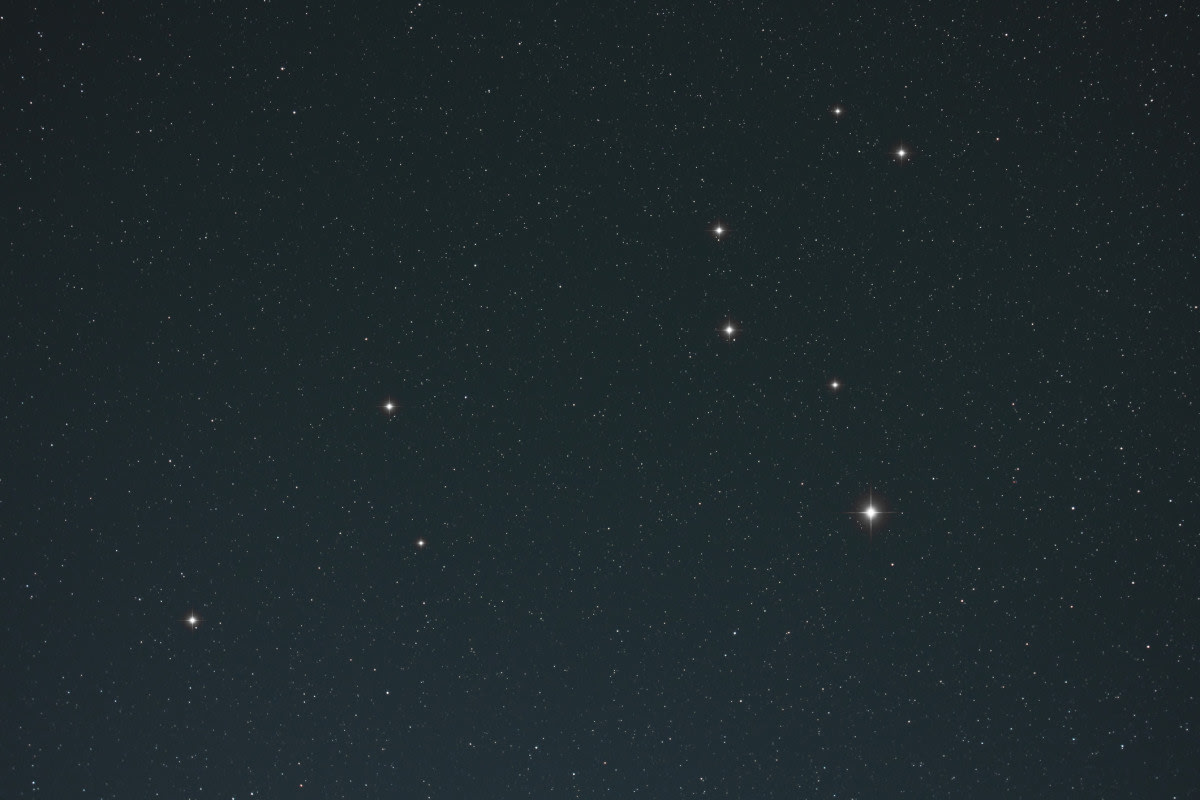
Currently, the comet is in the constellation Leo, with its light taking about 15 minutes to reach us. Moreover, it is rather faint, with a magnitude of 12.5, and is thus invisible to the naked eye. But you'll still be able to catch it on the big day if you happen to be in possession of a telescope with an aperture of at least 30 centimeters, per NASA. Make sure you keep scanning the east to northeast sky in the pre-dawn hours to catch the interstellar visitor right under Regulus, which is a star in the Leo constellation.
As the comet approaches Earth, its position in the sky is changing rapidly, along with its faint visual brightness. On December 16, the comet will be recorded with a magnitude of 15.12, positioned at Right Ascension 11h 02m 22s and Declination +05° 40’ 55”. It will have shifted to Right Ascension 10h 57m 50s by December 17 and Dec. +06° 04’ 24” and changed its magnitude to 15.14.

On December 18, it will be at Right Ascension 10h 53m 15s and Declination +06° 28’ 00” with a magnitude of 15.16. Finally, during its closest approach on December 19, this comet will be situated at R.A. 10h 48m 37s and Declination +06° 51’ 39”. At the time, it's magnitude is predicted to be 15.19. These coordinates are crucial for astronomers who try to track and observe this fast-moving interstellar visitor.
First noticed back in July, the comet was officially confirmed as only the third known object from outside our solar system. Astronomers calculated that 3I/ATLAS formed in some distant star system and spent potentially billions of years drifting through the stars before visiting our solar system. When first detected at about 410 million miles from the Sun, it was traveling at an estimated 137,000 miles per hour, according to NASA. Its speed increased as it got closer to the Sun, but now it is much slower.
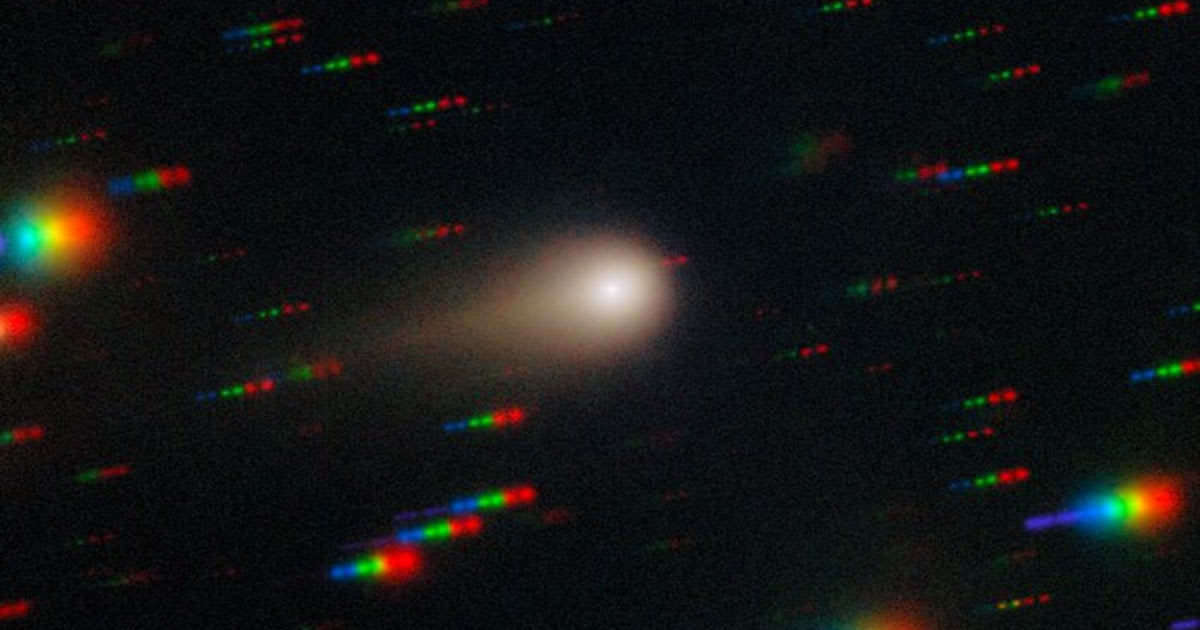
![Hubble captured this image of the interstellar comet 3I/ATLAS on July 21, 2025, when the comet was 277 million miles from Earth. [Image Source: NASA, ESA, David Jewitt (UCLA); Image Processing: Joseph DePasquale (STScI)]](https://de40cj7fpezr7.cloudfront.net/c49eeb4e-e60a-46c0-b39f-68fbb2ee9297.jpeg)
Its path into our solar system came from the general direction of the constellation Sagittarius, which is located near the center of our galaxy, the Milky Way. Over the past six months, 3I/ATLAS has been the subject of a great deal of media attention, generating interest among celebrities and politicians, and even teeing up theories online about alien spaceships. But the comet is only passing through. Unlike comets bound by the Sun's gravity, 3I/ATLAS is on a path to soon fling itself permanently out of the solar system and back into the depths of interstellar space.
More on Starlust
3I/ATLAS update: First X-ray detection suggests the comet behaves like its solar system counterparts
Interstellar comet 3I/ATLAS appears to be covered in erupting 'icy volcanoes,' scientists say