Vera Rubin Observatory finds asteroid nearly the size of 8 football fields spinning every two minutes

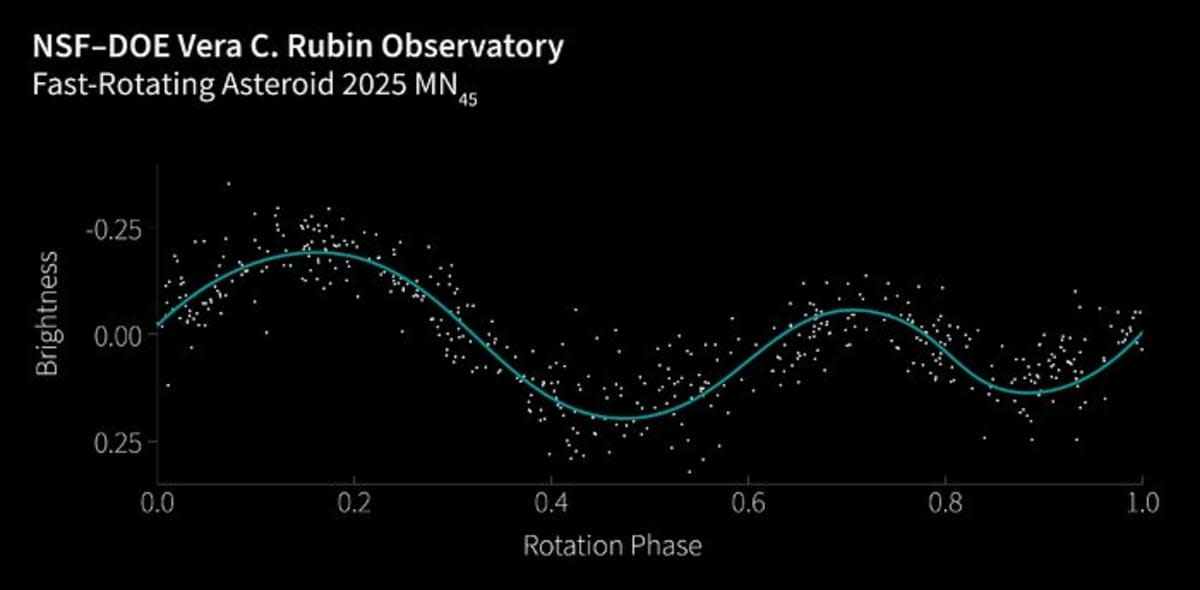
A large asteroid is spinning so fast that it should break apart, according to new data from the Vera C. Rubin Observatory. Within the huge population of asteroids observed by the observatory, astronomers have identified a 710-meter-wide (0.4-mile) rock named 2025 MN45 that completes a full rotation every 1.88 minutes. This makes it the fastest-spinning object of its size ever recorded, per NOIRLab.
🚨Record-breaking asteroid spotted by NSF–DOE @VRubinObs🚨
— NOIRLab (@NOIRLabAstro) January 7, 2026
Using early data from the LSST Camera, astronomers have discovered the fastest-spinning asteroid ever found that’s larger than 500 meters and rotating once every 2 minutes 😳
🔗https://t.co/7XlN0FVS97
Most asteroids are "rubble piles," loose collections of dust and stones held together by gravity. But a rock the size of several football fields spinning this quickly would break apart if it weren't structurally sound. "This asteroid must be made of material that has very high strength," said Sarah Greenstreet, an astronomer at NSF NOIRLab who led the study that was published in The Astrophysical Journal Letters. "It would need a cohesive strength similar to that of solid rock." This could mean that 2025 MN45 gained its speed from a collision with another asteroid, which, in turn, suggests that it may be a fragment of a larger celestial object.
During its "First Look" event in June last year, the observatory announced that it had discovered 1,900 previously unknown asteroids, a sign that it might be starting a new era in watching the skies. 2025 MN45 is one of the 19 super- and ultra-fast rotating asteroids among them. These discoveries were enabled by the LSST (Legacy Survey of Space and Time) Camera, an enormous piece of technology that doubles as the world's largest digital camera.

Before this survey, fast-spinning asteroids were generally seen only when they were passing close to Earth. So powerful is the Rubin Observatory that it can see these speed demons far away in the deep reaches of the asteroid belt. "Rubin Observatory will find things that no one even knew to look for," said Luca Rizzi, a program director at the National Science Foundation. In the coming months, Rubin will kick off a mission that will carry out scans of the Southern Hemisphere of the night sky for as long as a decade in order to deliver a detailed time-lapse view of the universe. Rizzi believes that the discovery of 2025 MN45 is only the beginning of an "avalanche" of data that is going to improve our understanding of the universe.
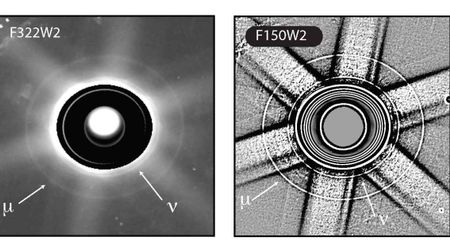
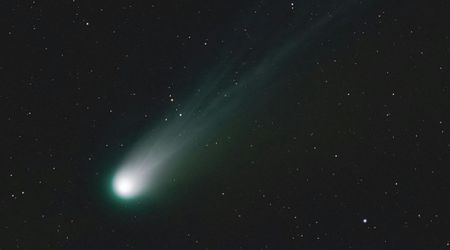
The observatory, in another twist of fate, was able to see a rare visitor from outside our solar system. The facility unwittingly obtained sharp images of the interstellar comet 3I/ATLAS before it was recognized by the larger scientific community as a comet. The observatory's 8.4-meter Simonyi Survey telescope and the 3.2-gigapixel LSST camera were directed towards the specific spot of the sky where the comet was moving between June 21 (10 days before 3I/ATLAS was officially discovered) and July 7. These unintended pictures are the earliest in-depth information recorded for the comet. The details of the observation can be found here.
More on Starlust
First spectacular images from Vera C. Rubin Observatory are finally here