This private space company wants to 'bag' a 100-ton asteroid and bring it closer to Earth for mining
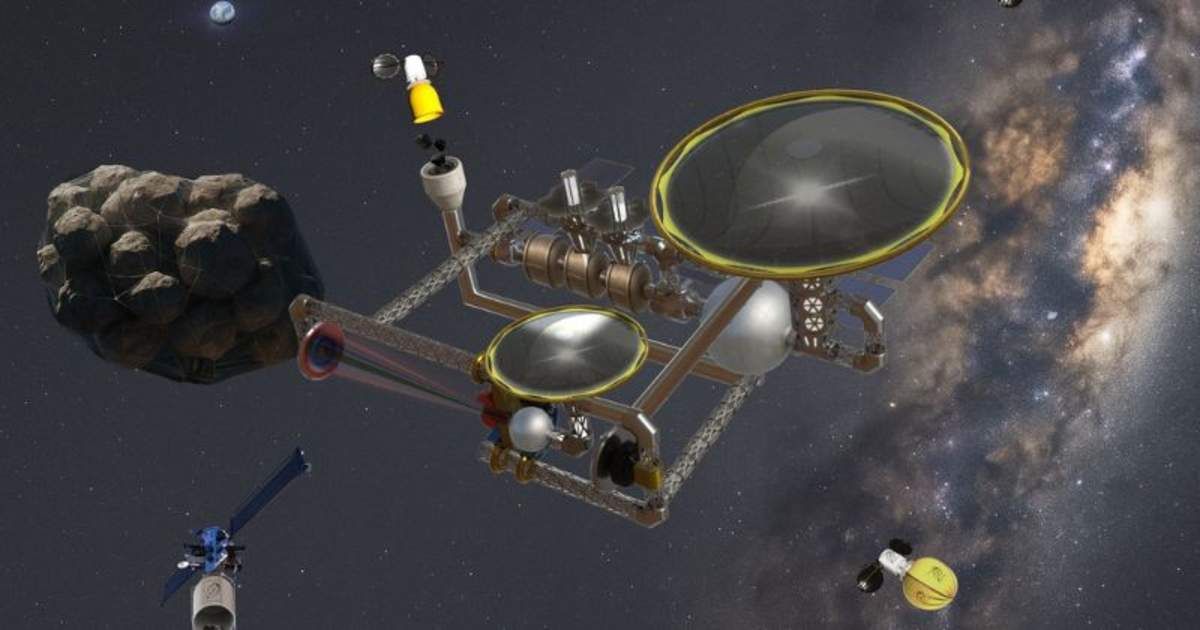
Los Angeles-based space technology company TransAstra is planning a mission to capture an asteroid with a giant “bag” and bring it closer to Earth. The “New Moon” mission would essentially relocate a near-Earth asteroid and turn it into a hub for space-based manufacturing and research. The relatively “small” target asteroid weighs around 100 metric tons, roughly the size of a house. The sci-fi-like project is closer to reality than ever, with an unnamed customer already on board to fund a feasibility study.
The New Moon mission concept is an attempt to use in-space resources for manufacturing and research instead of launching everything from Earth. “We envision it becoming a base for robotic research and development on materials processing and manufacturing,” TransAstra CEO Joel Sercel told ArsTechnica. “Long term, instead of building space hardware on the ground and launching propellant up from the Earth, we could harvest it from raw materials in space.” To make this possible, the company has more than just one target asteroid in their plans.
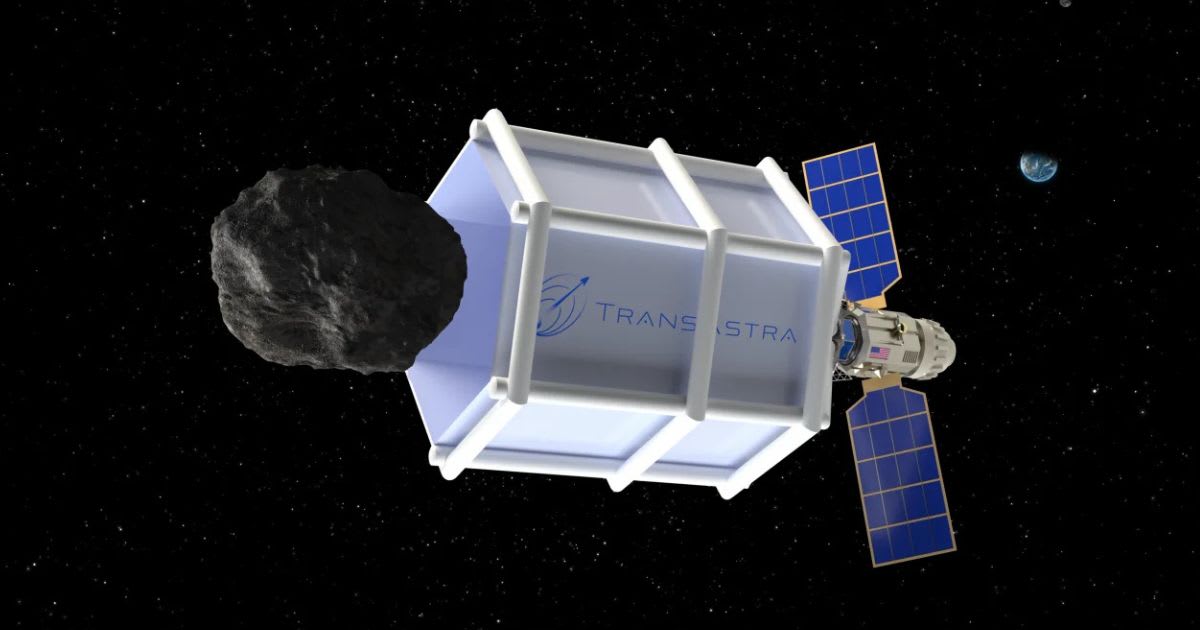
As per TransAstra’s estimates, there could be up to 250 potential target asteroids within the Earth’s reach, each only around 20 meters in diameter. The plan is to gather them all into a single processing site—first in dozens, then in hundreds. The proposed location for this is the stable Earth-Sun L2 gravitational point, about 1.5 million km away. The type of asteroid also matters here, as C-types are a good source of water, while M-types are better for construction since they contain metals. These asteroids could be reached using reusable robotic spacecraft, but that still doesn’t address how the “capturing” part of the mission would work.
In 2025, we moved from lab concepts to in-space demonstrations — scaling, testing, and validating the Capture Bag as a practical system for asteroid capture, orbital logistics, and in-space resource utilization.
— TransAstra (@TransAstra_Corp) December 23, 2025
This year was about proving what’s possible.
Next year is about… pic.twitter.com/owAYqI7rlq
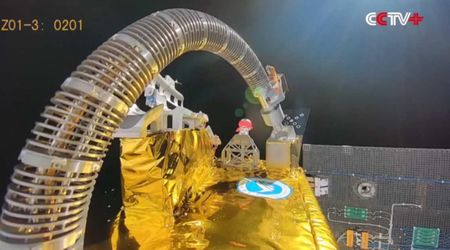
TransAstra plans to capture each asteroid with a literal inflatable bag made from laminates like Kapton. This bag would expand and wrap the asteroid and let it be towed wherever. Last September, a one-meter prototype of this capture-bag system was flown to the ISS aboard a Cygnus spacecraft and tested there. The bag was deployed through the Bishop airlock, where it was successfully opened and closed in vacuum conditions. Last fall, TransAstra also earned a $2.5 million NASA contract to scale the bag up to 10 meters, as well as private funding boosts.
When OSIRIS-REx reached the asteroid Bennu in 2018, scientists expected to find a smooth, beach-like surface. Instead, they encountered a jagged, rugged world.
— NASA (@NASA) March 17, 2026
Samples of the asteroid, brought back to Earth in 2023, are helping untangle the mystery: https://t.co/xjiKTsARfi pic.twitter.com/cc2UrOqYXm
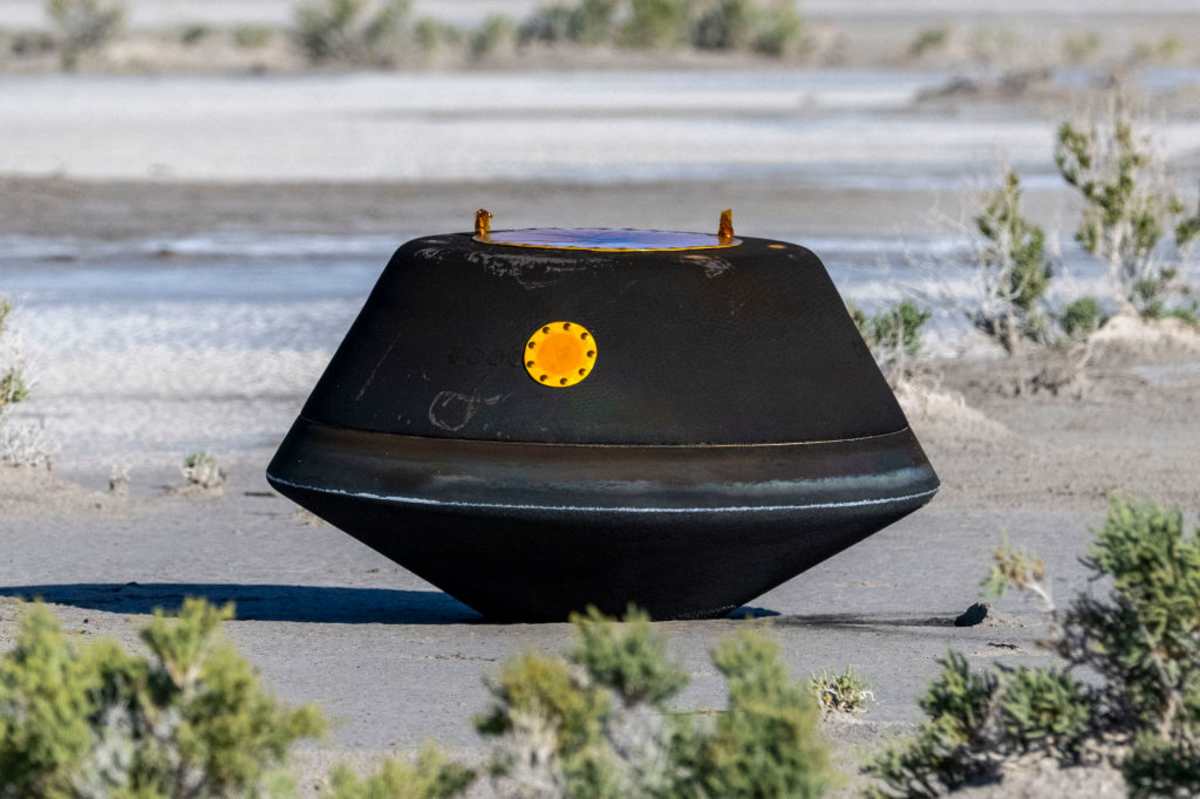
The asteroid mining company’s most immediate challenge is to figure out transportation, i.e., picking the final spacecraft provider. “We think there are many options of spacecraft providers within the United States, and we’re looking at their performance and cost effectiveness from the perspective of determining feasibility,” said Sercel. Moreover, returning asteroid material isn’t as easy as it sounds on paper. To put things in perspective, NASA’s billion-dollar OSIRIS-REx mission brought back only 121.3 grams from asteroid Bennu, which is negligible compared to TransAstra’s 100-ton target.
TransAstra’s mission to capture asteroids could launch as early as 2028 or 2029, with the feasibility study underway and expected to be completed by May. The study will refine mission design and trajectory, with contributions coming from the University of Central Florida, Purdue, and NASA’s Jet Propulsion Laboratory/Caltech. If successful, the New Moon mission could set the precedent for how asteroids could be used as resource hubs for future missions within our solar system and beyond.
More on Starlust
Blue Origin has come up with bold plan to protect Earth from asteroid impacts
NASA's DART created history by altering orbit of asteroid Didymos around the Sun