Interstellar comet 3I/ATLAS appears to be covered in erupting 'icy volcanoes,' scientists say
A study has also concluded that the interior of 3I/ATLAS is rich in metal, which could challenge our current understanding of comet formation.
PUBLISHED 3 HOURS AGO
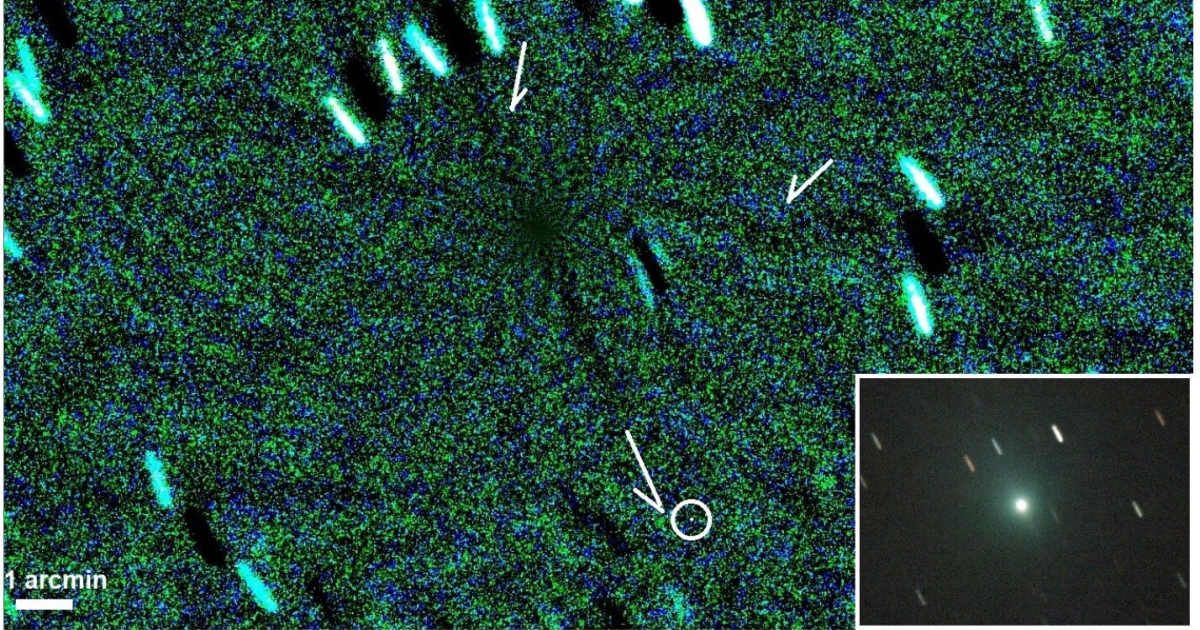
November 19, 2025, image of 3I/ATLAS obtained by Pau Montplet from Breda (Girona) using a C6 telescope. Original image in inset. Negative image shows anti-tail and several jets. (Image Credit: arXiv (2025). DOI: 10.48550/arxiv.2511.19112)

3I/ATLAS—the third known interstellar object to enter our solar system—continues to surprise and fascinate. A new study, titled Spectrophotometric evidence for a metal-bearing, carbonaceous, and pristine interstellar comet 3I/ATLAS, now claims that the object, having exhibited several anomalies already, is covered in icy volcano-like structures called cryovolcanoes. They also concluded that the object's interior is rich in metal, which may cause us to revisit our understanding of comet formation.
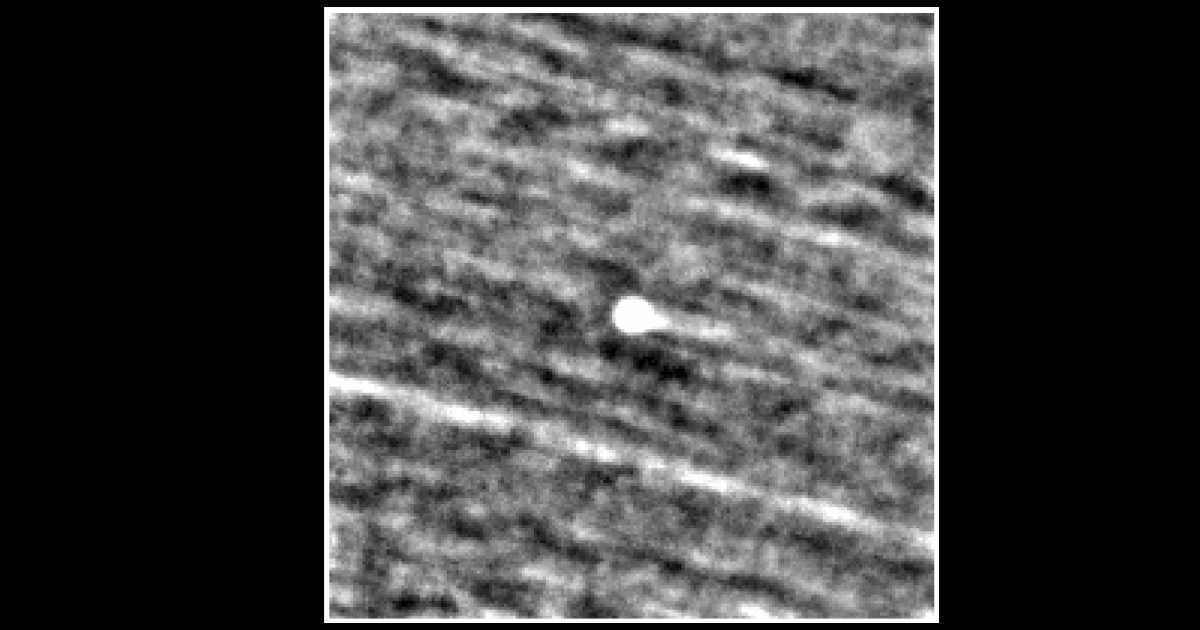
Comet 3I/ATLAS appears as a bright object near the center of this image, made from combining observations from NASA’s PUNCH mission taken from Sept. 20 to Oct. 3, 2025, when the comet was about 231 million to 235 million miles from Earth. Its tail appears as a short elongation to the right. Stars appear as streaks in the background.  (Image Credit:  NASA/Southwest Research Institute)
Comet 3I/ATLAS appears as a bright object near the center of this image, made from combining observations from NASA’s PUNCH mission taken from Sept. 20 to Oct. 3, 2025, when the comet was about 231 million to 235 million miles from Earth. (Image Credit: NASA/Southwest Research Institute)

The team of scientists conducted photometric observations as 3I/ATLAS made its way towards our Sun. Before it got close to the Sun, the object was rather pristine, indicating that it had never passed so close to a star before. When it came within about 2.5 times the distance of Earth from the Sun (2.5 AU), it started exhibiting a sustained increase in brightness, which the scientists attributed to ice-based volcanic activity or cryovolcanism. 
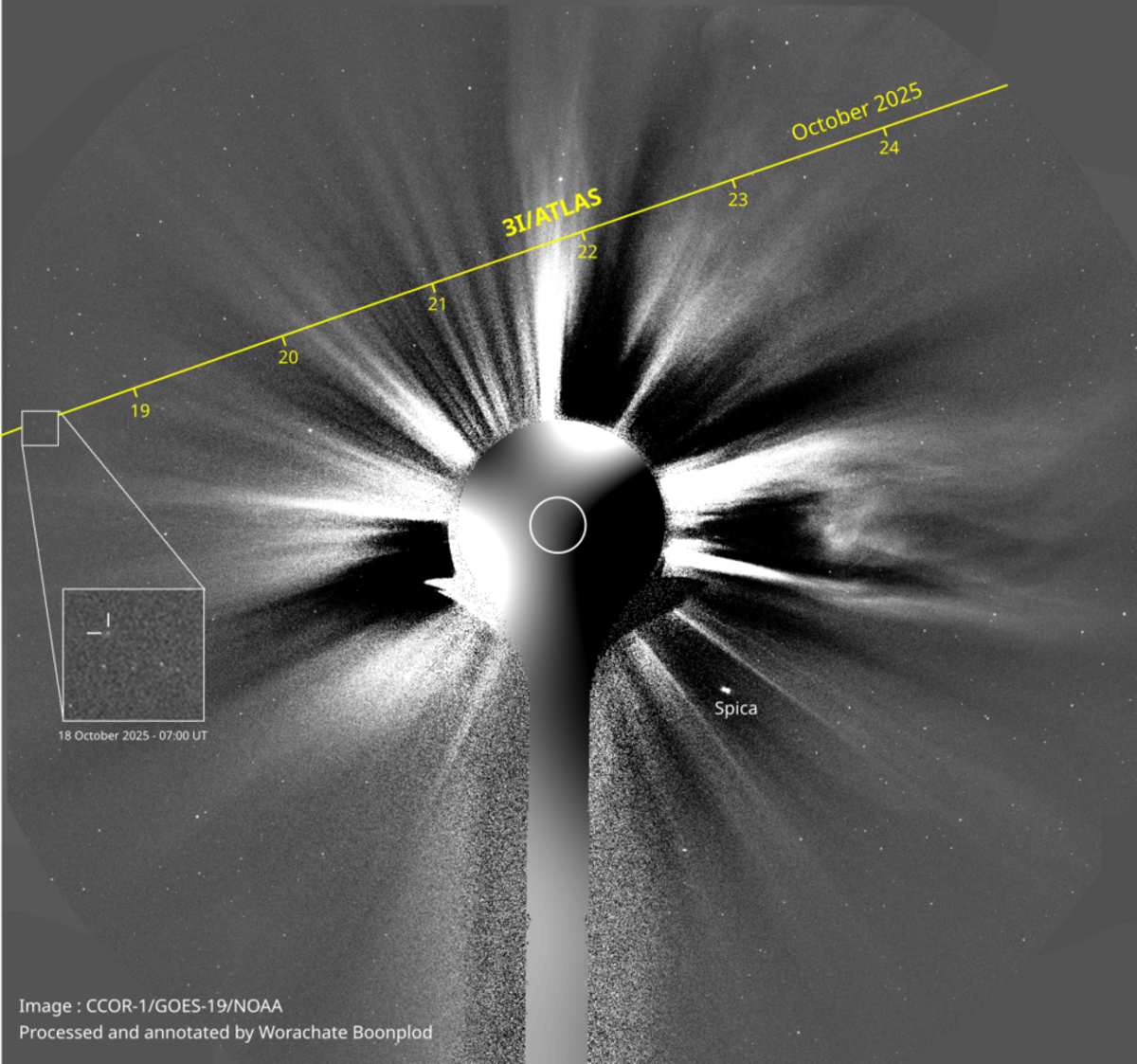
Boonplod utilized data from NOAA's Earth-orbiting CCOR-1 coronagraph to monitor the comet 3I/ATLAS position and brightness as it approaches perihelion (Image Source: CCOR-1/NOAA | Worachate Boonplod)

Thereafter, the scientists compared the light reflected from the interstellar visitor's surface with that reflected off the surface of meteorite samples on Earth and found that it matched the signatures of carbonaceous chondrite (CR)—a rare type of meteorite rich in metals like nickel and iron. This led the team to the conclusion that 3I/ATLAS could also have the same composition. 
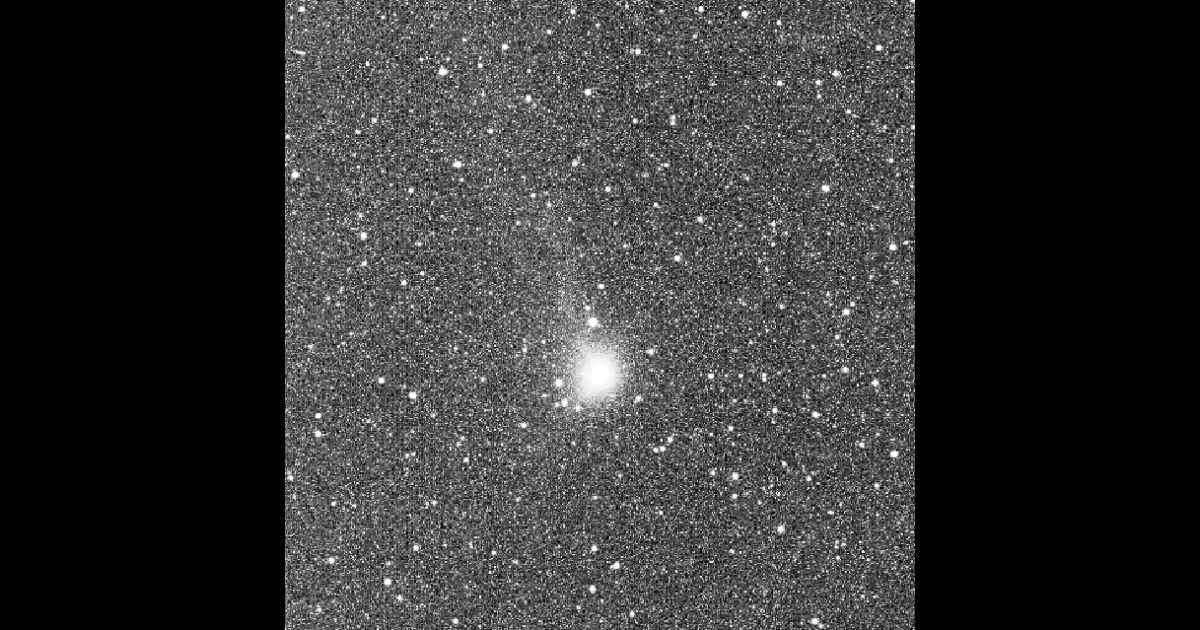
Image of 3I/ATLAS captured on November 2, 2025, by NavCam aboard ESA's Juice. (Image Credit: ESA)

The conclusion made sense because the metal-rich composition could be a possible explanation for the alien body's significant volcanic activity. As the heat from the Sun warmed the comet's surface, water from the melting ice began corroding the metals inside, releasing energy and gases like carbon dioxide, which assist in maintaining cryovolcanism. The findings, still pending peer review, essentially put 3I/ATLAS in the same class as icy trans-Neptunian objects. Even the researchers were stunned by the implications of this. 
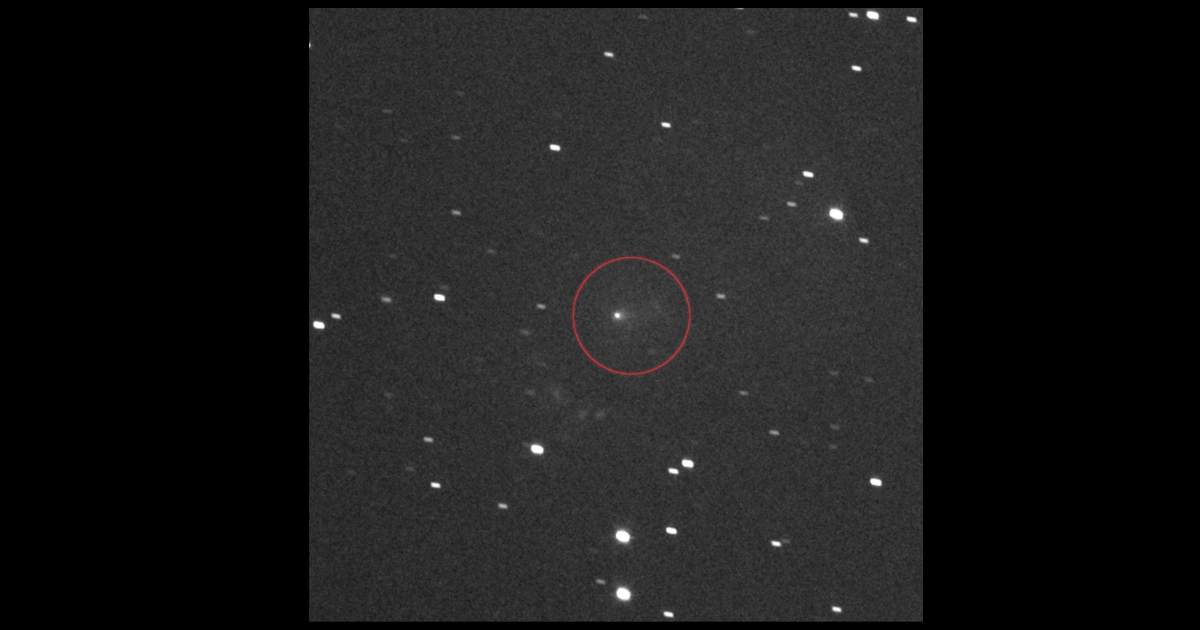
The interstellar comet 3I/ATLAS, circled in the center, as seen by the L’LORRI panchromatic, or black-and-white, imager on NASA’s Lucy spacecraft. (Image Credit:NASA/Goddard/SwRI/JHU-APL)
The interstellar comet 3I/ATLAS, circled in the center, as seen by the L’LORRI panchromatic, or black-and-white, imager on NASA’s Lucy spacecraft. (Image Credit: NASA/Goddard/SwRI/JHU-APL)

"We were all surprised," the lead author of the study, Josep Trigo-Rodriguez, told Live Science. "Being a comet formed in a remote planetary system, it is remarkable that the mixture of materials forming the surface of the body has a resemblance with trans-Neptunian objects, bodies formed at [a] large distance from the Sun but belonging to our planetary system."
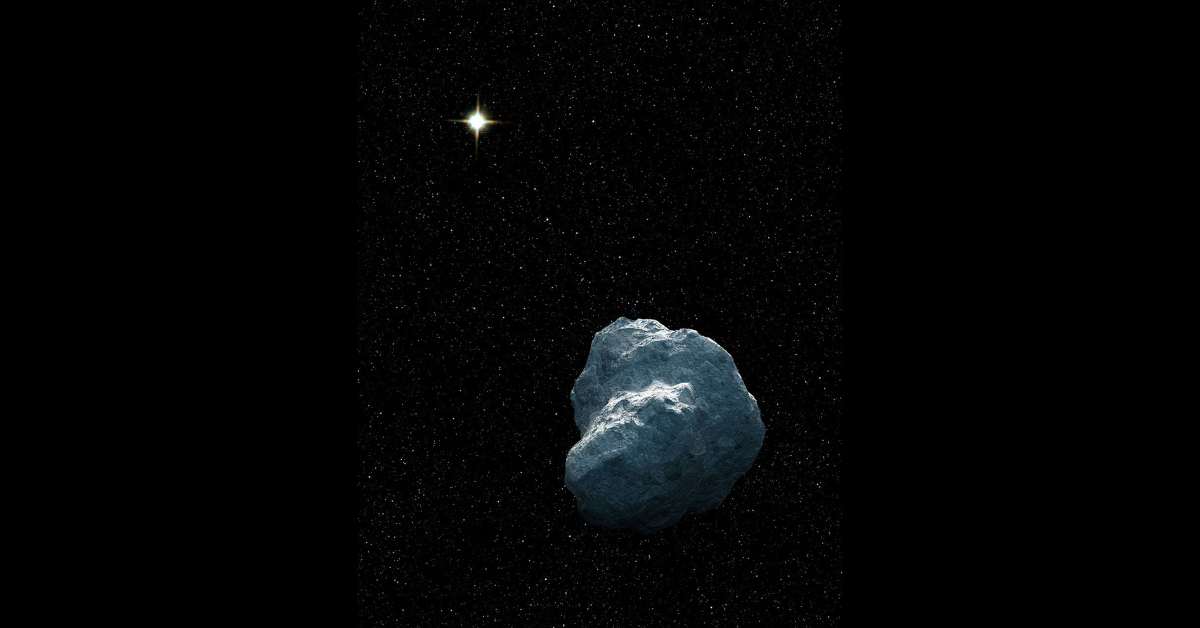
This is an artist's concept of a trans-Neptunian objects (TNOs).  Image edited by Starlust staff (Image Source: NASA, ESA, and C.Fuentes)
This is an artist's concept of a trans-Neptunian object (TNO). Image edited by Starlust staff (Image Source: NASA, ESA, and C.Fuentes)

This revelation comes shortly after controversial Harvard scientist Avi Loeb shared his thoughts on the November images of the comet taken after perihelion. In his Medium blog, he wrote that the images showed a teardrop shape of the coma pointing toward the sun. This anti-tail, he claimed, may be comprised of a swarm of objects. "If 3I/ATLAS is surrounded by a swarm of objects that do not share its non-gravitational acceleration, then these objects will tend to be closer to the Sun relative to 3I/ATLAS, because 3I/ATLAS is pushed away from the Sun relative to the objects through its non-gravitational acceleration," he wrote. 

Hubble Space Telescope reobserved 3I/ATLAS on November 30, with its Wide Field Camera 3 instrument. (Cover Image Source: NASA, ESA, STScI, D. Jewitt (UCLA), M.-T. Hui (Shanghai Astronomical Observatory)

Considering the distance of the object from the Sun at the time—around 167 million miles—Loeb asserted the objects would have been closer to the Sun by a margin of around 33,500 miles. "This separation is comparable to the sunward elongation of the teardrop glow around 3I/ATLAS," he wrote. He further claimed that a large swarm of objects would have a much larger surface area than the comet itself, even if their total mass was only a small percentage of that of 3I/ATLAS. He argued that even a swarm having just 0.001 of the mass of the comet could reflect 99% of the sunlight responsible for the observed coma glow.  

Comet 3I/ATLAS streaks across a dense star field in this image captured by the Gemini Multi-Object Spectrograph (GMOS) on Gemini South at Cerro Pachón in Chile (Cover Image Source: International Gemini Observatory/NOIRLab)

It is likely that more such claims and findings will be made in the coming months as multiple agencies continue to monitor the object as it heads out of our solar system. 3I/ATLAS will make its closest approach to Earth on December 19, 2025, when it will come within 170 million miles of the planet. 

More on Starlust

NASA's Hubble captures new view of 3I/ATLAS as ESA’s Juice spots heightened comet activity

New images show the death of 'other' comet ATLAS as it shatters into multiple fragments

MORE STORIES

The James Webb captures a more panoramic image of stars and galaxies, spectacular visuals that were missed by most other observatories.
1 day ago
The discovery comes as a surprise to scientists, as they believed the formation of such well-organized spiral galaxies took billions of years.
1 day ago
Scientists have found a nutrient crucial to the production of serotonin in the asteroid samples.
2 days ago
These giant radio quasars belong to a group of 369 that was recently discovered by the Giant Meterwave Radio Telescope near Pune, India.
3 days ago
An international team of researchers observed four highly intriguing 'dust objects' using the ERIS instrument at the Very Large Telescope facility in Chile.
4 days ago
Delve into how black holes went from being mathematical curiosities to imaged phenomena
4 days ago
10,000 of the 40,000 were discovered in the last three years alone.
7 days ago
Located 2,500 to 3,800 light-years away in the Scorpius constellation, this nebula's unusual shape is a result of its central star shedding material.
Nov 27, 2025
New data from a NASA space telescope hints that scientists may have finally captured the first direct glimpse of the mysterious substance.
Nov 26, 2025