✕
Astronomy Constellation Deep Sky Objects Skywatching Instruments Spaceflight Videos
Home / Galleries

Astronauts who almost never made it back home

Astronomy May 9, 2026
BY DISITA SIKDAR
A space shuttle astronaut tests the new Simplified Aid for EVA Rescue (SAFER) system [Credits: CORBIS/Corbis via Getty Images]
From Apollo crises to deadly spacewalks, explore the terrifying moments astronauts nearly never made it back home alive.
8 Photos
1 / 8
Training for a journey no human had ever attempted
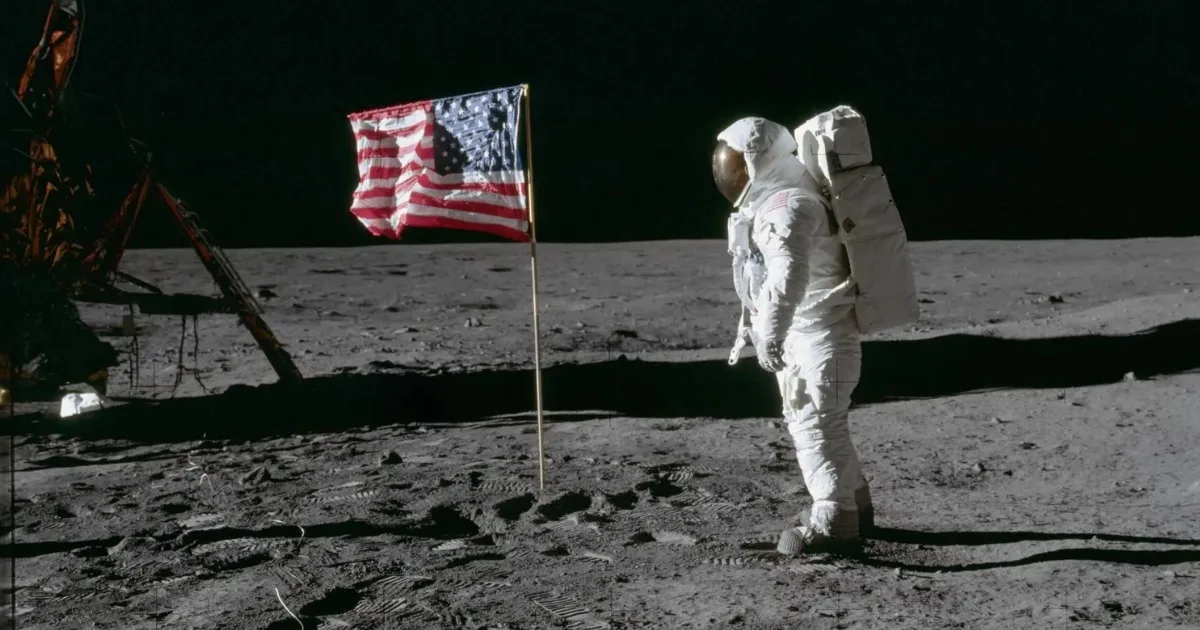
IMAGE SOURCE: NASA

Training for a journey no human had ever attempted

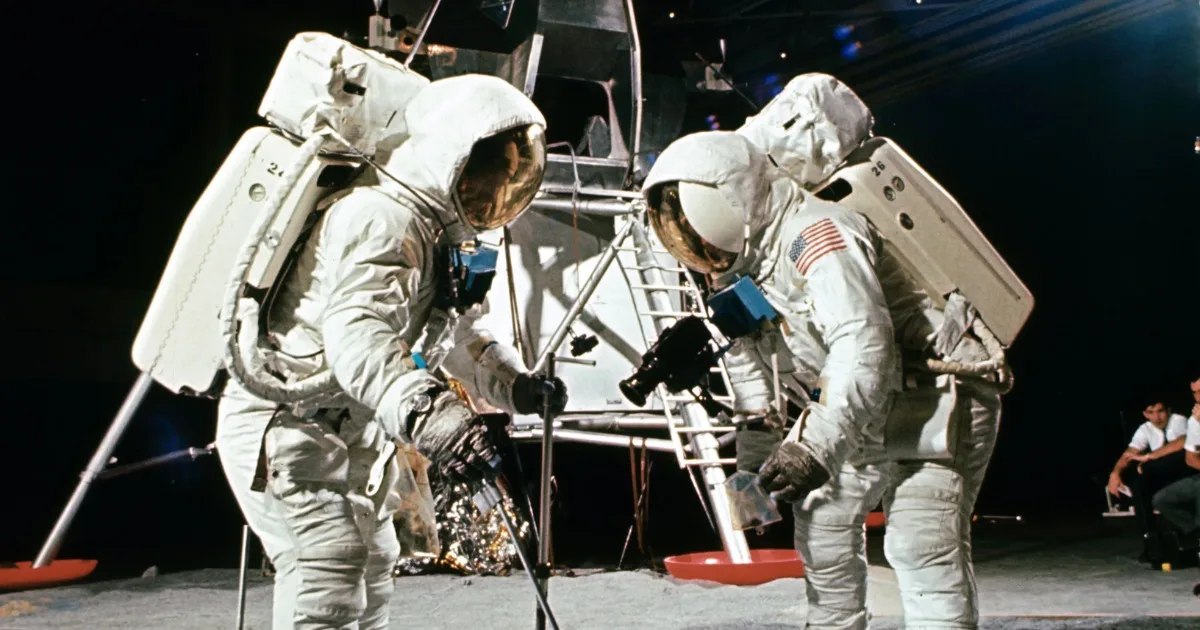
What if astronauts were sent to space knowing there was a real possibility they might never return? Well, that was exactly what happened with the Apollo 11 mission. When NASA announced its Apollo 11 mission, in a chilling turn of events, President Nixon feared that the astronauts might have to stay on the Moon forever. After all, no human had ever set foot on the lunar surface. Taking a daring leap, the duo of Neil Armstrong and Buzz Aldrin accepted the challenge of exploring the thrill of walking on the moon.

The picture shows Aldrin and Armstrong engaging in an EVA training. Both astronauts can be seen learning how to use their Hasselblad 500EL for their mission. 

2 / 8
Humanity reached the Moon while fearing the ultimate sacrifice
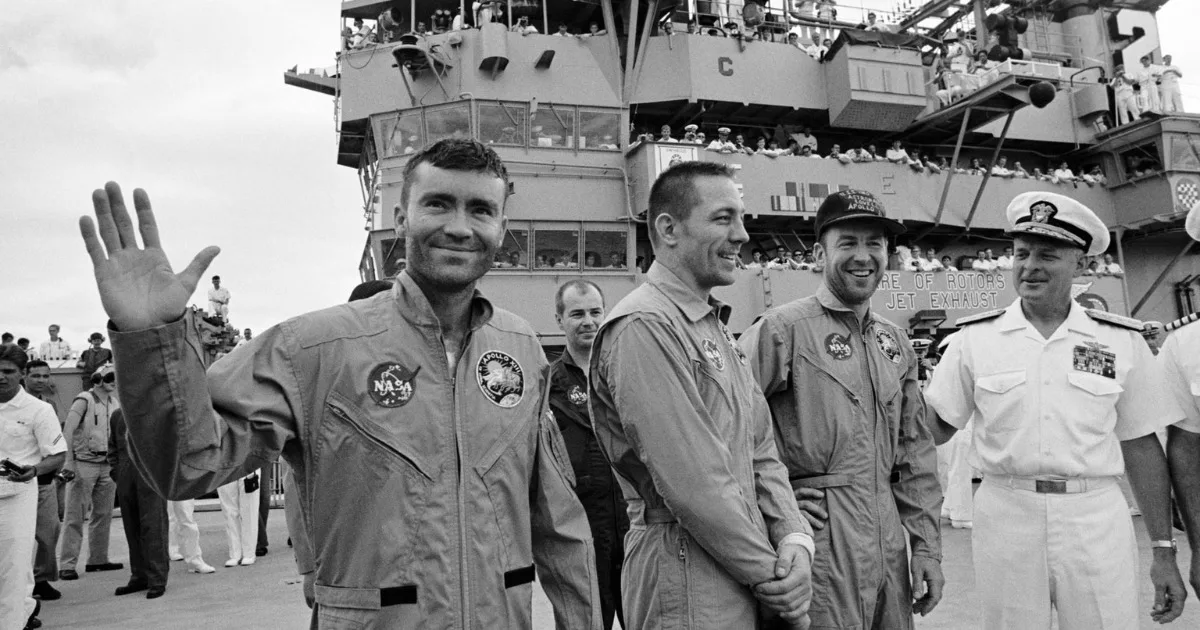
IMAGE SOURCE: NASA

Humanity reached the Moon while fearing the ultimate sacrifice

As Armstrong and Aldrin reached the surface of the moon, history was created. This picture, dated July 20, 1969, shows Aldrin posing for a photograph beside the US National flag on the lunar surface. And while both astronauts made their way back to the blue planet safely, preparations were underway in case the mission failed. President Nixon even had a speech prepared, which reportedly ended with the phrase, “They will remain there in peace.”

3 / 8
The Apollo 13 crisis that shocked the world in 1970
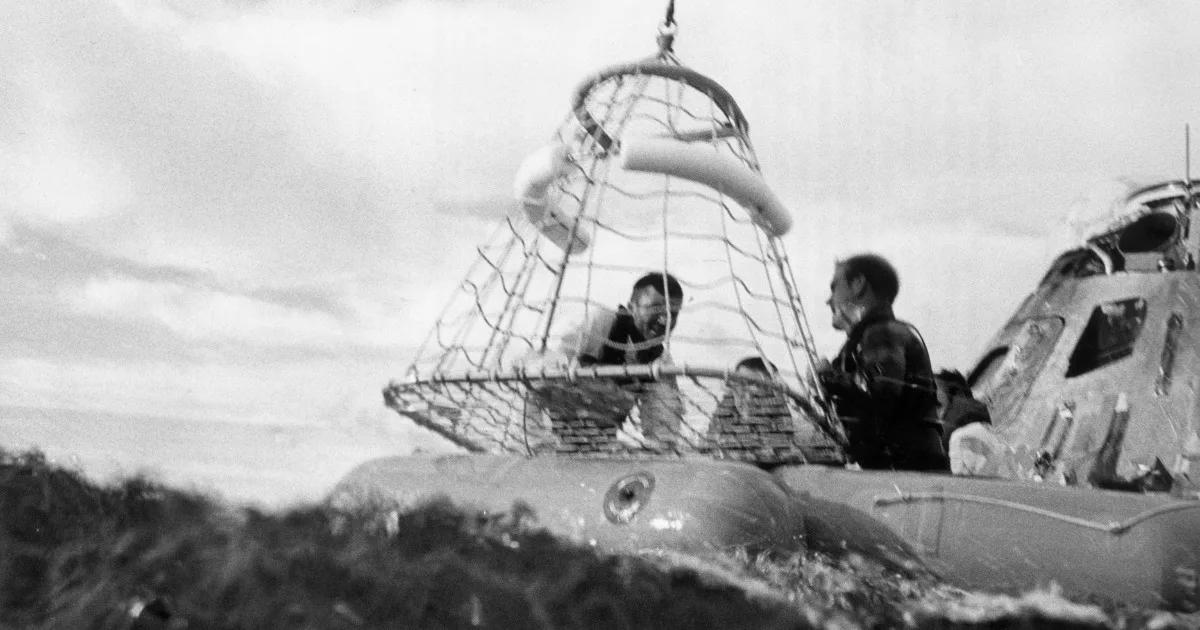
IMAGE SOURCE: NASA

The Apollo 13 crisis that shocked the world in 1970

“Okay, Houston, we’ve had a problem here,” echoed Jack Swigert’s voice at Mission Control. And this was scary because a problem in space means the chances of survival are bleak. Following the Apollo 13 launch, the excitement levels were peaking. Until, just 48 hours later, things took a dark turn. Jim Lovell, Fred Haise, and Jack Swigert were terrified when they found one of the oxygen tanks exploding. Immediately, it was mayday for the members aboard the spacecraft. Not only did the oxygen levels plummet, but power grids also started to falter, and water became limited. With the situation deteriorating, the moon landing was canceled immediately.

In the picture dated April 17, 1970, the Commanding Officer of Task Force 130, the Pacific Recovery Forces for the Manned Spacecraft Missions, Rear Admiral Donald C. Davis, is seen welcoming the astronauts on the USS Iwo Jima, which acted as the primary recovery ship.

4 / 8
Apollo 13 heroes returned home as the nation cheered
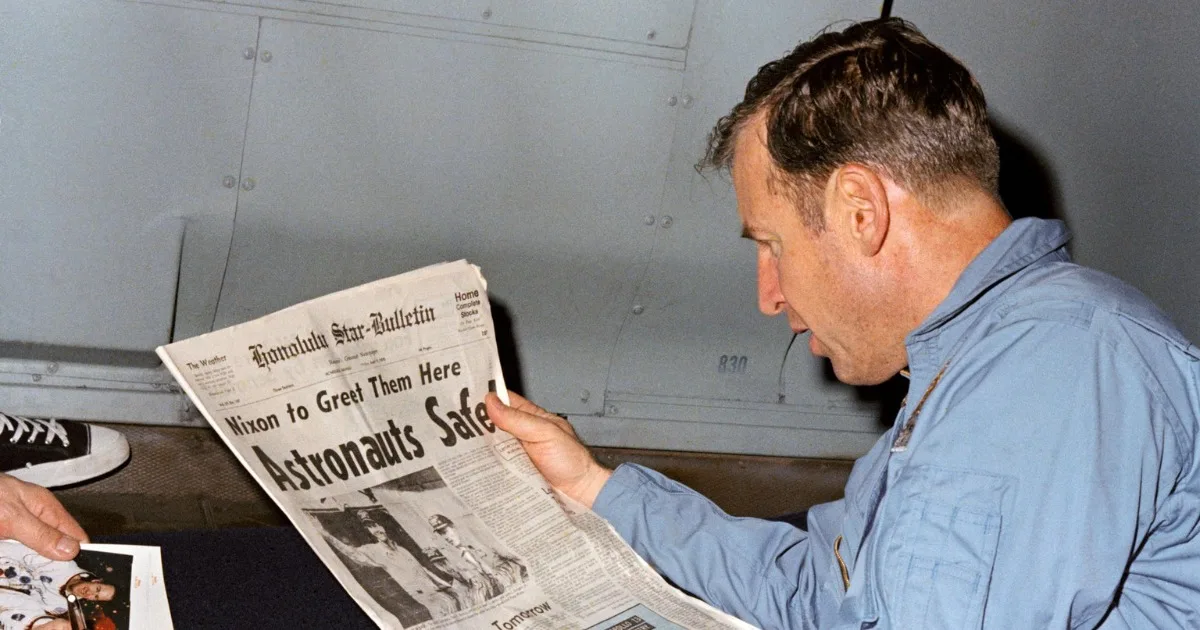
IMAGE SOURCE: NASA/HULTON ARCHIVE/GETTY IMAGES

Apollo 13 heroes returned home as the nation cheered

This image captures the Apollo 13 recovery operations in the South Pacific on April 17, 1970. Astronaut and lunar module pilot Fred W Haise Jr can be spotted in the image, who was to be hoisted up to a recovery helicopter from the USS Iwo Jima. Awaiting their return are command pilot John L Swigert Jr (center) and commander James A Lovell Jr (right). Another member of an underwater demolition team can be spotted, who was assisting with the recovery.

5 / 8
How, against all odds, Apollo 13 found its way home
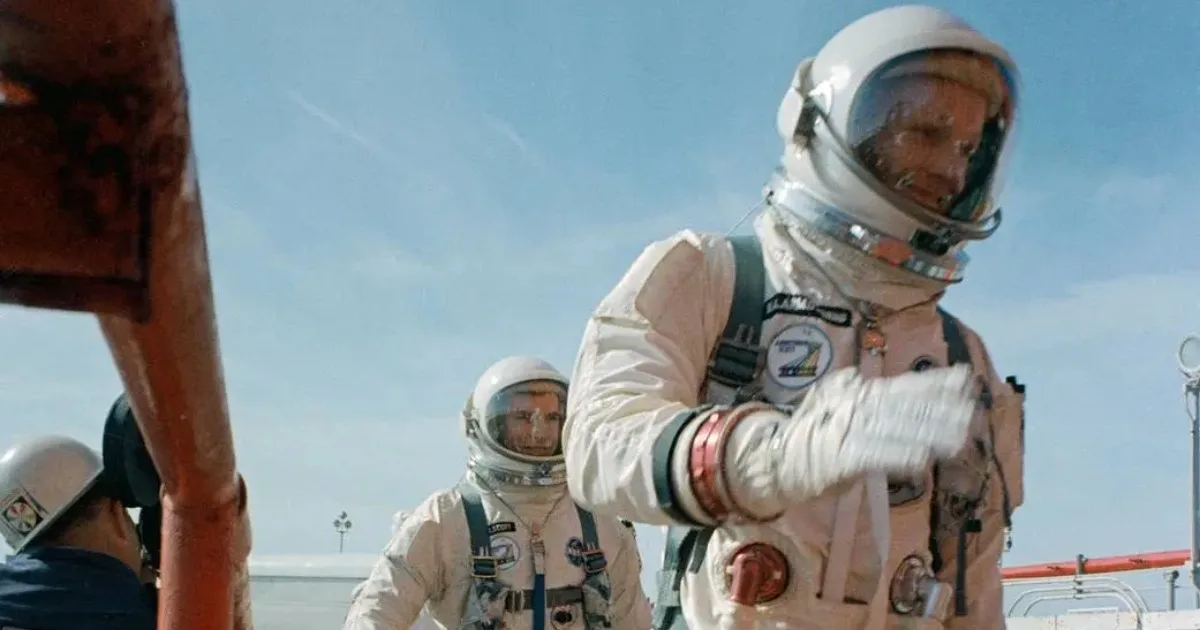
IMAGE SOURCE: NASA

How, against all odds, Apollo 13 found its way home

When your crew members are stranded at more than 200,000 miles from Earth under volatile conditions, recovery looks impossible. And NASA Mission Control was already praying for their fellow astronauts. Thankfully, the ones in space refused to give up and pulled off a science fiction script in the expansive void of space. The crew moved into a lunar module, Aquarius,’ which served as a lifeboat. The engineers then designed a makeshift carbon dioxide filter using spare parts such as plastic bags, cardboard, and tape. Later, the crew turned off the power to conserve energy. It led to temperatures going as low as 38 degrees Fahrenheit. As the crew returned to Earth, Apollo 13 became one of the best survival stories in NASA’s history.

In the picture from April 17, 1970, astronaut James Lovell is seen reading a newspaper account of their journey back home.

6 / 8
The mission that prepared Neil Armstrong for Apollo 11
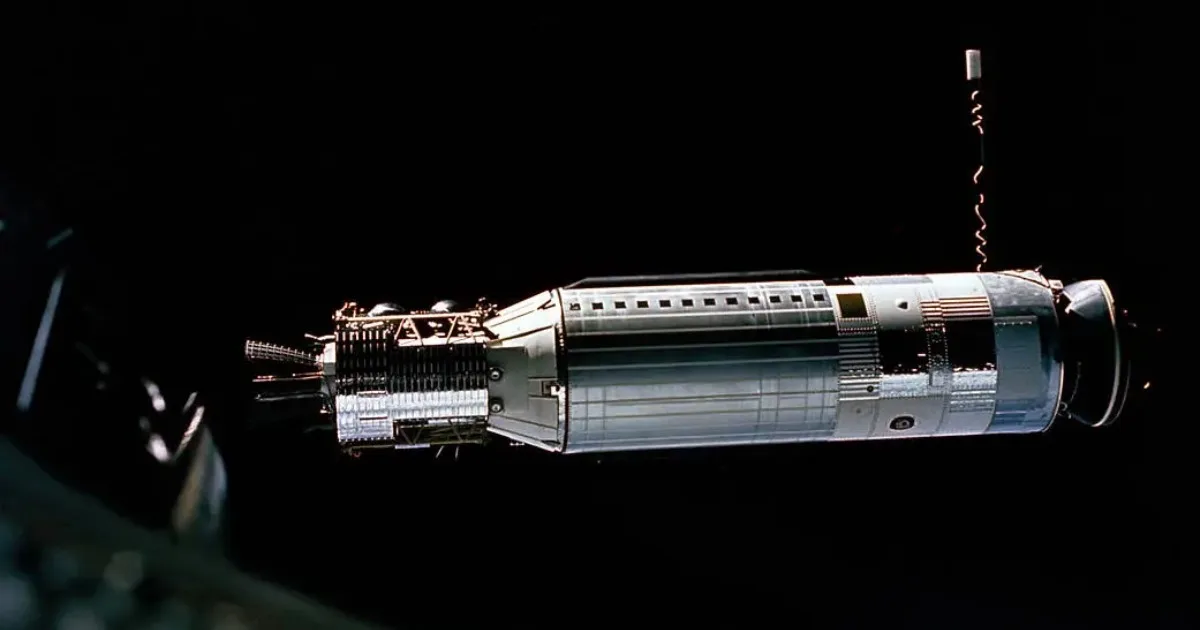
IMAGE SOURCE: NASA

The mission that prepared Neil Armstrong for Apollo 11

Launched on March 16, 1966, NASA's Gemini 8 mission, crewed by Neil Armstrong and David Scott, etched history. The mission achieved the first successful docking of two spacecraft in orbit. But right after the successful docking in space, the spacecraft started to spin violently and uncontrollably. The spacecraft was spinning once every second. 

This image shows Neil Armstrong and David R. Scott, the commander and the pilot of the Gemini 8 mission. On March 16 of 1996, the spacecraft was launched at 11:41 a.m. EST.

7 / 8
Breakthrough mission born from danger high above Earth

IMAGE SOURCE: NASA

Breakthrough mission born from danger high above Earth

In the Gemini 8 mission, the crew was almost losing consciousness and failed to perceive and see things clearly. But Armstrong tried to keep calm and fired emergency thrusters. That finally stabilized the spacecraft and saved the crew. 

In this image, we can see the first docking of two spacecraft in Earth's orbit in March 1996. Later, such a mission and path-breaking technology proved to be a milestone for future research and succeeding Moon missions.

8 / 8
Salyut 7’s unbelievable survival story in frozen space
IMAGE SOURCE: ERIC PRÉAU/GETTY IMAGES

Salyut 7’s unbelievable survival story in frozen space

In the year 1985, the Soviet Union launched a daring rescue mission to save the failing Salyut 7 after the 20-ton space station lost power and began drifting lifelessly through orbit. Cosmonauts Vladimir Dzhanibekov and Viktor Savinykh were sent to manually dock with the frozen station, a risky feat never attempted before. Against the odds, they succeeded, restoring power and turning the mission into one of space history’s greatest rescue stories.

In this image, French astronaut Jean-Loup Chretien can be spotted in the image as Patrick Baudry gives him a cigar to welcome him back after the Soyuz T-6 Russian space capsule's safe landing.

MORE GALLERIES

Why haven't we found aliens yet? 5 strange possibilities that might explain the Fermi paradox 5

Why haven't we found aliens yet? 5 strange possibilities that might explain the Fermi paradox

Jul 17, 2026
This is how humanity will die: Stephen Hawking's predictions for the end of the world 5

This is how humanity will die: Stephen Hawking's predictions for the end of the world

Jul 16, 2026
From Kendall Jenner to Shaquille O'Neal, six famous people who claimed they saw UFOs 6

From Kendall Jenner to Shaquille O'Neal, six famous people who claimed they saw UFOs

Jul 16, 2026
These 5 asteroids are passing closer to Earth than you might expect 6

These 5 asteroids are passing closer to Earth than you might expect

Jul 15, 2026
5 facts about the International Space Station you probably didn't know 5

5 facts about the International Space Station you probably didn't know

Jul 15, 2026
The chilling theory that explains why we haven't found aliens yet 5

The chilling theory that explains why we haven't found aliens yet

Jul 15, 2026
Does a parallel universe exist? Here's what the leading theories say 5

Does a parallel universe exist? Here's what the leading theories say

Jul 14, 2026
How a logger’s five-day disappearance became one of history's most famous alien abduction mysteries 5

How a logger’s five-day disappearance became one of history's most famous alien abduction mysteries

Jul 14, 2026
5 animals who paved the way for human space travel 6

5 animals who paved the way for human space travel

Jul 14, 2026
5 global music icons who claimed they saw UFOs 6

5 global music icons who claimed they saw UFOs

Jul 13, 2026
Wait, humans sent these into space? 5 strange objects you won't believe are still floating out there 6

Wait, humans sent these into space? 5 strange objects you won't believe are still floating out there

Jul 13, 2026
Contact with 'advanced aliens' may not end well for Earth, warned Stephen Hawking 5

Contact with 'advanced aliens' may not end well for Earth, warned Stephen Hawking

Jul 13, 2026
Did an advanced civilization exist on Earth long before humans? 5

Did an advanced civilization exist on Earth long before humans?

Jul 10, 2026
4 major cosmic hazards that could pose threat to Earth 5

4 major cosmic hazards that could pose threat to Earth

Jul 10, 2026
5 weirdest planets found by NASA 6

5 weirdest planets found by NASA

Jul 10, 2026
How a late-night road trip turned into one of history's most chilling UFO mysteries 6

How a late-night road trip turned into one of history's most chilling UFO mysteries

Jul 9, 2026
5 incredible facts you didn't know about the universe 5

5 incredible facts you didn't know about the universe

Jul 9, 2026
"Where are they?": Brian Cox reveals why we still haven’t found aliens 6

"Where are they?": Brian Cox reveals why we still haven’t found aliens

Jul 9, 2026
An asteroid could hit Earth with the energy of 22 atomic bombs—and NASA has a date for it 5

An asteroid could hit Earth with the energy of 22 atomic bombs—and NASA has a date for it

Jul 8, 2026
5 famous people who claimed they saw UFOs 6

5 famous people who claimed they saw UFOs

Jul 8, 2026
Starlust.org is part of the Scale Content Inc. publishing group.

Google Source

About Us
Editorial Guidelines
Privacy Policy
Cookie Policy
Terms of Use
Contact Us
Link to Facebook
Link to Instagram

© Scale Content Inc. 1178 Broadway, 3rd Floor #3469, New York, NY 10001, United States