Cassiopeia: The famous W-shaped constellation and how to spot it
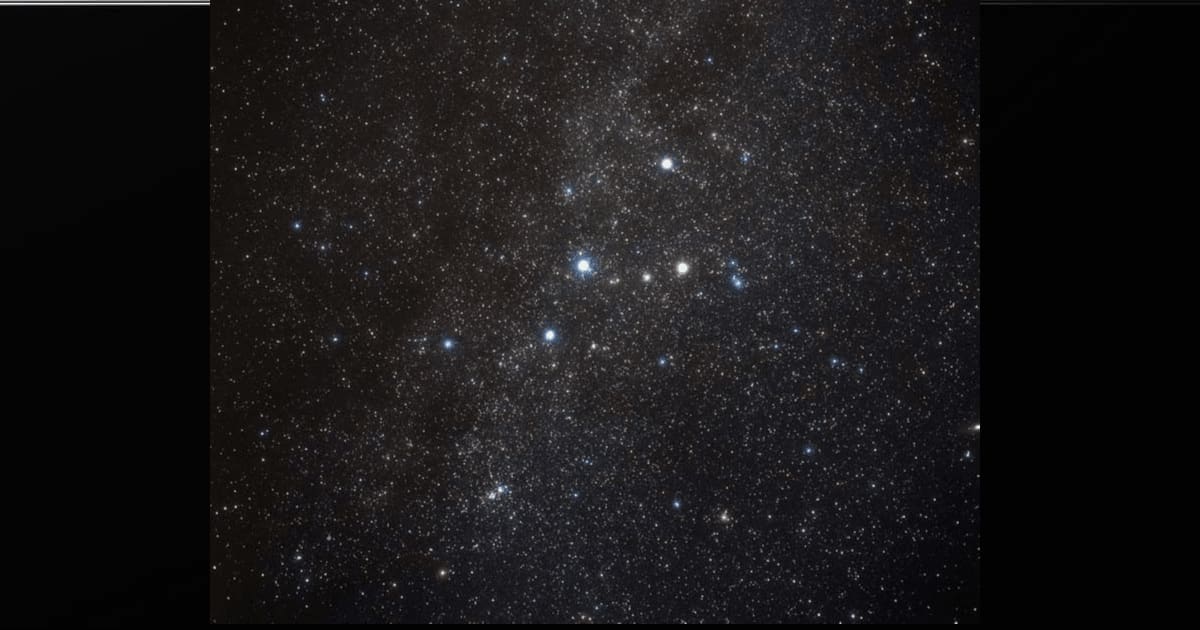
The W-shaped constellation is one of the easiest patterns to spot in the night sky, and it has a story rooted in ancient Greek mythology. We normally learn the alphabet from books, but the night sky has a few letters of its own. Look up on a clear evening and you may spot one written in stars: a bright W stretching across the northern sky. That's Cassiopeia the Queen.
Finding Cassiopeia in the sky
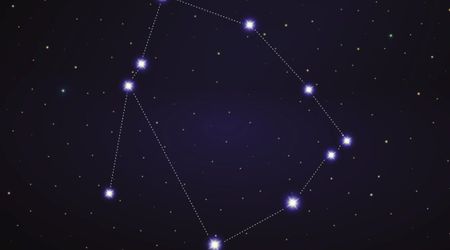
September and October are good months to look for Cassiopeia, according to EarthSky. After nightfall, face northeast and watch for the five bright stars that make up the constellation. They form a crooked W, although the shape can look more like an M as Cassiopeia changes position during the night.
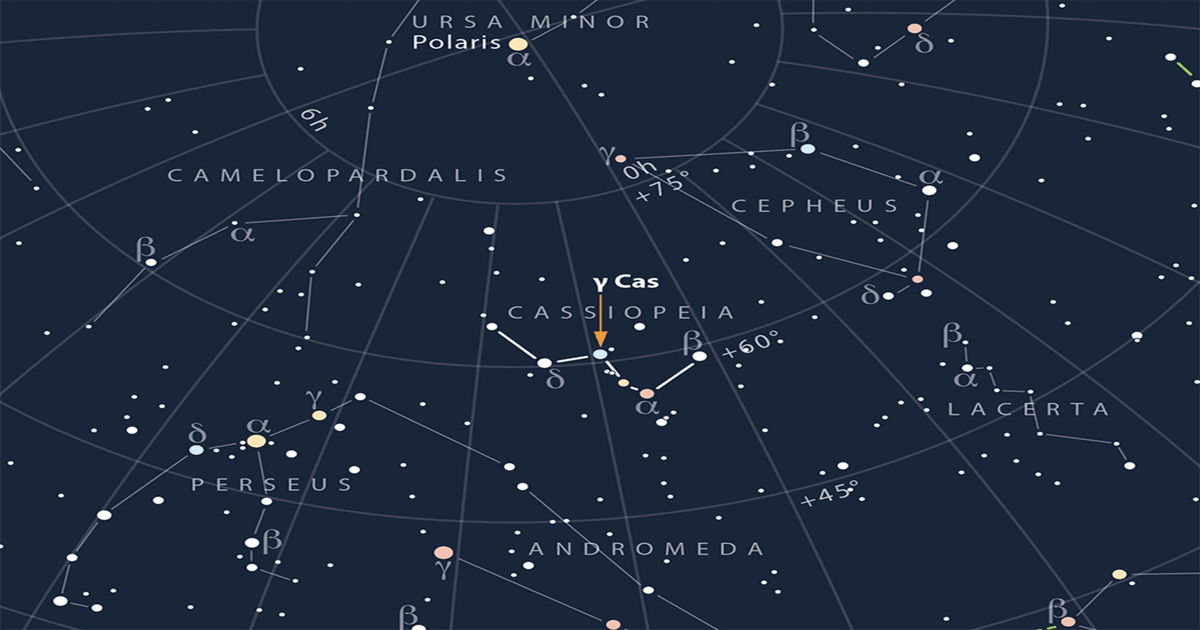
Polaris is a useful reference point. The North Star sits between Cassiopeia and the Big Dipper, with the two constellations on opposite sides. The view is different again as the seasons pass. Cassiopeia is prominent on autumn evenings, while the Big Dipper becomes easier to spot higher in the sky later in the year. For observers across most of the United States and Canada, Cassiopeia has a particularly useful feature. It is circumpolar, so it doesn't disappear below the horizon.
The five stars at the heart of the pattern are Schedar, Caph, Gamma Cassiopeiae, Ruchbah, and Segin. Their arrangement has been interpreted in different ways over time. On older star maps, they were drawn as the outline of a chair, with Cassiopeia seated upon it. Hence the old name, Cassiopeia's Chair.
A queen, a boast, and a place in the stars
Cassiopeia was a queen in Greek mythology, known for her pride. She boasted that she herself, as well as her daughter Andromeda, were more beautiful than the Nereids, sea nymphs who were companions of Poseidon, the Greek sea god. Displeased at the queen's arrogance, Poseidon sent Cetus, a huge sea monster, to punish Cassiopeia's kingdom.
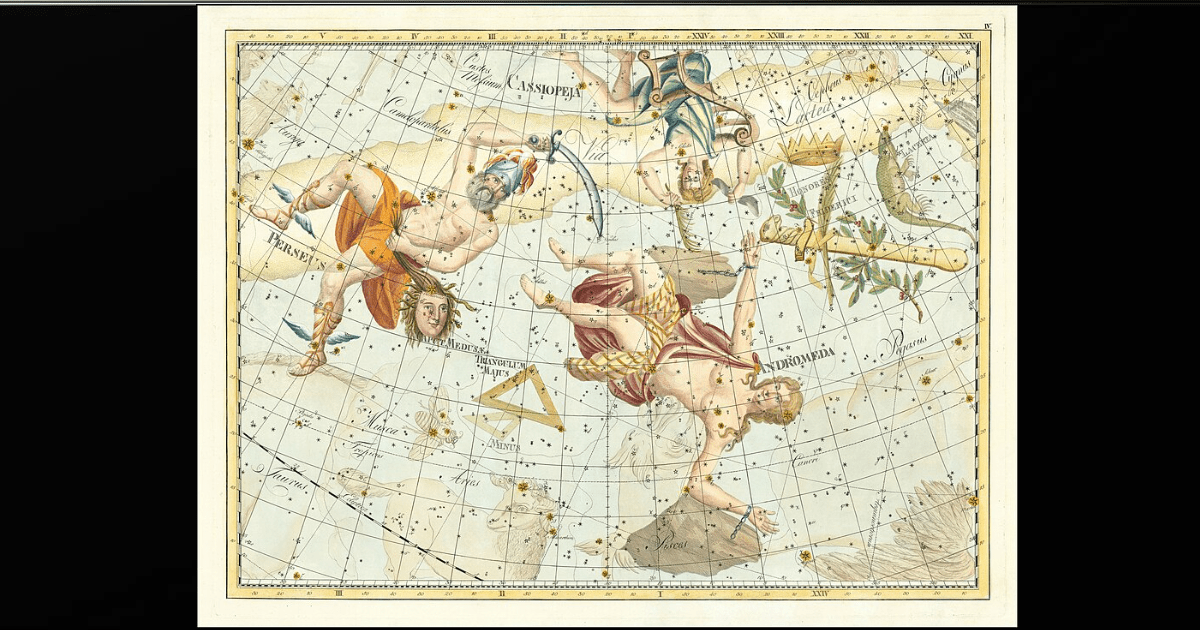
To appease Poseidon and save their kingdom, Cassiopeia's husband and king, Cepheus, consulted an oracle, who decreed that Andromeda would have to be sacrificed. With the kingdom's fate at stake, Andromeda was thus chained to a rock as an offering. However, before the beast could devour Andromeda, Perseus, a Greek hero and son of Zeus, arrived just in time and rescued her. The story didn't end there, and Cassiopeia was placed in the sky by the gods for her arrogance, destined to appear upside down on her chair for half the year as punishment. Andromeda and Perseus too became constellations in the night sky, but for their innocence and heroism respectively. Cetus, meanwhile, was placed in the sky by the gods to immortalize the epic battle and as a mark of divine order.
What else can you see near Cassiopeia?
Cassiopeia can also help you find something else in the autumn sky. Look toward Perseus, just beyond the constellation, and you'll find the Double Cluster, two groups of stars that sit close to each other and are bright enough to appear faintly in a dark sky. If you want a closer inspection, binoculars bring out the individual stars much more clearly, while telescopes offer an even better view. The two clusters sit 7,500 light-years away and are made up of hundreds of young, hot stars that formed from the same large cloud of gas and dust.
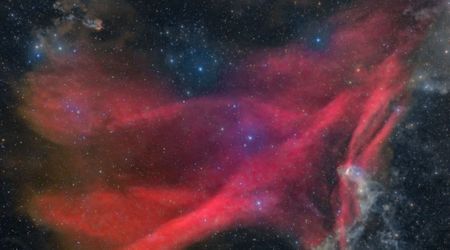
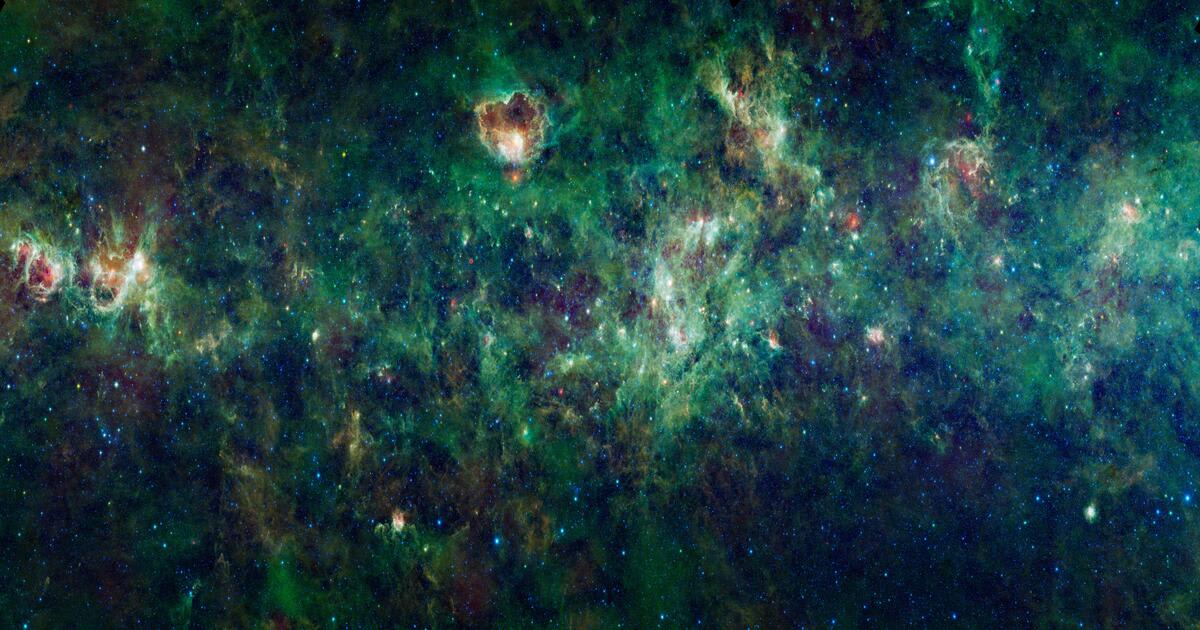
There is also plenty more in this part of the Milky Way. The Heart and Soul nebulae, where new stars form, lie within Cassiopeia, about 6,000 light-years from Earth. Using Cassiopeia as a reference point, it's also easy to spot the Andromeda galaxy, which is about 2.5 million light-years away—once you find the W constellation, look for the part of the W with a deeper notch, comprised of Gamma Cassiopeiae, Caph, and Schedar, and follow the direction that the latter points towards. Cassiopeia stays visible from northern latitudes almost year-round, which makes it one of the most dependable landmarks the night sky has to offer.
More on Starlust
How to easily spot the constellation Lynx in March's night skies