Artemis II crew breaks Apollo 13's record, travels farthest ever distance from Earth
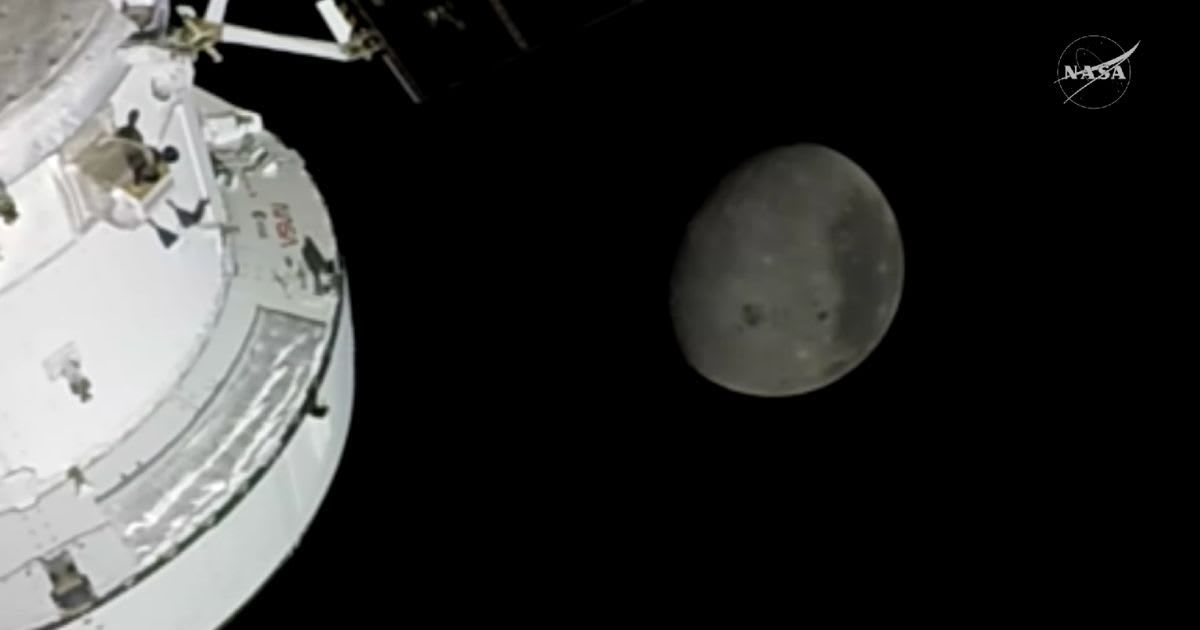
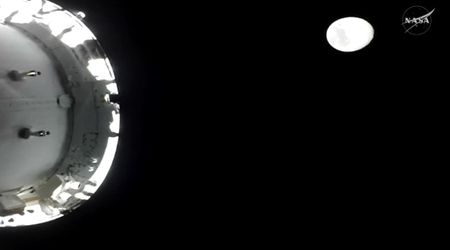
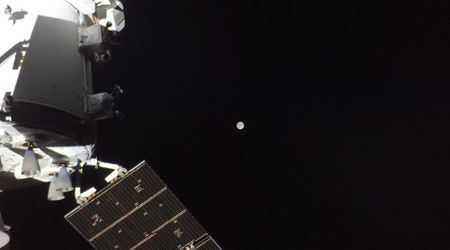
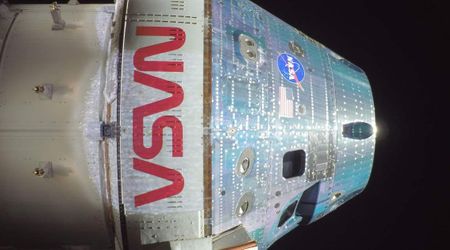
NASA’s Artemis II crew of four astronauts has now traveled farther from Earth than any humans before them. At approximately 1:56 p.m. EDT on April 6, the Orion spacecraft broke the 248,655-mile (400,171 km) record set in 1970 by the crew of Apollo 13. The ongoing lunar flyby will take Orion — named Integrity by the crew — to a maximum distance of 252,760 miles (406,800 km) from Earth at 7:07 p.m. EDT. By surpassing a deep space record that has stood for over half a century, Artemis II successfully achieves one of its most crucial mission goals.
New record🥇
— NASA Earth (@NASAEarth) April 6, 2026
The Artemis II astronauts are now farther from Earth than humans have ever been! At 1:57 p.m. EDT, they broke the record set by Apollo 13 in 1970.
Their journey around the far side of the Moon today will take them a maximum distance of 252,752 miles from Earth. pic.twitter.com/P5Swojpn0n
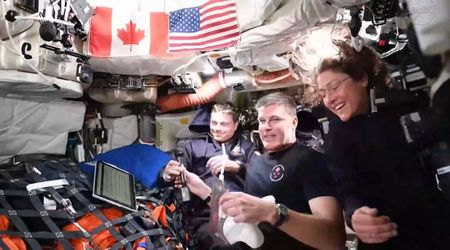
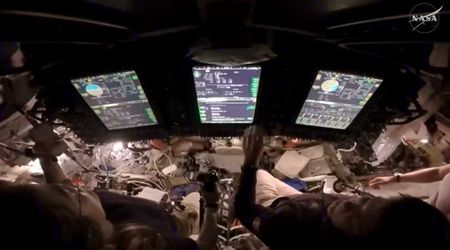
"From the cabin of Integrity here, as we surpass the furthest distance humans have ever traveled from planet Earth, we do so in honoring the extraordinary efforts and feats of our predecessors in human space exploration," remarked Canadian astronaut Jeremy Hansen. "We will continue our journey even further into space before Mother Earth succeeds in pulling us back to everything that we hold dear,” he added. “But we most importantly choose this moment to challenge this generation and the next to make sure this record is not long lived." The crew also took the historic moment to announce their suggestion to rename certain features on the Moon — one named "Integrity" after the mission’s spacecraft, and another, "Carroll," after Wiseman’s late wife. Now, the crew is expected to make their closest approach to the Moon around 7:02 p.m. EDT. The lunar flyby is expected to go on for around six to seven hours, during which the crew will witness a rare solar eclipse from Orion’s perspective.
To commemorate the Artemis II mission, the astronauts announced their suggestion to rename certain features on the Moon to honor the Orion spacecraft, named Integrity, as well as commander Reid Wiseman's late wife, Carroll. pic.twitter.com/ejfhnItDo8
— NASA (@NASA) April 6, 2026
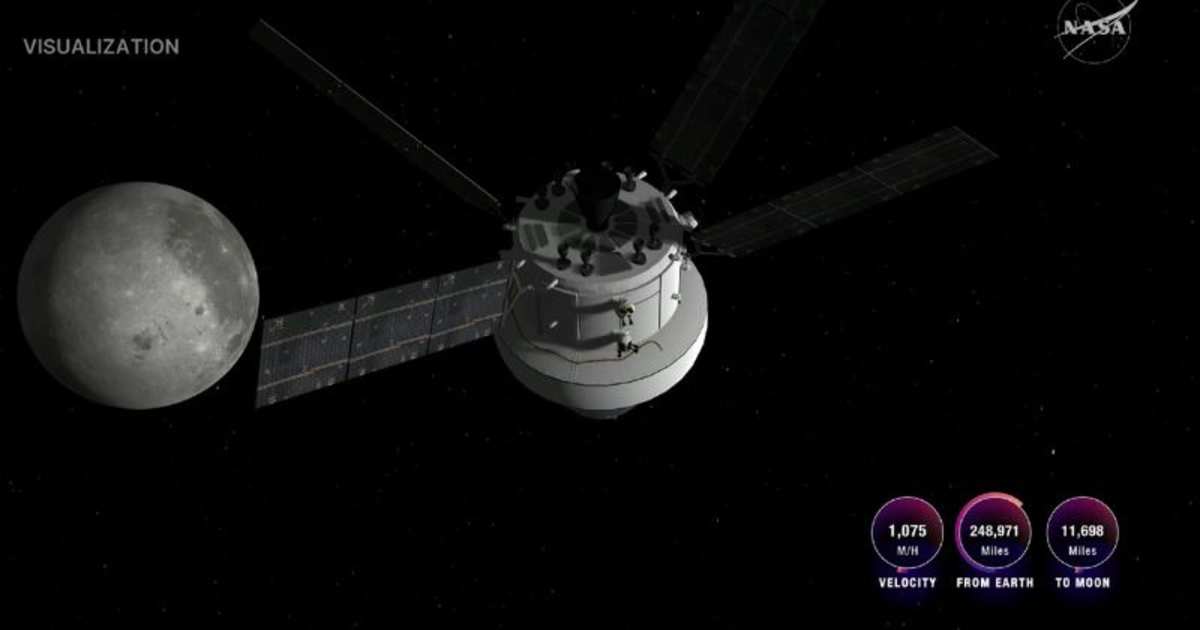
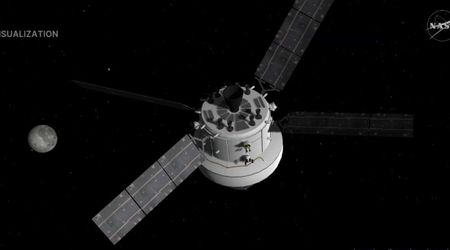
The Orion spacecraft began its much-awaited flyby as it entered the Moon’s sphere of influence at 12:37 a.m. EDT. From here, lunar gravitational control would guide the Artemis II crew on their planned free-return trajectory, the same path used by Apollo 13 after its onboard emergency. Shortly after, at about 2:45 p.m. EDT, the astronauts will begin their detailed observation of 30 lunar surface targets, thus fulfilling the mission’s science objectives. NASA expects Orion to fly 4,070 miles (6,550 km) above the lunar surface for a never-seen-before view of the Moon, especially its far side.
Here's what to expect: pic.twitter.com/KcuQu8Qerl
— NASA Solar System (@NASASolarSystem) April 6, 2026
Apollo 13’s astronauts Jim Lovell, Fred Haise, and Jack Swigert had set the long-standing distance record in 1970 following a crisis that forced the crew to abandon a planned lunar landing. Artemis II will now exceed this distance by over 4,000 miles, and hopes for more deep space missions in the near future to break this record. The crew of four — Reid Wiseman, Victor Glover, Christina Koch and Jeremy Hansen received a special pre-recorded “welcome” message from Lovell, who passed away in 2025. “I’m proud to pass that torch on to you — as you swing around the Moon and lay the groundwork for missions to Mars, for the benefit of all,” said Lovell in the recording, congratulating the Artemis II astronauts for breaking his crew's record. “It’s a historic day, and I know how busy you’ll be. But don’t forget to enjoy the view.”
Unlike Artemis II, Apollo 13 never intended to break any records in space exploration. However, both missions follow the same free-return trajectory, “swinging” around the Moon before setting course for Earth. This approach uses the combined gravity of both the Earth and the Moon, and also enhances safety and fuel efficiency. After completing its mission, Orion is expected to return in a splashdown on April 10 near San Diego.
More on Starlust
Artemis II Lunar Targeting Plan: The software that will guide the crew during the lunar flyby
Artemis II lunar flyby on April 6—When and where to watch live streaming