Watch: SpaceX successfully launches and lands Falcon 9 for U.S. Space Force classified mission

SpaceX on Thursday completed another major mission for the U.S. Space Force (USSF). Its Falcon 9 rocket lifted off from Space Launch Complex 4E at the Vandenberg Space Force Station in California at 11:42 a.m. EDT for the USSF-153 mission, which, like other USSF missions, was highly classified. After delivering the second stage with the payload, the first-stage Falcon booster successfully touched down on “the Of Course I Still Love You” droneship stationed in the Pacific Ocean about nine minutes post-liftoff. SpaceX ended the livestream shortly after the booster landed safely and also didn’t confirm whether the payload was deployed in its intended orbit. The number of satellites and the altitude at which they will operate also remain unknown.
According to a SpaceX description, the mission marked the 27th flight for the first stage booster, which previously launched Crew-7, CRS-29, PACE, Transporter-10, EarthCARE, NROL-186, Transporter-13, TRACERS, NROL-48, COSMO-SkyMED Second Generation FM3, and 16 Starlink missions.
Falcon 9’s first stage lands on the Of Course I Still Love You droneship pic.twitter.com/D6ix3GEqKv
— SpaceX (@SpaceX) September 10, 2026
This year alone, SpaceX has won multiple contracts from the U.S. Space Force for specific purposes. In May, the Space Force awarded $4.16 billion to build the Space-Based Airborne Moving Target Indicator (SB-AMTI) program that will track and target airborne threats globally, along with a $2.29 billion contract to build a secure, high-speed communication network connecting military sensors and weapons platforms across the world. SpaceX won another $1.6 billion in orders in July for 18 Falcon missions through late 2027. While little is known about the payload launched on the USSF-153, it may have been part of the latest contract for the deployment of satellites that would track and target airborne threats.
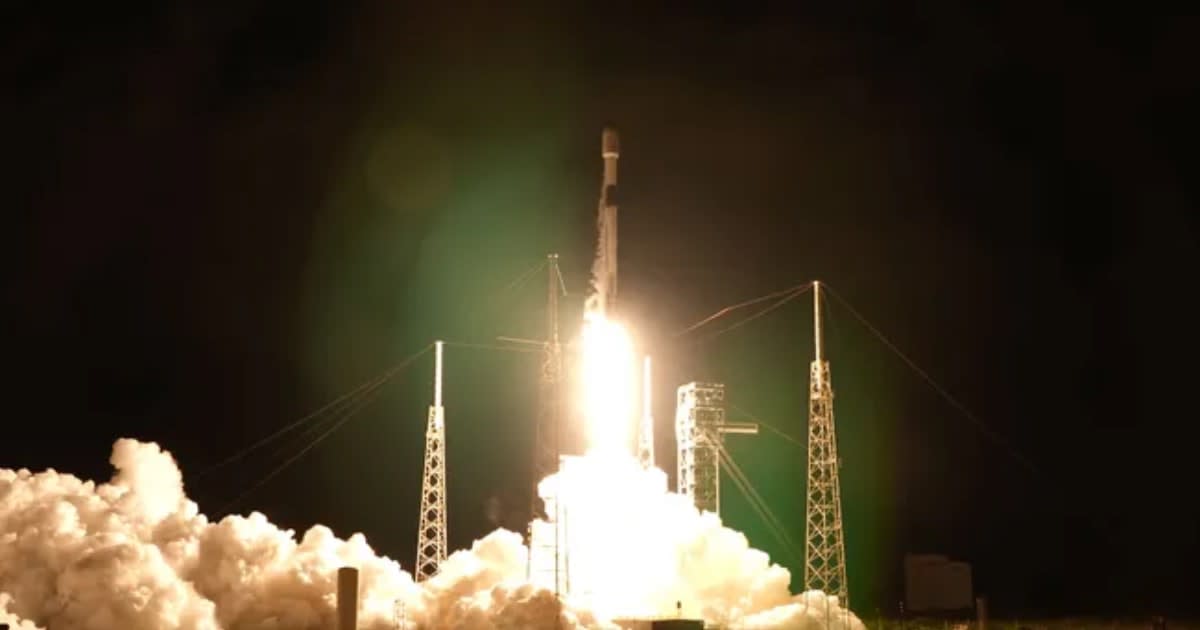
According to Spaceflight Now, the USSF-153 marked the fifth SpaceX mission with national security-related payloads this year. The last such mission, dubbed USSF-366, also saw a Falcon 9 rocket launch from Launch Complex 4E at Vandenberg on August 15, carrying an undisclosed number of satellites.

It won't be long until the company launches its next U.S. Space Force mission either, with USSF-259 being targeted for as early as September 15 from Launch Complex 4E. The four-hour launch window for the mission will open at 9 p.m. EDT, and there's a backup opportunity the next day at the same time. It will mark the 13th flight for the booster supporting the mission.
More on Starlust
Blue Origin's New Glenn is moving to historic NASA facility as it prepares for Artemis missions
After raising $1 billion, Stoke Space targets debut launch of its 1st fully reusable rocket in 2027