Scientists simulate how collision of two galaxies will proceed over 200 million years from now
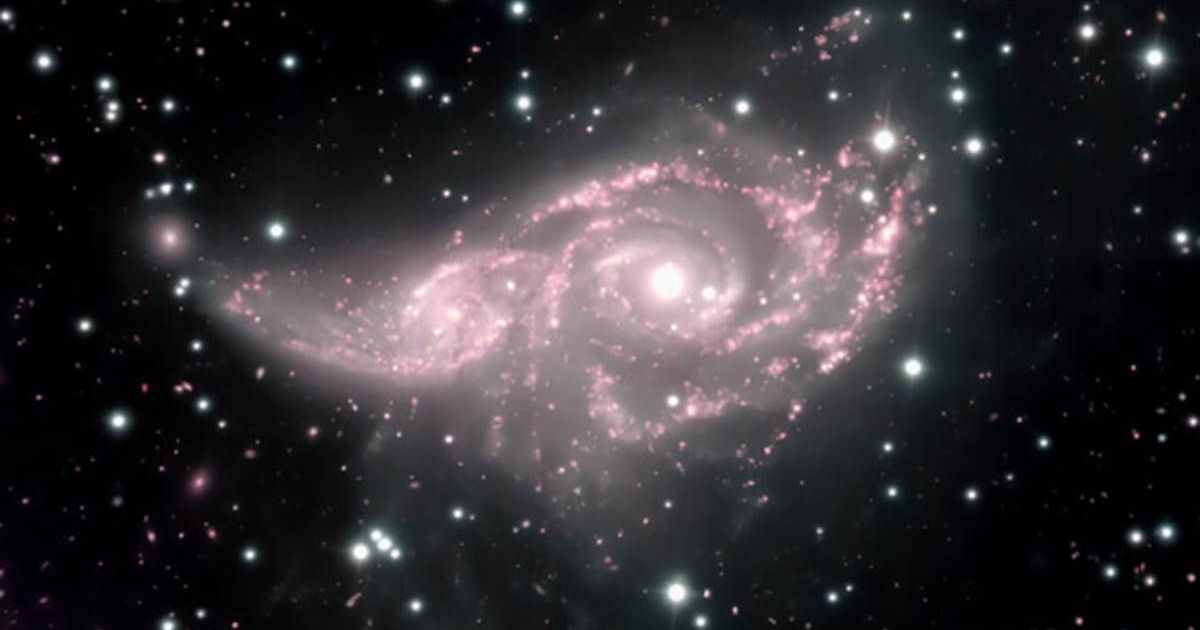
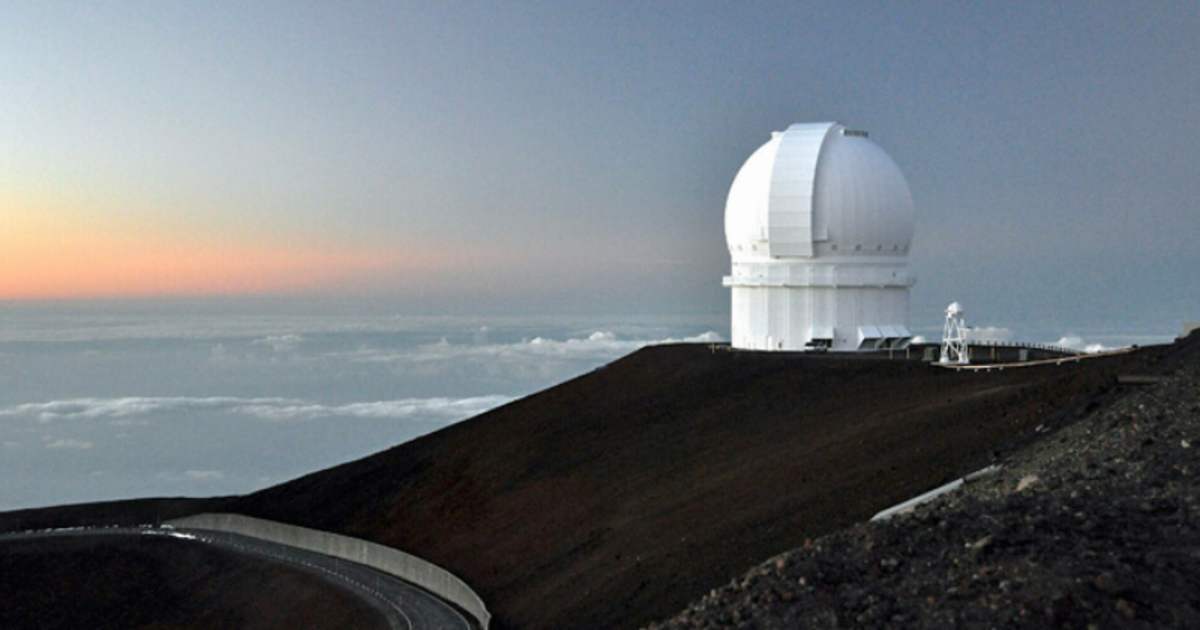
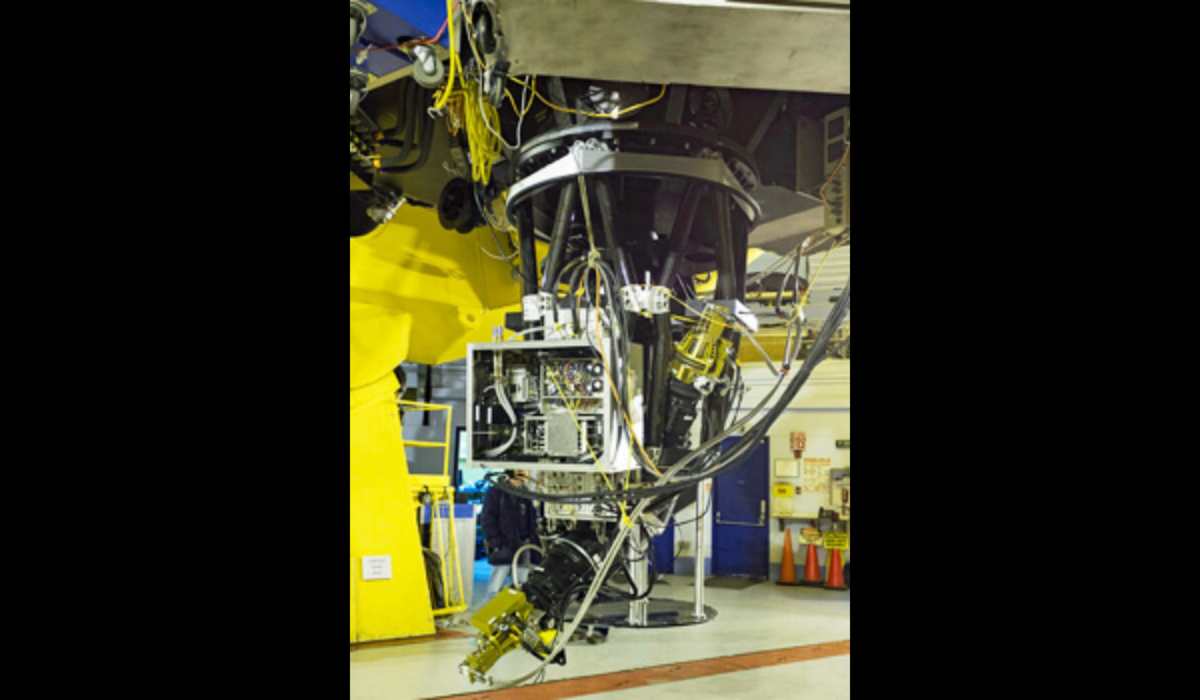
An international team of researchers has used data from the Canada-France-Hawai’i Telescope (CFHT) on Maunakea to figure out how an ongoing collision between two galaxies will unfold. CFHT's Fourier transform spectrometer instrument SITELLE was used to observe two spiral galaxies—NGC 2207 and IC 2163—which have collided with each other, pulled apart, and reconnected again over a period of 440 million years. They are expected to merge into one eventually, therefore rendering themselves unrecognizable.
Using early models of the collision in question as a starting point, the team ran hundreds of simulations to create an accurate model of its own. The new model includes everything from the shape and gas distribution to the rate of star formation and the motions of stars and gases across the galaxies. “This is the most sophisticated simulation to do this in the world right now,” said René Pierre Martin, co-author of the study and principal investigator at CFHT, in a statement. The team led by Camille Poitras, a PhD student at Université Laval, simulated not just how the galaxies would evolve as a result of their collisions but also how they would have evolved individually.
In fact, the final model spans over 600 million years, starting with the galaxies' first interaction 440 million years ago and predicting how they'll behave over 200 million years into the future. Of course, it goes without saying that making such predictions is no walk in the park. "It's as if you said, 'model a car crash,'" noted Martin. Nevertheless, a study like this provides great insight into the future of galaxies, including the Milky Way. After all, when galaxies slam into each other, the gases and chemical elements within them get redistributed and interact with each other, triggering star formation and even shaping the emergence of new planetary systems.
![Spiral Galaxies NGC 2207 and IC 2163 captured by the Hubble Space Telescope. [Image Source: NASA/Hubble Heritage Team (STScl)]](https://de40cj7fpezr7.cloudfront.net/7c8a8529-7e5b-4e60-b0fe-7964d36a48d1.jpg)
“Understanding what’s happening during these collisions is fundamental to our knowledge of galaxy evolution in general,” Martin added. “Our own galaxy, the Milky Way, has been through multiple interactions during its lifetime, with one of them having likely triggered the formation of our Sun, about 5 billion years ago.” Galactic collisions are not uncommon. In fact, all galaxies go through them. That being said, last year, the James Webb Space Telescope and the Hubble Telescope did discover an extremely rare kind of galactic collision—one involving five galaxies that took place just 800 million years after the Big Bang. More recently, the collision between the Small Magellanic Cloud (SMC) and the Large Magellanic Cloud (LMC)—both neighbors of the Milky Way—was studied. It showed that the larger galaxy affected its neighbors' structure so much so that the latter's stars were sent into a chaotic motion. It was yet another demonstration of how galaxies undergo massive changes because of collisions.
More on Starlust
Andromeda is headed toward the Milky Way, while other galaxies are moving away—and now we know why