James Webb Space Telescope maps Uranus’s upper atmosphere for the first time ever
![Uranus as observed by JWST's NIRSpec instrument in January 2025. [Cover Image Source: ESA/Webb, NASA, CSA, STScI, P. Tiranti, H. Melin, M. Zamani (ESA/Webb); Image Edited by Starlust Staff]](https://d3hedi16gruj5j.cloudfront.net/792344/uploads/8be413a0-107e-11f1-a7e7-bfa0ca2f7c24_1200_630.jpeg)
The James Webb Space Telescope’s (JWST) NIRSpec instrument has helped astronomers produce a map of Uranus’s upper atmosphere that reveals how temperature and charged particles vary with height across the planet. With the JWST, an international team of astronomers observed the planet for almost a full day. This allowed them to detect a faint glow from molecules that hover high above the clouds. The study, led by Paolo Tiranti of Northumbria University in the United Kingdom, has been published in Geophysical Research Letters.
![An annotated collage of JWST's observations of Uranus between 19 and 20 January, 2025. [Image Source: ESA/Webb, NASA, CSA, STScI, P. Tiranti, H. Melin, M. Zamani (ESA/Webb)]](https://de40cj7fpezr7.cloudfront.net/de7b47ef-876f-4259-8141-bd2c10c583fc.jpg)
The researchers measured the temperature and density of ions in the upper atmosphere that extends up to 5,000 kilometers beyond the planet's cloud tops. At this height, the region of the atmosphere is called the ionosphere, which is ion-rich and is strongly shaped by the planet’s magnetic field. These findings can shed light on where the planet’s auroras form, how the planet’s tilted magnetic field influences auroras, and how its atmosphere has been cooling over the past three decades. Analysis of the data shows that temperatures soar with height, peaking at around 3,000–4,000 km above the planet, while ion densities peak at much lower heights near 1,000 km.
Tiranti and his colleagues detected two bright bands of auroral emission close to magnetic poles, as well as a surprising region where both auroras and ion density were severely depleted. The researchers attributed this depletion to the planet’s unusual magnetic field. “This is the first time we’ve been able to see Uranus’s upper atmosphere in three dimensions,” said Paola in a statement released by the European Space Agency (ESA). “With Webb’s sensitivity, we can trace how energy moves upward through the planet’s atmosphere and even see the influence of its lopsided magnetic field.”
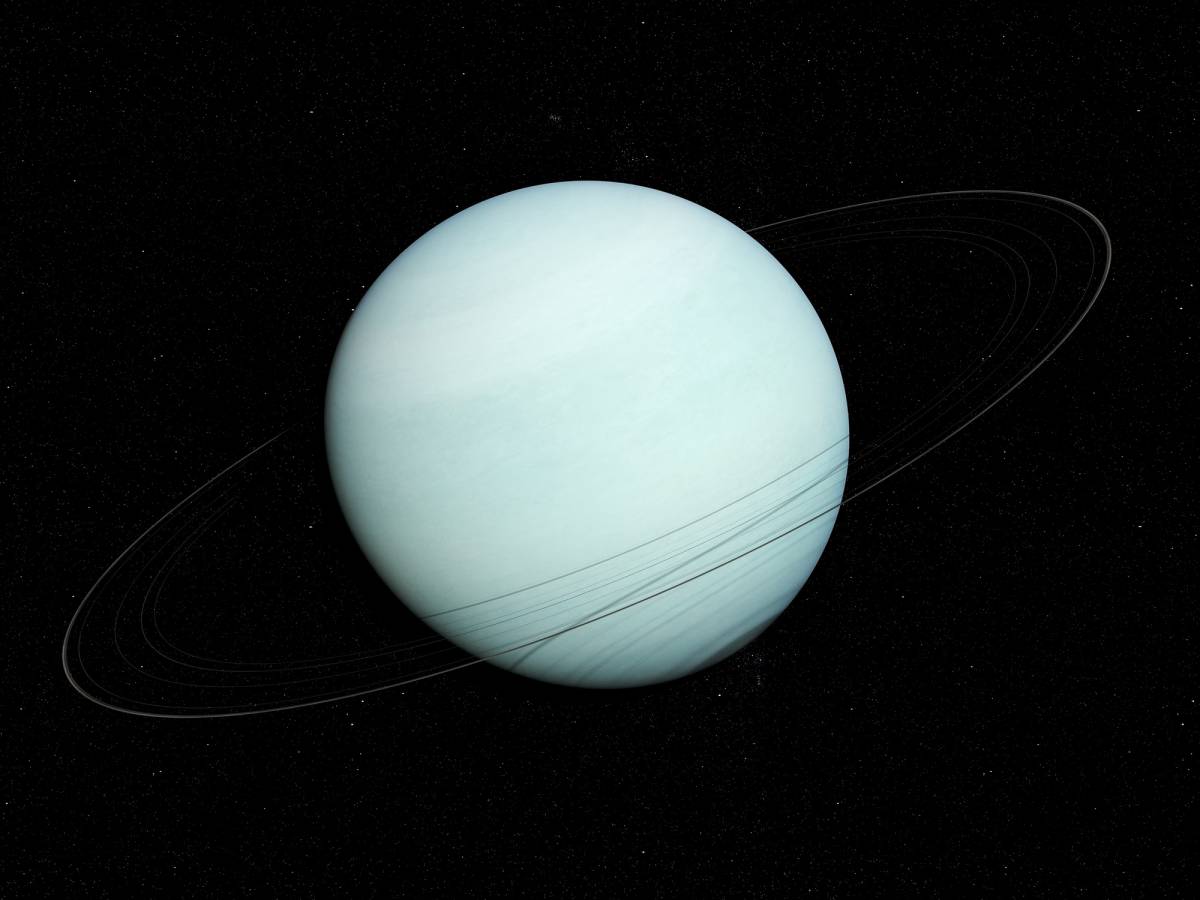
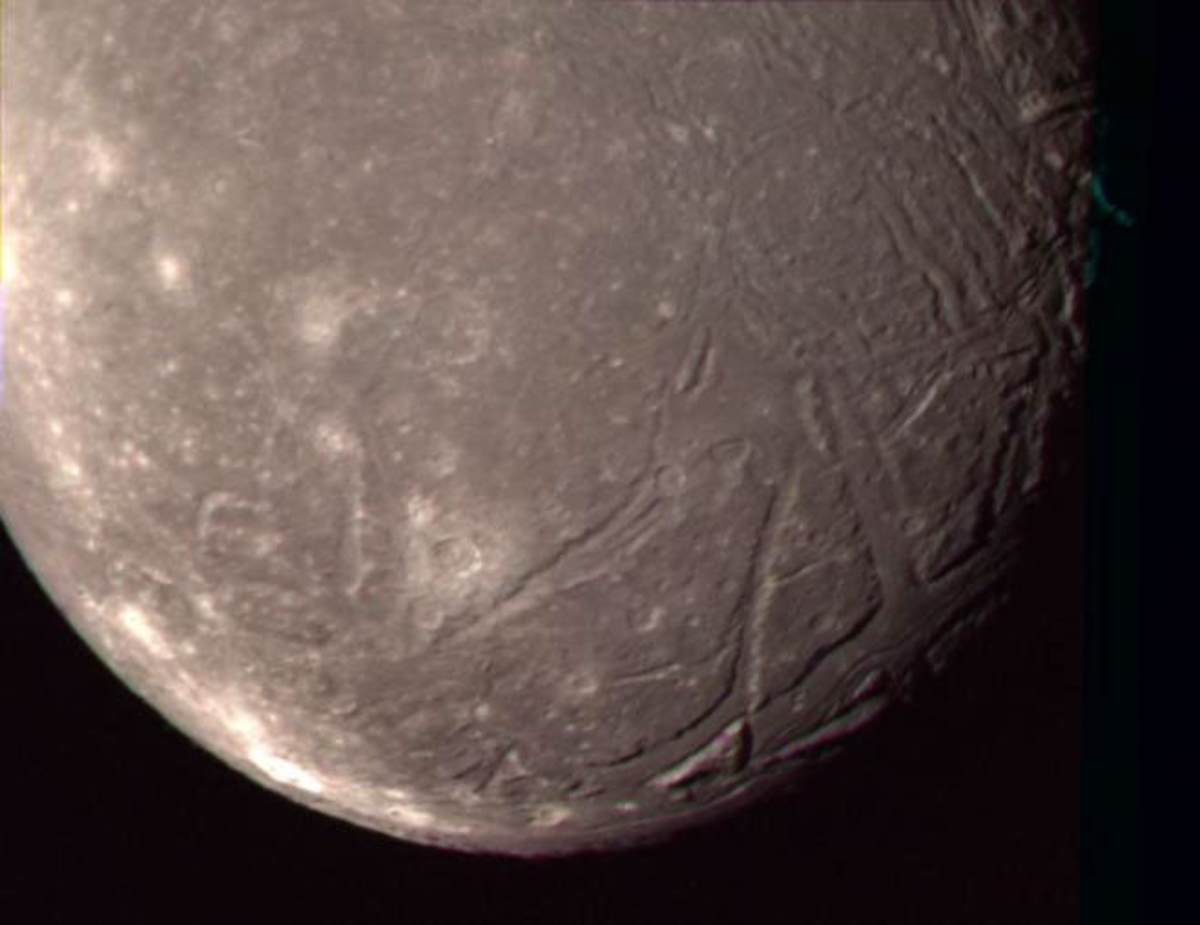
The telescopic data reveal that the planet has an average temperature of around 426 kelvins (about 150 degrees Celsius). Comparing this value with those previously recorded by ground-based telescopes and spacecraft shows that Uranus’s upper atmosphere is cooling, a trend that began in the early 1990s. To date, the only human-made object to fly past Uranus is Voyager 2, which discovered the planet’s 10 moons and two new rings. It also found that wind speeds on Uranus reach as high as 724 kilometers per hour, and it has a boiling ocean below the top cloud surface, according to data sent back by Voyager-2. But the magnetic field is its strangest feature, showing a tilt of 55 degrees off-axis and off-center.
“Uranus’s magnetosphere is one of the strangest in the Solar System," added Paola. “It’s tilted and offset from the planet’s rotation axis, which means its auroras sweep across the surface in complex ways. Webb has now shown us how deeply those effects reach into the atmosphere. By revealing Uranus’s vertical structure in such detail, Webb is helping us understand the energy balance of the ice giants. This is a crucial step towards characterizing giant planets beyond our Solar System."
More on Starlust
NASA’s James Webb captures Neptune’s extraordinary auroras for the first time
Study by NASA and Oxford reveals Uranus possesses more internal heat than previously thought