✕
Astronomy Constellation Deep Sky Objects Skywatching Instruments Spaceflight Videos
Home / Galleries

What would happen if Earth got too close to a black hole? NASA has a terrifying answer

Deep Sky Objects Jun 4, 2026
BY DISITA SIKDAR
Black hole destroying planet, illustration - stock illustration (Image Credits: Mark Garlick/Science Photo Library/Getty Images)
NASA reveals the terrifying fate of planets and stars that venture too close to a black hole, where extreme gravity can tear them apart.
6 Photos
1 / 6
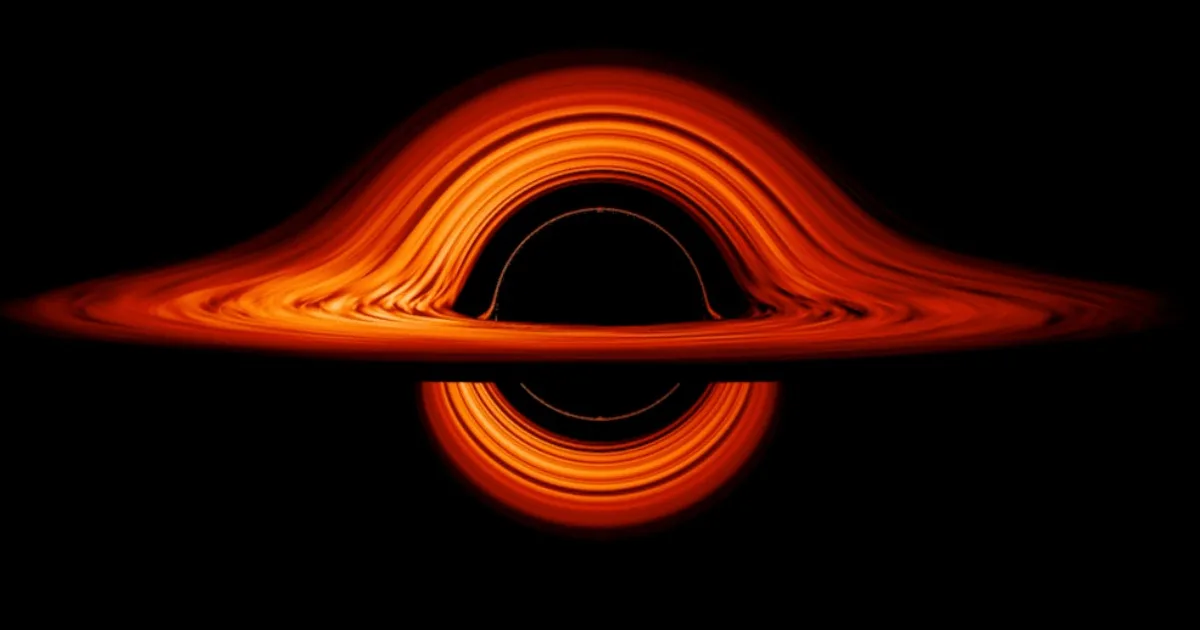
How black holes can stretch, flatten, and tear stars
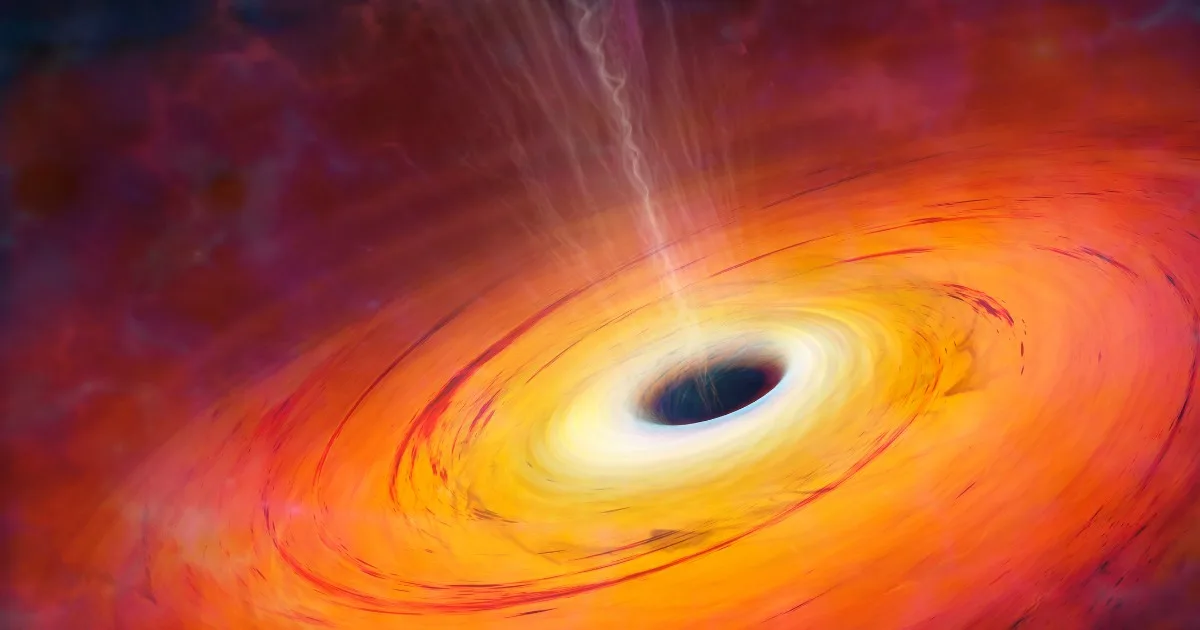
IMAGE SOURCE: NASA’S GODDARD SPACE FLIGHT CENTER/JEREMY SCHNITTMAN

How black holes can stretch, flatten, and tear stars

Since the 18th century, scientists had speculated about the existence of "dark stars" whose gravity is so intense that light cannot escape. However, it was not until 1964 that astronomers detected powerful X-rays emanating from Cygnus X-1, a binary system in the Milky Way that provided the first observational evidence of what we know as a 'black hole'. Because these collapsed stars possess an intense gravitational field, any planet or star or other object wandering too close to it is subjected to extreme physical distortion, and squeezed, flattened, or violently stretched.

The illustration shows a turbulent disc of gas around a black hole forming a double-humped appearance due to intense gravity.

2 / 6
What would happen if Earth got close to a black hole?
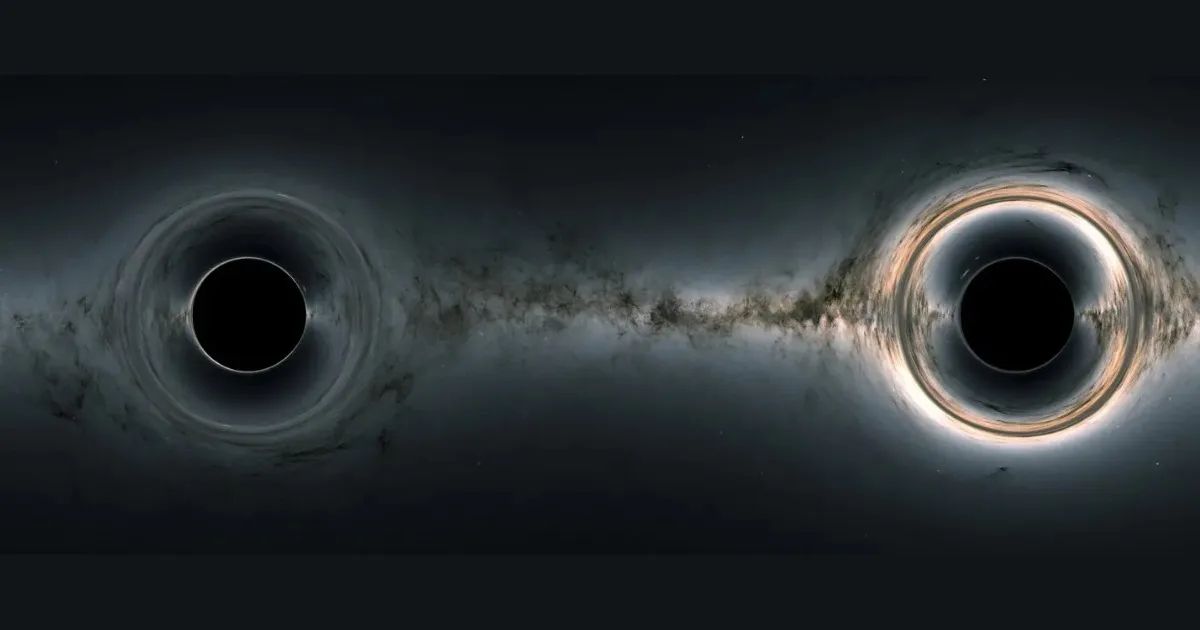
IMAGE SOURCE: MARK GARLICK/SCIENCE PHOTO LIBRARY/GETTY IMAGES

What would happen if Earth got close to a black hole?

Although scientists have made major strides in their understanding of black holes following the discovery of Cygnus X-1 in 1964, the event horizon of a black hole—the boundary beyond which no light can escape—makes direct observation of these cosmic monsters notoriously difficult. To work around this, scientists therefore study the devastating impact black holes have on their surrounding matter, which naturally leads to a terrifying, hypothetical question: What would happen if the Earth were to be in the proximity of a black hole? Well, our home planet would become subject to violent tidal forces born from a black hole's immense gravity, and would eventually and inevitably reach the point of no return—the event horizon. Earth would also eventually be stretched and ripped apart in a process called spaghettification, but whether this takes place inside our outside the event horizon would depend on the mass of the black hole.

The image shows a computer-generated model of a black hole.

3 / 6
What the Earth's journey towards a black hole would look like
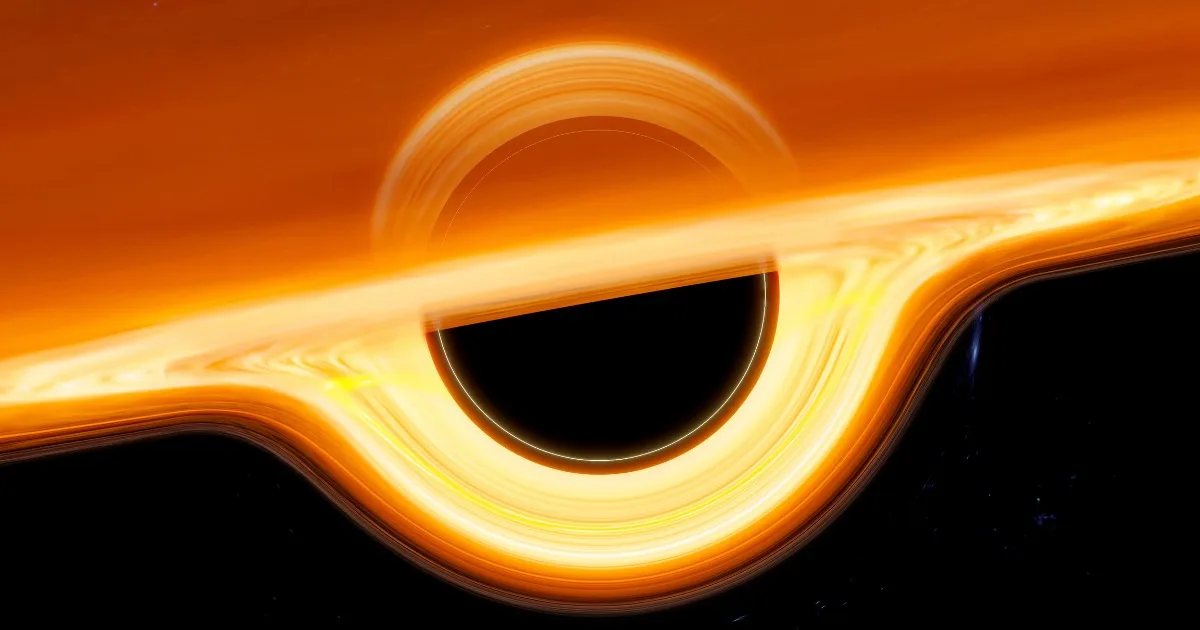
IMAGE SOURCE: NASA

What the Earth's journey towards a black hole would look like

The specific effects of a black hole on its surrounding matter depend largely on its mass, which can range from a few times the mass of the Sun to many billions of solar masses. Generally speaking, however, when an object gets close enough to a black hole, it crosses a critical boundary where maintaining a stable orbit become impossible. Past this point, the object thus enters a rapid plunge phase, falling past the event horizon and down towards the singularity—the center of the black hole where matter is crushed to a point of infinite density and where our current laws of physics break down.

The image released by NASA shows an illustration of a black hole.

4 / 6
Tidal forces from a black hole would rip apart the Earth
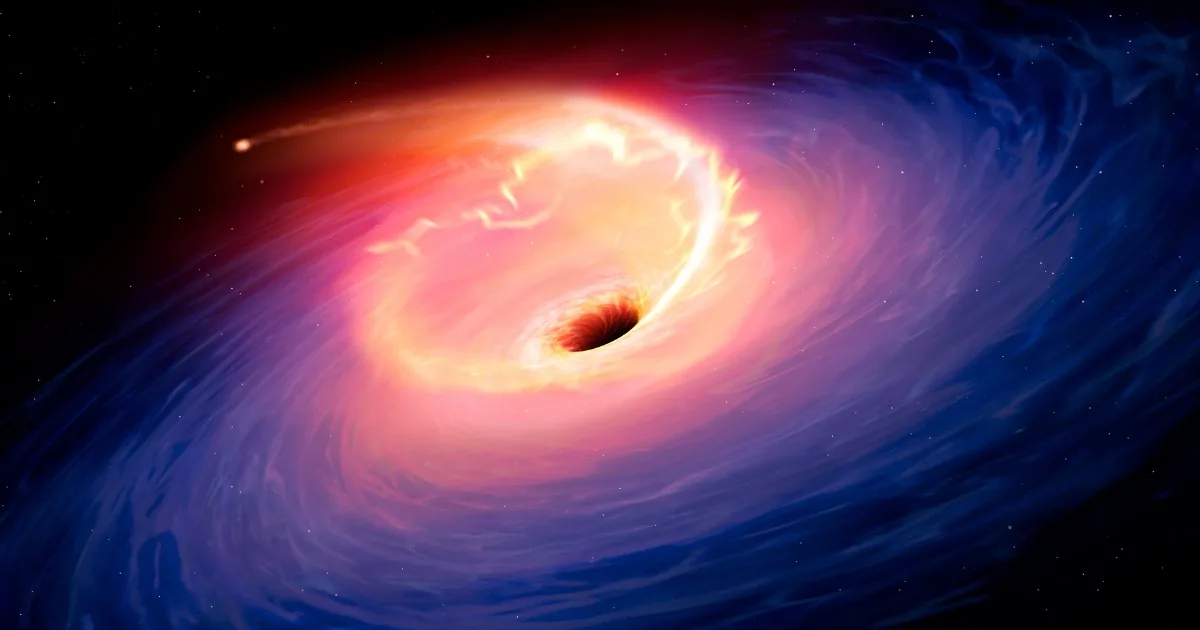
IMAGE SOURCE: MARK GARLICK/SCIENCE PHOTO LIBRARY/GETTY IMAGES

Tidal forces from a black hole would rip apart the Earth

Tidal forces occur because gravity weakens at a distance and the side of an object close to a massive body feels a stronger gravitational pull than the side facing away. This can be seen on Earth, where the Moon's gravitational pull is gentle enough to just shift the oceans, causing high and low tides. Near a black hole, however, tidal forces become far more violent.

The closer an object gets to a black hole, the stronger these effects become. As it approaches, the side of the object closer to the black hole feels a much sharper gravitational pull than the side farther away. This difference creates extreme tidal forces that simultaneously stretch the object lengthwise and crush it sideways. While these destructive forces can tear a planet like Earth apart, exactly where this happens depends on the black hole's mass: stellar-mass black holes can spaghettify objects as they approach the event horizon, while supermassive black holes are likely to swallow objects whole and destroy them inside, as they approach the center.

This image shows an illustration of a black hole.

5 / 6
How gravity slows time near a black hole
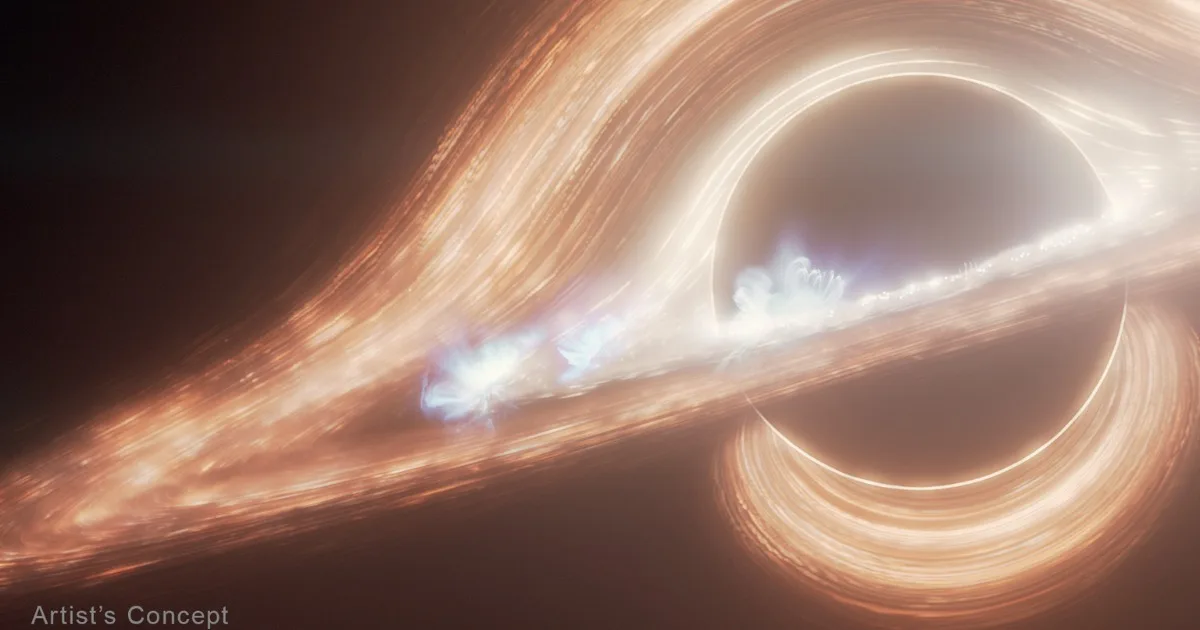
IMAGE SOURCE: MARK GARLICK/SCIENCE PHOTO LIBRARY/GETTY IMAGES

How gravity slows time near a black hole

According to Albert Einstein's theory of relativity, near a black hole, time passes at a different rate. The black hole’s extreme mass and its immense gravity warps the fabric of space and time, causing time to move more slowly the closer you get to it—a phenomenon known as time dilation.

Because time is relative, an traveler falling into a black hole would feel time passing perfectly normally. However, to an outside observer watching from a safe distance, the traveler would appear to move slower and slower as they approach the event horizon. Right at the boundary, the traveler would seem to become frozen in place, and this frozen snapshot of the object would eventually fade to black due to a phenomenon known as gravitational redshift, which stretches the light coming off the falling traveler in this case.

This image is an illustration portraying a black hole shredding a star in a 'tidal disruption event,' capturing the moment the star gets torn apart by extreme gravity.

6 / 6
How would Earth behave in a black hole accretion disk?
IMAGE SOURCE: NASA, ESA, CSA, RALF CRAWFORD (STSCI)

How would Earth behave in a black hole accretion disk?

Many black holes are surrounded by an accretion disk—a swirling halo of gas and dust. As this material spirals inward toward the event horizon, it accelerates to near-light speeds, and the consequent immense friction between these orbiting particles superheats the disk to millions of degrees, causing it to emit X-ray radiation. Thus, if Earth were to enter an active accretion disk around a black hole, the planet would not survive long enough to undergo spaghettification. Before tidal forces could even begin to tear Earth apart, the sheer kinetic energy and frictional heat within the disk would instantly vaporize our home world.

This image is an artist’s concept portraying Sagittarius A, the supermassive black hole at the center of our Milky Way. The black hole’s intense gravity bends light from the far side of its accretion disk, making it appear to fold above and below the shadow. NASA’s James Webb Space Telescope (JWST) recently detected a constant stream of flares coming from this disk.

MORE GALLERIES

The moon could get its first residents by the 2030s; here's what Elon Musk, Jeff Bezos, and Sam Altman are saying 6

The moon could get its first residents by the 2030s; here's what Elon Musk, Jeff Bezos, and Sam Altman are saying

Aug 24, 2026
Could we save Earth when the Sun dies? A scientist says there could be a way 7

Could we save Earth when the Sun dies? A scientist says there could be a way

Aug 24, 2026
Top cosmic mysteries NASA’s powerful new Nancy Grace Roman Space Telescope could solve 5

Top cosmic mysteries NASA’s powerful new Nancy Grace Roman Space Telescope could solve

Aug 23, 2026
What if the universe isn’t actually speeding up? Oxford physicist offers a new explanation 5

What if the universe isn’t actually speeding up? Oxford physicist offers a new explanation

Aug 22, 2026
Manhattan on Mars? UFO researcher claims the Red Planet had an ancient city 4

Manhattan on Mars? UFO researcher claims the Red Planet had an ancient city

Aug 21, 2026
Strange ‘jellyfish’ object spotted on Mars in NASA’s Curiosity image. Is it a UFO? 5

Strange ‘jellyfish’ object spotted on Mars in NASA’s Curiosity image. Is it a UFO?

Aug 21, 2026
New Pentagon UFO files: How close are we to alien life? Ex-NASA official explains 5

New Pentagon UFO files: How close are we to alien life? Ex-NASA official explains

Aug 21, 2026
Love from Mars: NASA captures surreal heart-shaped landscapes on the Red Planet 7

Love from Mars: NASA captures surreal heart-shaped landscapes on the Red Planet

Aug 20, 2026
Is the universe actually a simulation? One scientist says he's found evidence 5

Is the universe actually a simulation? One scientist says he's found evidence

Aug 19, 2026
Could aliens be communicating like fireflies? This study challenges human bias in ETI search 4

Could aliens be communicating like fireflies? This study challenges human bias in ETI search

Aug 19, 2026
Could Mars be our next home? Five strange facts about the Red Planet that will make you rethink 6

Could Mars be our next home? Five strange facts about the Red Planet that will make you rethink

Aug 18, 2026
Harvard scientist Avi Loeb says Earth may be a North Sentinel island adrift in a sea of spacefaring aliens 4

Harvard scientist Avi Loeb says Earth may be a North Sentinel island adrift in a sea of spacefaring aliens

Aug 18, 2026
This is what living on NASA's future moon base could actually look like 5

This is what living on NASA's future moon base could actually look like

Aug 17, 2026
"There is an agreement between the U.S. government and aliens": Former Israeli space security chief's wild claim 5

"There is an agreement between the U.S. government and aliens": Former Israeli space security chief's wild claim

Aug 17, 2026
Astronomers just confirmed the first black hole star: "We’re seeing pure black hole star light" 5

Astronomers just confirmed the first black hole star: "We’re seeing pure black hole star light"

Aug 15, 2026
When a mystery cone-shaped object on Mars ignited a public feud between a Harvard scientist and NASA 5

When a mystery cone-shaped object on Mars ignited a public feud between a Harvard scientist and NASA

Aug 14, 2026
There may be a second universe out there, and it could be why anything exists at all 5

There may be a second universe out there, and it could be why anything exists at all

Aug 13, 2026
Harvard professor Avi Loeb wants UFO “biologics” as new files raise more questions 5

Harvard professor Avi Loeb wants UFO “biologics” as new files raise more questions

Aug 13, 2026
The 2026 total solar eclipse in photos: Best shots of the historic event from August 12 7

The 2026 total solar eclipse in photos: Best shots of the historic event from August 12

Aug 13, 2026
What if déjà vu is a sign we're living inside a simulation? Here's what scientists say 5

What if déjà vu is a sign we're living inside a simulation? Here's what scientists say

Aug 12, 2026
Starlust.org is part of the Scale Content Inc. publishing group.

Google Source

About Us
Editorial Guidelines
Privacy Policy
Cookie Policy
Terms of Use
Contact Us
Link to Facebook
Link to Instagram

© Scale Content Inc. 1178 Broadway, 3rd Floor #3469, New York, NY 10001, United States