These 5 moons are the strangest in our solar system
Moons full of surprises
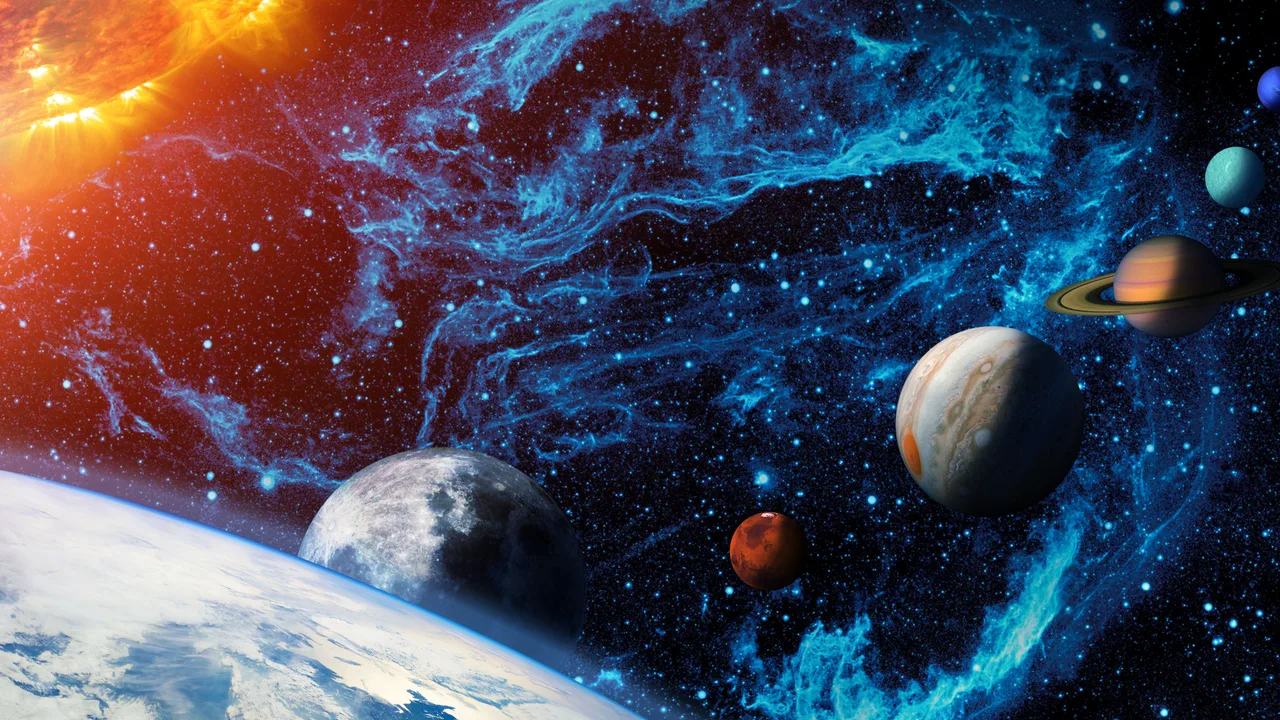
Our solar system is home to hundreds of known moons, and each one is unique in its own way. And some are so unusual they stand out as the strangest of them all. Even Earth’s natural satellite, the Moon, remains full of mysteries. Scientists believe that it was formed after a Mars-sized planet collided with early Earth. It’s also the fifth-largest satellite in our solar system. Let’s take a closer look at a few of the moons in our cosmic neighborhood that have really made an impression.
Io (Jupiter): a moon that never stops erupting
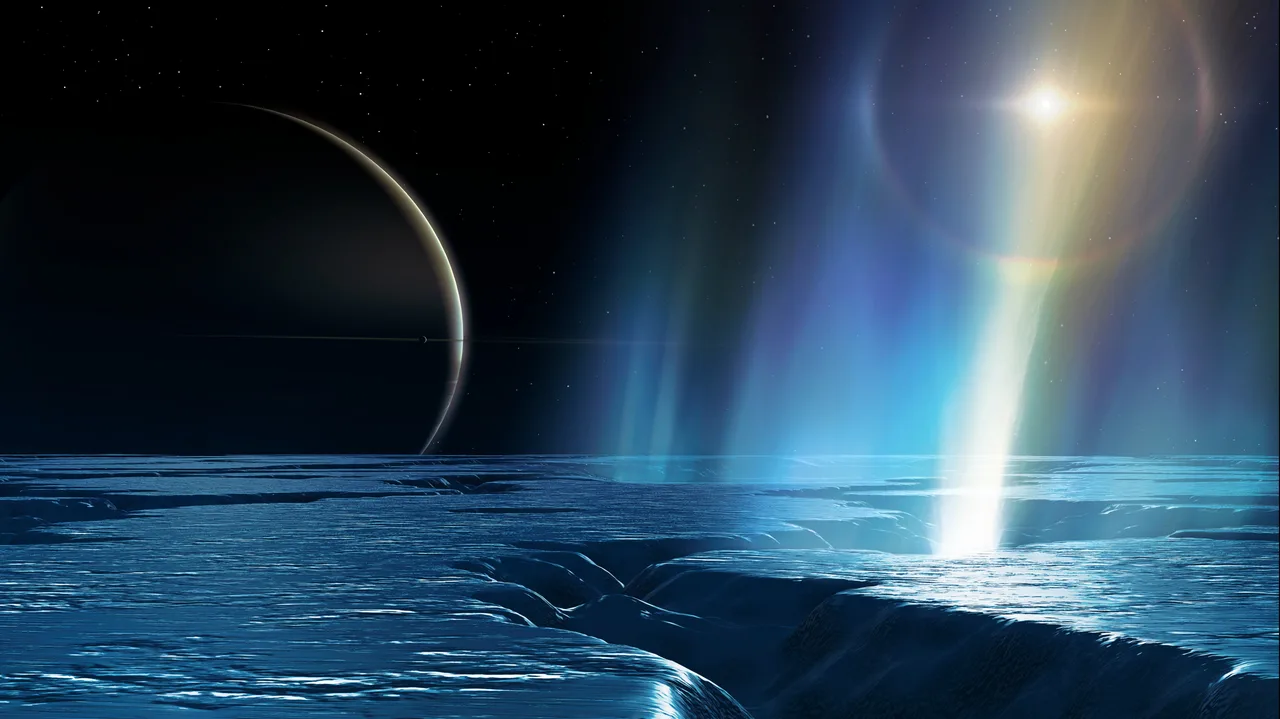
The first in the list is Io, the innermost of Jupiter's four Galilean moons. Its surface is full of sulfur, which gives it shifting patches of yellow, red, and brown. Io is the most volcanically active body in the solar system. Jupiter's gravity, combined with the pull from neighboring moons, keeps Io's orbit from settling into a perfect circle. The molten rock deep inside Io and the sulfur-based volcanism on its surface have together driven away any ice the moon once had. That's why Io stays mostly iceless, despite an average temperature of about -256 degrees Fahrenheit (-160 degrees Celsius).
Enceladus (Saturn): a moon hiding an ocean under the ice
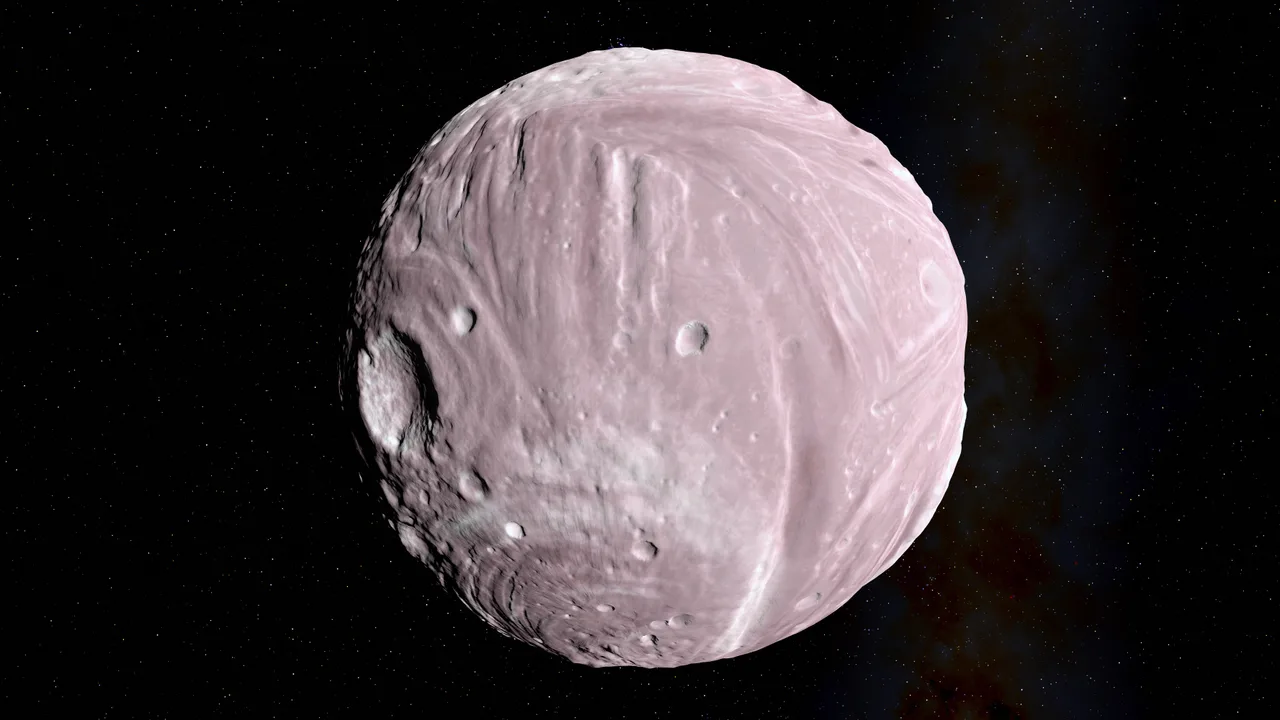
Enceladus is one of the strongest candidates in the search for extraterrestrial life. This moon should have frozen solid billions of years ago, like many of Saturn’s moons. But it's not the case. The reason is that, even though it's only 313 miles across, tidal forces from a gravitational tug of war between Saturn and the larger moon Dione keep its interior warm. Plus, NASA’s Cassini probe confirmed that water exists beneath the moon's icy crust. This discovery was made when the probe flew directly through a plume of water ice erupting from Enceladus’s southern hemisphere.
Miranda (Uranus): a surface that doesn't match itself
Voyager images of Miranda show us a surface that has no consistent pattern. It has heavily cratered terrain next to smoother-looking areas. The surface has a pattern of concentric ovals resembling a racetrack, while elsewhere, parallel V-shaped ridges form a chevron-like scar. The more likely explanation for this is tidal stretching. Miranda’s orbit once aligned repeatedly with the larger moon Umbriel, and that pulled its orbit into an ellipse and caused extreme tidal forces. This might have rearranged the surface before the two moons eventually moved again.
Hyperion (Saturn): a moon that tumbles instead of spins
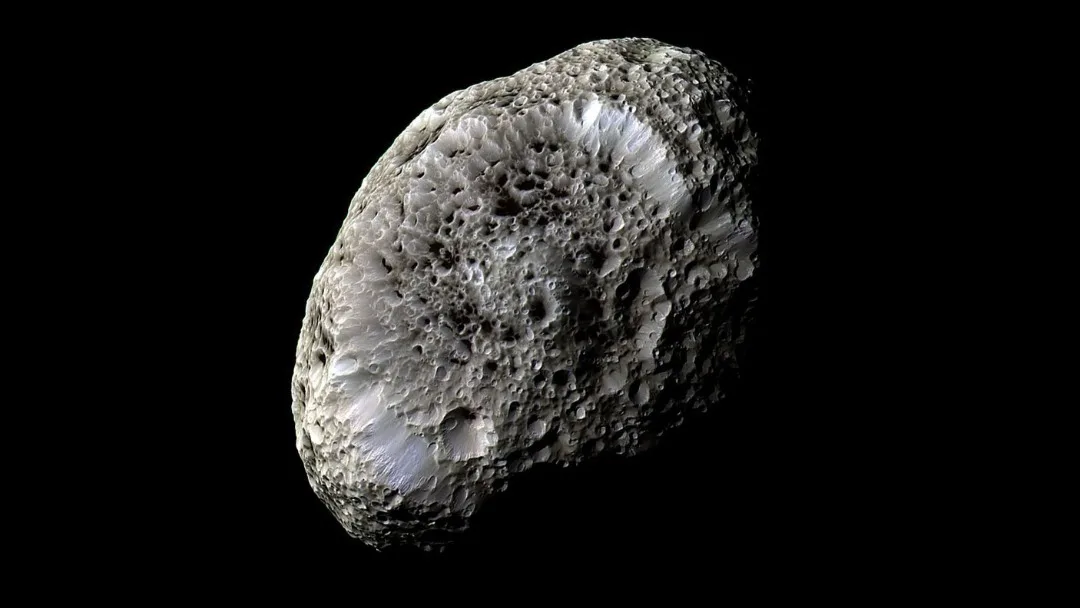
Next up is Hyperion, Saturn’s moon. What makes it so strange is its surface, which looks like a sponge covered in dark pits rimmed by sharp, bright ridges of rock and ice. It was the first non-spherical moon ever discovered. And instead of following a stable rotation, it tumbles chaotically with a constantly wobbling axis. Hyperion has a density of just 55% that of water, which means much of its interior is empty space. One theory suggests that Hyperion may be the surviving remnant of a larger satellite between Titan and Iapetus. It was largely destroyed by a collision with a large comet, and the material that survived in a stable orbit eventually came together to form Hyperion as we know it today.
Europa (Jupiter): an entire sea beneath the surface
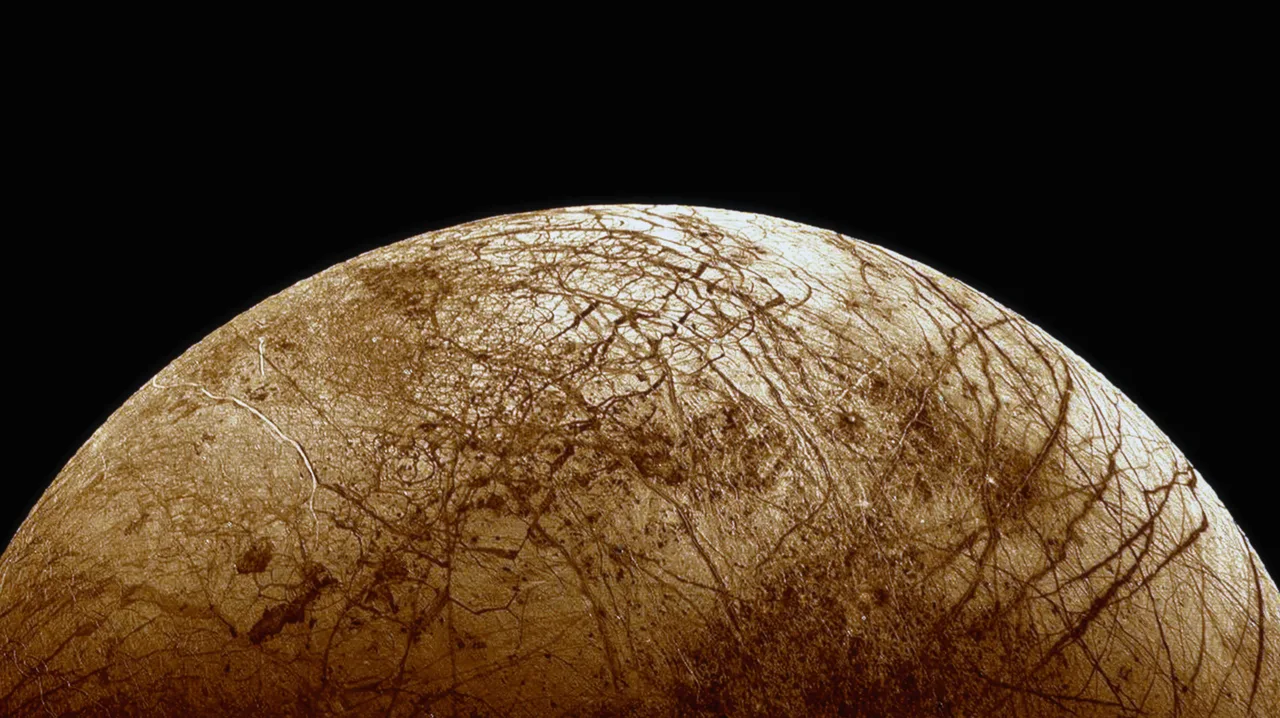
While Io is a world full of volcanic activity, Europa is one that holds more than twice the volume of water in all of Earth’s oceans combined. On top of that, it’s among the most promising places in our solar system where we can find present-day environments suitable for some form of life. NASA’s Europa Clipper is currently on its way to test whether there are places below this moon’s surface that could support life. As per NASA’s official website, “the spacecraft will travel 1.8 billion miles (2.9 billion kilometers) to reach Jupiter in April 2030. It will orbit Jupiter and conduct 49 close flybys of Europa."