Scientists think advanced civilizations like ours may not last long—it may explain the Great Silence
Where are the aliens? Fermi Paradox and its implications

Despite the immense vastness of the cosmos, the lack of contact with intelligent alien life has puzzled scientists for decades. Famously known as the ‘Fermi Paradox,’ named after Italian atomic physicist Enrico Fermi, the question of why we have not yet encountered life remains unanswered. What could be the reason behind this 'Great Silence'?
According to a new study, researchers have calculated a statistical upper bound for advanced technological civilizations like ours, suggesting they might survive for no more than 5,000 years. This could be the unsettling answer to the Fermi Paradox: we haven’t made contact because the window of time civilizations overlap is simply too narrow.
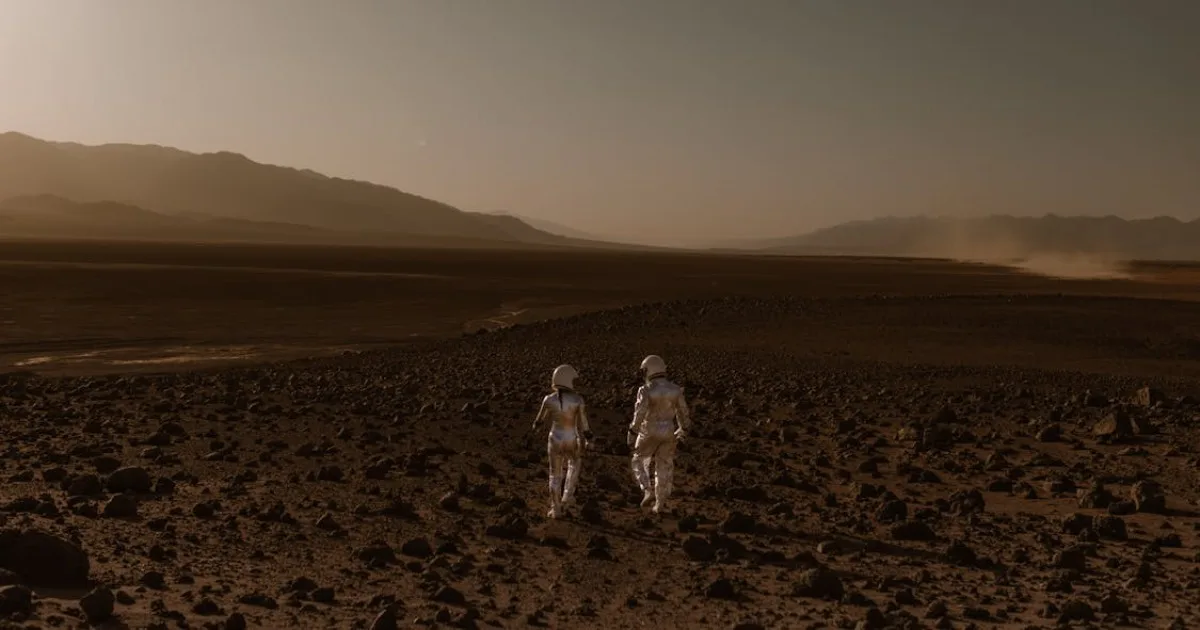
The image shows an illustration of two imaginary astronauts walking on a Mars-like terrain.
The universe should be teeming with life, but...

Named after Italian physicist Enrico Fermi, the paradox arises from a simple question: “Where is everybody?”
While our galaxy consists of hundreds of billions of stars, the new study narrows down the number of habitable, Earth-like planets to roughly one million. Scientists believe that statistically, life should have evolved across these worlds.
However, despite our best efforts to scan the universe for cosmic neighbours, no signs of alien life or engineered objects have been detected till date.
The image shows Enrico Fermi inside his laboratory.
New study looks at longevity of advanced alien civilizations
The latest study takes the Drake equation as its foundation. Developed in 1961, the formula calculates the approximate number of active alien civilizations by multiplying variables like the number of habitable planets and the fraction of planets that could develop intelligent life.
However, Sohrab Rahvar and Shahin Rouhani from the Sharif University of Technology took a different route. Instead of guessing the number of civilizations, the duo inverted the equation to mathematically constrain their longevity—the specific variable known as 'L'.
The image shows pictures taken by Viking in 1976 showing elusive faces. These were picked up by the paranormal community, who tried to present the photographs as definitive proof of alien civilization on the red planet.
How long could technological alien civilizations last?
Rahvar and Rouhani used scientifically grounded values, adopting an estimate of a million Earth-like planets within the Milky Way and assuming life frequently emerges on them. By running the math against our lack of alien contact, the duo calculated that advanced civilizations can only have an estimated lifespan of 5,000 years before collapsing.
While humanity's civilizational roots stretch back 10,000 years, when agriculture was invented, our 'technological' civilization so to speak is only about 200 years old. This study hypothesizes that this severely limited longevity of technological civilizations like ours is the true answer to the ‘Great Silence.’
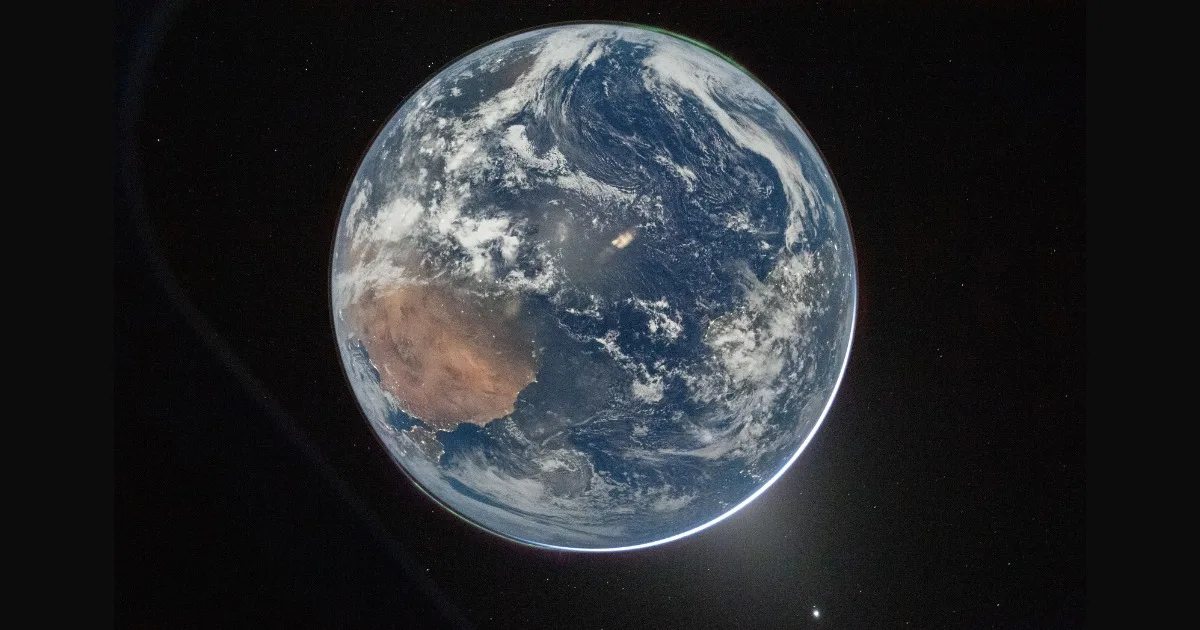
The image of the Earth was taken by Artemis II commander Reid Wiseman on April 2, 2026.
Three possible causes for extinction of advanced civilizations
According to the researchers, several major threats might result in the extinction of a technological species.
At number one is self-destruction: man-made pandemics, nuclear war, rogue artificial intelligence, or environmental collapse might rapidly destroy a civilization's technological capacity.
A second reason could be external cosmic catastrophes, such as asteroid impacts or gamma-ray bursts destroying entire planets.
Another, albeit less likely possibility, is that highly advanced civilizations may become so absorbed in their own artificial worlds that they simply lose interest in exploring the stars.
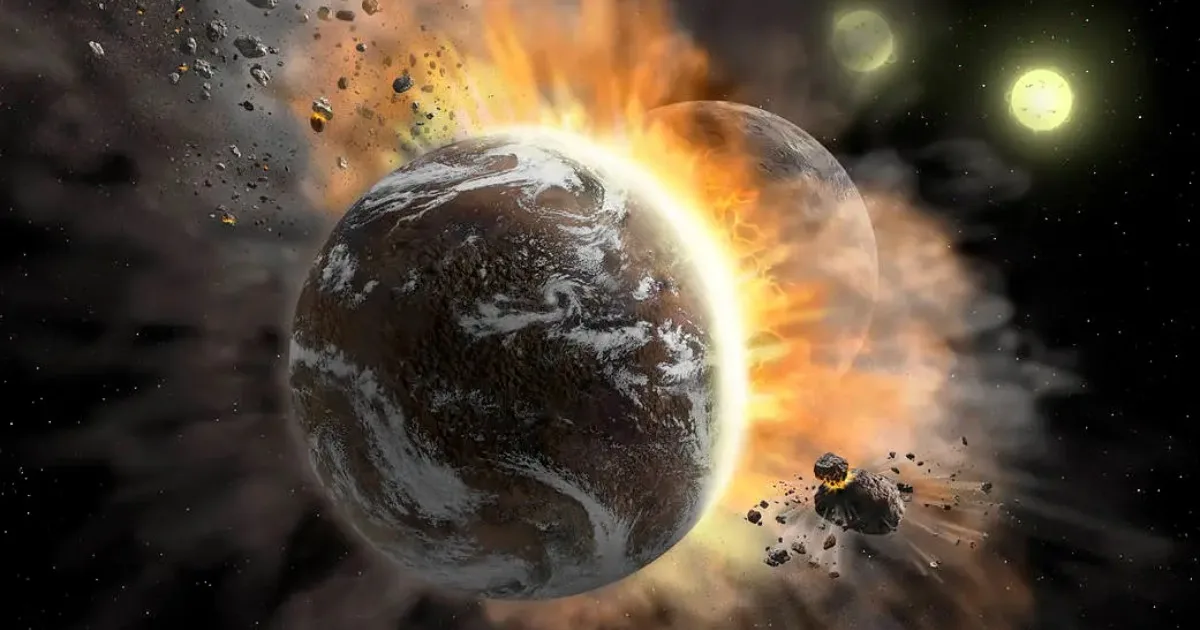
The image depicts a catastrophic collision between two rocky planetary objects. It's an artist's illustration where two exoplanets are colliding and are being reduced to debris.
How the Great Filter could explain the absence of alien civilizations

While these theories are in discussion, another theory comes into play: The Great Filter. Proposed in the late 1990s by economist Robin Hanson, the Great Filter is a theoretical bottleneck so formidable that almost no species survives it.
While the idea appears simple, it is terrifying. It states that there may be a nearly impossible evolutionary hurdle where most civilizations collapse, go extinct, or fail before becoming advanced enough to spread across the stars.
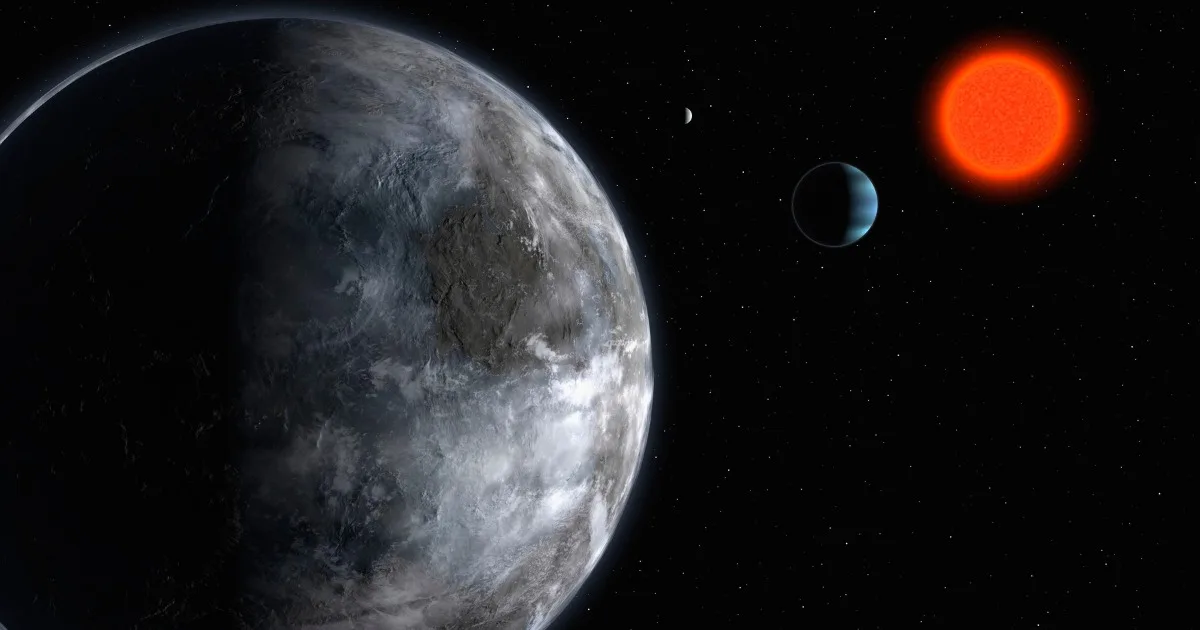
The image is of an artist's impression supplied by the ESO on April 25, 2007. It portrays the planetary system around the red dwarf, Gliese 581, showing what astronomers believe is the most Earth-like planet found outside our solar system to date.
A 100,000 years of silence?
The new study also highlights another massive hurdle: the speed of light. The researchers note that humanity's "past light cone" gives us a view of the galaxy spanning 100,000 years.
If long-lived alien civilizations were common, and they broadcasted electromagnetic radio waves at any point during this span, those signals would be reaching Earth right now. The total absence of these signals, as we have found so far, further tightens the mathematical constraints on alien lifespans.
The image is a digital illustration of an imaginary Unidentified Flying Object (UFO) over a country road.
Could our technological limits explain the lack of alien contact?
Amid this, renowned German physicist Sabine Hossenfelder has a different theory. She argues that the great universal silence is simply a result of our own technological limitations.
Hossenfelder theorizes that if faster-than-light (FTL) or quantum communication is being utilized by advanced species, aliens could be broadcasting all around us right now. We haven't made contact because our primitive radio telescopes simply lack the equipment to hear them.
This is an image of German physicist Sabine Hossenfelder from December 2023.