✕
Astronomy Constellation Deep Sky Objects Skywatching Instruments Spaceflight Videos
Home / Galleries

Neil deGrasse Tyson explains how Artemis missions would lay the groundwork for Mars exploration

Astronomy Jun 13, 2026
BY DISITA SIKDAR
Neil deGrasse Tyson at "William Shatner: You Can Call Me Bill" New York screening at Alice Tully Hall on March 17, 2024 (L) and Orion in the Spotlight (R) (Images Credits: John Lamparski/Getty Images and NASA)
Neil deGrasse Tyson reflects on how Artemis missions build lunar experience, reduce risks, and prepare humanity for future space exploration.
5 Photos
1 / 5
Space exploration should progress in stages

IMAGE SOURCE: NASA/EUGENE A. CERNAN

Space exploration should progress in stages

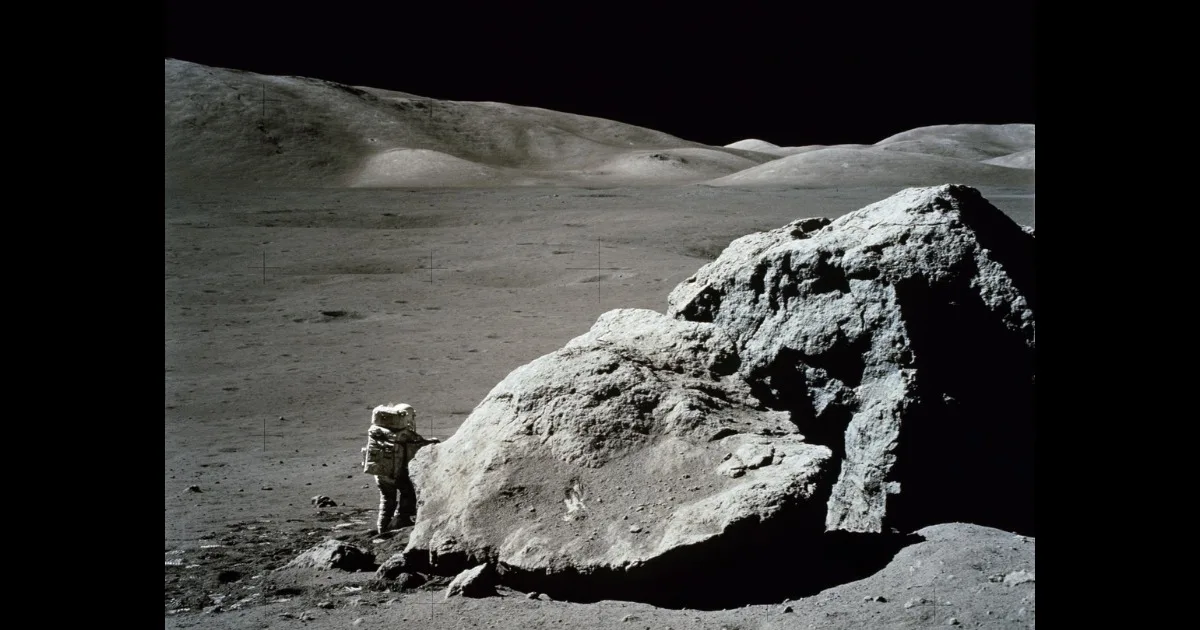
Neil deGrasse Tyson argued that major space missions should be planned and built on previous achievements rather than skipping steps. Drawing on the Apollo era, he noted that each mission expanded on lessons learned from earlier flights, allowing engineers and astronauts to identify problems and improve safety before attempting more ambitious goals.

Sharing his perspective, Tyson stated, “If we remember the Apollo era, every mission was an increment on the previous mission for safety reasons, for familiarizing ourselves with something we've never done before, you don't want to just jump out there and miss intermediate steps where you could have learned something or where smaller errors can be corrected and not be catastrophic.”

This image was captured during the Apollo 17 mission. In the picture, scientist-astronaut Harrison H. Schmitt can be seen standing right next to a huge, split lunar boulder during the third Apollo 17 extravehicular activity (EVA) at the Taurus-Littrow landing site. Eugene A. Cernan took the photograph.

2 / 5
Intermediate missions reduce risks
IMAGE SOURCE: RANDY BROOKE/GETTY IMAGES

Intermediate missions reduce risks

Tyson believes that jumping directly to a distant destination might increase the chances of failure. Instead, smaller, incremental planned missions provide opportunities to correct mistakes. Furthermore, they help provide more experience in environments humans have never explored before, preventing minor errors from turning into catastrophic ones.

This image shows Neil deGrasse Tyson at the 2025 Literacy Partners Evening of Readings & Gala Dinner on June 9, 2025, in New York City.

3 / 5
The Moon is not always the ideal launch base
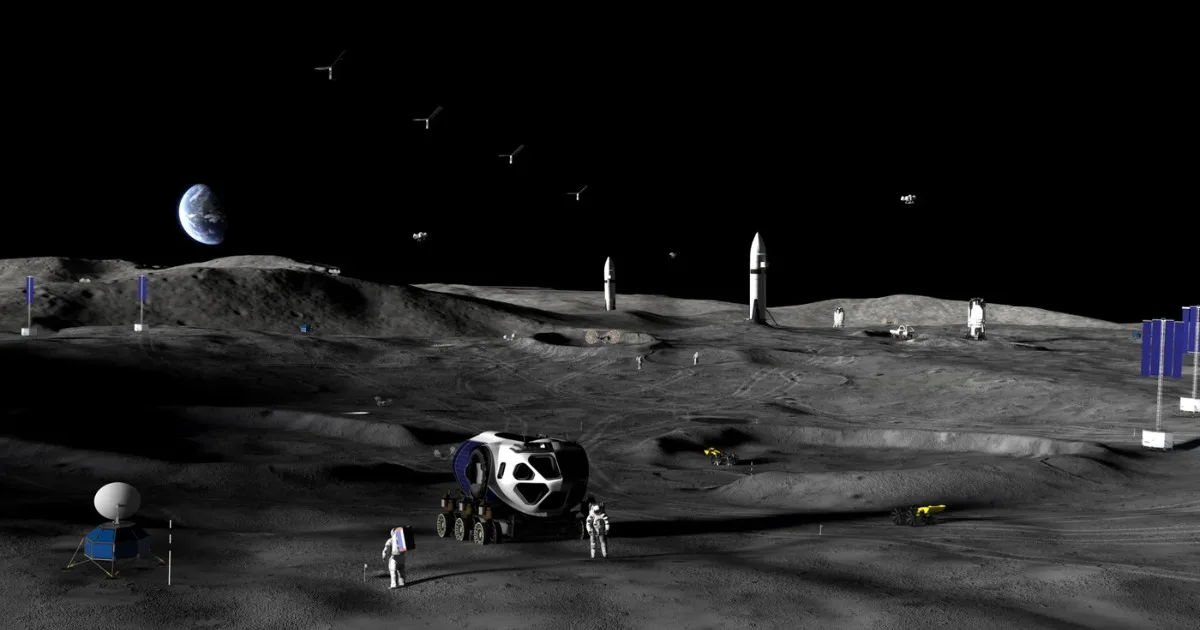
IMAGE SOURCE: NASA

The Moon is not always the ideal launch base

Tyson pointed out that an airless world like the Moon is not necessarily the best location from which to launch and return from other destinations. Spacecraft often need fuel to slow down and maneuver. That implies that a lunar base does not automatically offer advantages for every deep-space mission.

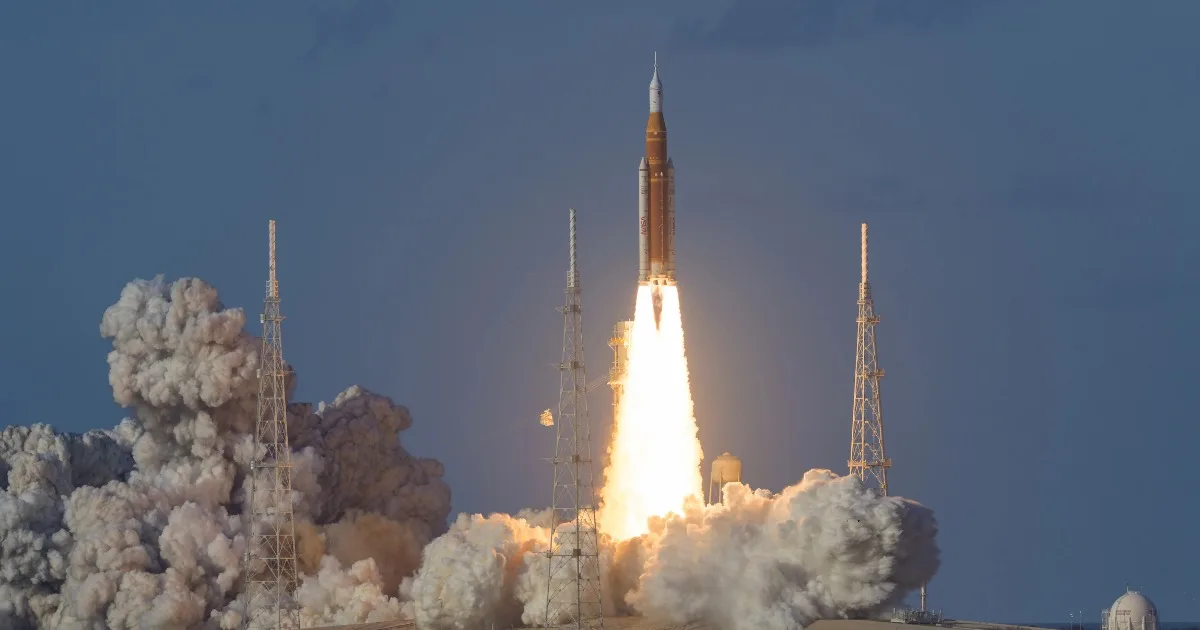
Before the Artemis II launch on April 1, 2026, Tyson shared this opinion and added, “It's not always the best place to call base if you're going to go places and then return. But if you're going to go to the Moon and stay, then fine.”

This image captures the moment NASA’s Space Launch System rocket lifted off from Launch Pad 39B at NASA’s Kennedy Space Center in Florida on Wednesday, April 1, 2026, carrying the Orion spacecraft and NASA astronauts Reid Wiseman, Victor Glover, Christina Koch, and Jeremy Hansen.

4 / 5
A lunar colony makes sense if humans plan to stay
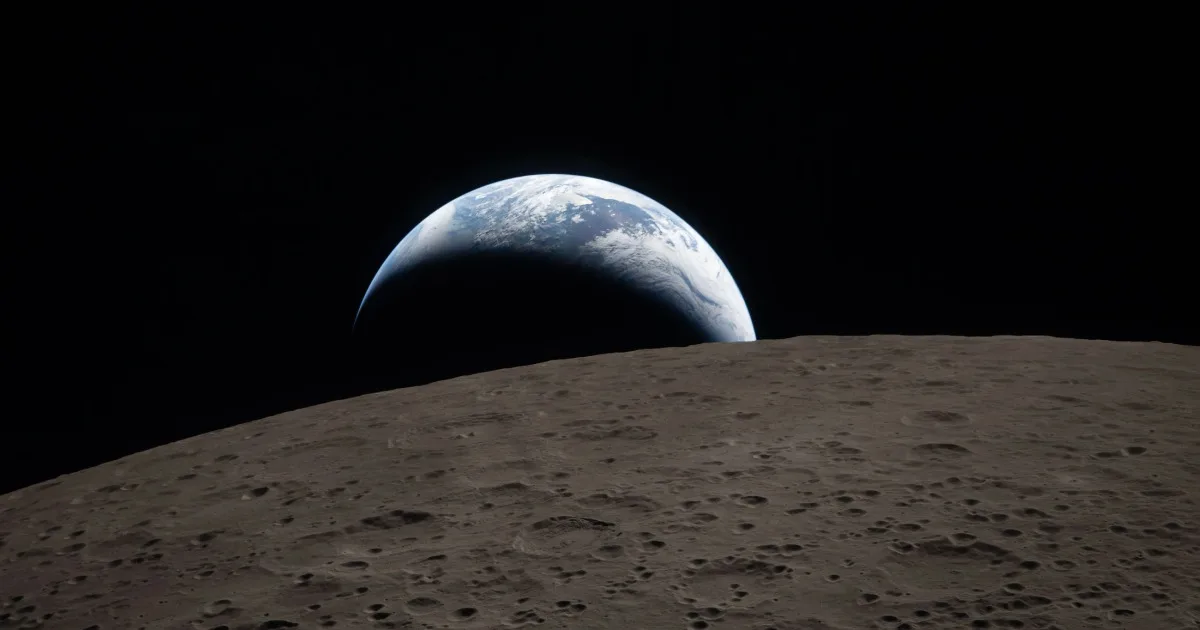
IMAGE SOURCE: NASA

A lunar colony makes sense if humans plan to stay

While questioning the Moon's value as a universal launch pad, Tyson said a permanent presence there would justify building infrastructure on the lunar surface. If the goal is long-term habitation rather than simply using the Moon as a transit point, establishing a colony becomes a logical step.


This NASA illustration depicts planned lunar surface exploration activities.

5 / 5
How the Moon's proximity is a major advantage
IMAGE SOURCE: NASA

How the Moon's proximity is a major advantage

Neil deGrasse Tyson emphasized that the Artemis program is looking into making space exploration far more accessible. The closeness of our only natural satellite allows missions to be completed relatively quickly and keeps the public engaged throughout the journey, unlike longer expeditions that may easily fade from public attention.

This image of Earthset was captured through the Orion spacecraft window during the Artemis II crew’s flyby of the Moon. Taken at 6:41 p.m. EDT on April 6, 2026, the Earth appears in a muted blue shade, with swirling clouds visible over the Australia and Oceania regions on Earth's day side.

MORE GALLERIES

Artemis III astronaut reveal: Landmark photos of NASA’s next crew heading toward lunar exploration 11

Artemis III astronaut reveal: Landmark photos of NASA’s next crew heading toward lunar exploration

Jun 10, 2026
NASA declares its Mars spacecraft MAVEN dead, but its legacy lives on 12

NASA declares its Mars spacecraft MAVEN dead, but its legacy lives on

Jun 6, 2026
What would happen if Earth got too close to a black hole? NASA has a terrifying answer 6

What would happen if Earth got too close to a black hole? NASA has a terrifying answer

Jun 4, 2026
James Webb uncovers dark matter shaping unseen cosmic web of the universe 7

James Webb uncovers dark matter shaping unseen cosmic web of the universe

Jun 3, 2026
Blue Moon 2026 in pictures: Stunning views of the rare lunar event and year's smallest full Moon 6

Blue Moon 2026 in pictures: Stunning views of the rare lunar event and year's smallest full Moon

Jun 1, 2026
Scientists thought a black hole forming before its galaxy was impossible — then James Webb spotted one 7

Scientists thought a black hole forming before its galaxy was impossible — then James Webb spotted one

May 29, 2026
Mars revealed like never before by NASA's Psyche spacecraft in breathtaking new images 6

Mars revealed like never before by NASA's Psyche spacecraft in breathtaking new images

May 28, 2026
NASA offers a fresh look at how astronauts could live at future Moon Base 12

NASA offers a fresh look at how astronauts could live at future Moon Base

May 27, 2026
Aliens may not be green creatures but purple beings 6

Aliens may not be green creatures but purple beings

May 26, 2026
Starship V3 launch: Spectacular photos of SpaceX’s most powerful rocket in flight 9

Starship V3 launch: Spectacular photos of SpaceX’s most powerful rocket in flight

May 25, 2026
Why Stephen Hawking warned humanity to leave Earth before it’s too late 8

Why Stephen Hawking warned humanity to leave Earth before it’s too late

May 24, 2026
Scientists think advanced civilizations like ours may not last long—it may explain the Great Silence 8

Scientists think advanced civilizations like ours may not last long—it may explain the Great Silence

May 23, 2026
'If it's all true... bring out the alien': Neil deGrasse Tyson demands hard evidence of alien life after UFO files release 5

'If it's all true... bring out the alien': Neil deGrasse Tyson demands hard evidence of alien life after UFO files release

May 22, 2026
Spacecraft already in space may help scientists find alien life 7

Spacecraft already in space may help scientists find alien life

May 21, 2026
10 breathtaking celestial spectacles that skywatchers must not miss in 2026 10

10 breathtaking celestial spectacles that skywatchers must not miss in 2026

May 19, 2026
6 upcoming space missions that could help humanity move beyond Earth 6

6 upcoming space missions that could help humanity move beyond Earth

May 18, 2026
Powerful words from NASA astronauts that still inspire the world today 8

Powerful words from NASA astronauts that still inspire the world today

May 16, 2026
“We should be prepared for aliens”: Neil deGrasse Tyson reacts to Pentagon UFO files 5

“We should be prepared for aliens”: Neil deGrasse Tyson reacts to Pentagon UFO files

May 15, 2026
The Pentagon has finally released the infamous UFO files—here's what they reveal 10

The Pentagon has finally released the infamous UFO files—here's what they reveal

May 12, 2026
Starlust.org is part of the Scale Content Inc. publishing group.

Google Source

About Us
Editorial Guidelines
Privacy Policy
Cookie Policy
Terms of Use
Contact Us
Link to Facebook
Link to Instagram

© Scale Content Inc. 1178 Broadway, 3rd Floor #3469, New York, NY 10001, United States