✕
Astronomy Constellation Deep Sky Objects Skywatching Instruments Spaceflight Videos
Home / Galleries

Incredible Moon mission facts the world still talks about

Astronomy May 12, 2026
BY DISITA SIKDAR
Astronaut John W. Young, commander of the Apollo 16, salutes the United States flag standing on the lunar surface during the first Apollo 16 spacewalk. (Credits: NASA)
Moon landing facts that still continue to surprise and fascinate space enthusiasts across the world today.
9 Photos
1 / 9
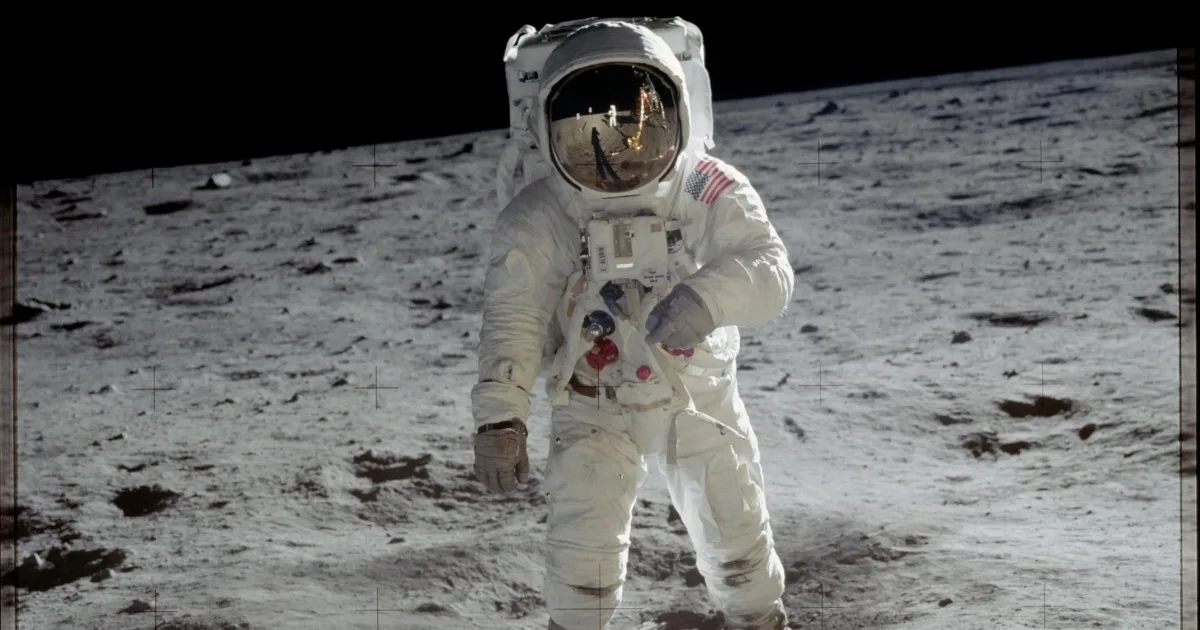
Neil Armstrong hiding in Buzz Aldrin’s golden visor
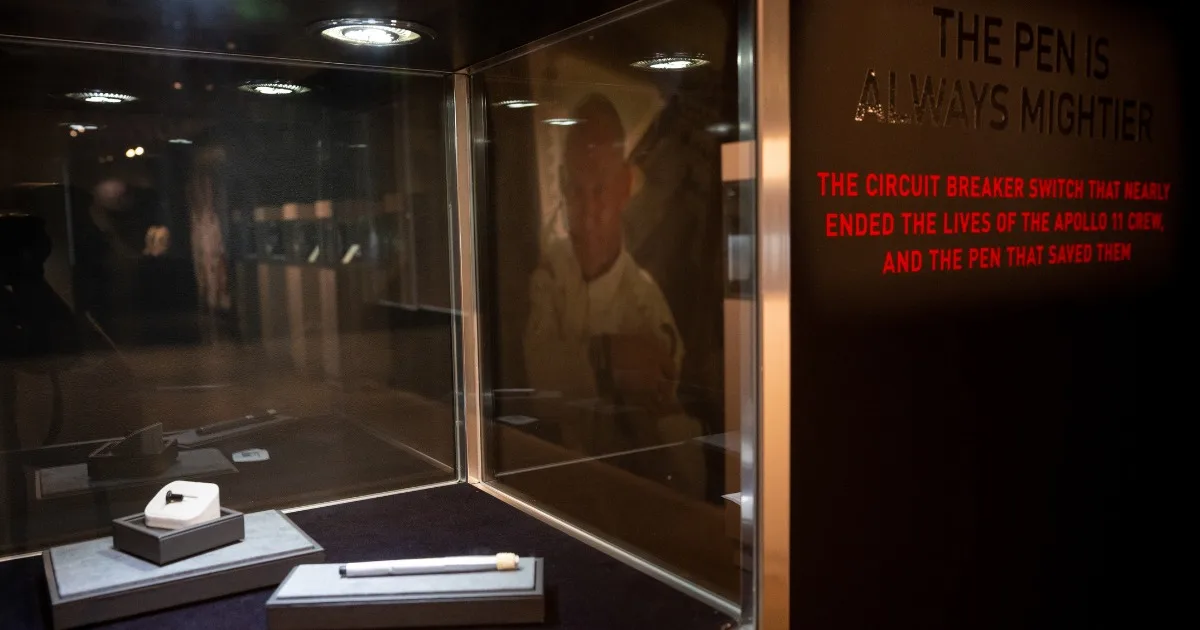
IMAGE SOURCE: NASA

Neil Armstrong hiding in Buzz Aldrin’s golden visor

During the Apollo 11 mission, after Neil Armstrong and Buzz Aldrin stepped on the Moon, Aldrin was photographed standing in front of the lunar module.

In the photograph, Armstrong can be spotted in Aldrin’s visor, clicking his image.

2 / 9
A broken circuit breaker nearly trapped astronauts on the Moon
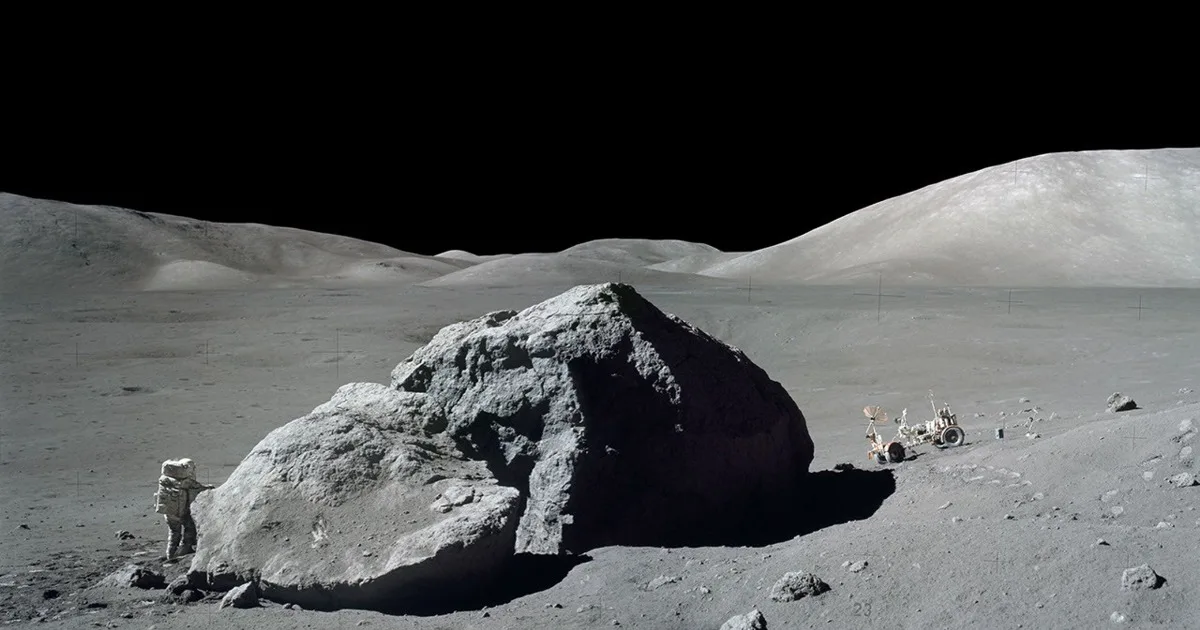
IMAGE SOURCE: ALEXI ROSENFELD/GETTY IMAGES

A broken circuit breaker nearly trapped astronauts on the Moon

The Apollo 11 Moon Landing mission almost ended in disaster when Buzz Aldrin and Neil Armstrong noticed that a crucial circuit breaker switch on Panel 16 had accidentally snapped off. But no matter who was responsible, the switch had to be put back into place for the ascent engine to ignite and take them back home. Recalling the incident, Aldrin wrote in his book Magnificent Desolation: The Long Journey Home from the Moon, “I looked closer and jolted a bit. There, on the dust on the floor on the right side of the cabin, lay a circuit breaker switch that had broken off.” Thankfully, a quick piece of improvisation from Aldrin saved the day, as he used a felt-tip pen to push the circuit breaker switch back into place.


This is the image of the circuit switch that nearly ended the lives of the Apollo 11 Crew and the pen that Armstrong and Aldrin used to fix the mechanism and lift off successfully.

3 / 9
Ancient lunar stones challenged Earth’s formation theories
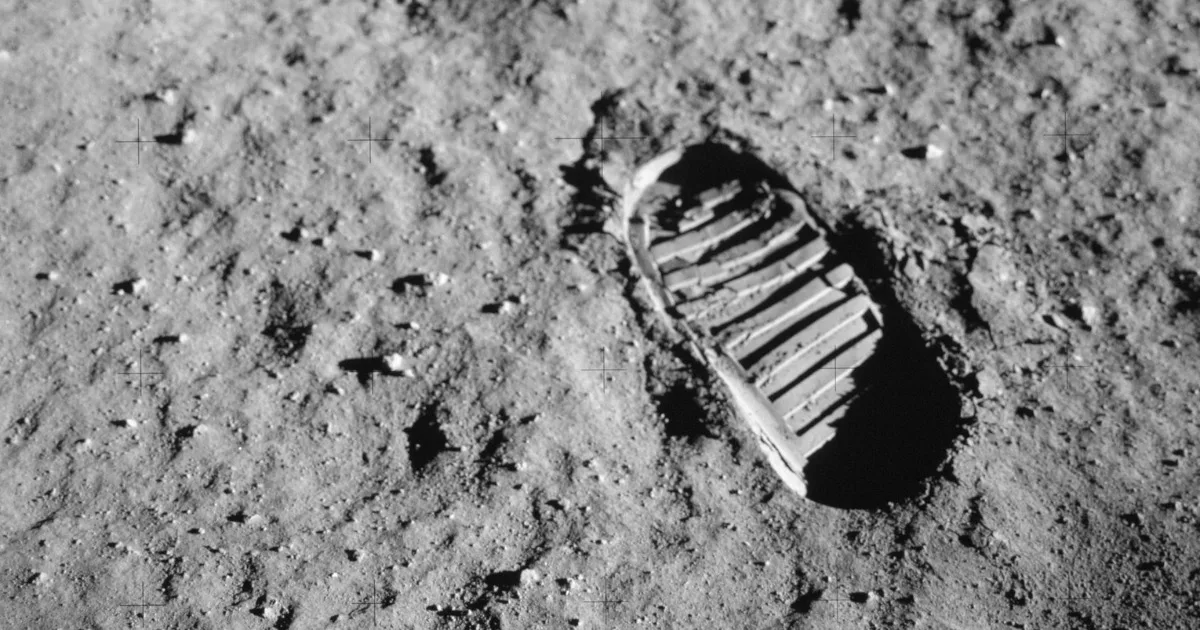
IMAGE SOURCE: NASA/EUGENE CERNAN

Ancient lunar stones challenged Earth’s formation theories

Moon rocks gathered during the Apollo missions fundamentally changed planetary science. It is because radiometric dating hinted that the samples (like the "Genesis Rock" from Apollo 15) were around 4.5 billion years old, which is significantly more than most of Earth's rocks. This age discrepancy forced scientists to rethink the history of our solar system and the formation of the Earth-Moon system. Adding to that, the rock samples brought back from the Moon showed that some Moon rocks are very similar to rocks found deep inside Earth, and these similarities suggested that the Moon was seemingly a part of Earth and later broke away millions of years ago. 

In the image, you can spot Harrison H. Schmitt standing next to a huge lunar boulder during the Apollo 17 mission at the Taurus-Littrow landing site. The image was captured on December 13, 1972.

4 / 9
Humanity’s first footprints on the Moon remain frozen in time
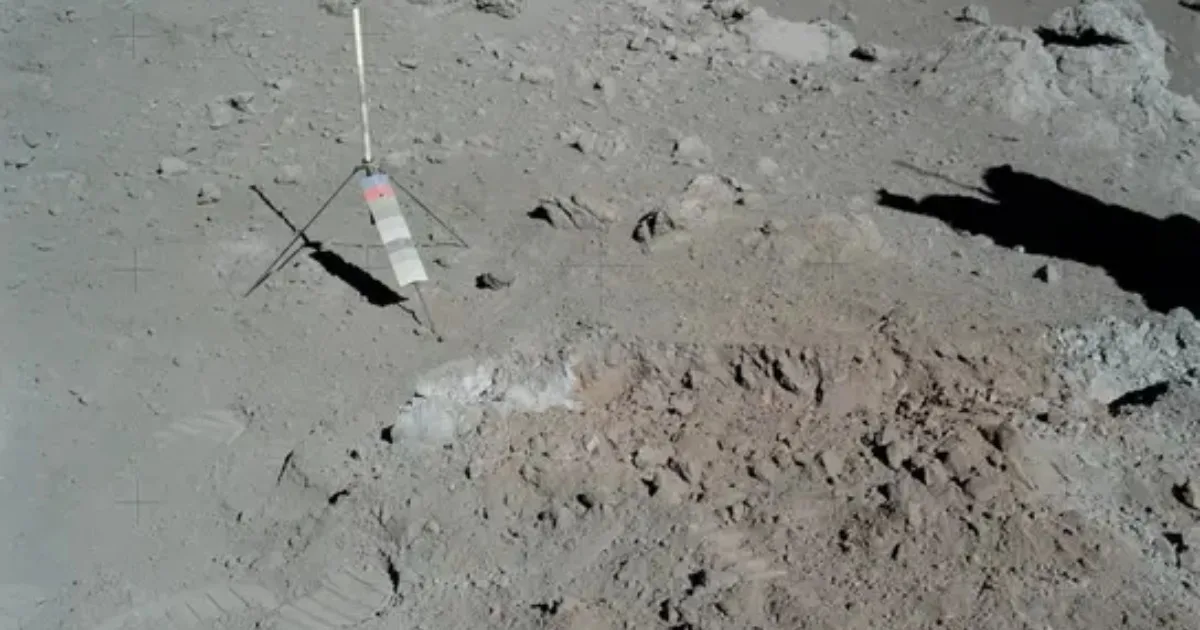
IMAGE SOURCE: NASA

Humanity’s first footprints on the Moon remain frozen in time

When Neil Armstrong and Buzz Aldrin landed on the Moon, they left their bootprints on the lunar surface. The Moon lacks an atmosphere, and thus it does not experience wind, rain, or flowing water. Without these earthly forces of erosion, the iconic bootprints will remain unaltered in the lunar dust for millions of years.

The image shows a close-up view of an astronaut's footprint on the lunar soil. It was captured with the 70mm lunar surface camera during the Apollo 11 mission.

5 / 9
Orange soil on the Moon baffles Apollo 17 astronauts
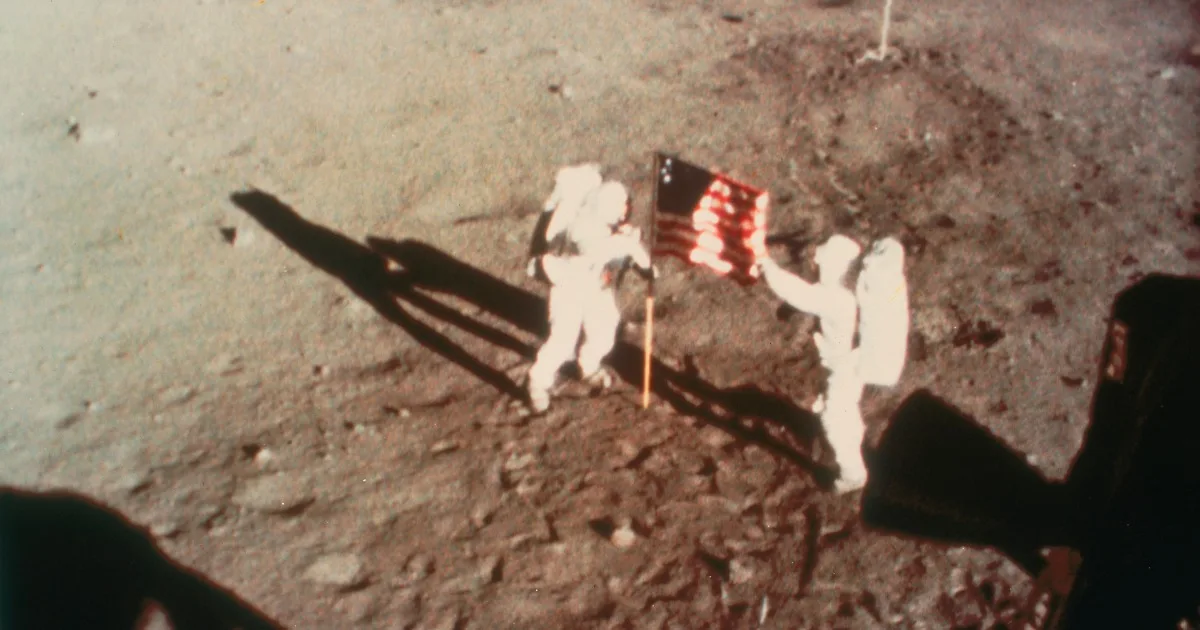
IMAGE SOURCE: NASA

Orange soil on the Moon baffles Apollo 17 astronauts

During the Apollo 17 mission in December of 1972, Harrison Schmitt and Eugene Cernan discovered orange soil on the rim of Shorty crater in the Valley of Taurus-Littrow. The unusual orange soil was composed of tiny reddish and black glass balls and fragments formed from volcanic lava droplets. These droplets cooled rapidly in flight about 3.5 billion years ago, creating volcanic ash rich in iron metal rather than ordinary lunar soil.

The image captures the area on the rim of Shorty crater, in the Valley of Taurus-Littrow, where the Apollo 17 astronauts discovered the orange lunar soil.

6 / 9
Moon walking made harder by bulky spacesuits
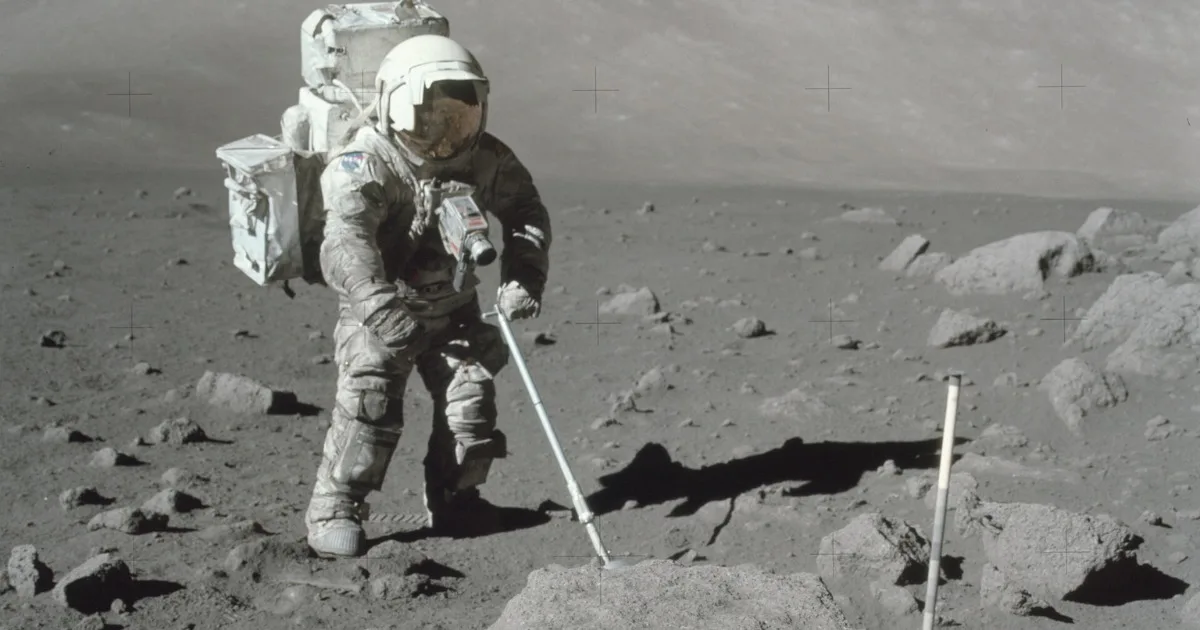
IMAGE SOURCE: OXFORD SCIENCE ARCHIVE/PRINT COLLECTOR/GETTY IMAGES

Moon walking made harder by bulky spacesuits

Moon's gravity is ⅙ of Earth's surface gravity. Owing to this reason, astronauts struggled to land or move on the lunar surface. More so because pressurized spacesuits acted like stiff balloons. So instead of walking, they try to hop on the lunar surface. 

This image was captured by Michael Collins from lunar orbit during Apollo 11. In the image, Neil Armstrong and Buzz Aldrin unfurl the American flag on the Moon on July 20, 1969.

7 / 9
Lunar dust shocked astronauts with its strange burning scent
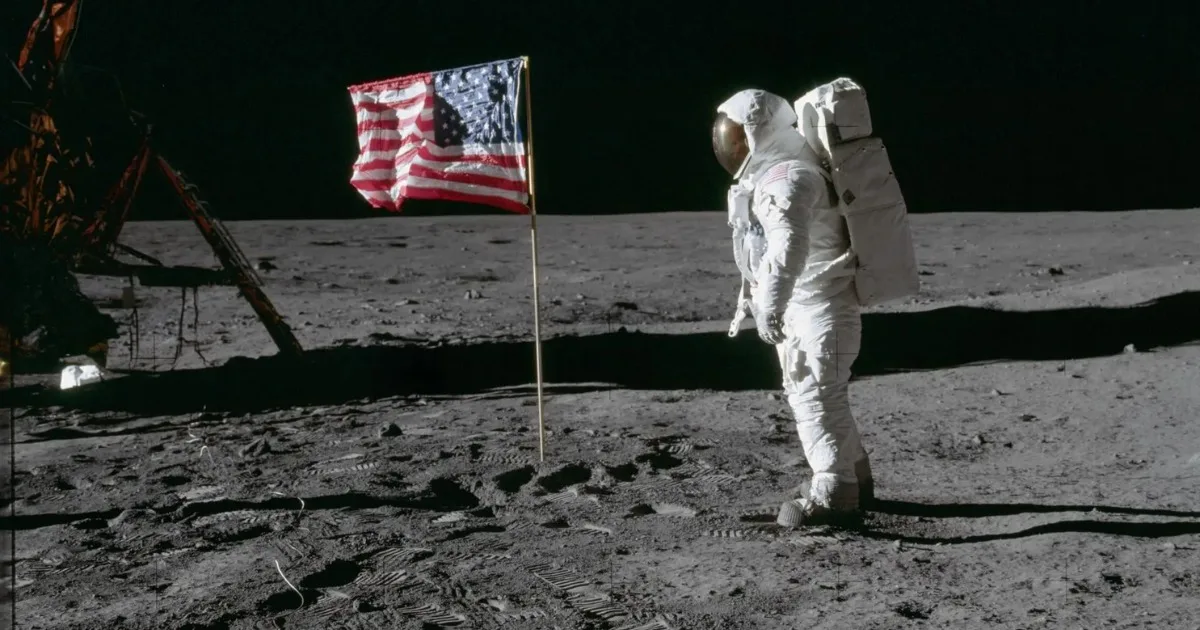
IMAGE SOURCE: NASA/ESA

Lunar dust shocked astronauts with its strange burning scent

Apollo astronauts, after stepping back inside their lunar module, shared how the lunar dust smelled like lunar gunpowder. Research, however, has revealed that the dust from the surface of the Moon does not contain gunpowder. However, they are highly reactive and instantly oxidize upon contact with the moist, oxygen-rich air inside the spacecraft.

The image captures Apollo 17 astronaut Harrison Schmitt collecting a soil sample from the lunar surface on December 13, 1972. During the process, Schmitt’s spacesuit was coated with lunar dust.

8 / 9
The U.S. flags on the Moon are almost certainly not as bright as they once were
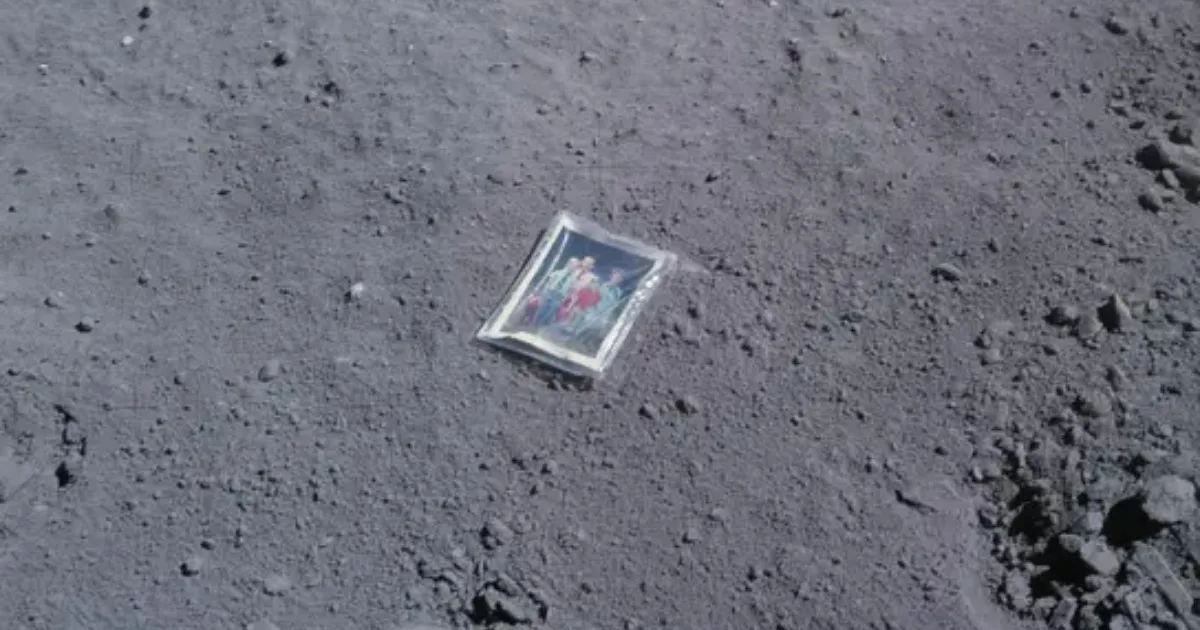
IMAGE SOURCE: NASA

The U.S. flags on the Moon are almost certainly not as bright as they once were

The flags that were planted on the lunar surface may have all turned white. It is probably because the presence of solar radiation has bleached them. The Moon lacks an atmosphere or ozone layer, so the planted flags had to endure the radiation for years, as a result of which the colors may have almost certainly faded away.  

The image was captured by Neil Armstrong during the Apollo 11 mission when Buzz Aldrin was standing beside the planted US flag on the lunar surface.

9 / 9
Apollo 16 left love frozen on the Moon’s surface
IMAGE SOURCE: NASA

Apollo 16 left love frozen on the Moon’s surface

Back on April 16, 1972, Charles Duke got on board the Apollo 16 as the Lunar Module pilot. Becoming the youngest person to walk on the lunar surface, Duke wanted to make his family a part of the mission, so the NASA astronaut left a family photo on the moon as a wholesome gesture towards his loved ones. The picture had his wife Dorothy, sons Thomas and Charles Duke III, and Duke himself.

The picture shows the Duke family photograph lying on the surface of the Moon, which was captured before they boarded the lunar module again during Apollo 16.

MORE GALLERIES

Cosmonaut spent months in space—by the time he returned, his country was gone 9

Cosmonaut spent months in space—by the time he returned, his country was gone

May 11, 2026
Astronauts who almost never made it back home 8

Astronauts who almost never made it back home

May 9, 2026
Iconic space photos captured by astronauts and the incredible stories behind them 7

Iconic space photos captured by astronauts and the incredible stories behind them

May 8, 2026
Rare Artemis II photos reveal the Moon’s stunning hidden far side like never before 7

Rare Artemis II photos reveal the Moon’s stunning hidden far side like never before

May 7, 2026
These Nebula images from 2026 will change how you see space forever 6

These Nebula images from 2026 will change how you see space forever

May 6, 2026
Artemis II astronauts visit Nasdaq Marketside, ring the closing bell 4

Artemis II astronauts visit Nasdaq Marketside, ring the closing bell

May 5, 2026
NASA releases mind-boggling images of the Moon from Artemis II mission 5

NASA releases mind-boggling images of the Moon from Artemis II mission

May 4, 2026
SpaceX Crew-13 seen training for the first time post NASA announcement 7

SpaceX Crew-13 seen training for the first time post NASA announcement

May 1, 2026
President Trump welcomes the Artemis II crew to the White House after their historic Moon mission 10

President Trump welcomes the Artemis II crew to the White House after their historic Moon mission

Apr 30, 2026
Hubble Space Telescope turns 36: Top 5 images from the past year 5

Hubble Space Telescope turns 36: Top 5 images from the past year

Apr 28, 2026
Jordan becomes 63rd Artemis Accords signatory 5

Jordan becomes 63rd Artemis Accords signatory

Apr 24, 2026
The women driving Artemis II, on the ground and beyond 8

The women driving Artemis II, on the ground and beyond

Apr 24, 2026
Artemis II in photos: Humanity’s historic mission around the Moon and back 26

Artemis II in photos: Humanity’s historic mission around the Moon and back

Apr 22, 2026
Breathtaking views of Earth captured from space during Artemis II 8

Breathtaking views of Earth captured from space during Artemis II

Apr 22, 2026
Latvia becomes the 62nd country to join US-led Artemis Accords 5

Latvia becomes the 62nd country to join US-led Artemis Accords

Apr 21, 2026
Emotional Artemis II homecoming: Crew welcomed with tears and hugs 8

Emotional Artemis II homecoming: Crew welcomed with tears and hugs

Apr 20, 2026
Best moments captured by the Artemis II crew during their 10-day Moon mission 9

Best moments captured by the Artemis II crew during their 10-day Moon mission

Apr 17, 2026
Starlust.org is part of the Scale Content Inc. publishing group.

Google Source

About Us
Editorial Guidelines
Privacy Policy
Cookie Policy
Terms of Use
Contact Us
Link to Facebook
Link to Instagram

© Scale Content Inc. 1178 Broadway, 3rd Floor #3469, New York, NY 10001, United States