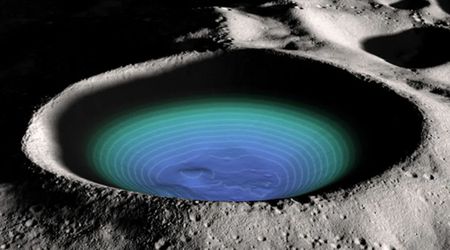
Auroras on Jupiter's moon Ganymede are not too different from those on Earth
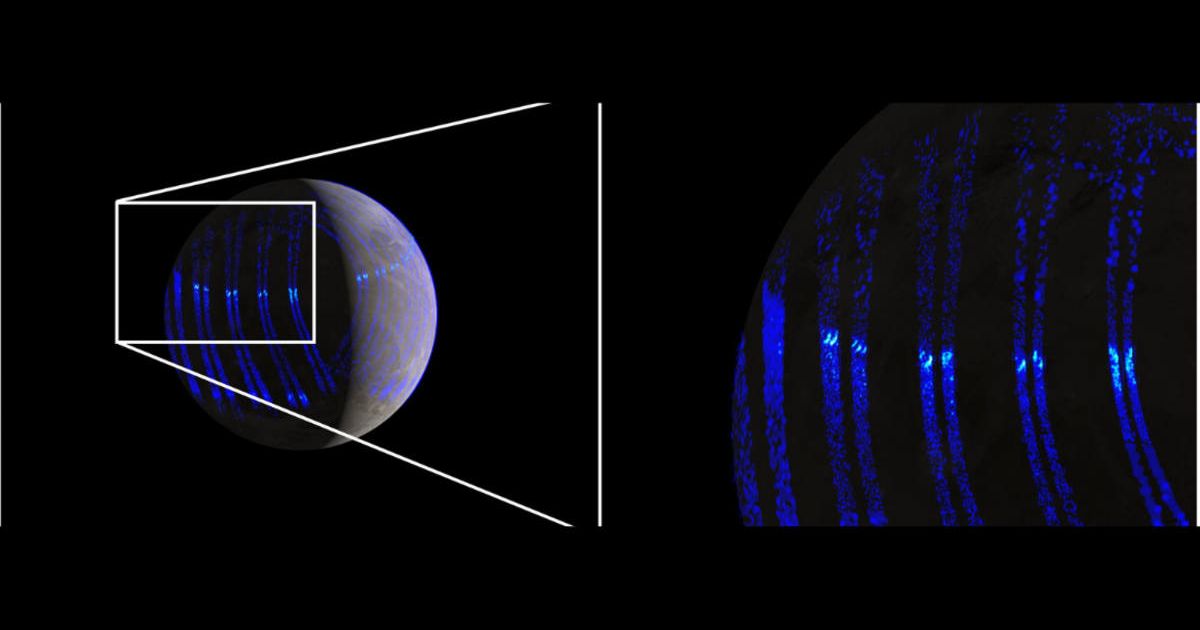
Auroras on Ganymede, a Jovian moon, resemble those on Earth, a team of astrophysicists at the University of Liege (UL) in Belgium claims in its paper published in Astronomy & Astrophysics. Like Earth, Ganymede, too, has an intrinsic magnetic field. In fact, it is the only moon in the solar system to have that. But besides that, the conditions on Earth and the Jovian moon are very different from each other. Yet the scientists have found that the processes behind auroras are not exclusive to just planets but are common to a variety of celestial bodies.

Visible mostly from polar regions here on Earth, auroras are a result of solar wind raining down on Earth's magnetic field. It causes charged particles to accumulate in Earth's atmosphere, where they excite oxygen and nitrogen, producing red, green, and purple lights visible to the naked eye. Besides Earth, such glows show up on Venus, Mars, Jupiter, Saturn, and Uranus. The Juno spacecraft, since its arrival on Jupiter in 2016, has taken remarkable strides in the exploration of the Jovian system. And while its primary target is the gas giant itself, on July 7, 2021, it conducted a flyby of Ganymede.
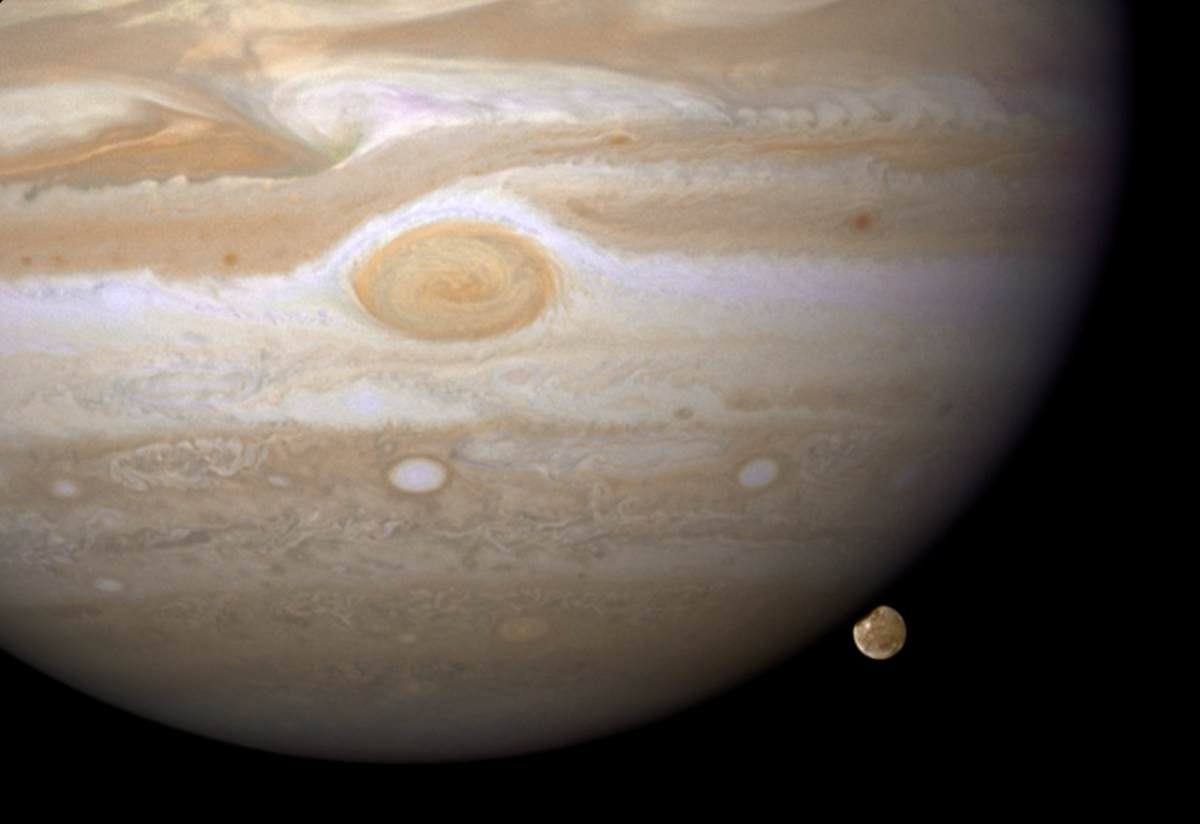
"Auroras are also observed on Ganymede and are caused by the precipitation of electrons in its thin oxygen atmosphere," explained co-author Philippe Gusbin, whose master's thesis in space sciences served as the basis for this study, per a report by Phys.org. "Observations of Ganymede's auroras prior to Juno were limited by the spatial resolution of ground-based observations, and they could not resolve the small-scale structures typical of planetary auroras." The infrared and ultraviolet instruments on Juno recorded auroras on Ganymede. The spacecraft’s ultraviolet device was able to achieve a spatial resolution of a few kilometers, allowing the UL team to observe that the auroras are fragmented as a chain of patches.

"Similar structures, known as 'beads,' have been observed in the auroras of Earth and Jupiter, where they are linked to sub-storms and dawn storms, large-scale rearrangements of the magnetosphere that release enormous amounts of energy and produce intense auroral activity," said Alessandro Moirano, a post-doctoral researcher at the Laboratory of Atmospheric and Planetary Physics (LPAP) of UL. The interactions between Earth and solar wind are similar to the ways Ganymede interacts with Jupiter's space environment. The fact that both bodies experience auroras indicates that similar fundamental physical processes could be at play between any celestial body, its magnetosphere, and external forces.
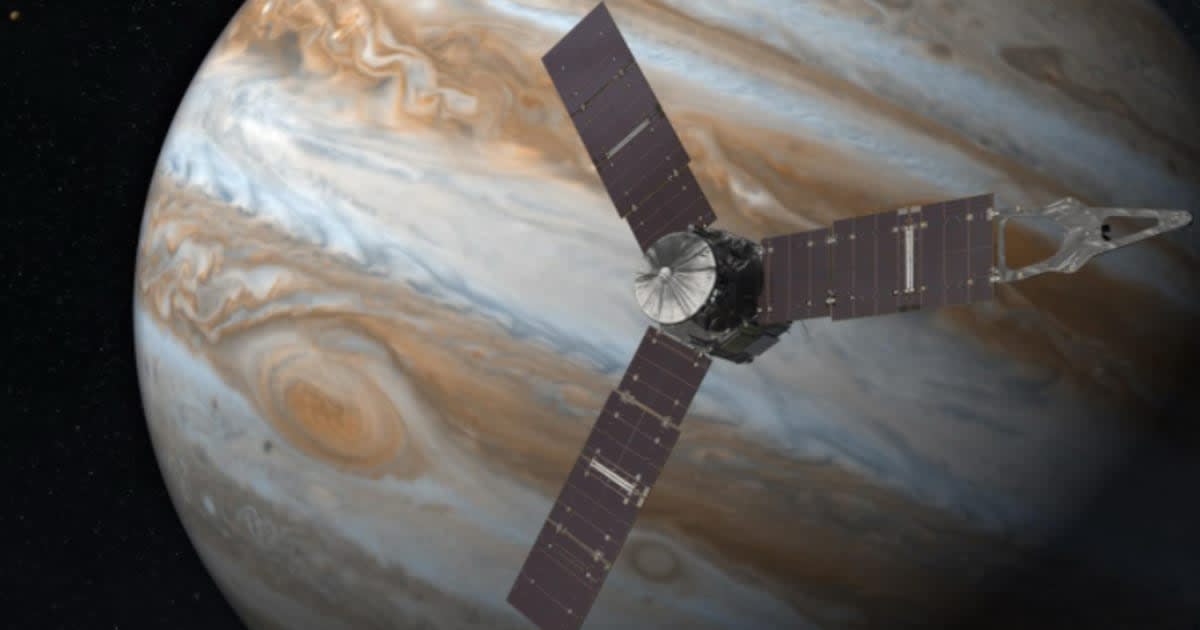
However, the researchers are still doubtful about how the auroras evolve on Ganymede. "Juno's close observations of Ganymede lasted less than 15 minutes, and the spacecraft will never fly over Ganymede again. Therefore, we do not know how common these patches are or how they evolve over time,” said Bertrand Bonford, an astrophysicist and a co-author. “Fortunately, ESA's Juice (Jupiter Icy Moons Explorer) mission is currently on its way to Jupiter, where it will arrive in 2031, and will carry out dedicated observations of Ganymede," he added.
More on Starlust
A Jupiter-family comet stuns scientists by abruptly reversing its spin after perihelion
Mysterious weather patterns of Jupiter and Saturn's poles reveal secrets about their interiors