 0:14
0:14
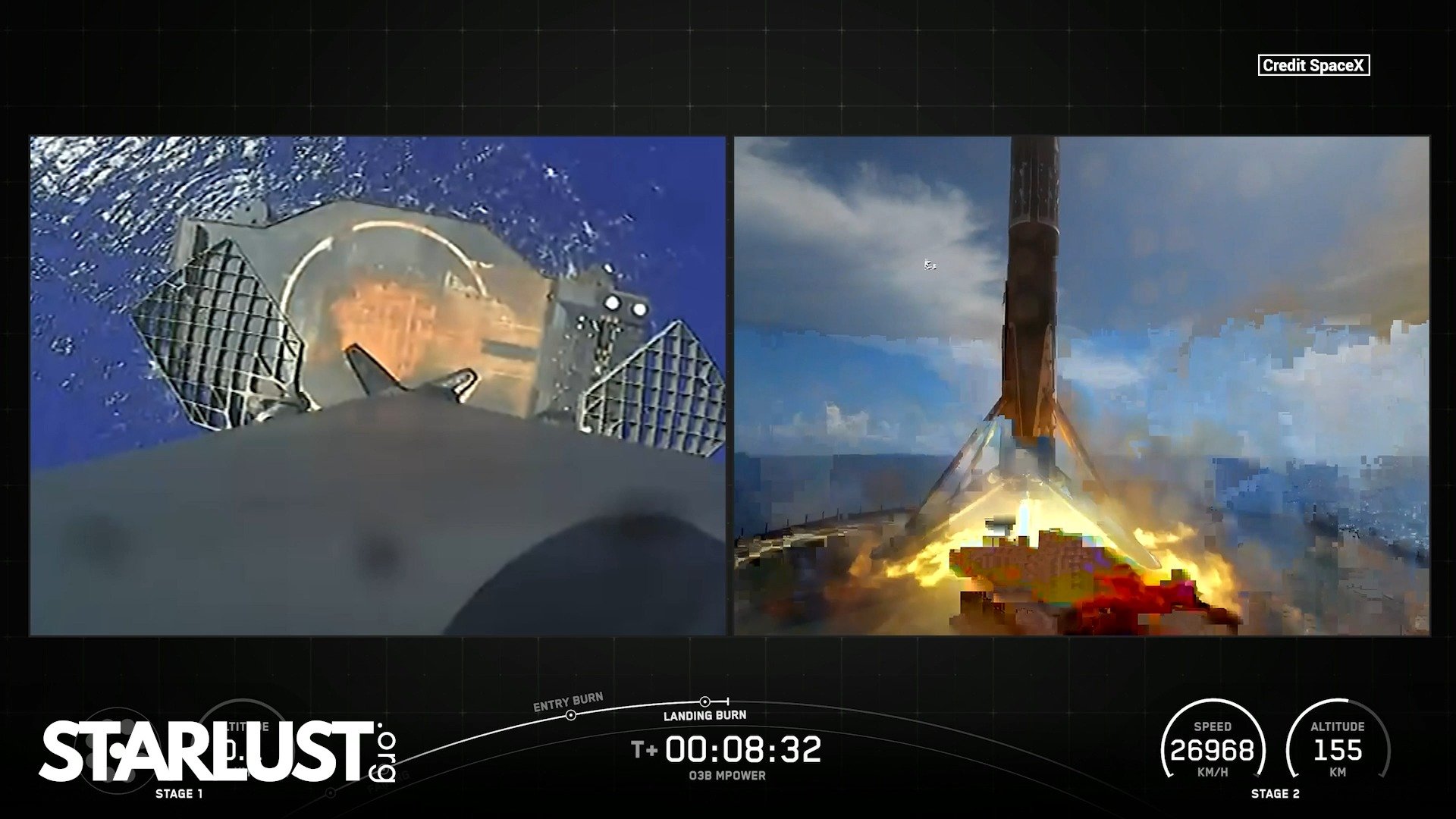
SpaceX lands Falcon 9 booster after Falcon’s 700th mission and its 29th flight
SpaceX successfully landed the Falcon 9 first-stage booster on the A Shortfall of Gravitas droneship in the Atlantic Ocean after its 29th flight, following the SES O3b mPOWER mission that marked Falcon’s 700th overall mission. Video Credit: SpaceX
More Videos
 0:37
0:37
NASA's James Webb revealed the farthest star ever detected — and hints of a hidden companion
NASA's James Webb Space Telescope followed up on Hubble's discovery of Earendel, the farthest individual star ever detected, dating to within the first billion years after the Big Bang. Released August 9, 2023, Webb's observations revealed the star to be more than twice as hot as our Sun and about a million times more luminous — visible only because a massive galaxy cluster between Earth and the star bends space itself, magnifying it by a factor of at least 4,000. Astronomers also found hints of a cooler companion star, detectable only through the specific colors of light Webb could see. Credit: NASA, ESA, CSA; Science: D. Coe (STScI/AURA for ESA; JHU), B. Welch (NASA-GSFC; UMD); Image Processing: A. Pagan (STScI), Z. Levay; Acknowledgment: NSF's NOIRLab, DSS, Akira Fujii
 0:40
0:40
Hand-shaped nebula carved by pulsar revealed in stunning X-ray and radio view
Watch a stunning new view of MSH 15-52, a human hand-shaped nebula powered by the rapidly spinning pulsar B1509-58, revealed through combined X-ray and radio observations. Video Credit: NASA/CXC/A. Hobart
 0:30
0:30
NASA's James Webb revealed a black hole and hundreds of star-forming pockets in the Cartwheel Galaxy
NASA's James Webb Space Telescope captured the Cartwheel Galaxy, about 500 million light-years away in the constellation Sculptor. Released on August 2, 2022, the image revealed new details about star formation and the galaxy's central black hole. The galaxy's rare wheel-like shape resulted from a high-speed collision between a large spiral galaxy and a smaller one, triggering a cascade of smaller collisions still visible today. Webb's combined near- and mid-infrared imaging resolved individual stars throughout the galaxy for the first time, cutting through dust that had shrouded it in mystery even after earlier Hubble observations. Video Credit: NASA, ESA, CSA, STScI, Webb ERO Production Team
 0:14
0:14
SpaceX captures breathtaking close-up of Falcon 9 roaring off the launch pad
Watch a breathtaking close-up of SpaceX's Falcon 9 roaring off the launch pad during the SpainSat NG II mission, with its powerful engines lighting up the night sky as the rocket lifted off from Cape Canaveral. Video Credit: SpaceX
 0:20
0:20
China launches Yaogan-53 and Yaogan-56 satellite groups, marking 666th Long March mission
China launched two new groups of remote sensing satellites, Yaogan-53 and Yaogan-56, aboard a Long March-4B rocket from the Jiuquan Satellite Launch Center on September 10, 2026. Both groups successfully reached their planned orbits and will be used for scientific experiments, land and resource surveys, crop yield estimation, and disaster prevention. The launch marked the 666th mission of China's Long March carrier rocket program. Video Credit: CNS via AP © Copyright: CNS, 2026 — editorial use only; no access Chinese mainland media
 0:14
0:14
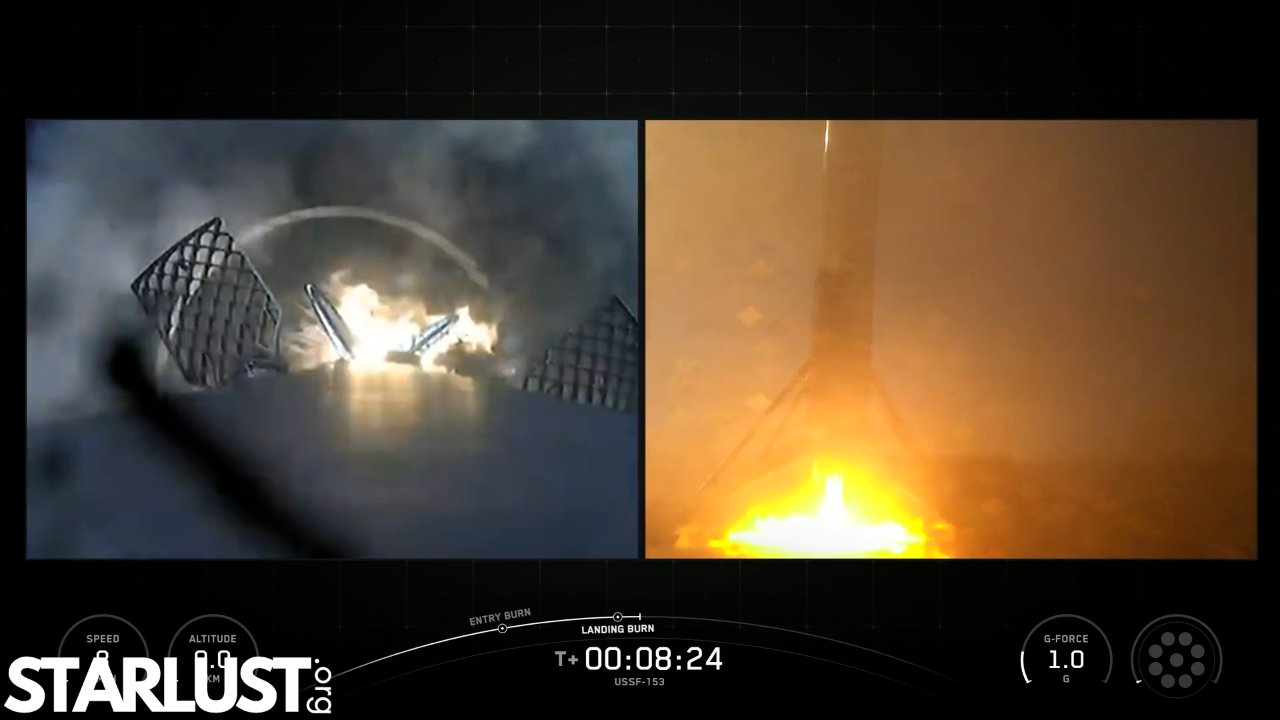
SpaceX Falcon 9 booster lands after 27th flight, marking 104th launch of 2026
SpaceX's Falcon 9 first-stage booster, B1081, landed on the droneship "Of Course I Still Love You" in the Pacific Ocean roughly 8.5 minutes after launching the classified USSF-153 mission on September 10, 2026 — the booster's 27th flight and the 104th Falcon 9 launch of the year. B1081 has previously supported Crew-7, CRS-29, PACE, and more than a dozen other missions. Video Credit: SpaceX
 0:23
0:23
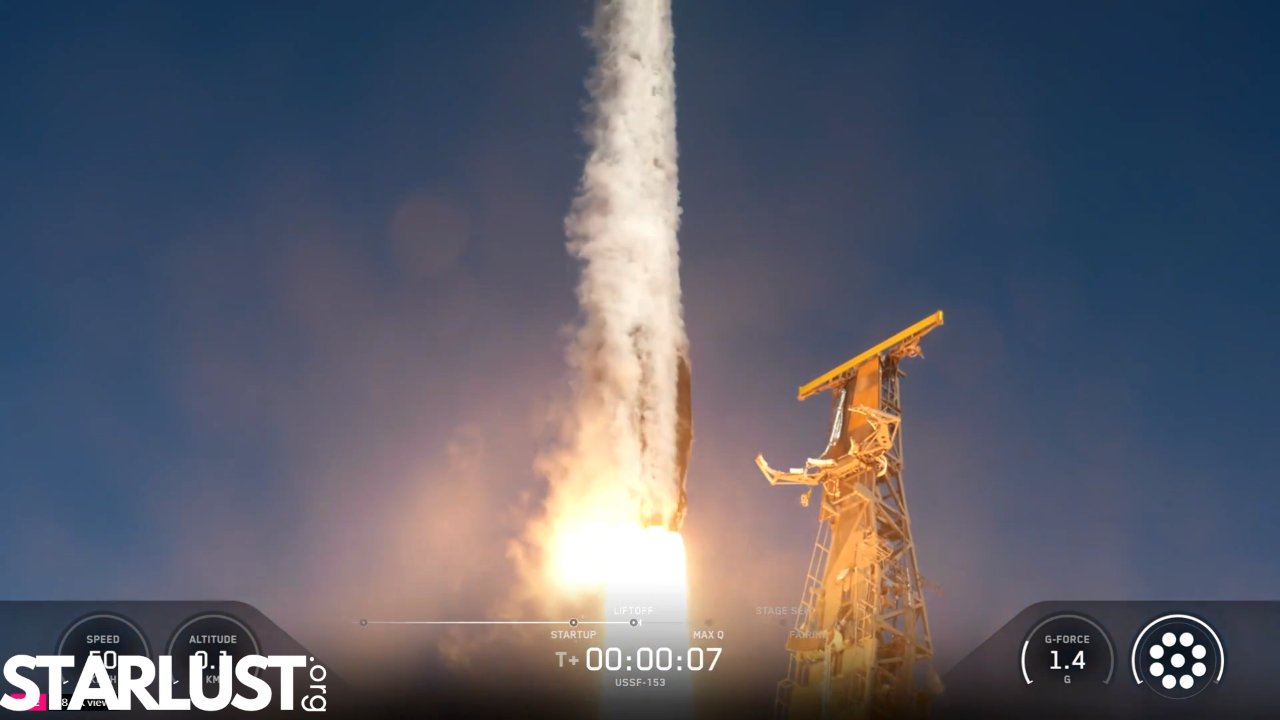
SpaceX launches classified USSF-153 mission on booster's 27th flight
SpaceX launched a Falcon 9 rocket carrying the classified USSF-153 mission for the U.S. Space Force from Vandenberg Space Force Base, California, on September 10, 2026. The first-stage booster, B1081, flew for its 27th time before landing on the droneship "Of Course I Still Love You" in the Pacific Ocean roughly 8.5 minutes after liftoff. The mission marked the 104th Falcon 9 launch of 2026. The payload's exact purpose remains classified, though it may involve satellites built on SpaceX's Starshield platform for a U.S. government entity. Video Credit: SpaceX
 0:46
0:46
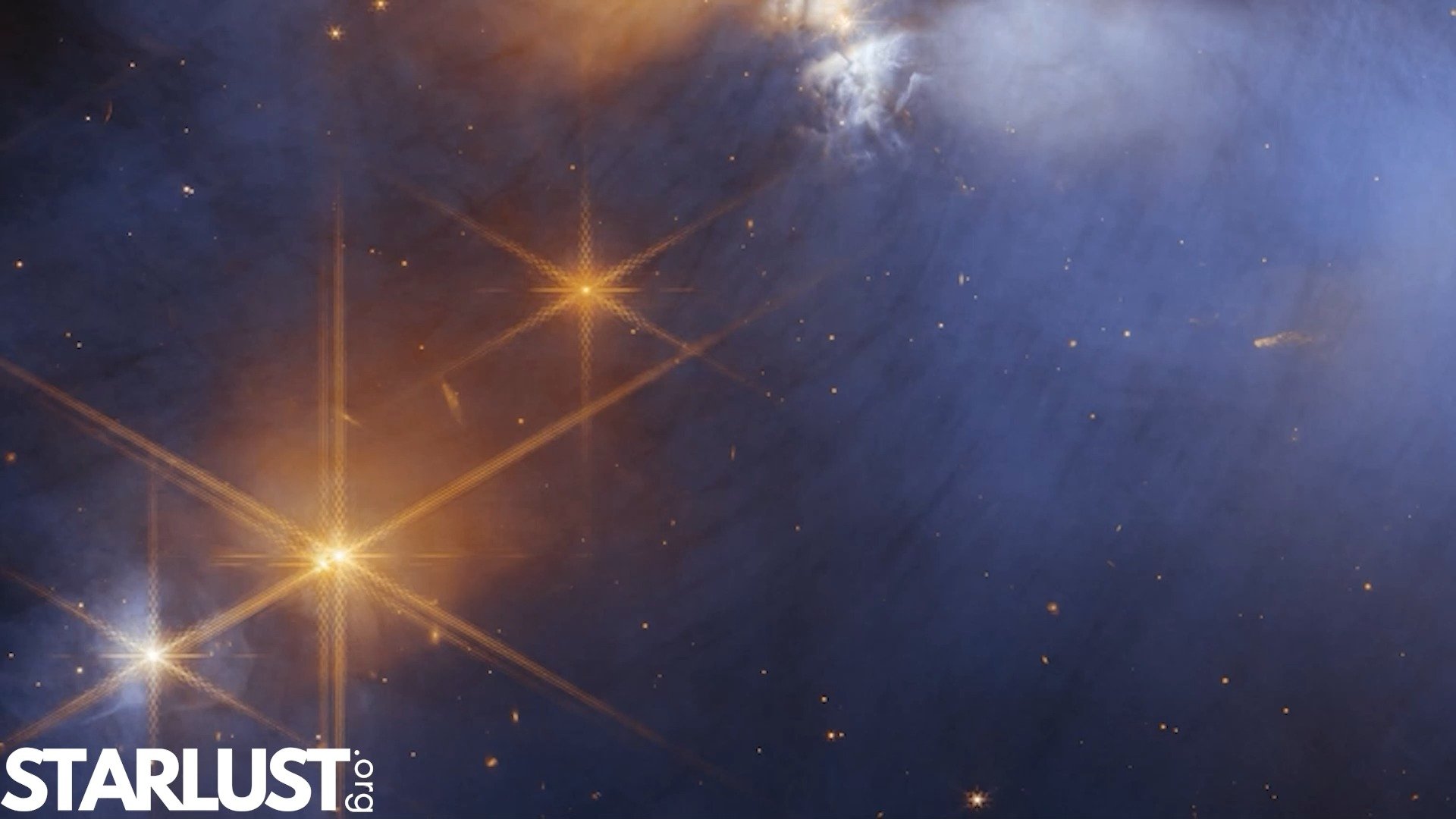
NASA's Webb finds frozen ingredients for life in a cold, dark molecular cloud 630 light-years away
NASA's James Webb Space Telescope imaged the central region of the Chameleon I dark molecular cloud, about 630 light-years away, revealing the coldest, darkest ices ever measured inside a star-forming cloud. Beyond simple water ice, astronomers identified frozen ammonia — naturally present in volcanic gases and animal waste on Earth — along with frozen methane, found in wetlands and released by decomposing organic matter, and methanol, produced naturally by fermenting plants. Researchers said these icy grains could one day be incorporated into future exoplanets, and that finding complex molecules here suggested prebiotic chemistry may be a routine part of star formation everywhere, not a unique feature of our own solar system. Credit: ESA/Webb, NASA, CSA, STScI; M. K. McClure, F. Sun, Z. Smith, and the Ice Age ERS Team; N. Bartmann, M. Zamani (ESA/Webb)
 0:36
0:36
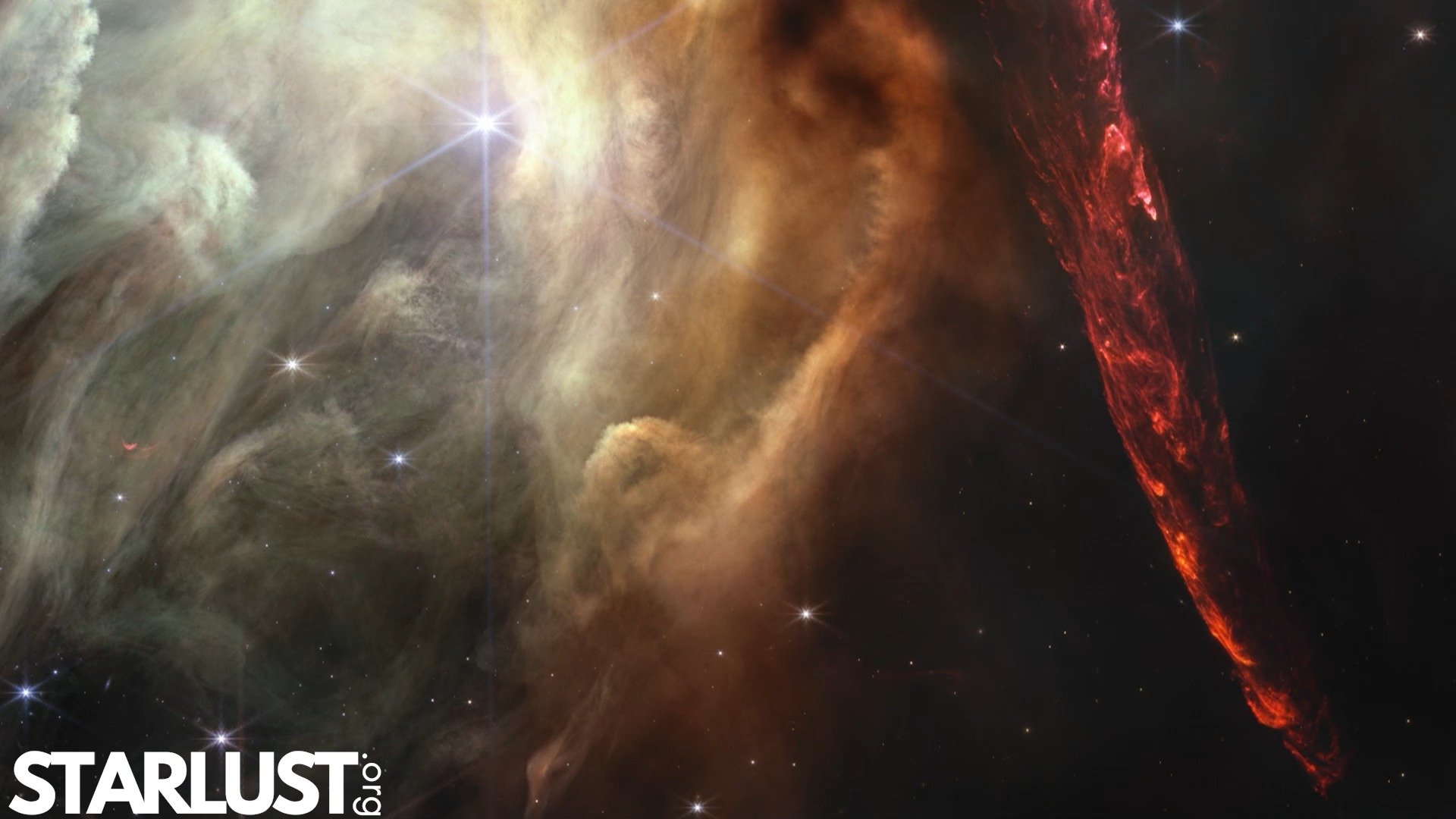
NASA's James Webb captured a stellar nursery like the one that birthed our Sun
NASA's James Webb Space Telescope captured the Rho Ophiuchi cloud complex, the closest star-forming region to Earth, about 390 light-years away. The image, released July 12, 2023, showed roughly 50 young stars, several with the telltale shadow of a circumstellar disk — the material that eventually forms planets. Giant jets from newborn stars lit up surrounding gas in red, while a single, more massive star named S1 carved a glowing cavity into the dust using its own stellar wind. Despite its chaotic appearance, astronomers describe the region as a relatively quiet stellar nursery. Credit: NASA, ESA, CSA, STScI, K. Pontoppidan (STScI); Image Processing: A. Pagan (STScI); N. Bartmann (ESA/Webb)
 0:40
0:40
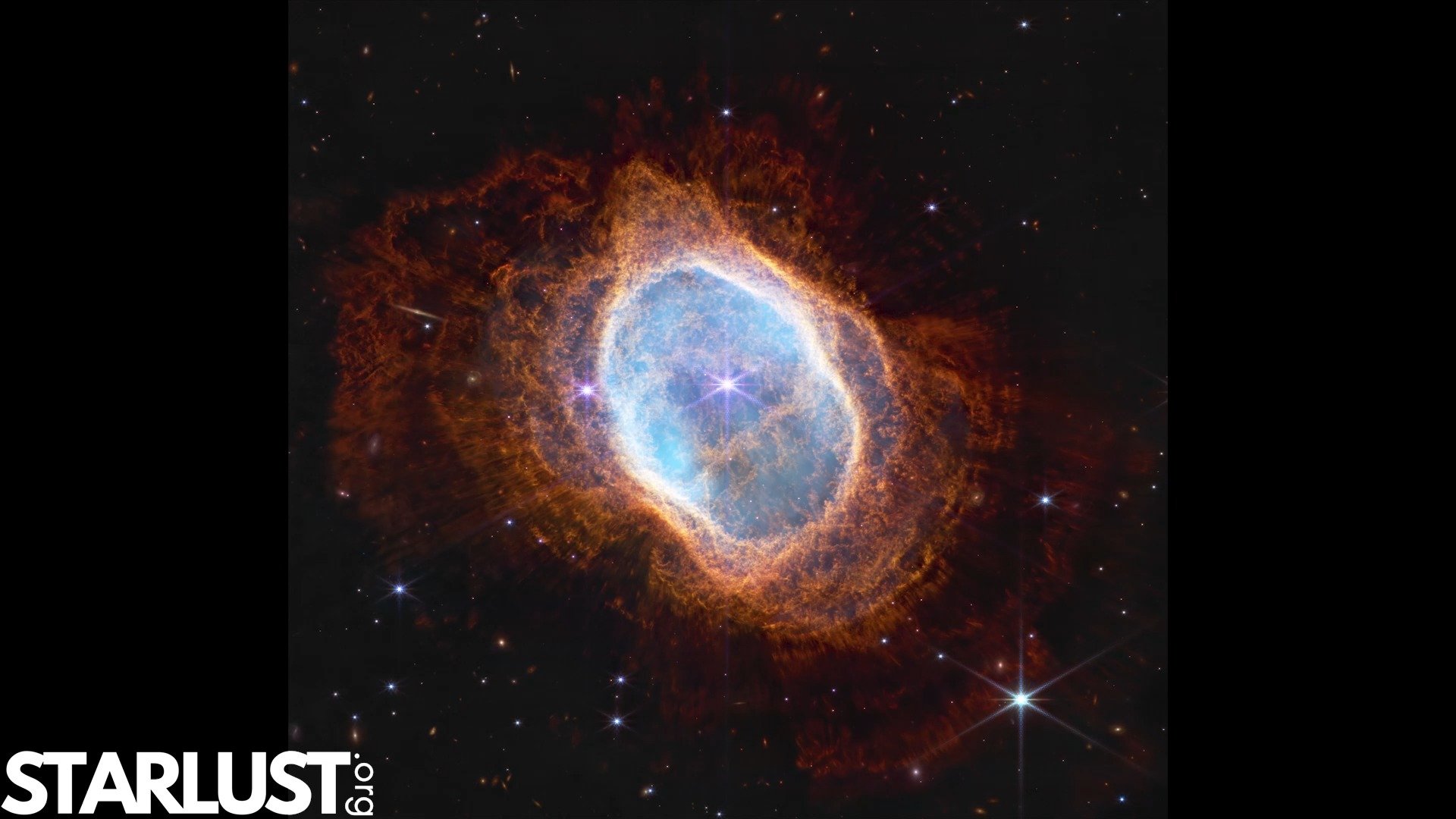
NASA's Webb looked again at the popular Southern Ring Nebula and finally found the hidden star that created it
NASA's James Webb Space Telescope captured the Southern Ring Nebula, about 2,500 light-years away, in one of its first released images in July 2022. The bright central star played only a supporting role — a second, fainter star hidden nearby was revealed as the nebula's true source, having ejected at least eight layers of gas and dust over thousands of years as the two stars orbited each other tightly. Webb's Mid-Infrared Instrument revealed the fainter star was wrapped in its own disk of dust, while hundreds of bright rays of starlight pierced through gaps in the surrounding gas and dust. Credit: NASA, ESA, CSA, STScI, and the Webb ERO Production Team; O. De Marco (Macquarie University), J. DePasquale (STScI), E. Wheatley (STScI)
 0:16
0:16
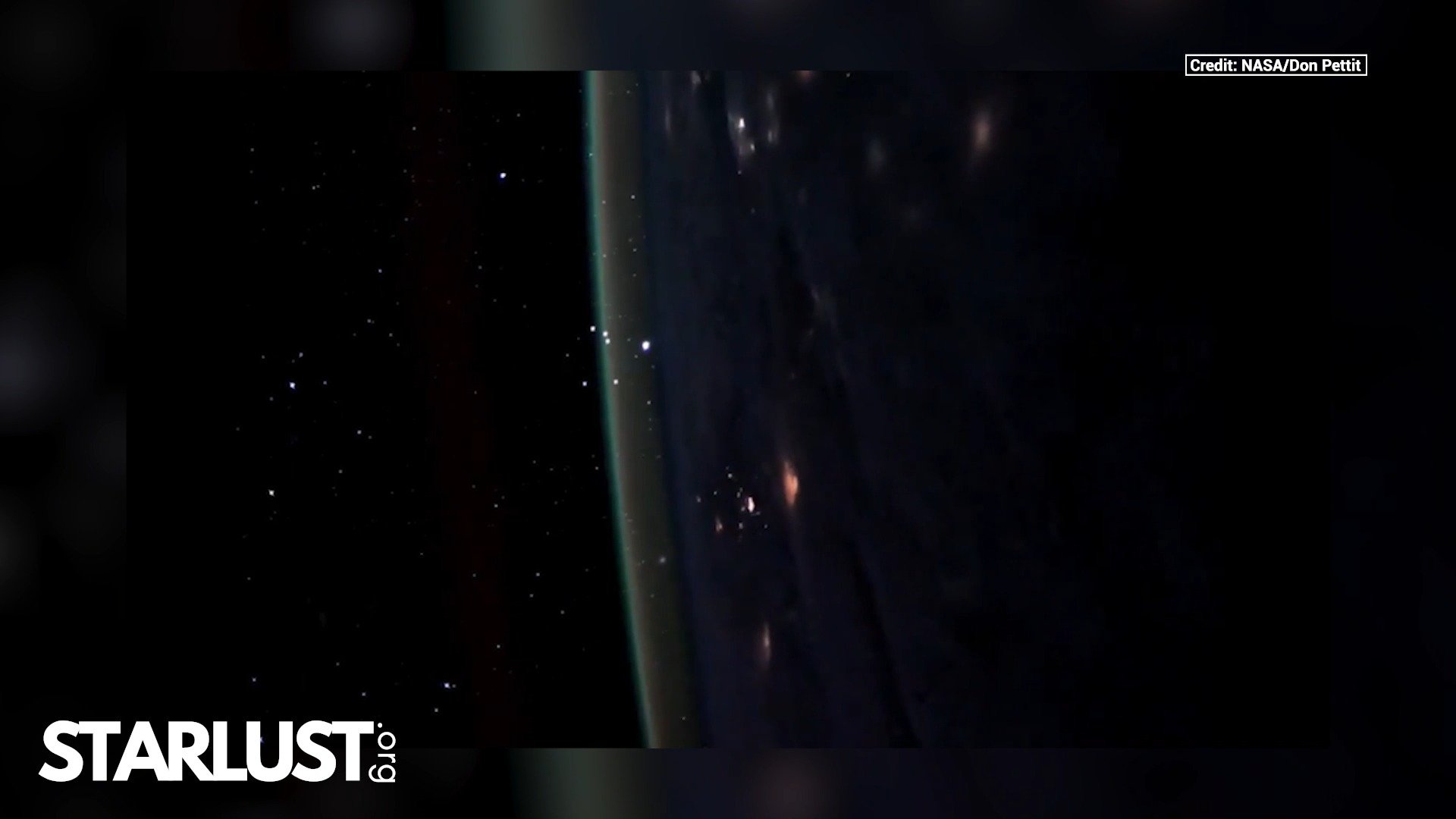
SpaceX Starlink satellites glow like ‘cosmic fireflies’ in breathtaking ISS time-lapse
Watch NASA astronaut Don Pettit capture a breathtaking time-lapse from the International Space Station showing SpaceX Starlink satellites flickering like “cosmic fireflies” as sunlight briefly reflected off them in orbit. Video Credit: NASA / Don Pettit
 0:27
0:27
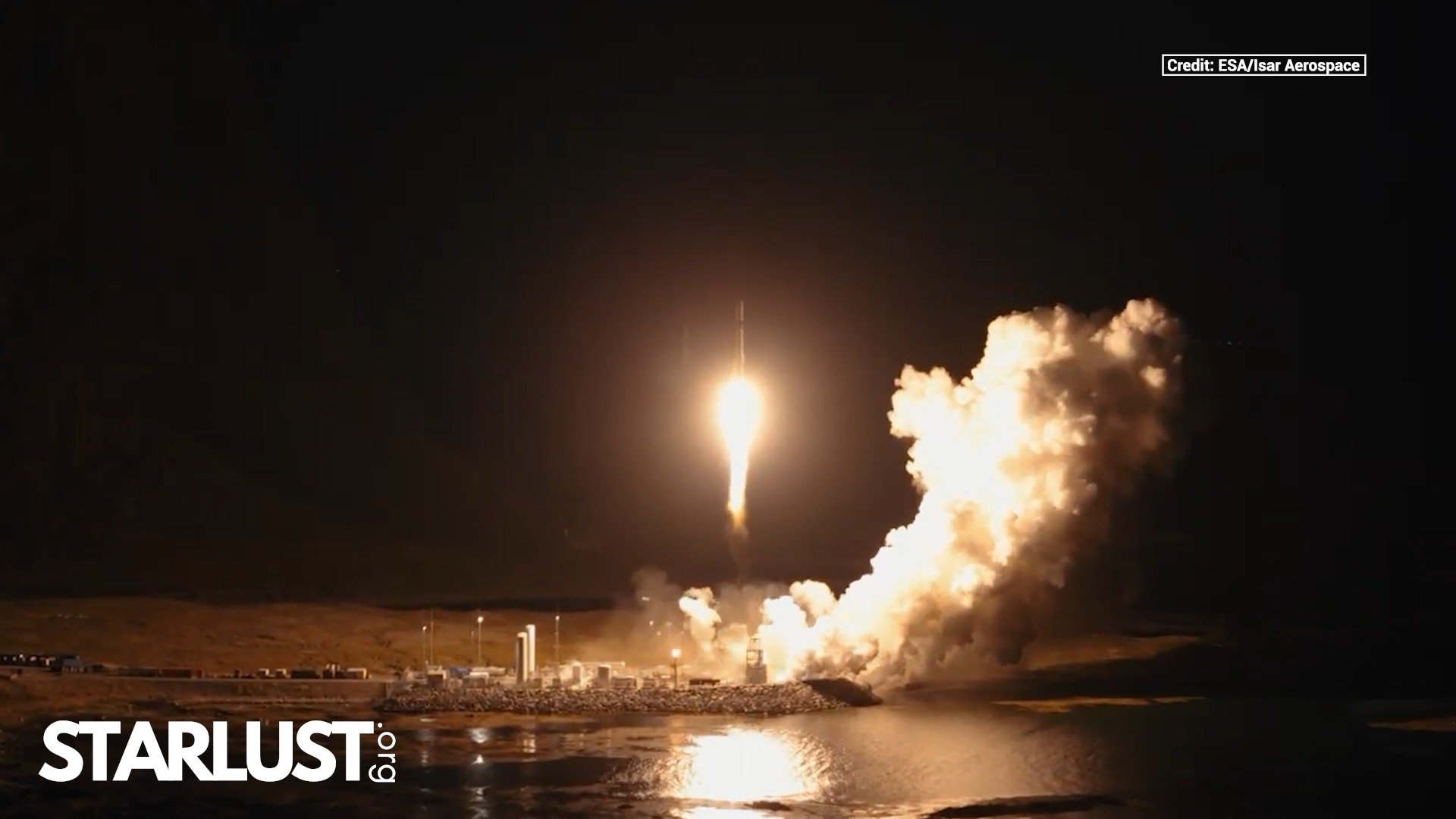
German company Isar Aerospace achieves first launch to orbit from continental Europe
German company Isar Aerospace successfully reached orbit with its Spectrum launcher after lifting off from Andøya Spaceport in Norway on September 5, 2026. The successful “Onward and Upward” mission marked the first launch to orbit from continental Europe and demonstrated the Spectrum launch system during its second flight. Video Credit: ESA/Isar Aerospace