 0:36
0:36
SpaceX turns Starlink V3 vision into reality on Starship Flight 14
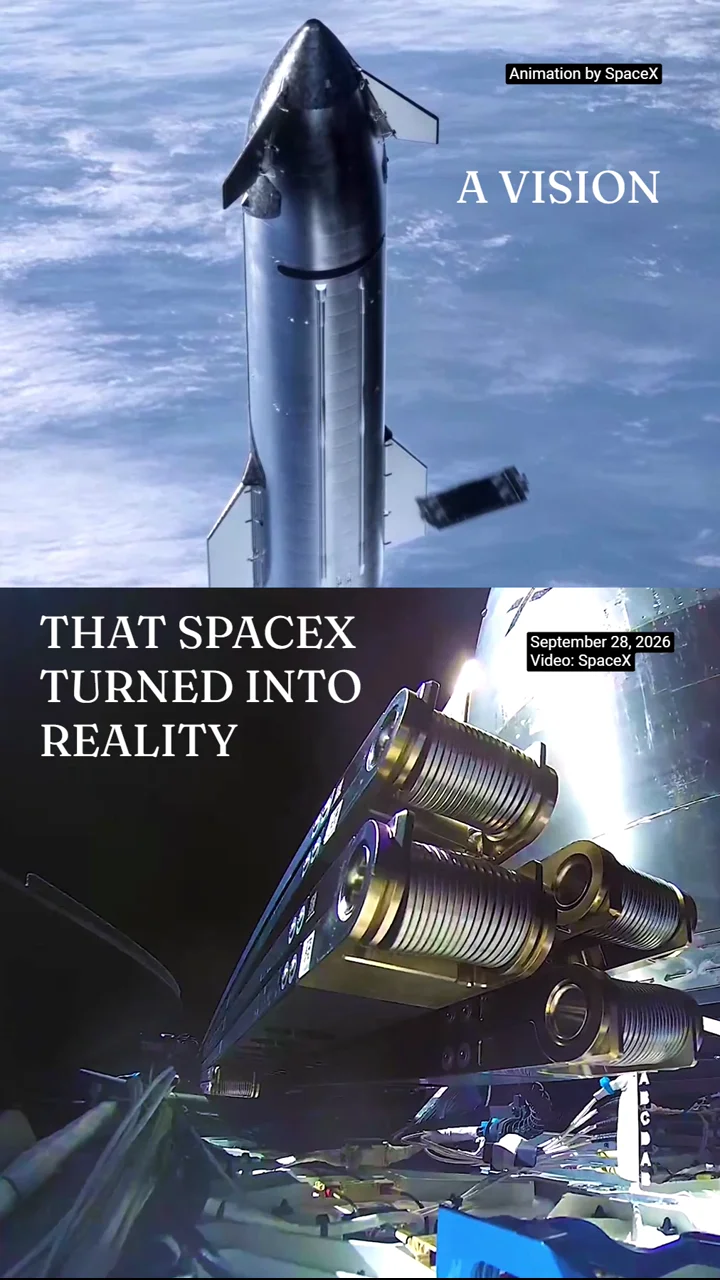
SpaceX once shared a concept for deploying Starlink V3 satellites into orbit. On September 28, 2026, that concept became reality. During Starship’s first orbital flight, Flight 14, SpaceX successfully deployed 26 Starlink V3 satellites into orbit. Contact was established with all 26 satellites shortly after deployment through laser links, ground stations, and Starlink user terminals. Each Starlink V3 satellite is designed to deliver more than 1 terabit per second (Tbps) of downlink capacity — around 10 times the capacity of Starlink V2 Mini satellites. Animation and video by SpaceX
More Videos
 0:21
0:21
Watch Starship separating from Super Heavy booster on its first orbital flight
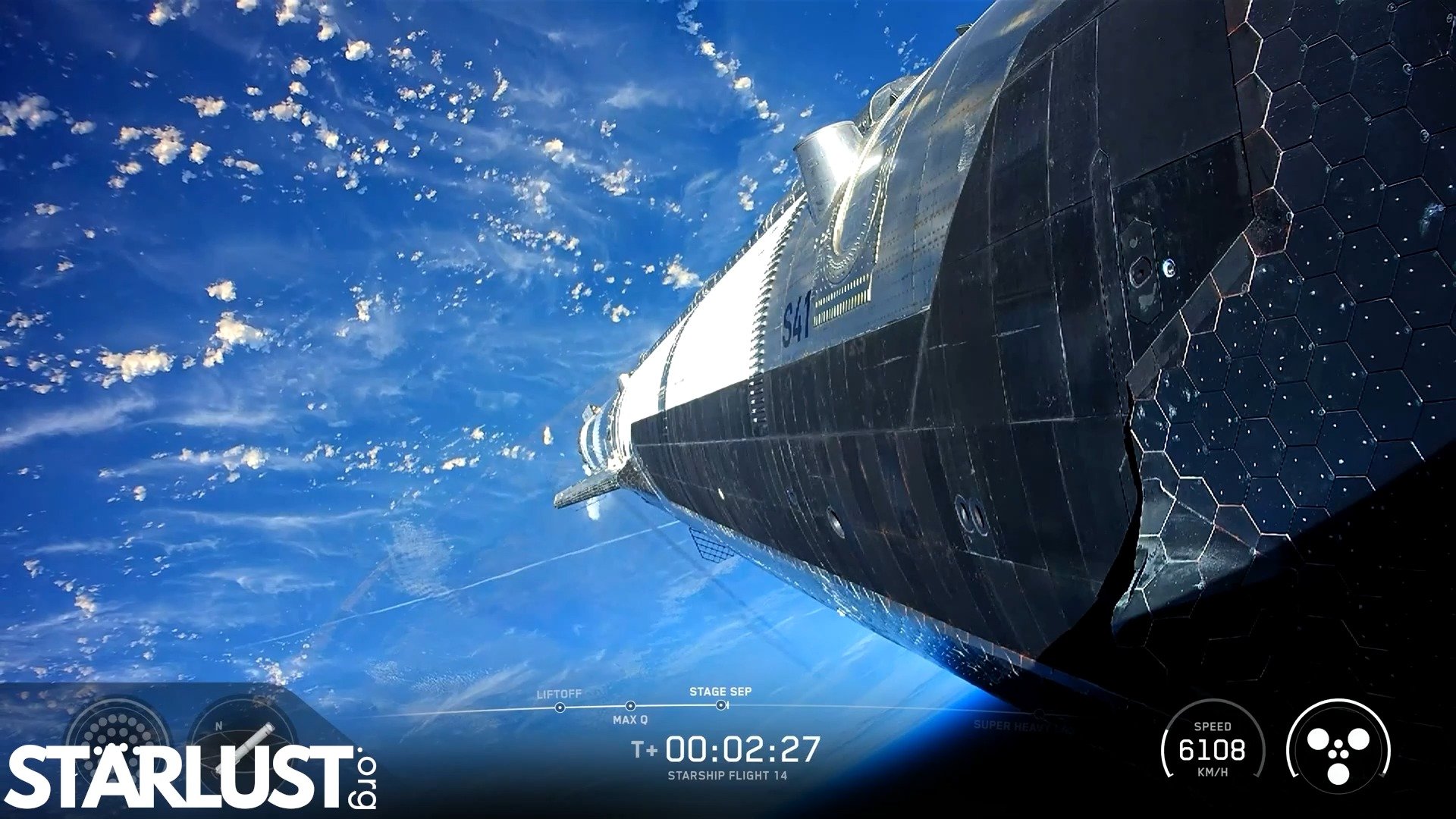
Starship's Ship 41 separated from Super Heavy Booster 21 during Flight 14, which launched from Pad 2 at Starbase, Texas, on September 28, 2026. Ship 41's Raptor engines ignited during hot-staging separation, about 2 minutes 34 seconds after liftoff. Booster 21 then boosted back toward its splashdown site in the Gulf of America, while the ship continued to orbit. The separation was a key step in Starship's first flight designed to reach Earth orbit. Video Credit: SpaceX
 0:23
0:23
SpaceX's Super Heavy booster splashes down after Starship's first orbital launch
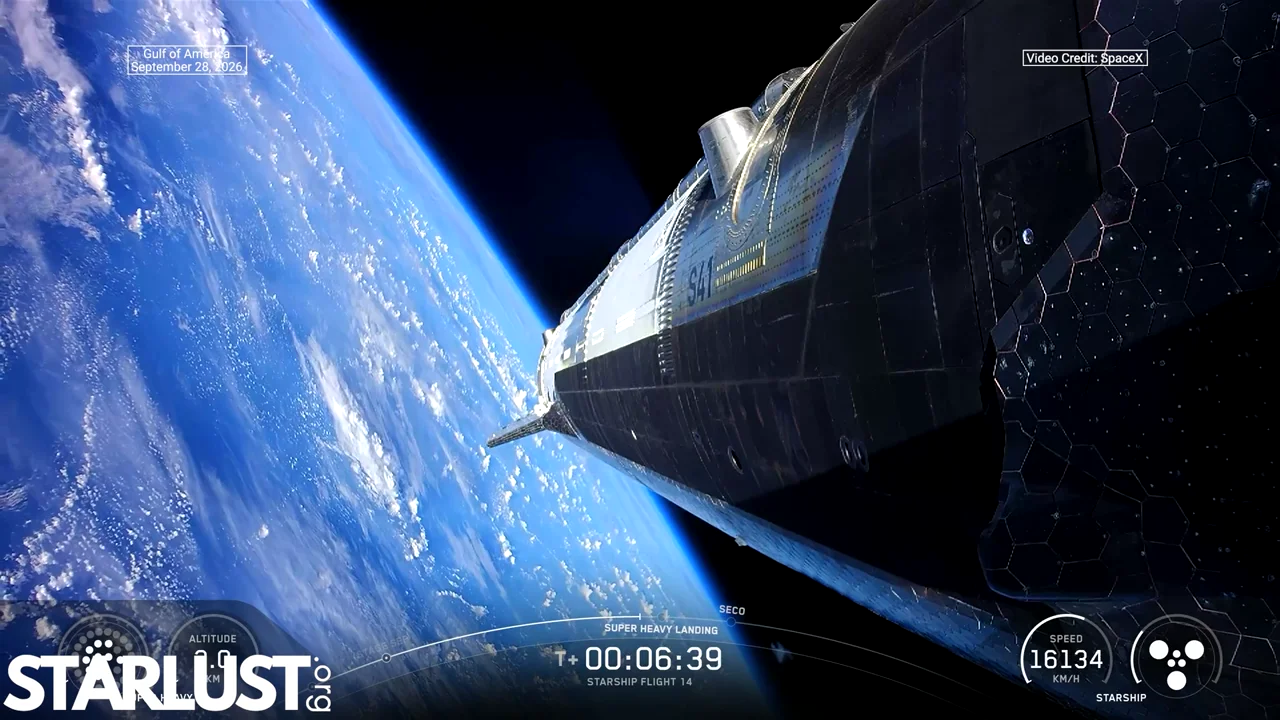
Starship's Super Heavy Booster 21 splashed down in the Gulf of America after launching Flight 14 from Starbase, Texas, on September 28, 2026, SpaceX said. Onboard footage shows the booster's landing sequence at 6.9 km altitude, 6 minutes 27 seconds after liftoff. The booster carried filtering hardware changes and relight software updates after the previous booster's landing burn ended in a hard splashdown. Video Credit: SpaceX
 0:24
0:24
SpaceX launches Starship on its first attempt to reach orbit
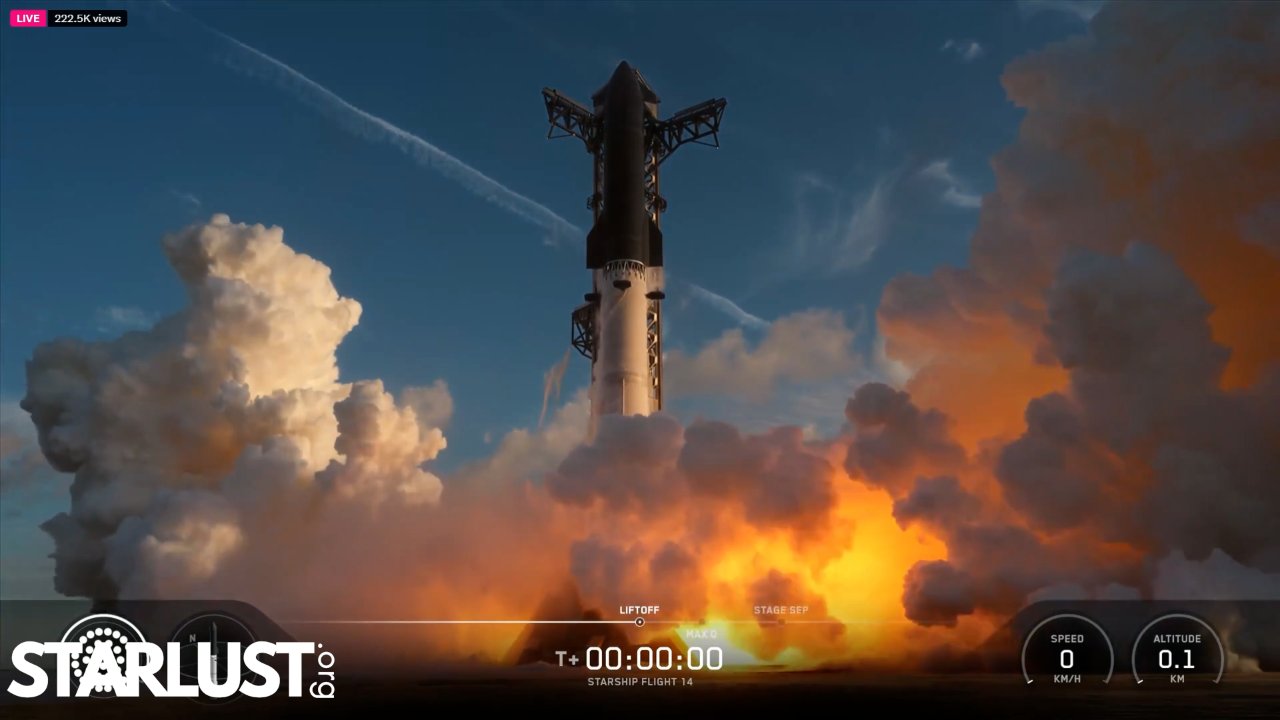
SpaceX launched Starship Flight 14 from Pad 2 at Starbase, Texas, at 7:46 A.M. CDT on September 28, 2026, the vehicle's first attempt to reach orbit after 13 suborbital test flights. The FAA approved the launch and reentry on September 26. The ship plans to deploy 26 Starlink V3 satellites for the first time, then splash down in the Pacific Ocean west of Chile after nearly 10 hours. Video Credit: SpaceX
 0:23
0:23
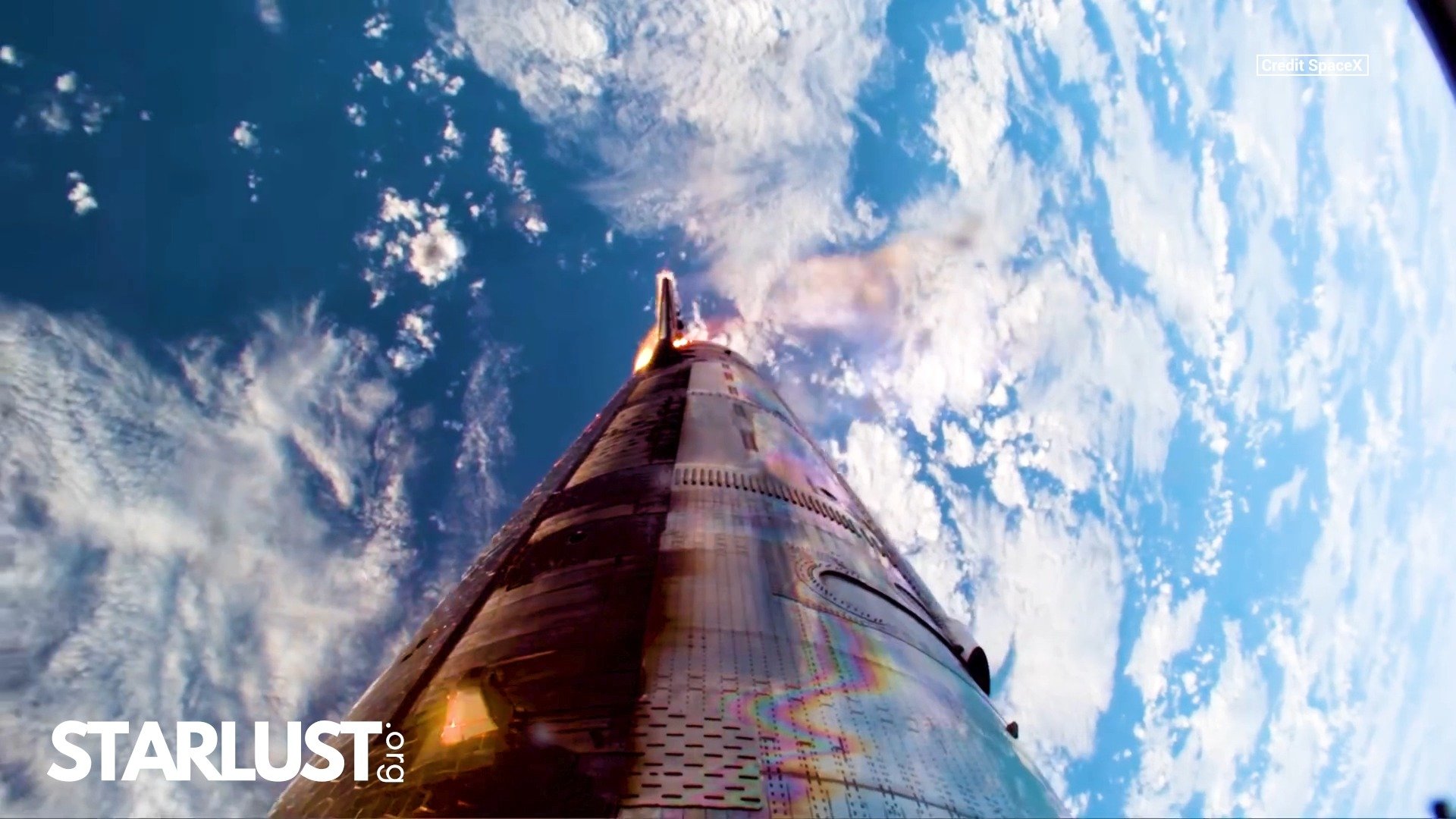
Watch Starship's dramatic final descent in slow motion
SpaceX's Starship completed its 12th flight test before returning toward the Indian Ocean on May 22, 2026. During the final part of the flight, the spacecraft descended through the atmosphere, fired its engines, flipped upright and performed its landing burn before splashing down in the ocean. This slow motion view shows the dramatic final maneuver in greater detail. Video Credit: SpaceX
 1:23
1:23
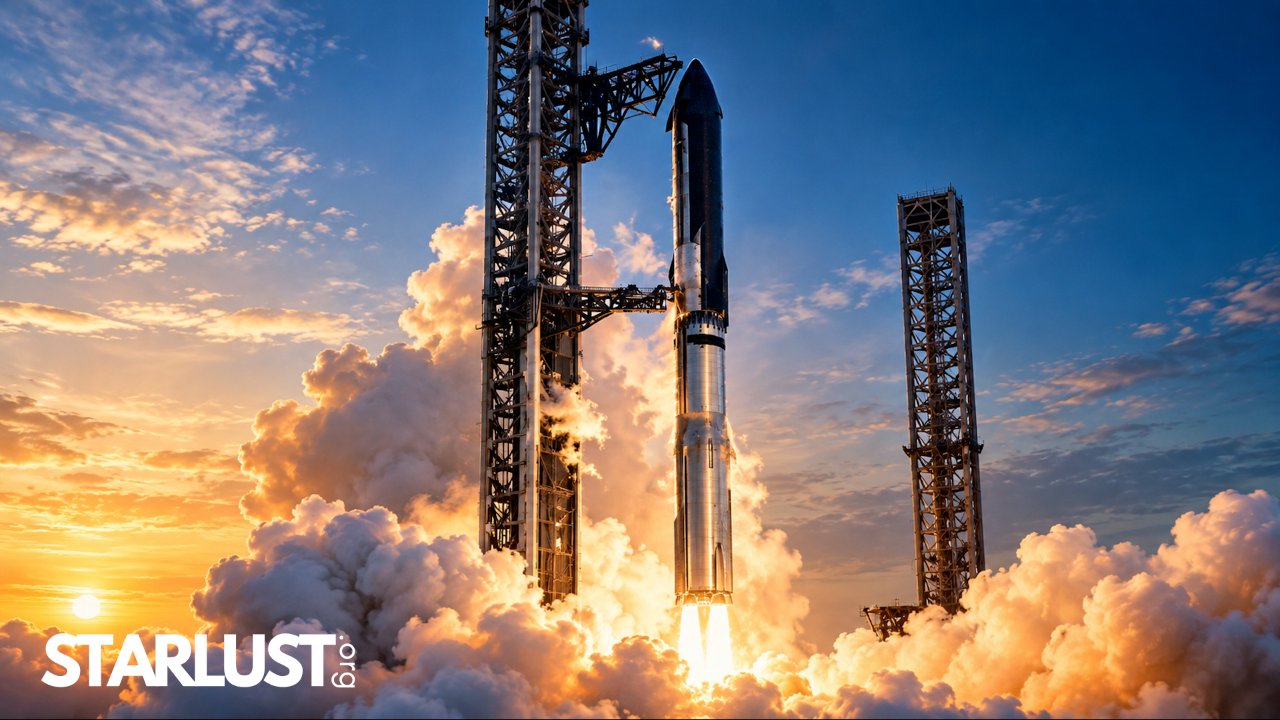
SpaceX’s Starship Flight 14 set to launch today
SpaceX’s Starship Flight 14 is set to launch today, September 28, from Starbase, Texas. The 75-minute launch window opens at 7:15 a.m. CT, with live coverage beginning about 35 minutes before launch. The flight is planned to be Starship’s first attempt to reach orbit around Earth, marking a new milestone in the vehicle’s development. Video Credit: SpaceX
 0:48
0:48
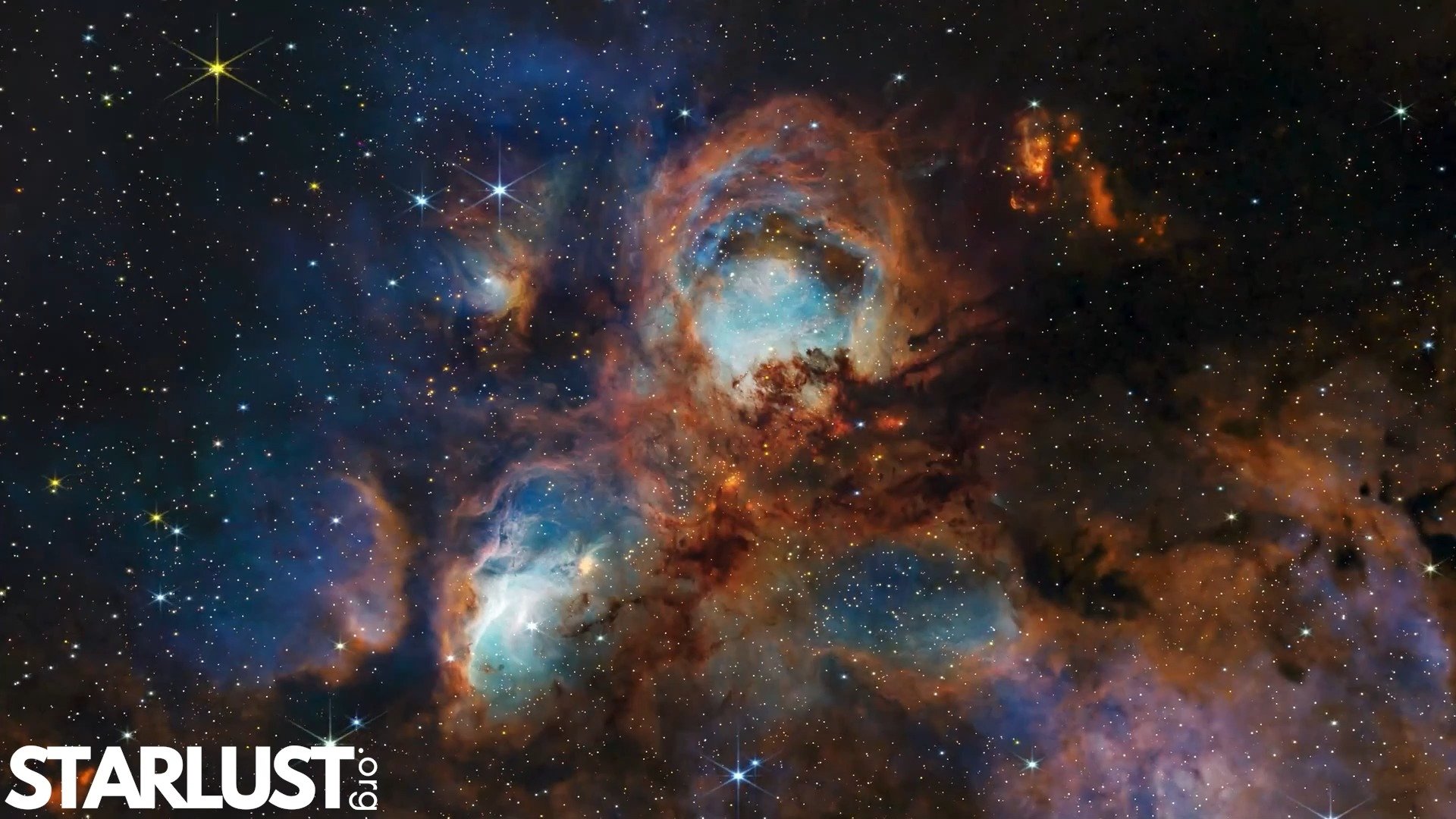
NASA's James Webb showed how newborn stars will end star formation in a nebula 4,000 light-years away
NASA's James Webb Space Telescope revealed how massive young stars are reshaping a section of the Cat's Paw Nebula, a star-forming region about 4,000 light-years away in the constellation Scorpius. The near-infrared image was released on July 10, 2025, using data captured on September 6, 2024, and zoomed in on one section of the nebula to reveal smaller structures of gas, dust, and young stars. Massive young stars were carving away nearby gas and dust, with their bright starlight producing the blue glow seen across the image. NASA said this behavior will eventually bring local star formation to a stop, since these stars are luminous but short-lived. Video Credit: NASA, ESA, CSA, STScI
 0:24
0:24
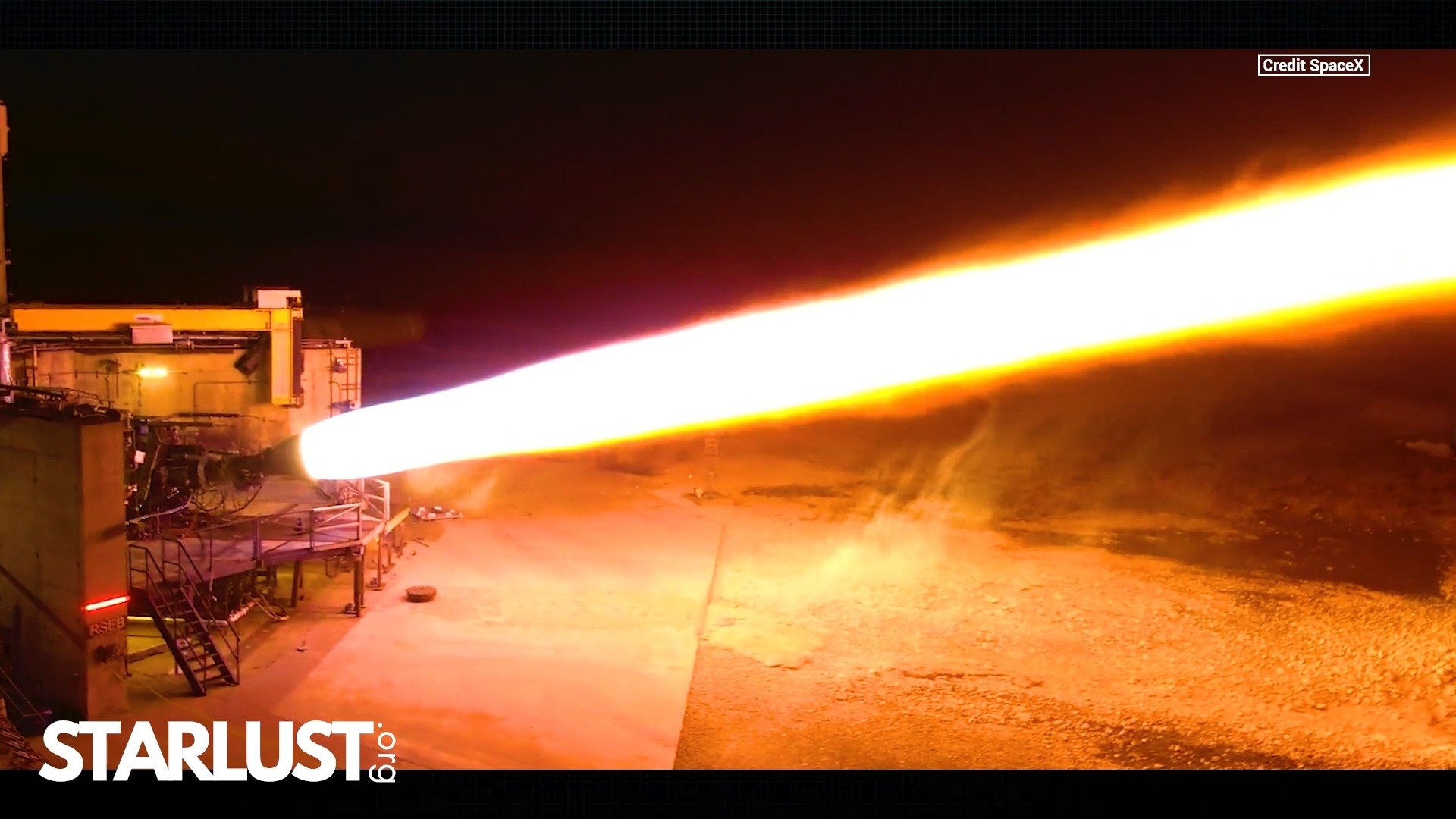
SpaceX captures Raptor engine firing at a 15-degree gimbal angle
Watch SpaceX’s Raptor engine fire while gimballed 15 degrees during a ground test. The engine’s ability to pivot during firing is part of the thrust-vector control system used to steer Starship by changing the direction of its thrust. Video Credit: SpaceX
 1:32
1:32
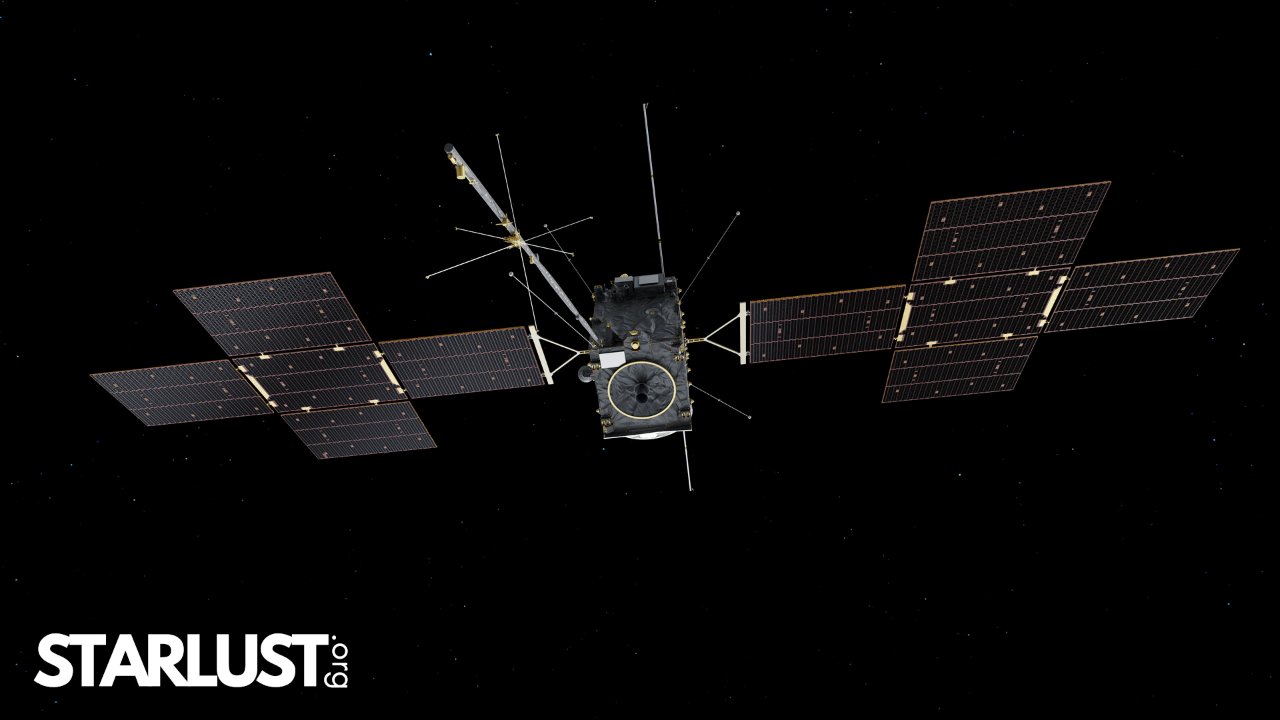
ESA's JUICE spacecraft will use Earth's gravity to steal speed on its way to Jupiter
ESA's JUICE spacecraft will fly past Earth on September 28 for its third gravity assist, using the planet's gravity to bend its trajectory by about 20 degrees and gain roughly 3.5 km/s in speed on its journey toward Jupiter. The spacecraft will pass about 8,640 km from Earth while observing our planet and the Moon and testing navigation techniques ahead of its arrival at Jupiter, where it will study the gas giant and its ocean-bearing moons Ganymede, Callisto and Europa, including their potential habitability. Credit: ESA/GettyImages/NASA
 0:13
0:13
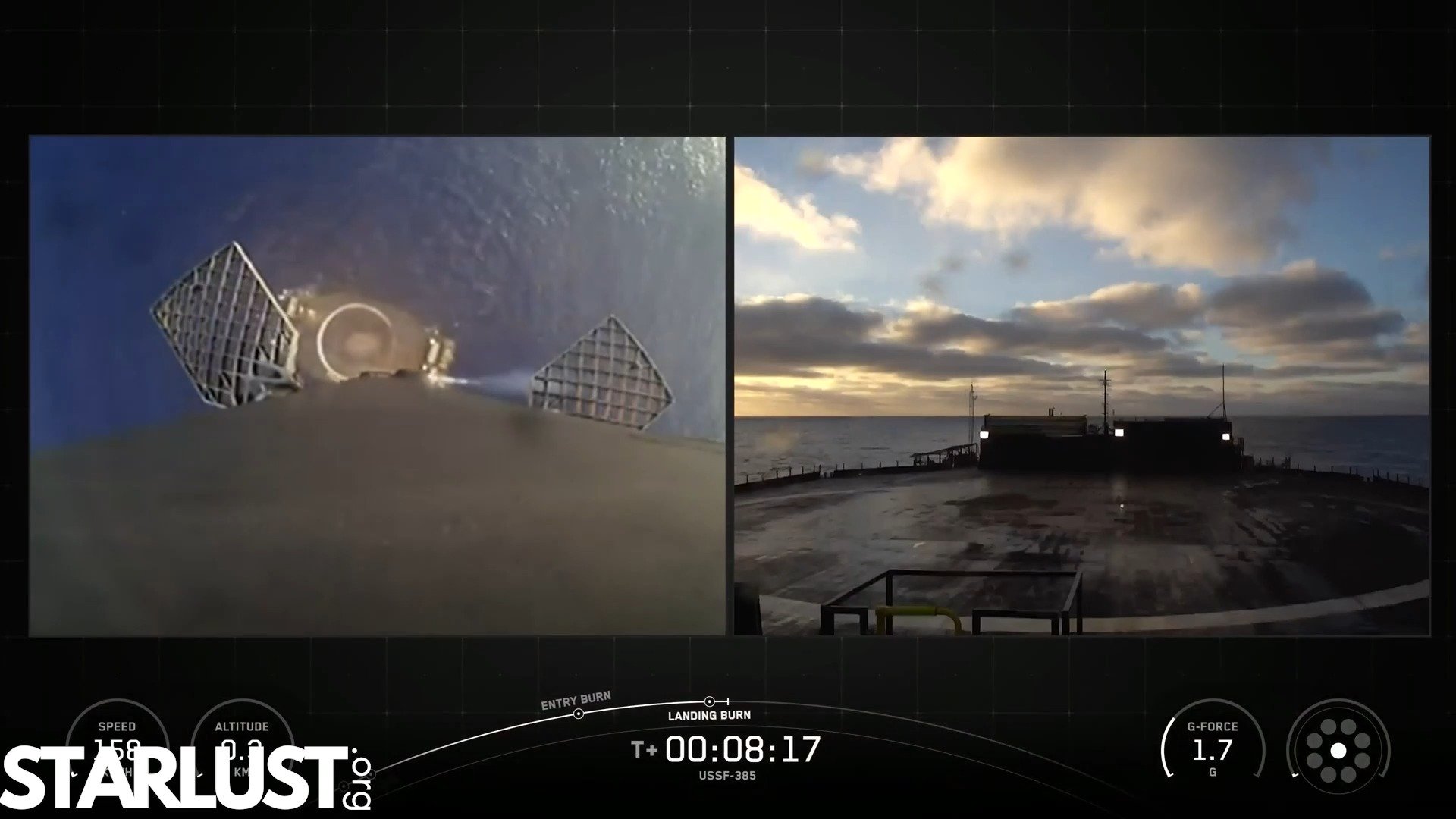
SpaceX Falcon 9 booster lands after 10th flight, carrying classified Space Force payload
SpaceX's Falcon 9 first-stage booster, B1100, landed on the droneship "Of Course I Still Love You" in the Pacific Ocean after launching the classified USSF-385 mission on September 26, 2026 — the booster's 10th flight, and the fourth national security Falcon 9 launch from Vandenberg in just 43 days. Video Credit: SpaceX
 0:22
0:22
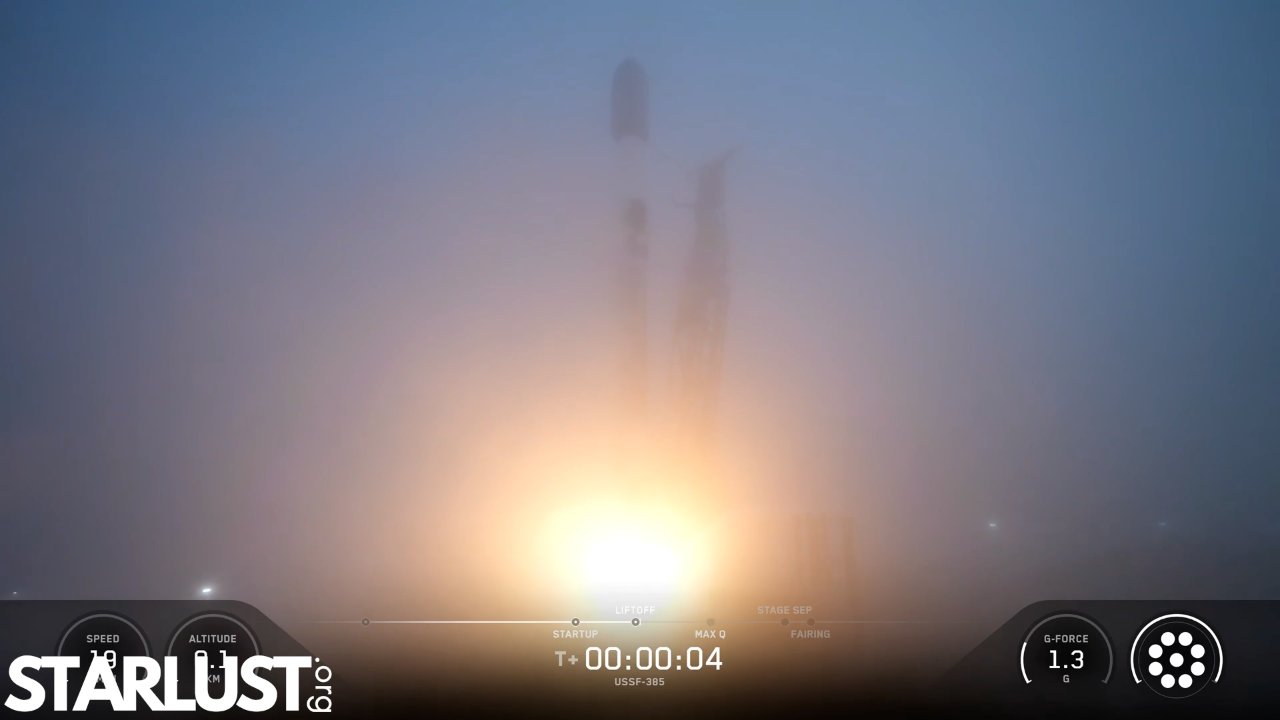
SpaceX launches classified USSF-385 mission, booster's 10th flight
SpaceX launched a Falcon 9 rocket carrying the classified USSF-385 mission for the U.S. Space Force from Vandenberg Space Force Base, California, on September 26, 2026. The first-stage booster, B1100, flew for its 10th time. This marked the fourth national security Falcon 9 launch from Vandenberg in just 43 days, part of an ongoing classified Starshield satellite buildout. Video Credit: SpaceX
 2:08
2:08
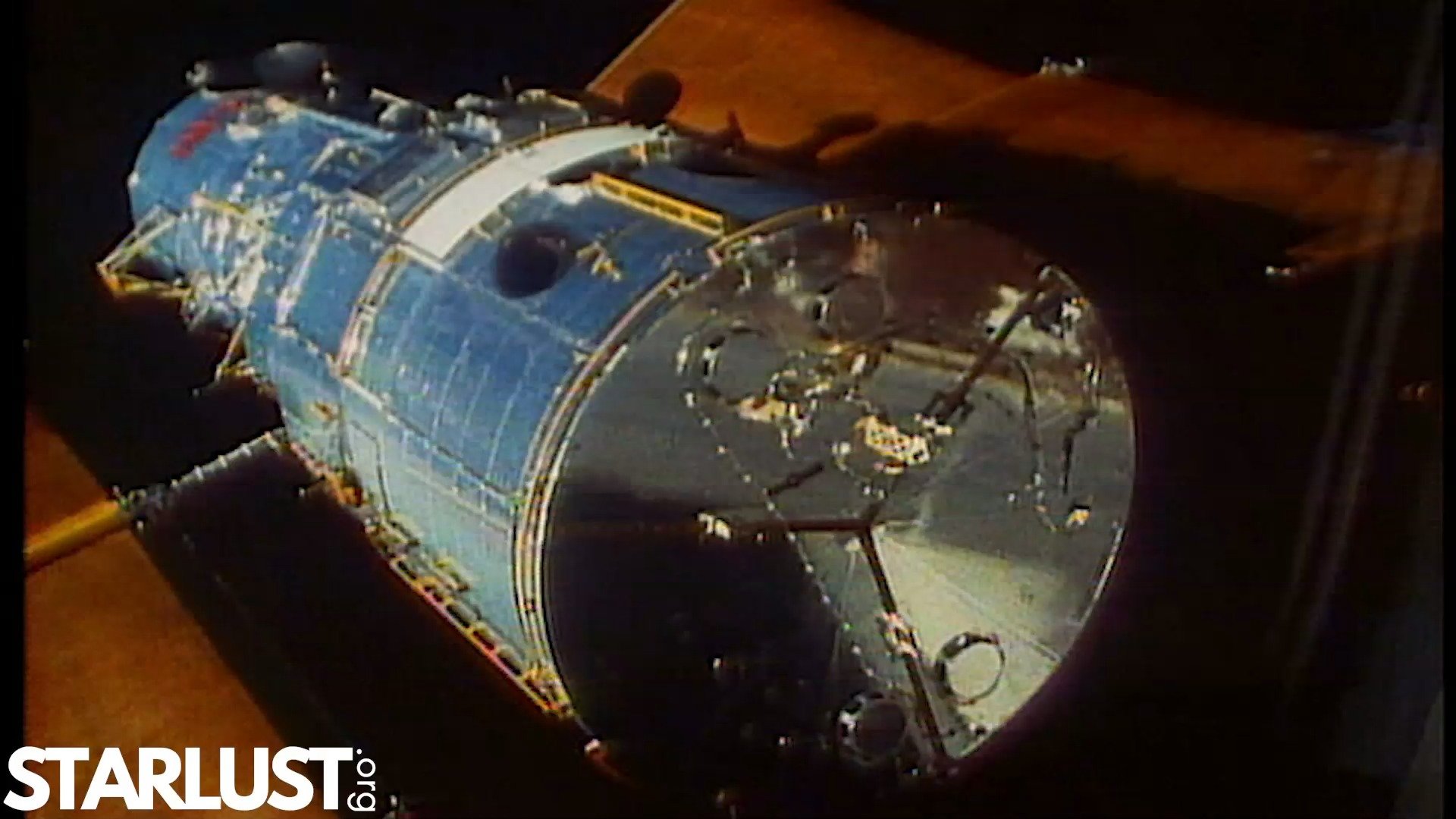
NASA's Hubble completes 200,000th orbit while hunting a reappearing supernova
NASA's Hubble Space Telescope completed its 200,000th orbit around Earth on September 19, 2026, more than 36 years after launch — having traveled over 5 billion miles and made more than 1.7 million observations. The milestone came while Hubble captured an image of galaxy cluster MACS J0417, part of an effort to catch supernova Athena reappearing through gravitational lensing, helping refine measurements of the universe's expansion rate. Athena is predicted to reappear between now and March 2027, and NASA expects Hubble to remain productive well into the next decade. Credit: NASA, ESA, STScI, M. Pascale (UCLA), A. Feild (STScI), A. Riess (STScI/JHU); Image Processing: J. DePasquale (STScI); additional images/video via Getty Images
 0:12
0:12
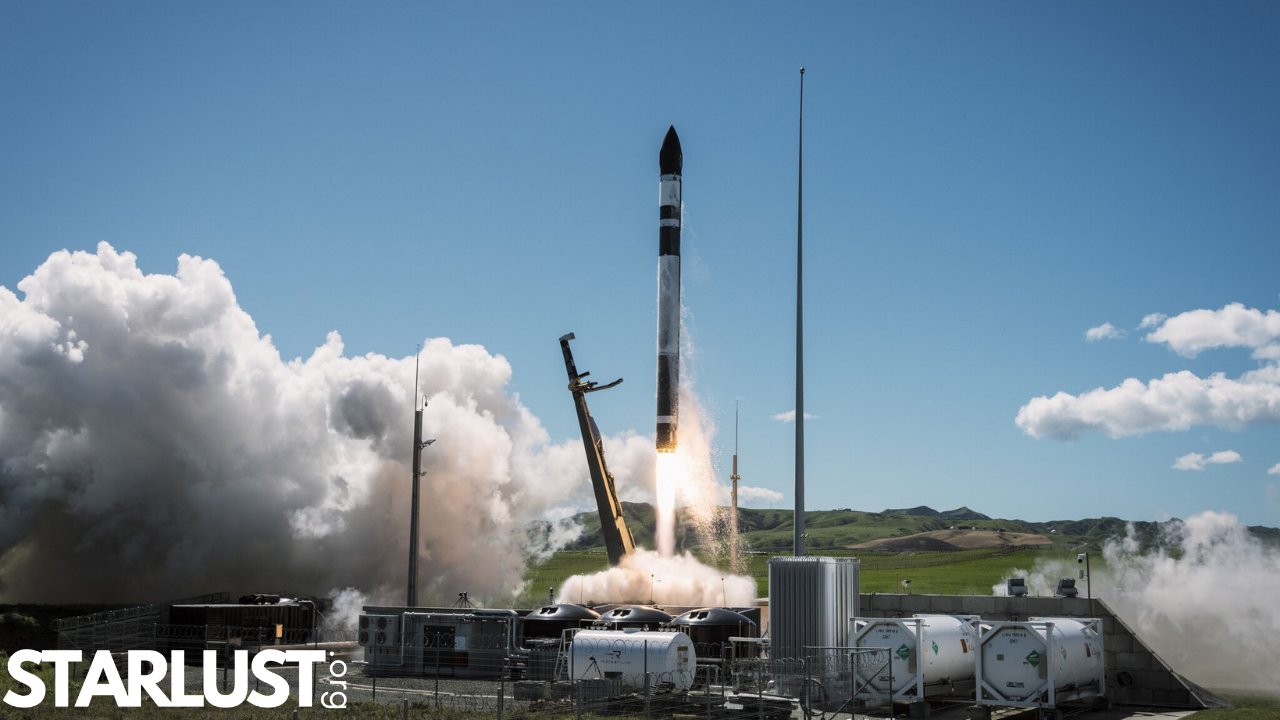
Rocket Lab launches 97th Electron mission, deploys 13th StriX satellite
Rocket Lab launched its "Owlright, Owlright, Owlright" mission on September 26, 2026, delivering the 13th StriX satellite for Synspective into a 559-kilometer low Earth orbit. The Electron vehicle launched from Rocket Lab Launch Complex 1B in New Zealand — on the first attempt, keeping a perfect mission success record across the partnership. This marked the 97th overall mission for Electron and the 18th of 2026, pushing the rocket to within three flights of its 100th overall launch, powered by a unique battery-driven turbopump architecture no other rocket has replicated. Video Credit: Rocket Lab