 0:59
0:59
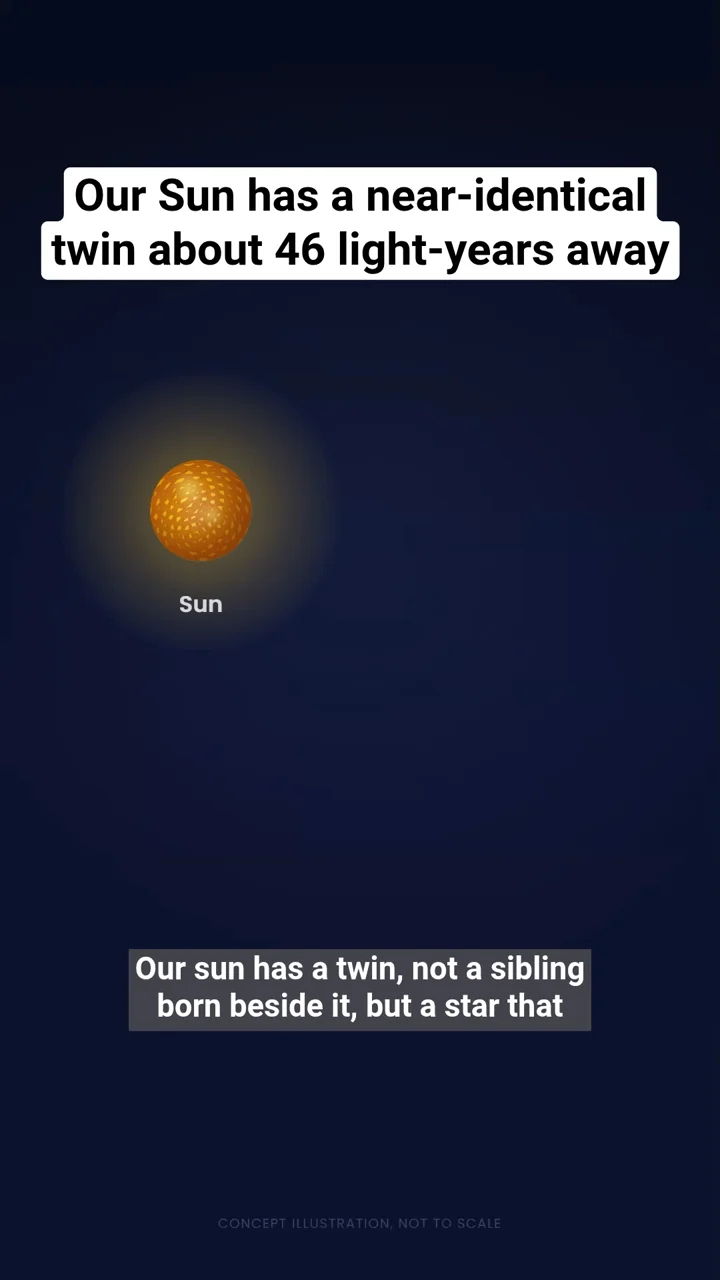
Our Sun has a near-identical twin about 46 light-years away
Our Sun has a twin: 18 Scorpii, a star about 46 light-years away in Scorpius that matches the Sun in age, mass, size, and surface temperature, with brightness changes almost identical to the Sun’s. It is a solar twin, meaning a star with very similar temperature, surface gravity, and composition, not necessarily one born in the same cluster. In March 2026, astronomers using Gaia data cataloged 6,594 solar twins within about 1,000 light-years, many aged 4 to 6 billion years like the Sun, which suggests the Sun may have migrated outward from near the galaxy’s center with many of them. Studying twins helps astronomers see whether the Sun is a typical star. Credit: Tokyo Metropolitan University and the National Astronomical Observatory of Japan (NAOJ), 2026; Villanova University via NBC News; Lowell Observatory and Tennessee State University via SpaceNews
More Videos
 12:46
12:46
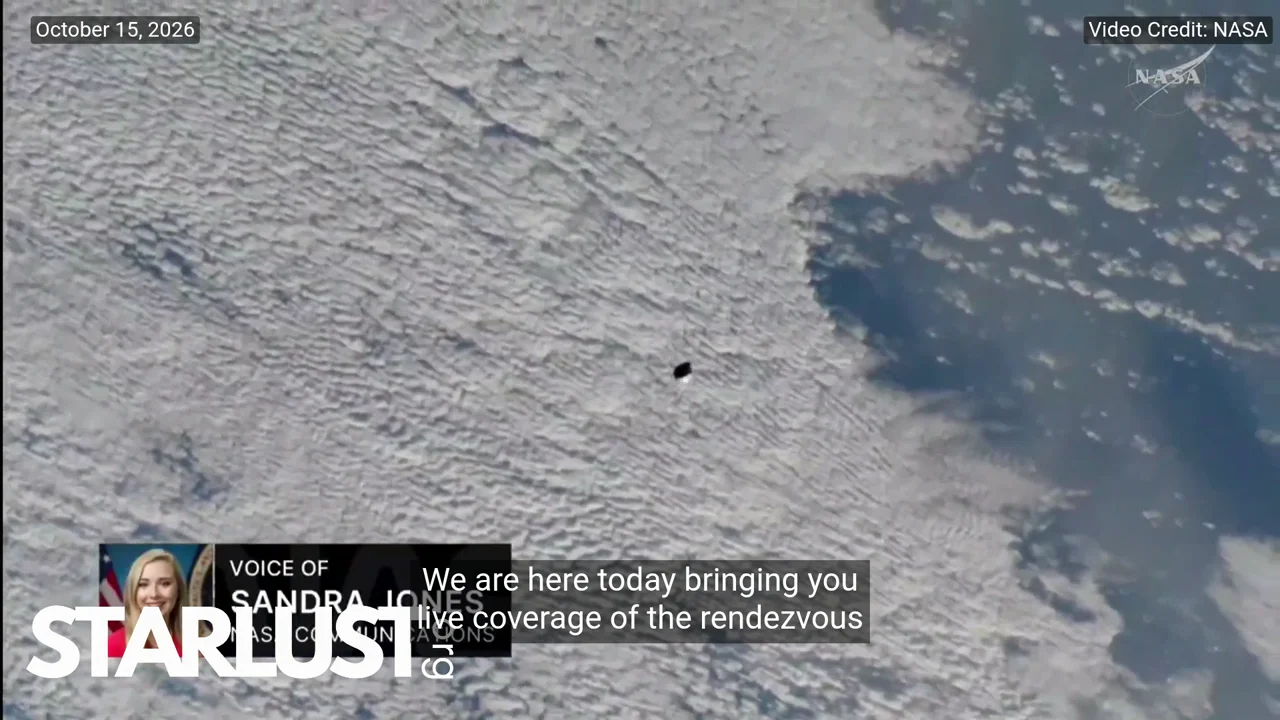
WATCH: SpaceX Dragon arrives and docks at the ISS, delivering 6,300 pounds of cargo
SpaceX’s Dragon cargo spacecraft has docked with the International Space Station, delivering over 6,300 pounds of supplies, equipment, and scientific experiments for the Expedition 75 crew. This is SpaceX’s 35th commercial resupply mission to the station for NASA. The cargo includes the final set of roll-out solar arrays, along with hardware to manufacture artificial retinas and 3D heart tissue models in microgravity. Researchers will also study glass formation and brain organoids to explore potential treatments for neurodegenerative diseases. Dragon launched aboard a Falcon 9 rocket on October 13 and is scheduled to return to Earth in mid-November with research samples and cargo. Video edited using livestream footage owned by NASA.
 5:55
5:55
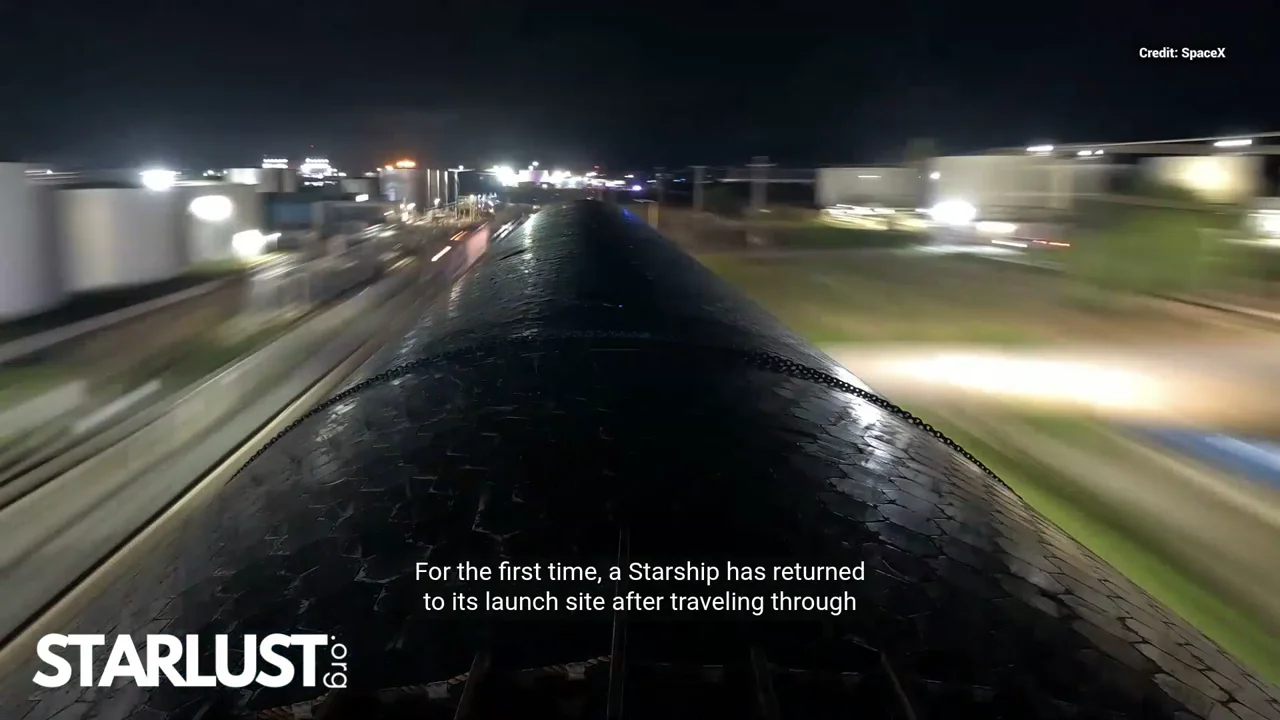
SpaceX's Ship 40 returns to its launch site! What's next for Starships?
SpaceX’s Ship 40 has returned to Starbase after Starship’s 13th flight test on July 24, 2026. During the mission, Starship deployed 20 next-generation Starlink V3 satellites on a suborbital trajectory, demonstrated an in-space Raptor engine relight, and completed a soft splashdown in the Indian Ocean. After more than two months of recovery and transport, the spacecraft is back in Texas, where SpaceX can examine its flown heatshield, engines, and other systems to improve future Starship missions. Video credit: SpaceX / Starlink
 11:41
11:41
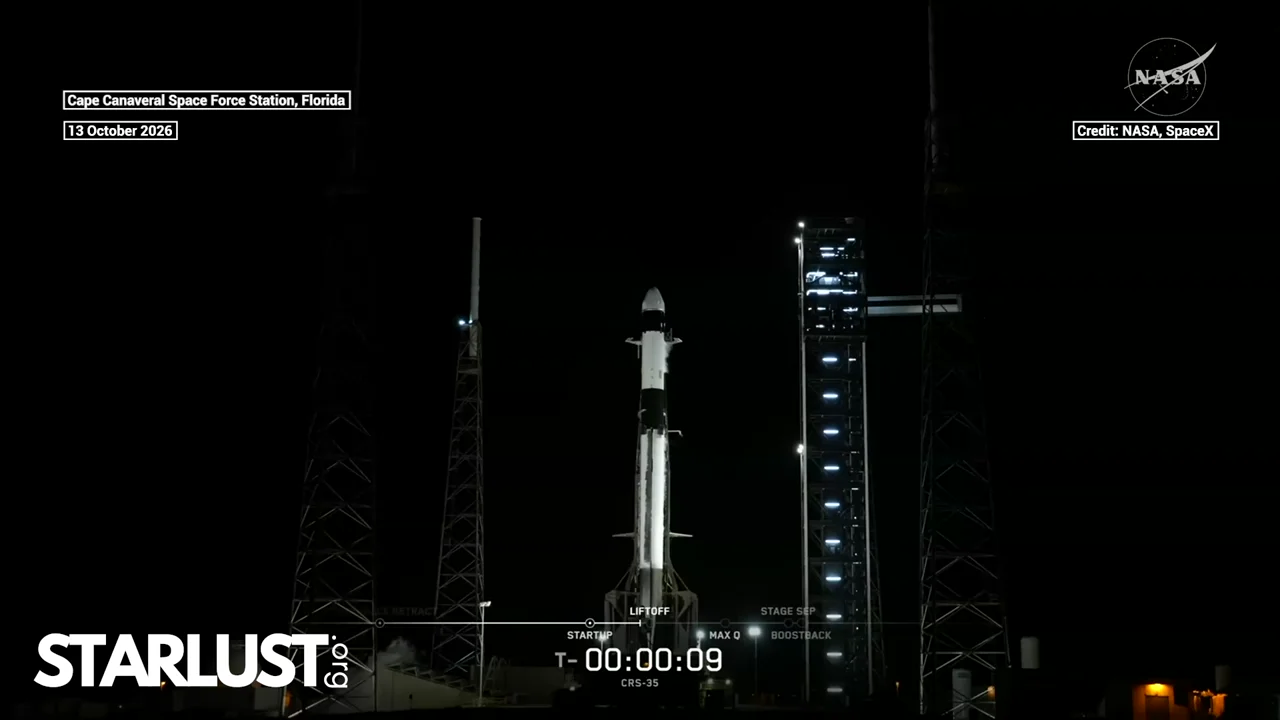
NASA, SpaceX launch Dragon’s 35th CRS mission to ISS, Falcon 9 booster nails landing
SpaceX launched NASA’s CRS-35 cargo mission to the International Space Station on Tuesday, October 13, carrying more than 6,300 pounds of science and supplies. The Falcon 9 first-stage booster, flying for the eighth time, successfully landed at Landing Zone 40 at Cape Canaveral. Dragon is scheduled to dock with the ISS on October 15 at approximately 11 a.m. EDT. Video credit: NASA, SpaceX
 8:17
8:17
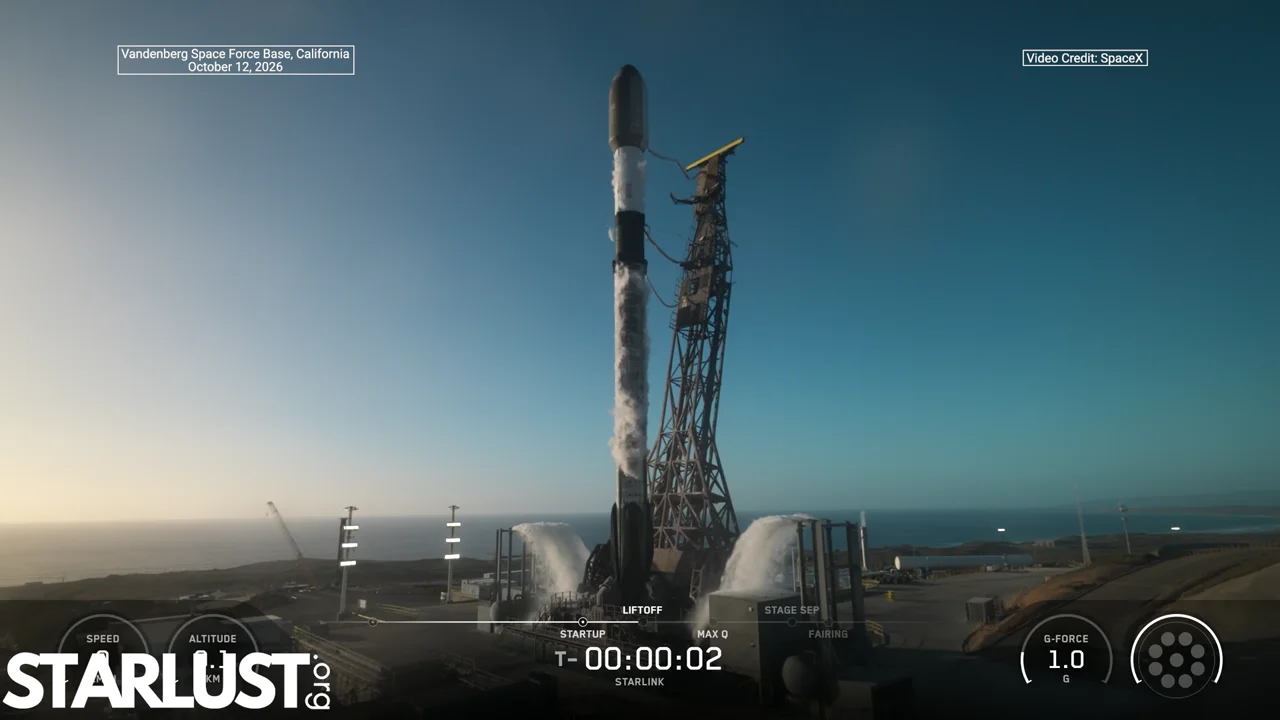
LIFTOFF! SpaceX launches 27 Starlink satellites from California, sticks landing
SpaceX launched 27 Starlink V2 Mini Optimized satellites on a Falcon 9 from Space Launch Complex 4E at Vandenberg Space Force Base, California, at 5:28 p.m. PDT on October 12, 2026. The first stage, booster B1088 on its 20th flight, landed on the droneship Of Course I Still Love You in the Pacific Ocean nearly 8.5 minutes after liftoff. SpaceX confirmed the deployment of all 27 satellites, which add to the Starlink broadband constellation. The same booster previously launched NROL-126, Transporter-12, NASA’s SPHEREx, NROL-57, USSF-366, and 14 Starlink missions. Video Credit: SpaceX
 5:38
5:38
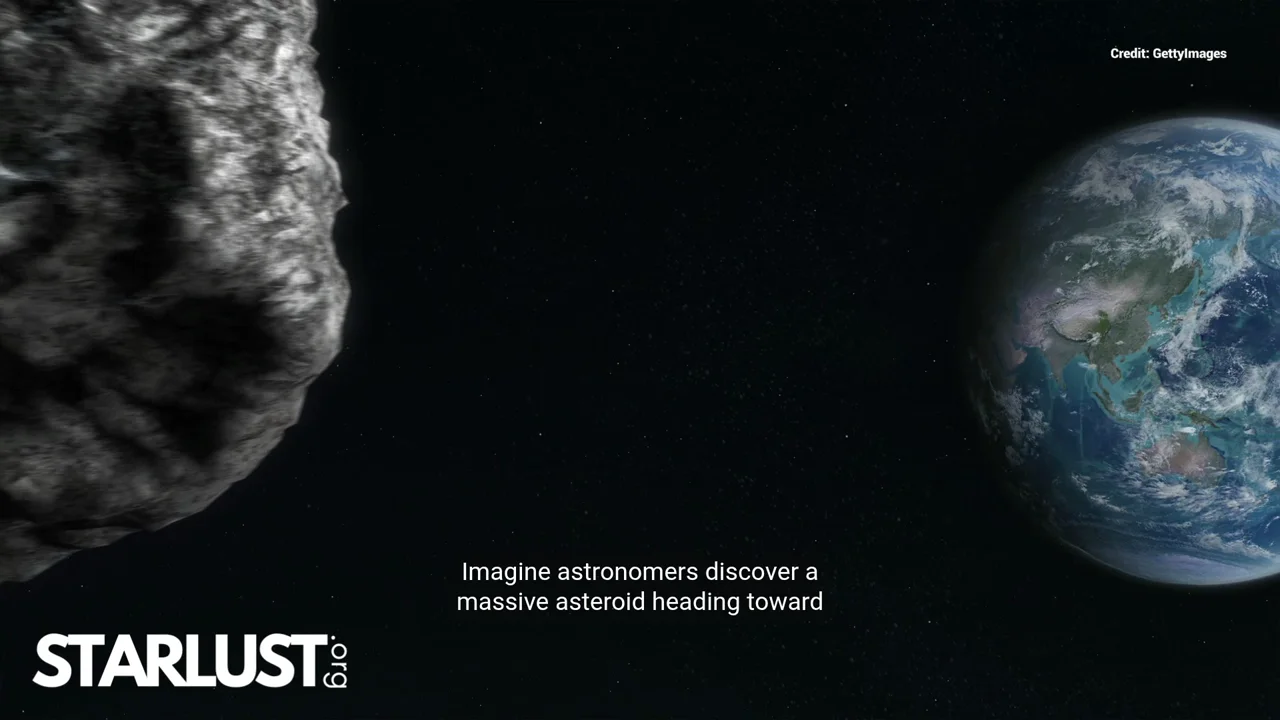
Can a nuclear blast save Earth from incoming asteroid? Scientists test 2 methods
Could a nuclear explosion stop an asteroid heading toward Earth? A new study explores two proposed defense methods, including one that uses a prepared crater to improve energy transfer. Simulations show different changes in asteroid velocity, but neither method has been demonstrated on a real asteroid. Here's what the research reveals about humanity's potential last-resort planetary defense. Video Credit: NASA DART mission footage and imagery: NASA. Additional planetary-defense information: NASA, GettyImages, Lawrence Livermore National Laboratory, Space: Science & Technology, AI generated visuals (Google Gemini & Chatgpt)
 2:32
2:32
NASA veteran claims electric fields can push a spacecraft without fuel
A NASA veteran says electric fields alone can push an object without propellant, but the claim has no published independent replication in the latest reporting we found (May 2026). Charles Buhler, who helped set up the Electrostatics and Surface Physics Laboratory at NASA’s Kennedy Space Center, and his company Exodus Propulsion Technologies say asymmetric electric fields produce a “New Force,” with their best device making about 10 millinewtons of thrust. Scientists point to the EmDrive, whose apparent thrust researchers at Dresden University of Technology traced to heating of the test equipment, and say independent replication is the key test. Video Credit: Alt Propulsion (Alternative Propulsion Engineering Conference, APEC) via YouTube Image Credit: Getty Images; NASA; Exodus Propulsion Technologies; Satellite Propulsion Research Ltd; NASA Eagleworks (Advanced Propulsion Physics Laboratory); Dresden University of Technology; AI-generated visuals; Centauri Dreams Source: NASA Technical Reports Server (NTRS); Marc Millis, Centauri Dreams (2018)
 3:59
3:59
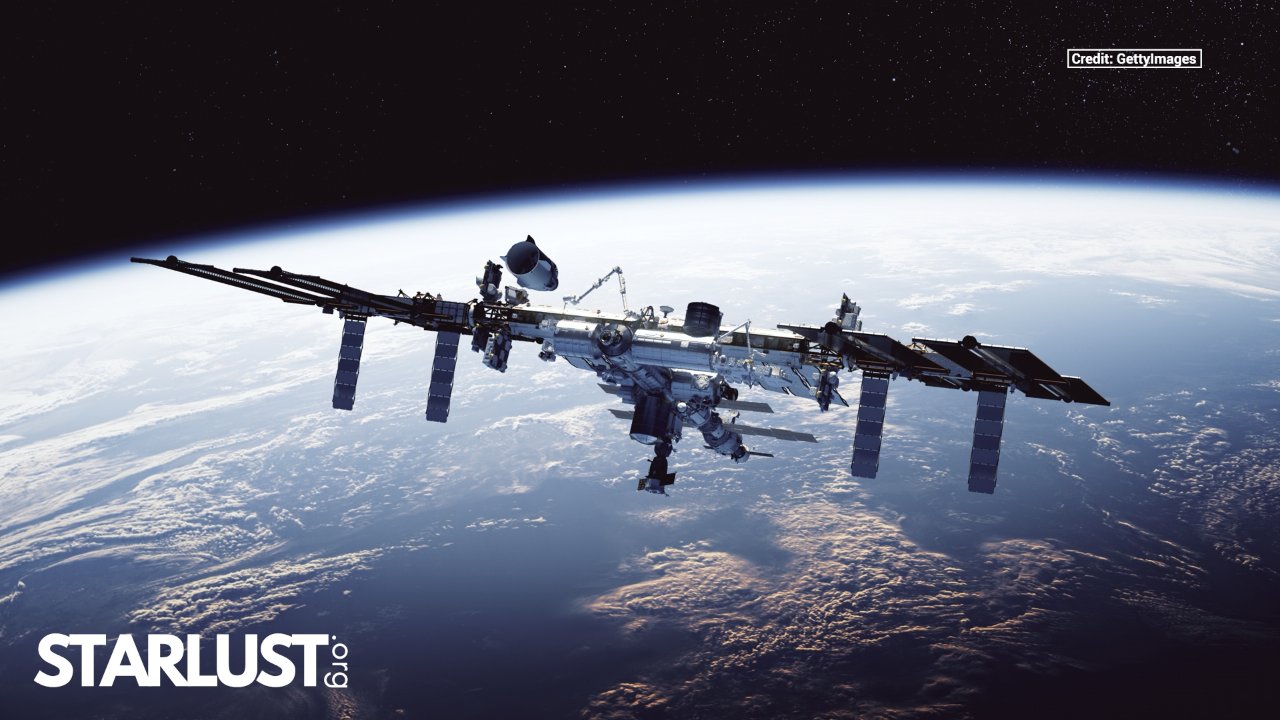
NASA opens the door to commercial space stations. Here's what NASA plans next
NASA has released its final Request for Proposals for commercial space stations, seeking companies to design, build, test, certify, and operate destinations for human spaceflight in low Earth orbit. The agency plans to select two or more contractors for early development, with proposals due December 8, 2026, and contract awards expected in spring 2027. The initiative aims to sustain research, astronaut training, and technology development in orbit after the International Space Station retires. Video Credit: NASA / GettyImages / acquisition.gov
 4:57
4:57
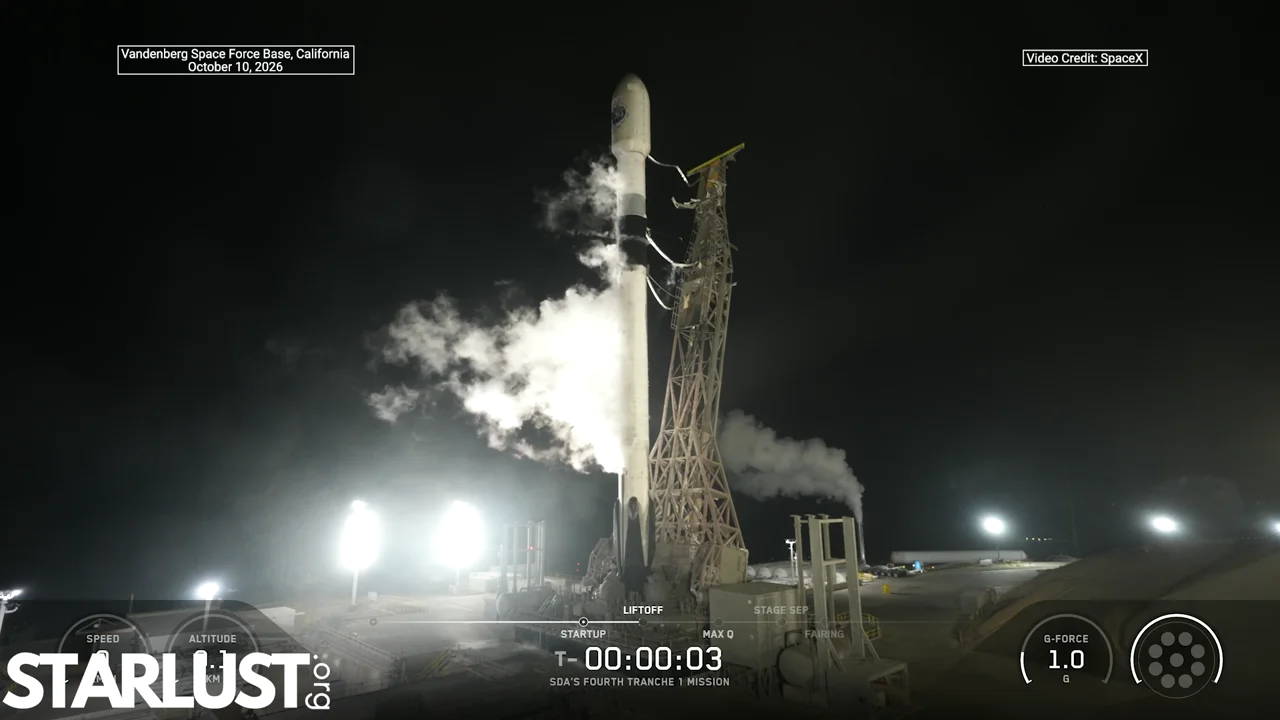
SpaceX launches 21 Northrop Grumman military satellites, sticks landing
SpaceX launched 21 Northrop Grumman-built data transport satellites for the U.S. Space Development Agency on a Falcon 9 from Space Launch Complex 4E at Vandenberg Space Force Base, California, at 12:39 a.m. PDT on October 10, 2026, five days after an automatic abort halted the first attempt. The first stage, on its sixth flight, landed at Landing Zone 4 a little over seven minutes after liftoff. It was the agency’s fourth Tranche 1 data transport launch, bringing 84 of the 126 Transport Layer satellites to orbit and adding a fourth plane to its military communications and missile-warning network. Video Credit: SpaceX
 5:19
5:19
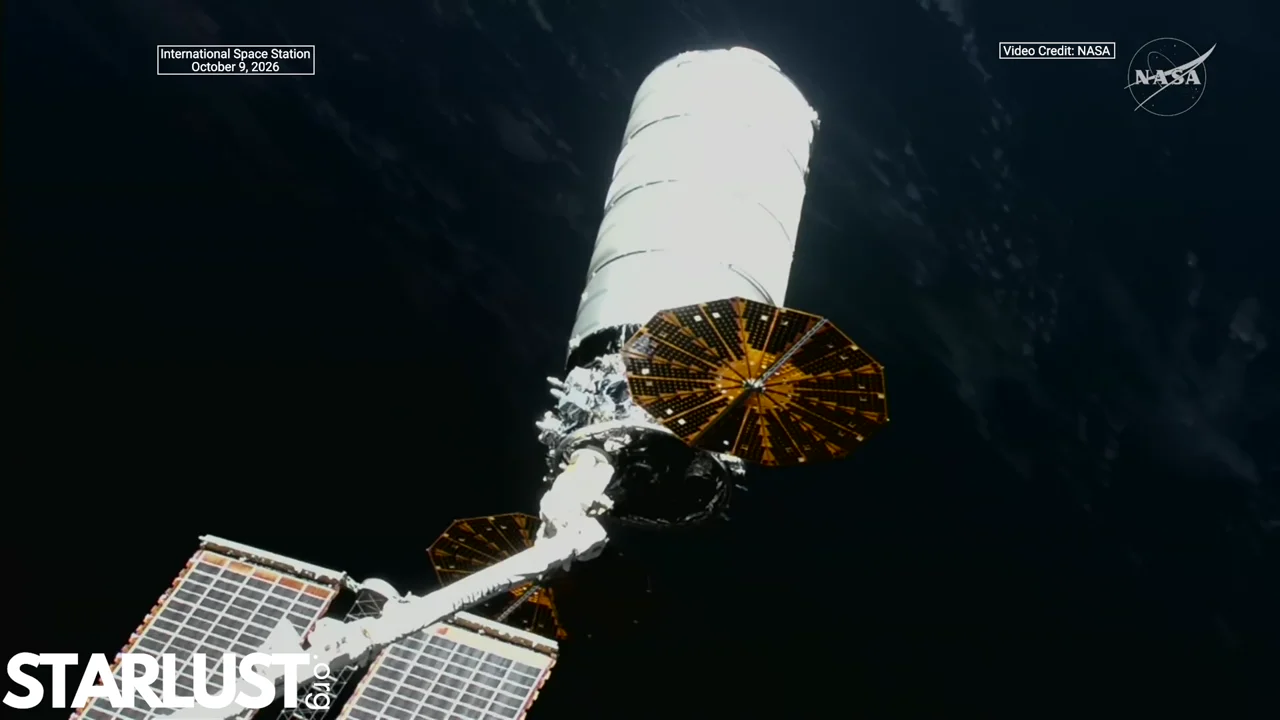
Northrop Grumman’s Cygnus XL departs the ISS after nearly 6 months at the station
Northrop Grumman’s Cygnus XL cargo spacecraft departed the International Space Station on October 9, 2026, after nearly six months at the orbiting laboratory. Ground controllers commanded the station’s Canadarm2 robotic arm to detach it from the Unity module’s Earth-facing port and release it at 12:44 p.m. EDT, while the station flew about 260 miles above the Pacific Ocean. Cygnus XL arrived in April with about 11,000 pounds of supplies, science investigations, and other cargo for NASA and its partners, and it left loaded with several thousand pounds of disposal items. Mission controllers will command it to deorbit on October 12, when it will burn up harmlessly in Earth’s atmosphere. Video Credit: NASA
 0:23
0:23
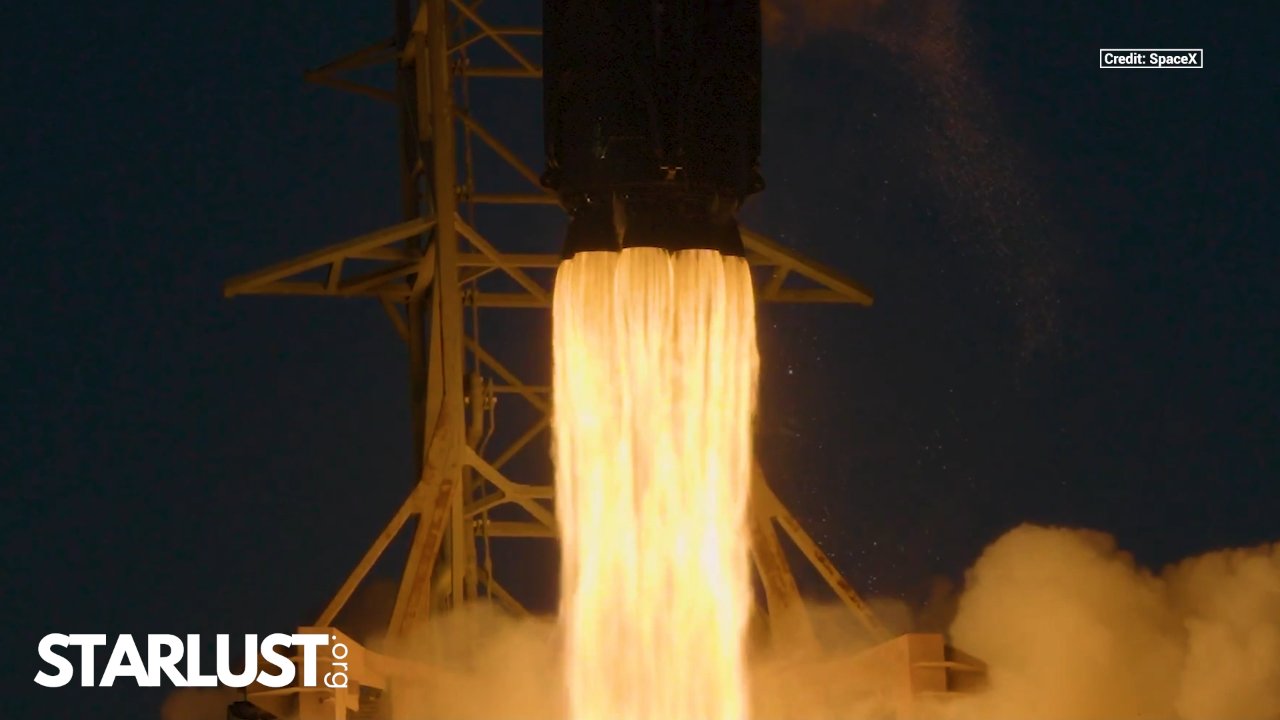
Watch the flames build as SpaceX’s Falcon 9 sends Cygnus XL toward the space station
A stunning close-up view captures the flames building and the exhaust plume growing as SpaceX’s Falcon 9 lifts off with Northrop Grumman’s Cygnus XL spacecraft on April 11, 2026. The rocket was carrying approximately 11,000 pounds of cargo and science investigations to the International Space Station. Credit: SpaceX
 1:15
1:15
NASA's James Webb finds farthest fast radio burst came from a dwarf galaxy far smaller than expected
NASA’s James Webb Space Telescope pinpointed the host galaxy of FRB 20240304B, the most distant fast radio burst seen to date, according to a study published on October 8, 2026, in Science. MeerKAT detected the burst on March 4, 2024, but no ground-based telescope could see its galaxy, so Webb’s NIRCam found a small, star-forming dwarf galaxy and NIRSpec measured a redshift of 2.148, placing the burst just 3 billion years after the Big Bang. The galaxy was about 1,000 times less massive than expected, leading lead author Manisha Caleb of the University of Sydney to say it is very unlikely the burst came from a merger of two neutron stars, which could point instead to a young magnetar. Credit: NASA, ESA, CSA, STScI, T. Nanayakkara (USYD), J. DePasquale (STScI), N. Bartmann (ESA/Webb)
 1:08
1:08
NASA's James Webb reveals how a young star carved a 3.5-light-year cavity in the NGC 7129 nebula
NASA’s James Webb Space Telescope revealed protostars and young stars at different stages of development in NGC 7129, a stellar nursery about 3,300 light-years away in the constellation Cepheus. The image, released on October 6, 2026, was captured with Webb’s Near-InfraRed Camera, whose infrared view pierces the dust that hides young stars from many telescopes. The central star, LkH-alpha 234, weighs about 5 to 8 times the mass of the Sun and carved a golden cavity about 3.5 light-years wide with outflows from an earlier stage of its life, while a clumpy red region to its right hides even younger protostars ejecting outflows of superheated gas. Astronomers will use the data to study how these stars and protostars influence the surrounding gas and dust. Credit: NASA, ESA, CSA, STScI, A. Pagan (STScI), N. Bartmann (ESA/Webb)