 0:38
Trump on whether NASA will have astronauts on the Moon before the end of his term
On April 29, with the #ArtemisII crew and #NASA Administrator Jared Isaacman standing behind him at the #OvalOffice, President Donald Trump sounded reasonably optimistic as he spoke about the possibility of American astronauts returning to the Moon's surface during his 2nd term.
More Videos
 1:29
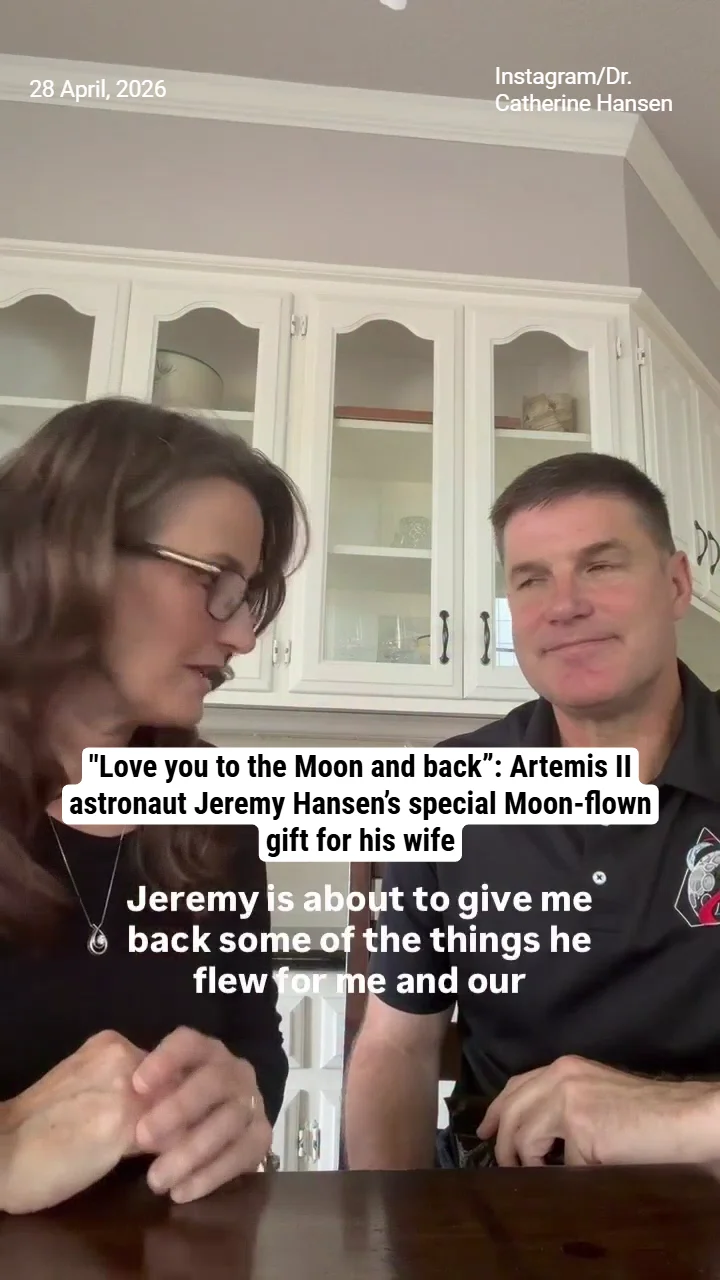
Artemis II astronaut Jeremy Hansen’s special Moon-flown gift for his wife
#ArtemisII Mission Specialist and #CanadianSpaceAgency astronaut Jeremy Hansen flew a set of souvenirs around the Moon. They included Moon pendants embedded with family birthstones and earrings belonging to his wife, Dr. Catherine Hansen—all of which he handed over to her.
 0:05
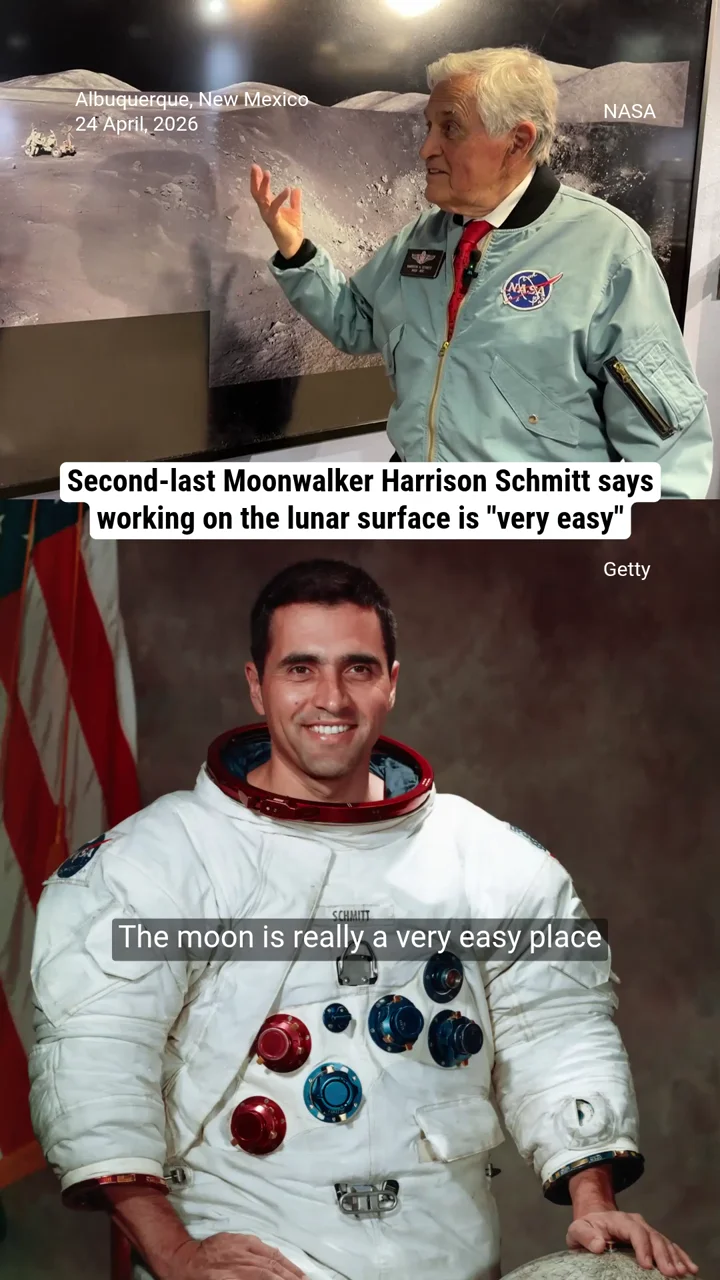
Second-last Moonwalker Harrison Schmitt says working on the lunar surface is " very easy"
Harrison Schmitt is one of the four surviving astronauts who walked on the Moon during the Apollo missions more than 50 years ago. As the first scientist to set foot on the lunar surface, he spent three days alongside Eugene Cernan collecting rock and soil samples during the Apollo 17 mission. Speaking to the Associated Press, Schmitt reflected on his experience, saying that working on the Moon is, surprisingly, “very easy.” Images: credit: 1) Portrait of Harrison H. (Jack) Schmitt, lunar module pilot for Apollo 17 (Getty/Bettmann) 2) Schmitt using a scoop on the lunar surface during Apollo 17, December 1972 (Getty/Heritage Images) 3) Schmitt with the U.S. flag on the Moon, Apollo 17, December 1972 (Getty/Heritage Images) 4) Schmitt seated in the Lunar Roving Vehicle at Station 9 (Van Serg Crater) during EVA-3 at the Taurus-Littrow landing site (Getty/Bettmann)
 0:25
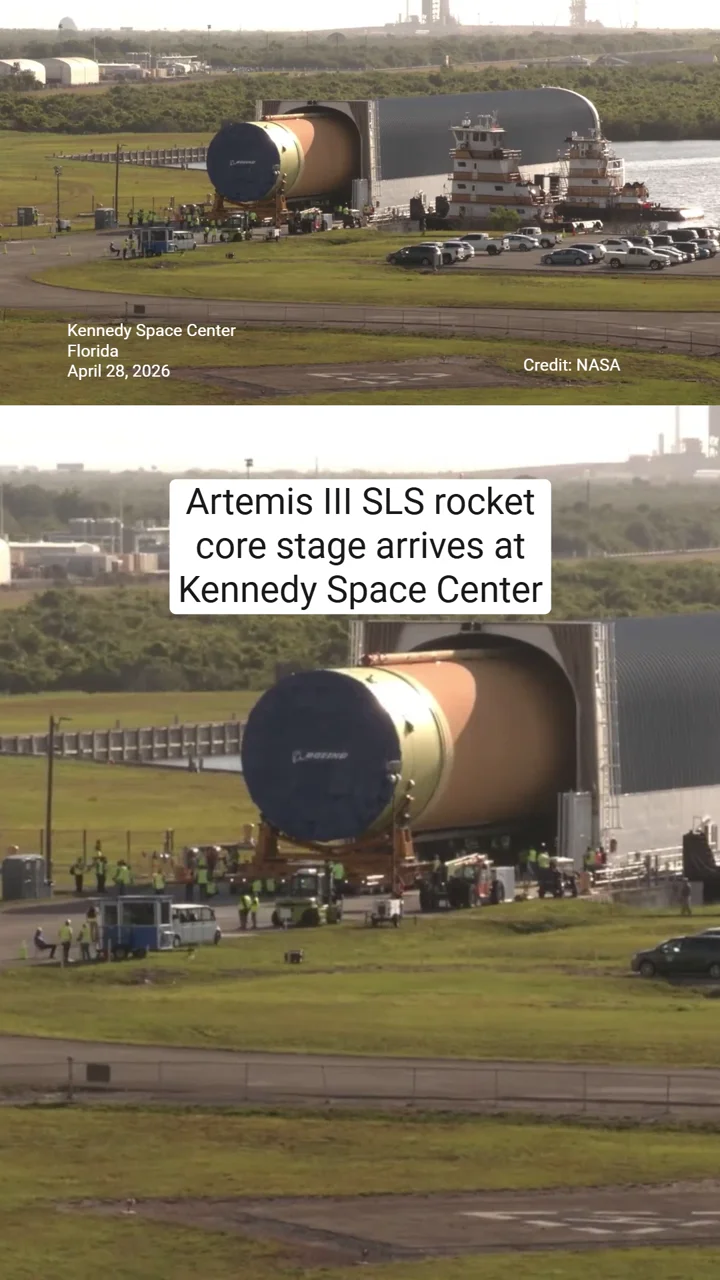
Artemis III SLS core stage arrival at Kennedy Space Center
The massive 212-feet tall structure that houses the liquid hydrogen (LH2) tank, liquid oxygen (LOX) tank, intertank, and forward skirt, arrived at NASA’s Vehicle Assembly Building at Kennedy to be vertically integrated with the already-arrived boat-tail and engine section in the facility’s High Bay 2. The massive part arrived on Tuesday, April 28, 2026, having traveled over 900 miles from the Michoud Assembly Facility in New Orleans.
 0:47
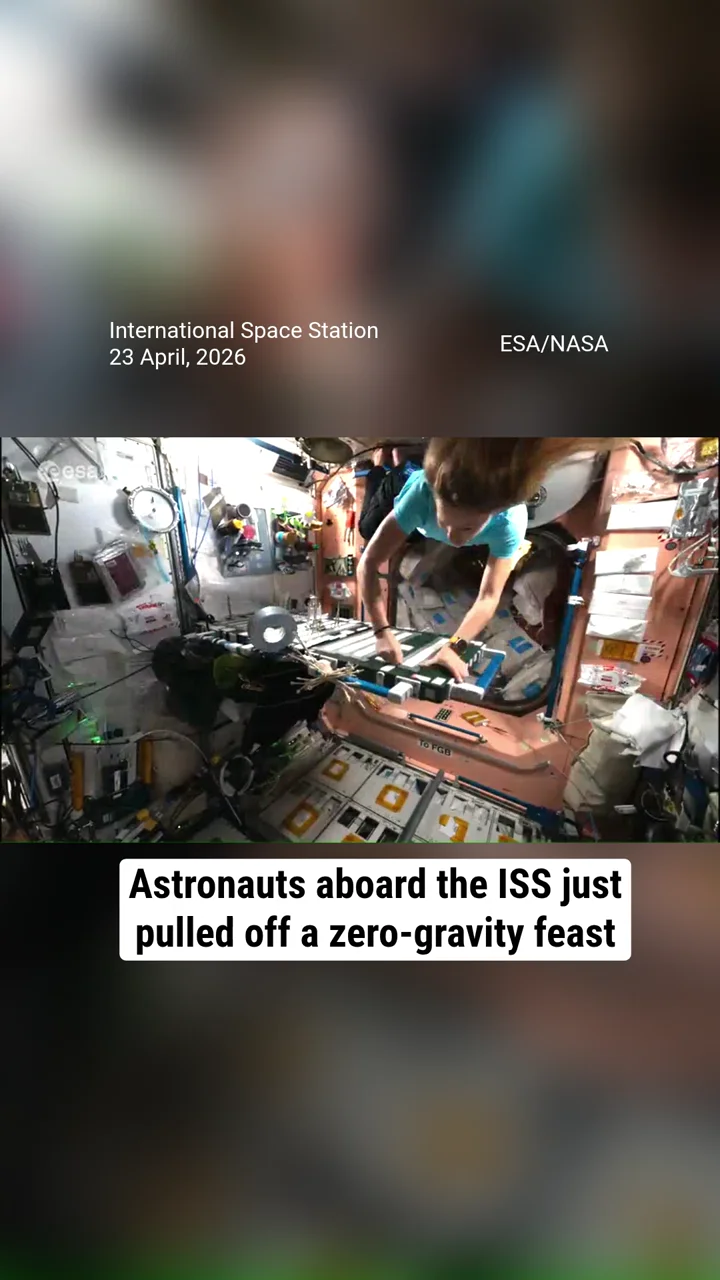
Astronauts aboard the ISS just pulled off a zero-gravity feast
Somewhere between starlight and silence, the crew of the International Space Station decided to take a pause. They took some time out to sit together for a Saturday night meal. Miles away from home in the cosmic wilderness the crew arranged for the meal and sat together to share laughter and stories. ESA astronaut Sophie Adenot's “bonus food,” created by multi-Michelin-starred chef Anne‑Sophie Pic before the mission, left the crew craving for more. In the clip, you can spot Jessica Meir, Jack Hathaway, Andrey Fedyaev, Sergey Kud-Sverchkov, Sergei Mikayev, and Christopher Williams alongside Sophie Adenot. Credits: ESA/NASA Note: No edits in the video have been made by the Starlust team.
 0:13
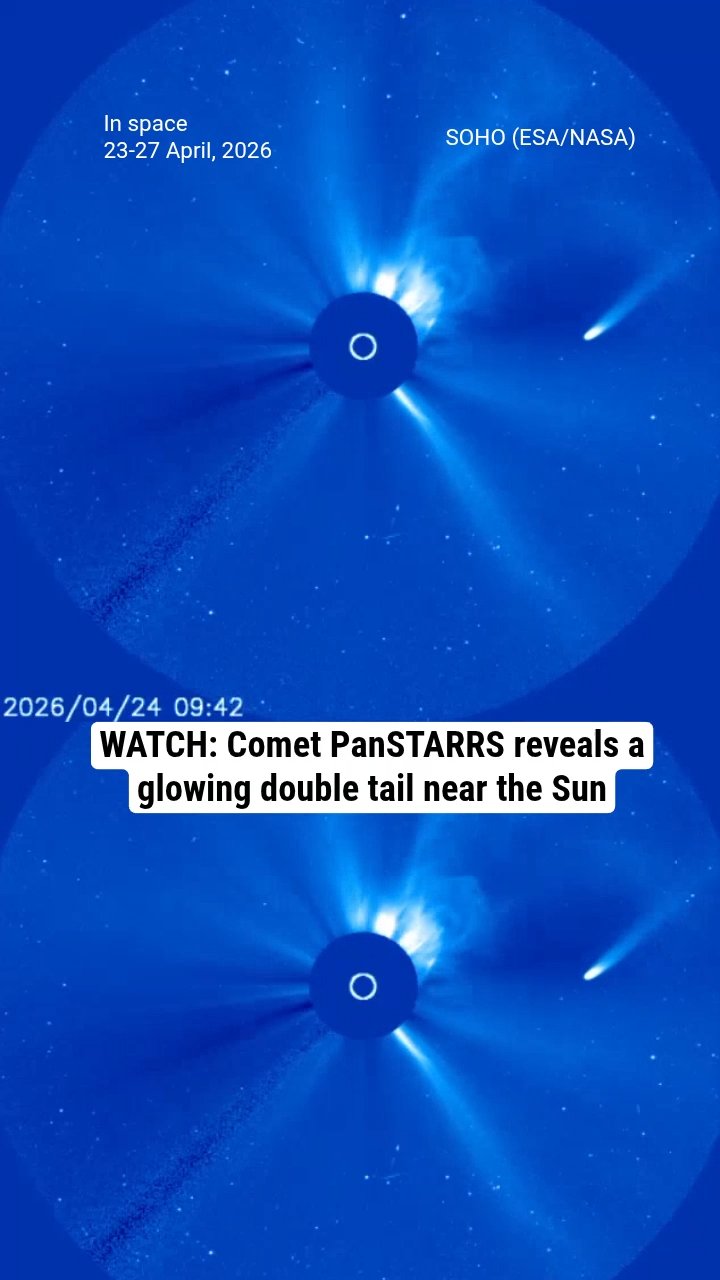
WATCH: Comet PanSTARRS reveals a glowing double tail near the Sun
Comet PanSTARRS just pulled off a cosmic plot twist. Although it was not visible to all of us in naked eye, it was caught in all its glory by SOHO’s LASCO's watchful eye. In this clip, the comet is seen slipping between Earth and the Sun. It first starts as a glowing streak. But with time, it suddenly levels up near the end and flaunts its second tail. The thicker and glowing trail that you can spot is its dust tail. It's stubborn and steady in nature. And the other tail with the sharper and sleeker streak is the ion tail, which is light, electric, and pushed by the Sun’s wild solar wind. Video Credits: Courtesy of SOHO/LASCO consortium. SOHO is a project of international cooperation between ESA and NASA.
 0:06
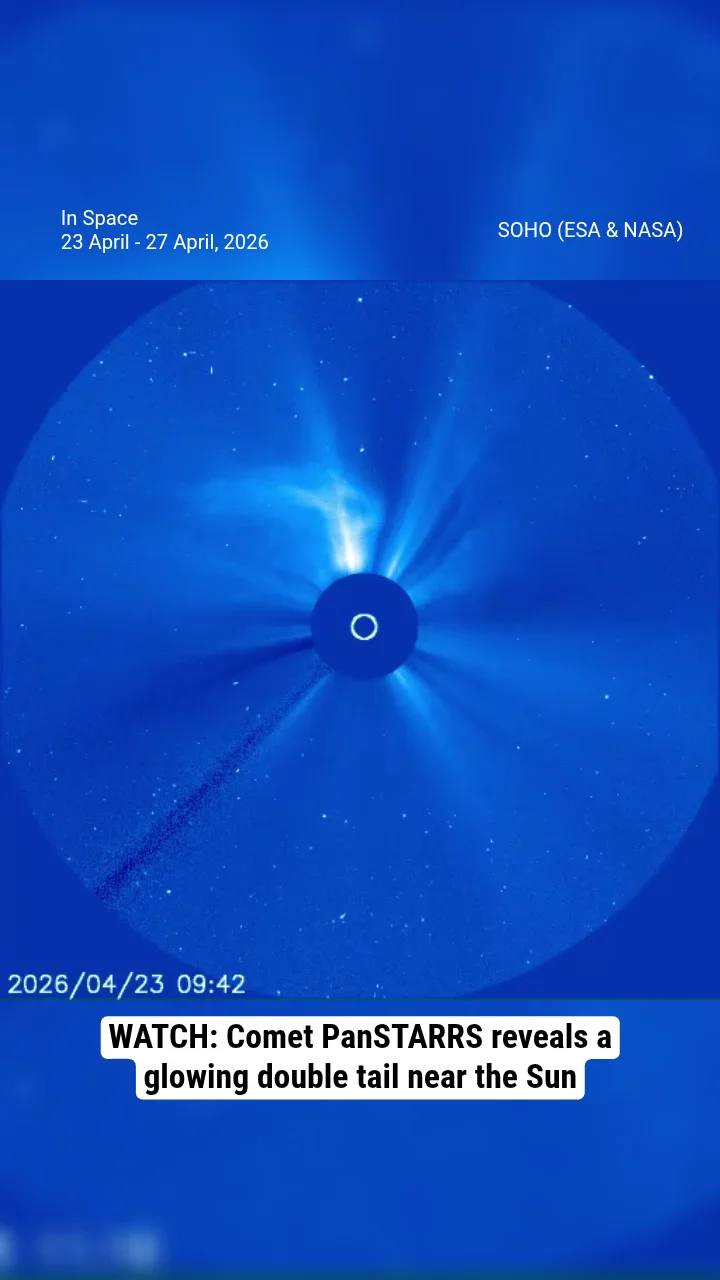
WATCH: Comet PanSTARRS reveals a glowing double tail near the Sun
Comet PanSTARRS just pulled off a cosmic plot twist. Although it was not visible to all of us in naked eye, it was caught in all its glory by SOHO’s LASCO's watchful eye. In this clip, the comet is seen slipping between Earth and the Sun. It first starts as a glowing streak. But with time, it suddenly levels up near the end and flaunts its second tail. The thicker and glowing trail that you can spot is its dust tail. It's stubborn and steady in nature. And the other tail with the sharper and sleeker streak is the ion tail, which is light, electric, and pushed by the Sun’s wild solar wind. Video Credits: Courtesy of SOHO/LASCO consortium. SOHO is a project of international cooperation between ESA and NASA.
 0:22
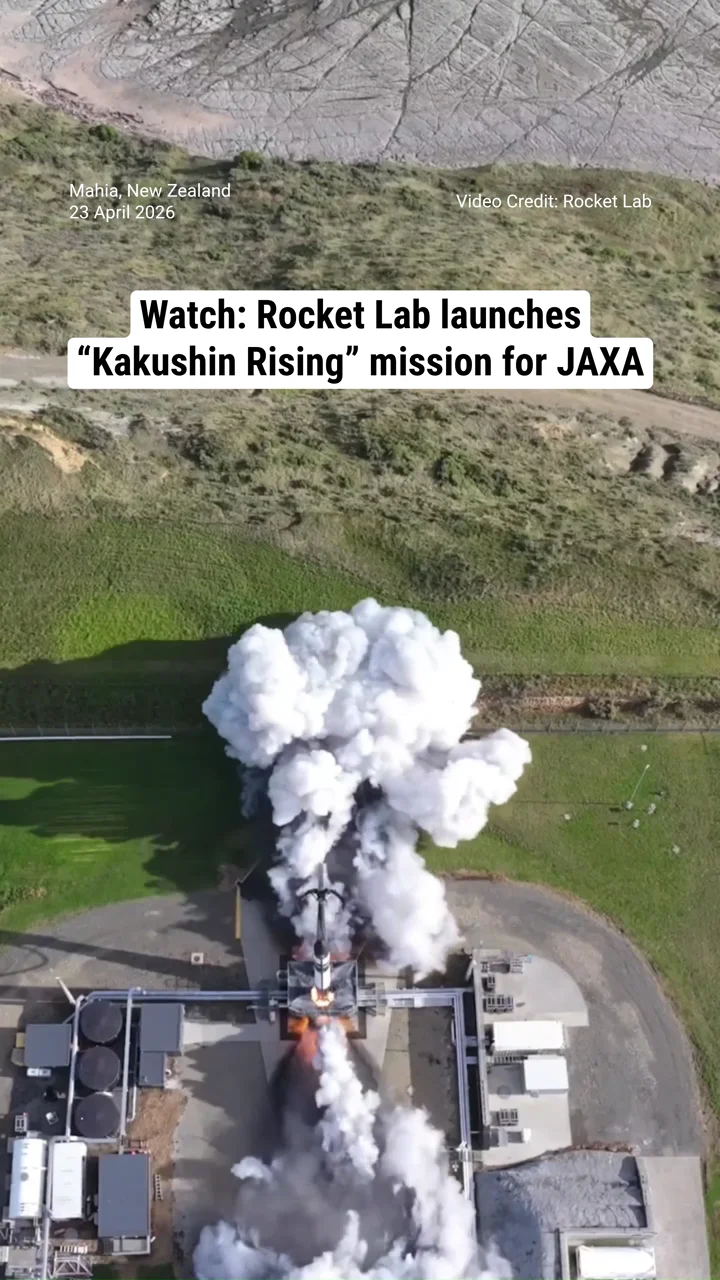
Watch: Rocket Lab Launches “Kakushin Rising” Mission for JAXA
On Thursday, April 23, 2026, Rocket Lab launched its “Kakushin Rising” mission for the Japan Aerospace Exploration Agency (JAXA). The Electron rocket lifted off from Launch Complex 1 in Mahia, New Zealand, at 3:09 p.m. NZT (11:09 p.m. EDT / 0309 GMT), delivering eight Japanese satellites into orbit. One of the payloads features a unique origami-inspired design.
 0:50
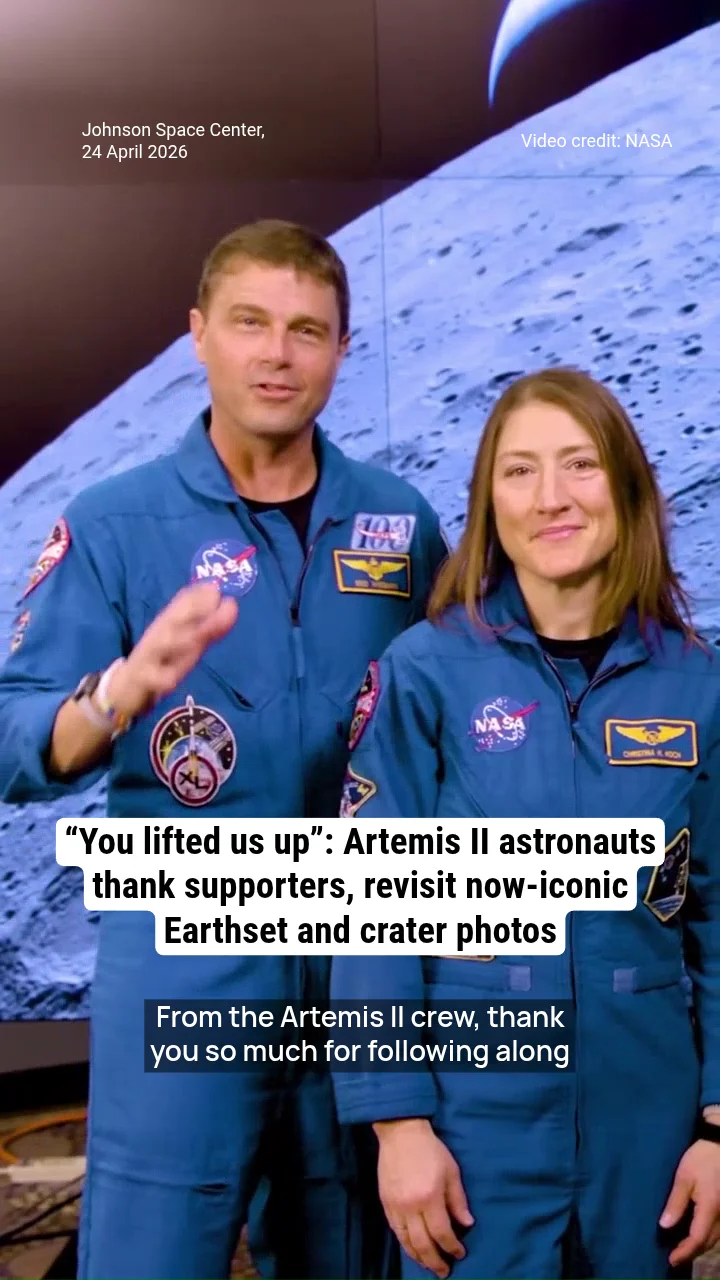
“You lifted us up”: Artemis II astronauts thank supporters, revisit now-iconic Earthset and crater photos
NASA shared a personal message of thanks from the Artemis II crew — Reid Wiseman, Victor Glover, Christina Koch and Jeremy Hansen — shared in their own words, as they reflect on their journey and look ahead to continued human exploration and more to come. The astronauts looked back at pictures they took of the Moon, the "Earthset," and newly named craters such as Carroll and Integrity during their historic mission.
 0:31
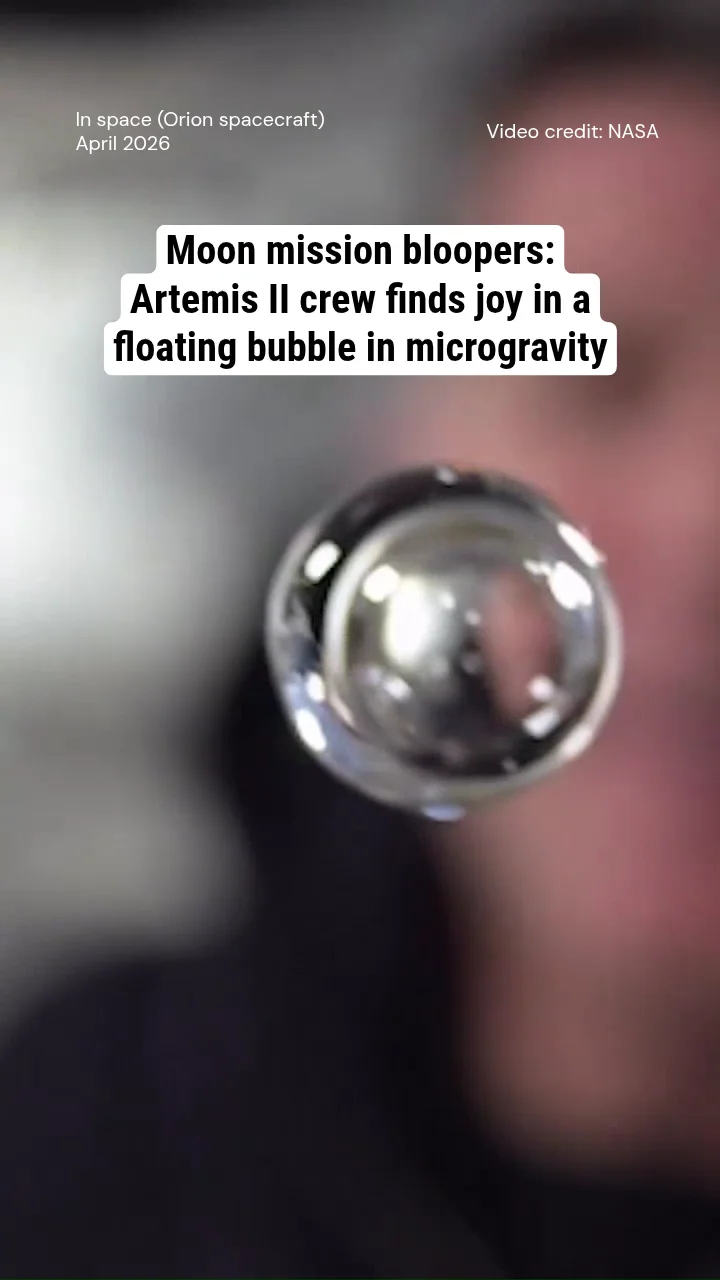
Moon mission bloopers: Artemis II crew finds joy in a floating bubble in microgravity
New NASA-shared footage from inside the Orion spacecraft (Integrity) shows the Artemis II astronauts sharing a lighthearted moment as they play with a bubble floating due to microgravity in space.
 0:25
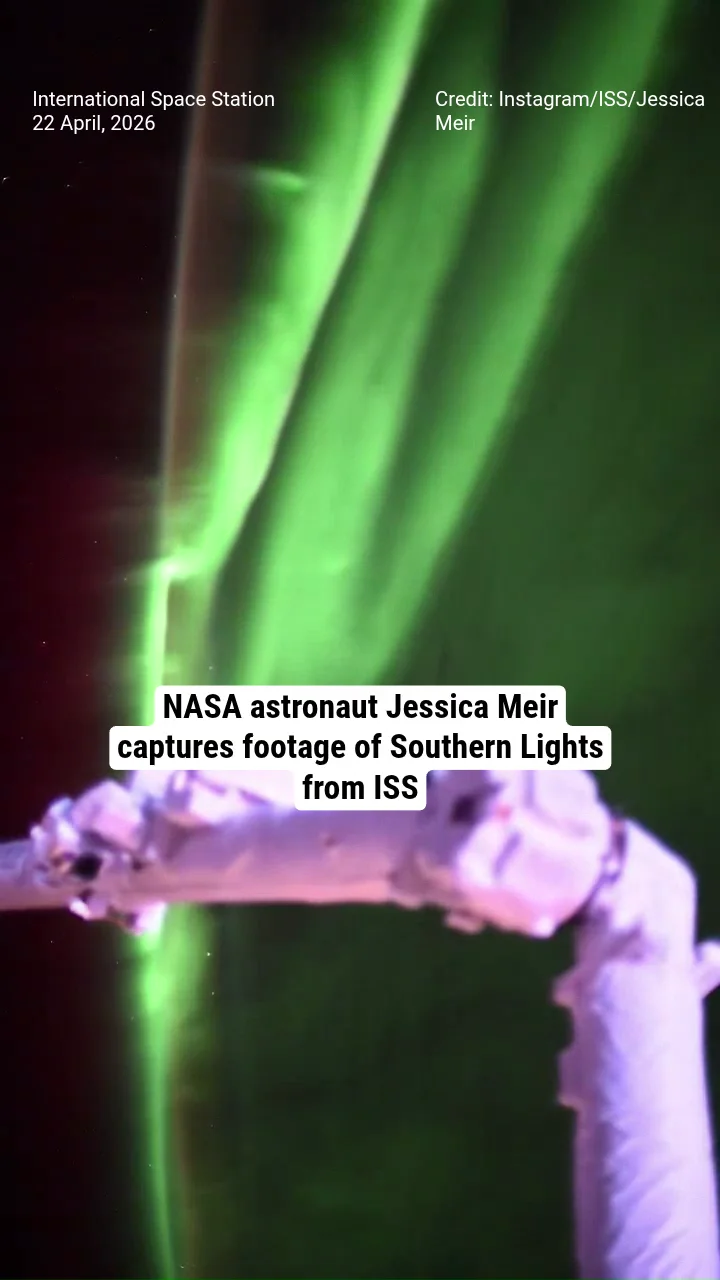
NASA astronaut Jessica Meir captures footage of Southern Lights from ISS
On Earth Day, #NASA astronaut Jessica Meir captured breathtaking footage of the Southern Lights from the cupola window of the #InternationalSpaceStation. Describing the view, she wrote on her social media handles, "Covering a majority of the area I could see, our precious blue gem had turned completely green!" The serendipity of such a massive auroral event taking place on #EarthDay was also not lost on her. "Mother Earth is undeniably gorgeous, but she is also utterly fragile. Let’s remember to treat her as well as she has treated us," she added.
 0:33
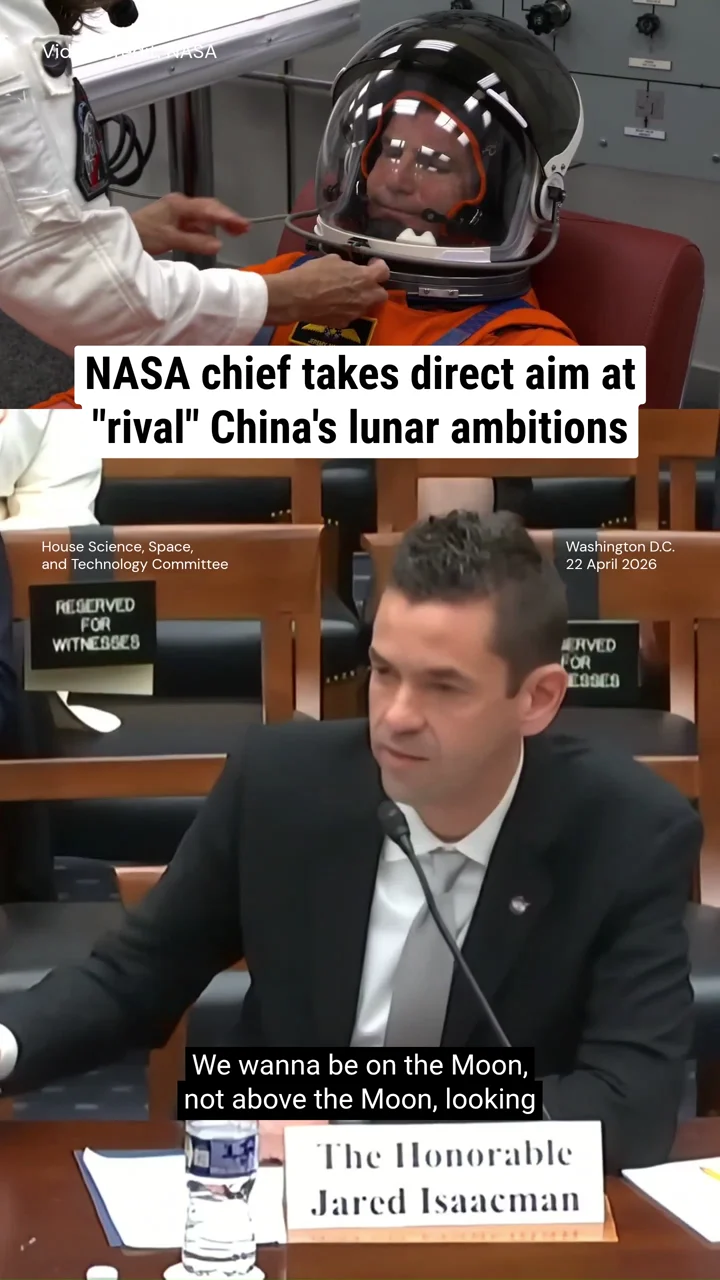
NASA chief takes direct aim at "rival" China's lunar ambitions
Speaking before Congress today, NASA Administrator Jared Isaacman discussed the United States’ space race with China. He warned that the US cannot afford to fall behind as it pushes to return astronauts to the Moon by 2028 and build a sustained lunar presence. Isaacman emphasized building American-led infrastructure on the Moon across power, communications, mobility, and habitation. He spoke about increasing launch cadence, standardizing systems like SLS and Orion, and working closely with industry to deliver faster, more reliable missions. Inset video credit: NASA Image and Video Library, "Welcome Home, Artemis II (Official NASA Recap)" (NOTE: The Starlust team merely trimmed the inset compilation and removed the original audio; no other edits have been made.)
 1:18
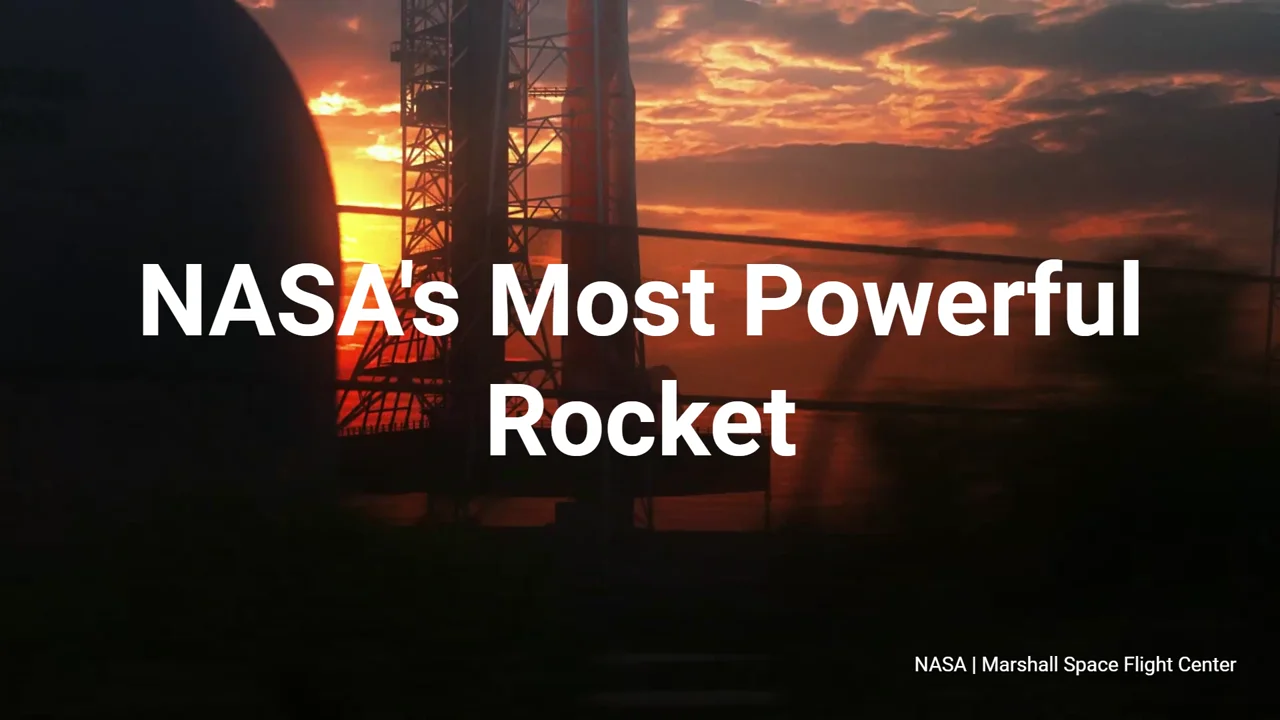
Space Launch System (SLS): NASA's Moon rocket simplified
The Artemis III SLS rocket is already in production, with its largest component headed to NASA's Kennedy Space Center for vertical integration. Thanks to the recent decision by NASA to standardize its launch architecture for a higher launch cadence, SLS will see a third flight in the current configuration with the mission slated for next year, before a change to the upper stage is made with Artemis IV the following year. With better-than-expected performance of the massive rocket during Artemis I and the recent Artemis II, Artemis III will be a test of the human landing systems in Earth orbit.