 1:09
Is post-mission depression real? NASA astronaut Anil Menon breaks it down
Ahead of his upcoming eight-month stay at the International Space Station, NASA’s Anil Menon discusses how astronauts tackle post-mission depression. Menon holds degrees in medicine and neurobiology, still actively practices emergency medicine, and was SpaceX’s first flight surgeon, supporting the 2020 Demo-2 crewed mission.
More Videos
 2:10
Why can't we see stars in space?
Why can’t we see stars in most pictures of space — or even with the naked eye while astronauts are in space? For decades, this simple question has baffled many even though the answer is simple yet fascinating. After all, if space is filled with billions of stars, why do so many photos from NASA missions show nothing but a dark black sky? In this video, we explore the real science behind why astronauts often describe space as a pitch-black void, how cameras behave differently in orbit, and why capturing stars in space is much harder than it sounds. From Moon landings and Artemis imagery to human eyesight and long-exposure photography, this quick breakdown explains the hidden physics behind one of the internet’s most misunderstood space questions. Because the stars were never missing in the first place. Video edited using footage owned by NASA. Royalty free music from Hook Sounds.
 1:41
May 31’s Full Moon will be a rare ‘Blue Micromoon’
A rare celestial event will light up the night sky on May 31, 2026, as a Full Moon appears for the second time in the same month following the Flower Moon on May 1. According to NASA, a second Full Moon within a calendar month is known as a Blue Moon. But what makes this one even more interesting is that it will also be a Micromoon. Here’s why. Read the full article on Starlust: https://starlust.org/may-31-blue-moon-is-also-going-to-be-a-micromoonheres-what-it-means/ Video edited using footage and images from NASA, Pexels, and the Movie Vertigo YouTube channel. Royalty-free music from HookSounds.
 1:52
Watch: How Christina Koch slept like a bat in space
#ArtemisII mission specialist Christina Koch slept upside down in Orion to save space. It was not just comfortable but also safer than sleeping upright because the top docking hatch area of the capsule lacked active ventilation.
 1:00
Watch: Vega-C rocket launches ESA-China's Smile spacecraft to study space weather
The Smile spacecraft lifted off aboard a Vega-C rocket from Europe’s Spaceport at 04:52 BST / 05:52 CEST (00:52 local time) on May 19, 2026. The mission’s core goal is to study how Earth reacts to solar wind, which could help improve space weather forecasting and better protect satellites, communications systems, and power grids from solar activity. The spacecraft carries four instruments — a soft X-ray imager, an ultraviolet imager, a magnetometer, and an ion analyzer. Together, they will make the first-ever X-ray observations of Earth’s magnetic field. Stay tuned to Starlust for more spaceflight updates, launch coverage, and the latest developments in space science and exploration.
 1:41
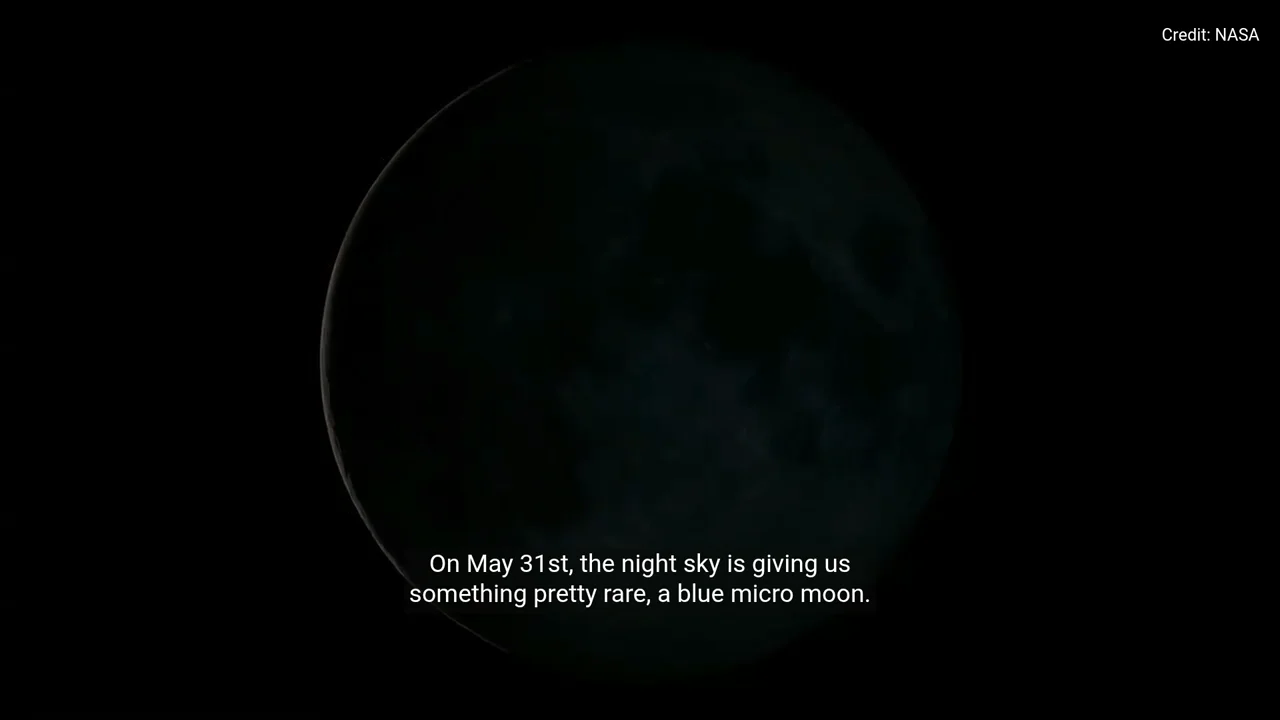
May 31’s Full Moon will be a rare ‘Blue Micromoon’
A rare celestial event will light up the night sky on May 31, 2026, as a Full Moon appears for the second time in the same month following the Flower Moon on May 1. According to NASA, a second Full Moon within a calendar month is known as a Blue Moon. But what makes this one even more interesting is that it will also be a Micromoon. Here’s why. Read the full article on Starlust: https://starlust.org/may-31-blue-moon-is-also-going-to-be-a-micromoonheres-what-it-means/ Video edited using footage and images from NASA, Pexels, and the Movie Vertigo YouTube channel. Royalty-free music from HookSounds.
 2:10
Why can't we see stars in space?
Why can’t we see stars in most pictures of space — or even with the naked eye while astronauts are in space? For decades, this simple question has baffled many even though the answer is simple yet fascinating. After all, if space is filled with billions of stars, why do so many photos from NASA missions show nothing but a dark black sky? In this video, we explore the real science behind why astronauts often describe space as a pitch-black void, how cameras behave differently in orbit, and why capturing stars in space is much harder than it sounds. From Moon landings and Artemis imagery to human eyesight and long-exposure photography, this quick breakdown explains the hidden physics behind one of the internet’s most misunderstood space questions. Because the stars were never missing in the first place. Video edited using footage owned by NASA. Royalty free music from Hook Sounds.
 1:23
Reid Wiseman on the one thing most people still don’t understand about space exploration
Reid Wiseman joined fellow Artemis II crewmates Jeremy Hansen, Victor Glover, and Christina Koch at a Canadian Space Agency event in Longueuil, Quebec, where they took part in a live Q&A following the Artemis II mission around the Moon. Hosted by Minister of Industry Mélanie Joly, the conversation focused on the mission, international collaboration, and the future of human space exploration. CSA astronaut Jenni Gibbons also joined the discussion, sharing insights from her roles supporting the mission.
 2:03
Exactly how NASA will build a permanent base on the Moon - Part 2
NASA’s first phase of its Moon base roadmap was mostly about learning how to survive and operate on the lunar surface. But the next two phases are where the real construction begins. The three-phase roadmap comes as the United States faces growing competition from China in a new lunar space race, with both nations aiming to establish a long-term presence on the Moon. If successful, the effort could eventually turn the Moon from a destination into humanity’s first permanent outpost beyond Earth. Video edited using images and footage owned by NASA, ESA, JAXA and Getty. Royalty free music from Hook Sounds.
 1:19
Bella Ramsey asked NASA a simple question about space and it got deep really fast
Hollywood actor Bella Ramsey, known for playing Ellie in the HBO show 'The Last of Us', as well as Lyanna Mormont in 'Game of Thrones', channelled her curiosity about space, asking NASA questions about the universe. Around the time of the release of The Last of Us Season 2, Ramsey spoke on how Ellie in the show found refuge in her love for space, and told NASA that she wanted a 101 lecture on everything we know about the universe, and the questions that science has not been able to answer. While the space agency was unable to deliver the lecture that Ramsey asked for, her questions were answered by not just anyone at NASA, but by astronaut Nichole Ayers from the International Space Station (ISS). Video Credit: NASA and HBO Video Producer: Sonnet Apple Music Credit: Universal Production Music
 3:44
Exactly how NASA will build a permanent base on the Moon
Ever since Artemis II’s raging success, one thing seems clear: there’s no stopping NASA from its plans to set up a permanent base on the Moon. But how exactly will the agency go about it? Administrator Jared Isaacman had already revealed a three-phase roadmap for the plan during NASA’s Ignition event in March. The push also comes as the United States faces growing competition from China in a new lunar space race, with both nations aiming to establish a long-term presence on the Moon. If successful, the effort could eventually turn the Moon from a destination into humanity’s first permanent outpost beyond Earth. Video edited using images and footage owned by NASA, ESA, JAXA and Getty. Royalty free music from Hook Sounds.
 1:00
NASA’s Psyche spacecraft is all set to slingshot around Mars
On its quest to catch up with its namesake asteroid, NASA’s Psyche spacecraft will harness the gravitational pull of Mars to speed up and adjust its path. For this purpose, on May 15, the spacecraft will pass just 2800 miles (4,500 kilometers) from the Red Planet’s surface at some 12,333 mph (19,848 kph). Read full article on Starlust: https://starlust.org/nas-as-psyche-spacecraft-to-capture-never-seen-before-images-of-mars-during-gravity-assist-move/ The video was edited using clips owned by NASA/JPL-Caltech/ASU, and produced by True Story Films.
 0:38
What's happening on Mars? Images taken decades apart show surface changing
A comparison of images captured decades apart by NASA and the ESA has revealed that a massive dark patch is creeping across the surface of Mars, leaving scientists puzzled. Located in the vast plains of Utopia Planitia in the northern hemisphere of the Red Planet, the dark patch observed in photos is ground covered with volcanic rocks and ash from eruptions that occurred millions of years ago. The feature was first photographed by NASA's Viking probes way back in 1976, and photos captured since then have shown the shadowy feature expanding across the surrounding landscape: the latest images captured by ESA's Mars Express orbiter in 2024 were released on 15 April this year, and showed that the dark patch's southern boundary had expanded by at least 320 kilometers. This suggests that the patch has been expanding at a rate of roughly 6.5 km per year. While scientists are certain that the dark patch in question is the result of volcanic eruptions and that its expansion has something to do with strong winds on Mars, which are known to kick up dust and ash from the surface, they are unsure of what exactly is behind the observed expansion. Currently, there are two hypotheses to explain this phenomenon: either volcanic ash is being picked up and moved around by strong Martian winds, or the ochre-colored dust that previously covered the volcanic ash has been blown away by gusts, leaving the dark patch underneath exposed. However, there is currently no consensus on which hypothesis is correct, as per the ESA. Video Credit: ©ESA