 2:04
2:04
President Trump announces new US Space Academy for America’s next-gen space workforce
US President Donald Trump has signed an executive order creating a new US Space Academy to train the next generation of America’s space workforce. Comparing it to landmark American institutions such as West Point and the US Naval Academy, Trump said graduates could go on to careers at NASA, the US Space Force and across the commercial space industry. The announcement comes as the US continues to expand its ambitions in space, from the Artemis program to military and private-sector spaceflight. A new presidential commission, led by NASA Administrator Jared Isaacman, will now help shape the academy and its future. Video edited using footage owned by NASA, US Navy, US Air Force, US Space Force, ESA, and The White House.
More Videos
 0:17
0:17
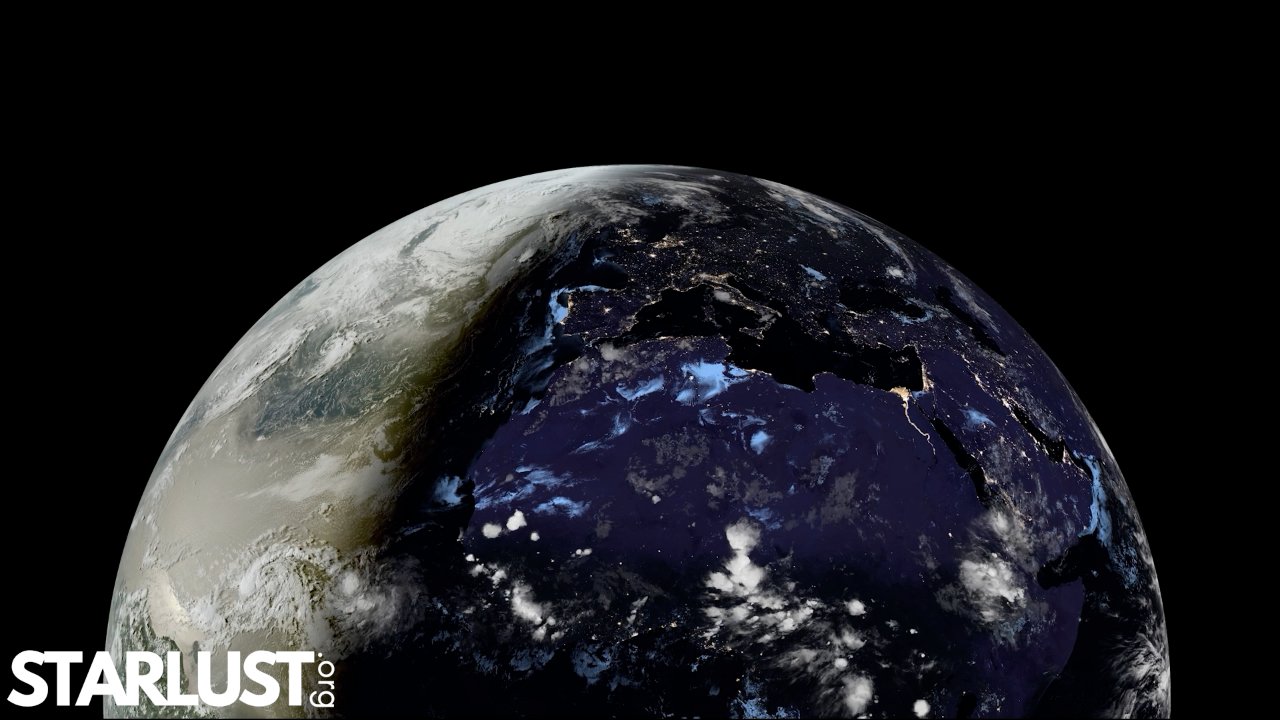
Watch: Total solar eclipse seen from 22,370 miles above Earth
A total solar eclipse was captured from space by the Meteosat-12 satellite. The eclipse occurred on Aug. 12, 2026, between 20:26 and 20:34 CEST, as parts of the Iberian Peninsula experienced totality. From geostationary orbit 22,370 miles above Earth, Meteosat-12 tracked the Moon's shadow as it swept over Greenland and Iceland, then a small part of northeastern Portugal, and finally Spain. Video Credit: ESA/EUMETSAT
 0:47
0:47
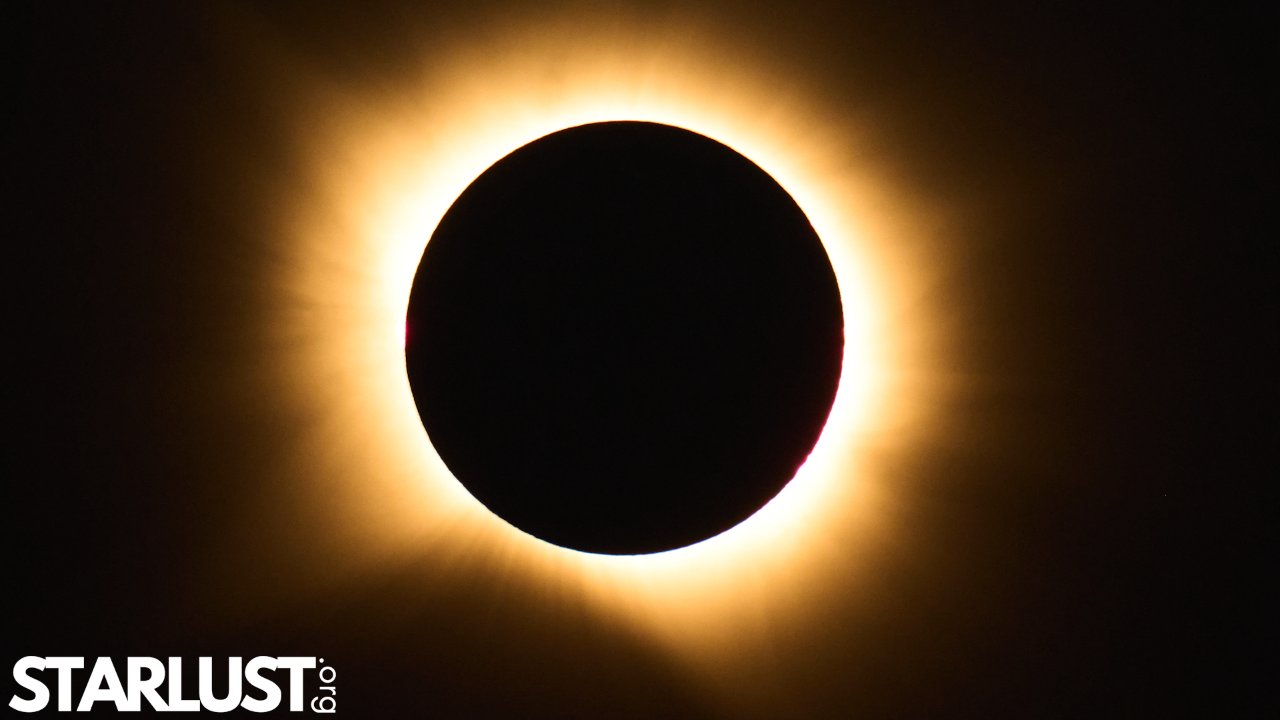
Total solar eclipse 2026: What millions just witnessed
A total solar eclipse swept across Greenland, Iceland, northern Russia, the Atlantic Ocean, Spain, and a small corner of Portugal, marking mainland Europe's first total solar eclipse since 1999. The eclipse occurred on August 12, 2026, with about 15 million people, mostly in Spain, standing in the path of totality, while nearly 980 million people 'had the opportunity' to see a partial eclipse. The event held a great significance as it was the first time since 1905 that Spain witnessed a total eclipse, and the next opportunity to see one will come on Aug. 2, 2027, when totality crosses southern Spain, North Africa, Saudi Arabia, and Yemen. Video Credit: Getty, AP & NASA
 0:30
0:30
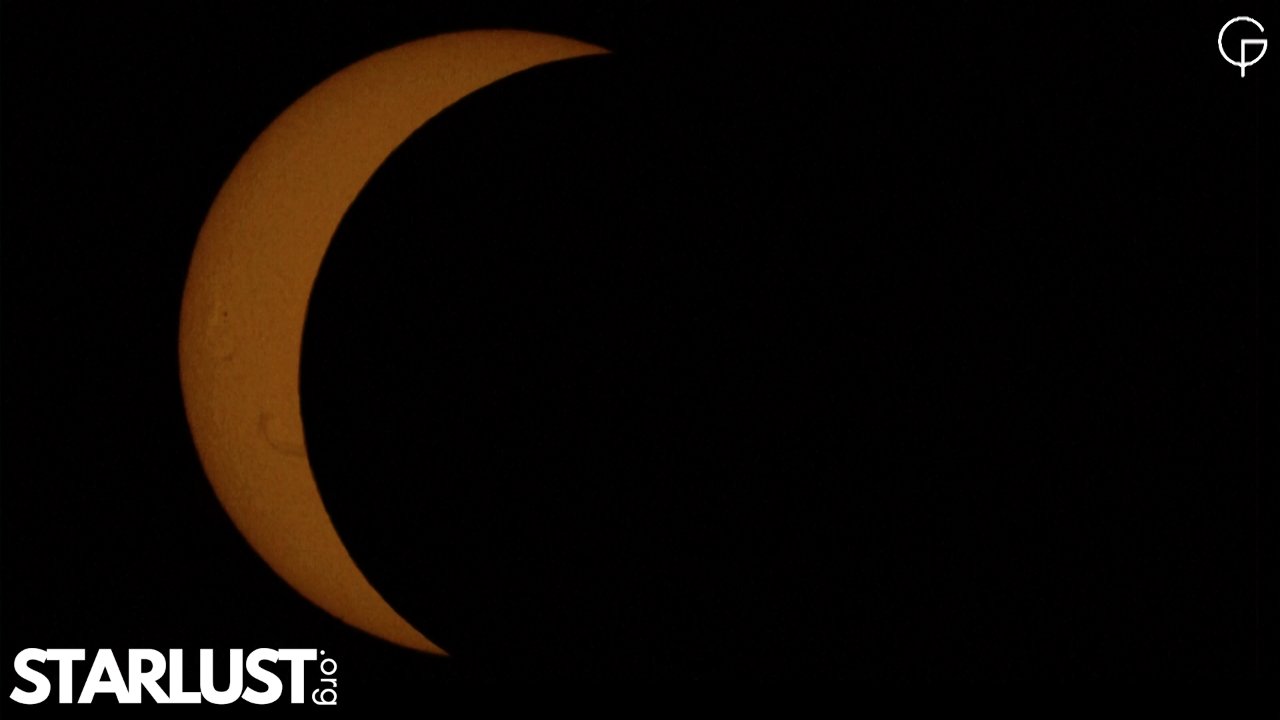
Spectacular timelapse captures partial solar eclipse over London
The Royal Observatory Greenwich in London captured a timelapse of the partial solar eclipse sweeping across the sky. The eclipse occurred on Aug. 12, 2026, as the Sun was over 90% obscured across Britain. The rare sight drew crowds to Greenwich Park and hilltop spots across the country, turning the sky an eerie gray as a sliver of light sat atop the darkened Moon like a hat. The moment mattered because while Spain and other locations along the path of totality experienced complete darkness, this gave millions across the UK their own view of the same historic global eclipse. Video Credit: Royal Observatory Greenwich via AP
 0:21
0:21
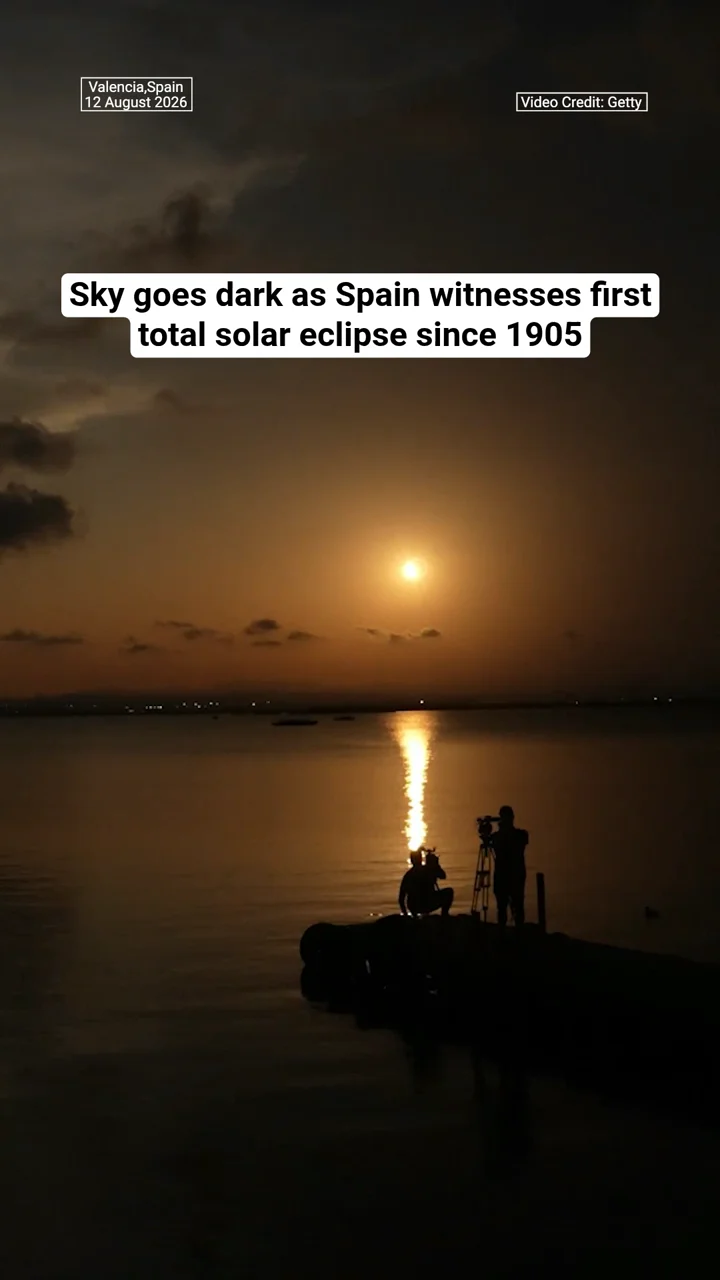
Sky goes dark as Spain witnesses first total solar eclipse since 1905
The sky went dark over Valencia, Spain, as the country witnessed a total solar eclipse on Aug. 12, 2026 — its first since 1905. The visuals were captured at the natural park of Albufera, showing the partial eclipse building toward totality over the water. Video Credit: Getty
 2:00
2:00
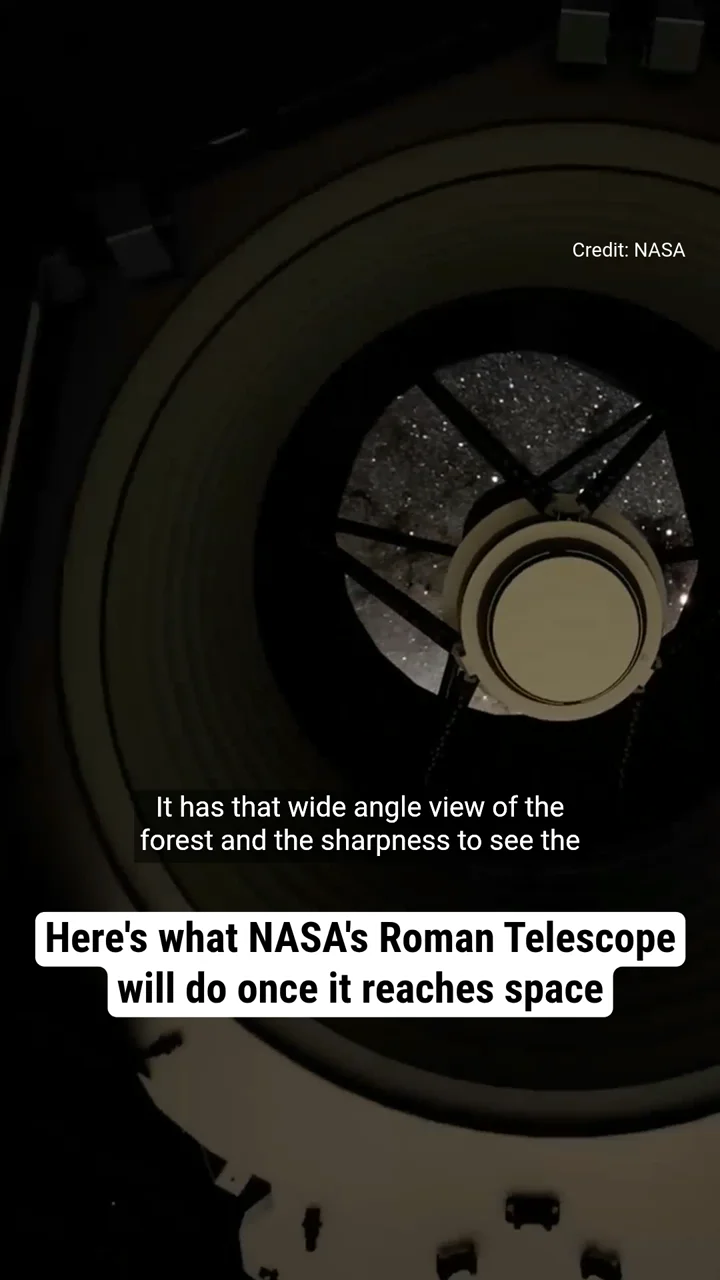
Here's what NASA's Roman Space Telescope will do once it reaches space
How do you explain one of the most advanced space telescopes ever built without the science jargon? At NASA's Mission Preview News Conference on July 29, 2026, mission experts Shawn Domagal-Goldman, Julie McEnery, Jackie Townsend, and Jeremy Perkins did exactly that. Using simple but powerful analogies, they explained what makes the Nancy Grace Roman Space Telescope so extraordinary. They compared its view of the universe to seeing an entire forest instead of a single tree, likened its massive data output to music streaming, and described its coronagraph as spotting a firefly beside a floodlight—making some of astronomy's most complex concepts easy to understand. Launching on August 30, 2026, the Nancy Grace Roman Space Telescope will deliver breathtaking wide-field views of the cosmos while helping scientists investigate dark matter, dark energy, exoplanets, and the evolution of the universe. A new era of space exploration is just a few weeks away. Video edited using footage courtesy of NASA Goddard
 1:01
1:01
August 2026 skywatching guide: Every major celestial event to watch this month
From a total solar eclipse and the Perseid meteor shower to Saturn, a partial lunar eclipse, and stunning deep-sky objects, here's everything happening in the August 2026 night sky. Video Credit: NASA, AI-generated visuals (based on NASA references)
 1:25
1:25
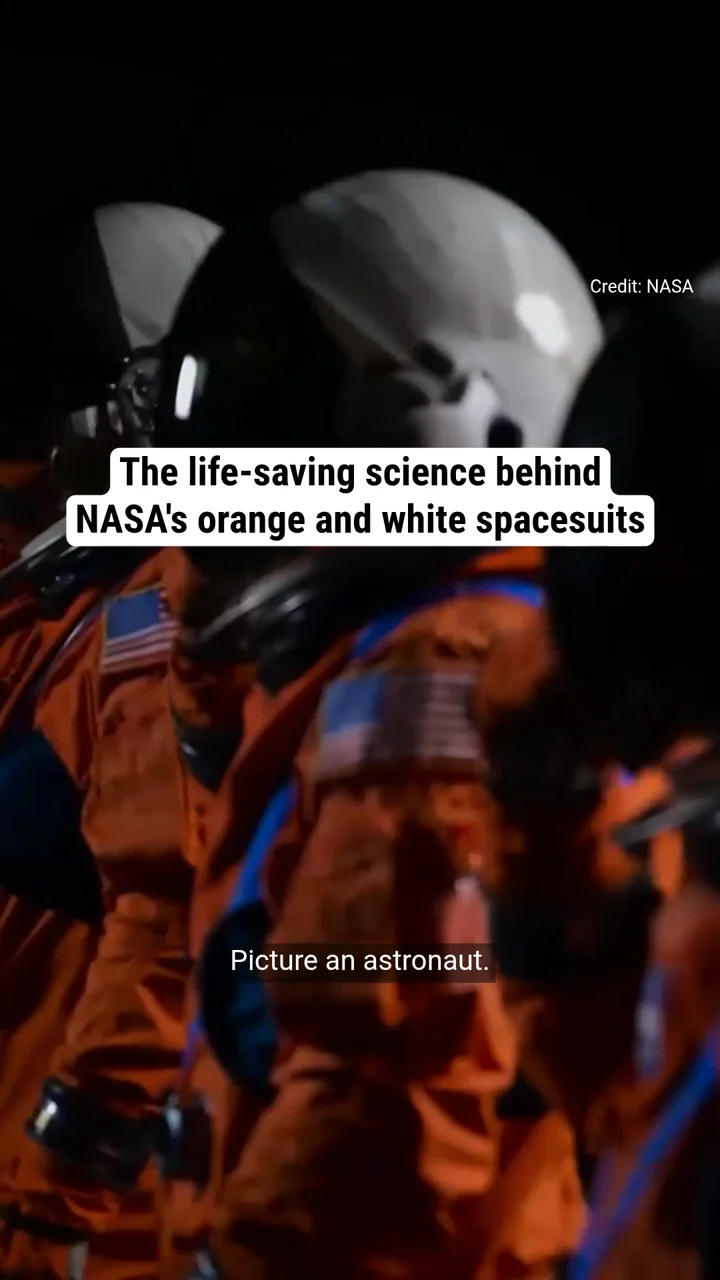
The life-saving science behind NASA's orange and white spacesuits
When you think of a NASA spacesuit, the first image that comes to mind is probably either the iconic white EVA suit used during a spacewalk, or the bright orange suit worn by the Artemis II astronauts. But have you ever wondered why they're different? As it turns out, those colours are far more than a design choice. Every astronaut suit is built for a specific mission, and even the colour plays an important role in helping astronauts stay safe from launch all the way through their time in space. Stay tuned to Starlust for all you need to know about space exploration, astronomy and more.
 0:09
0:09
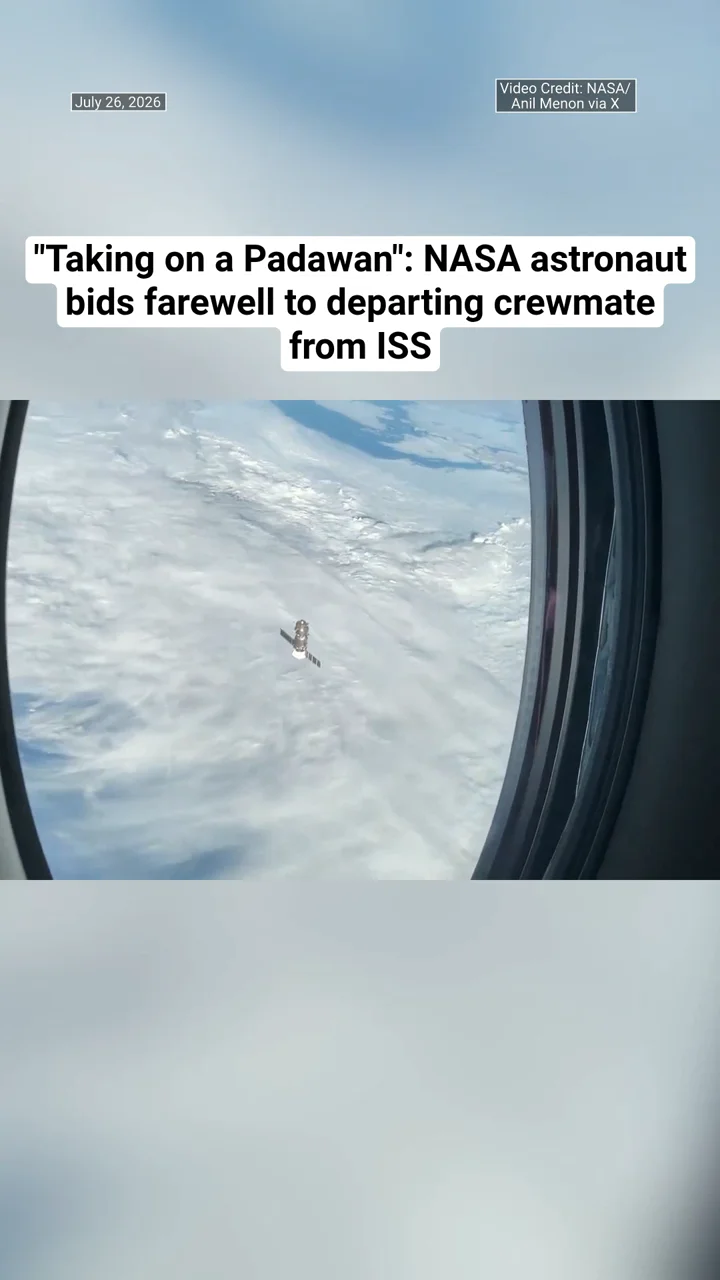
"Taking on a Padawan": NASA astronaut bids farewell to departing crewmate from ISS
NASA astronaut Anil Menon shared this view from the ISS window of the Soyuz MS-28 spacecraft drifting away after undocking on July 26 — carrying Chris Williams and two Roscosmos cosmonauts home after 241 days in space. "Godspeed Soyuz MC-28 crew. Goodbye Chris — taking on a Padawan!" Menon wrote. Video Credit: NASA/Anil Menon via X
 0:19
0:19
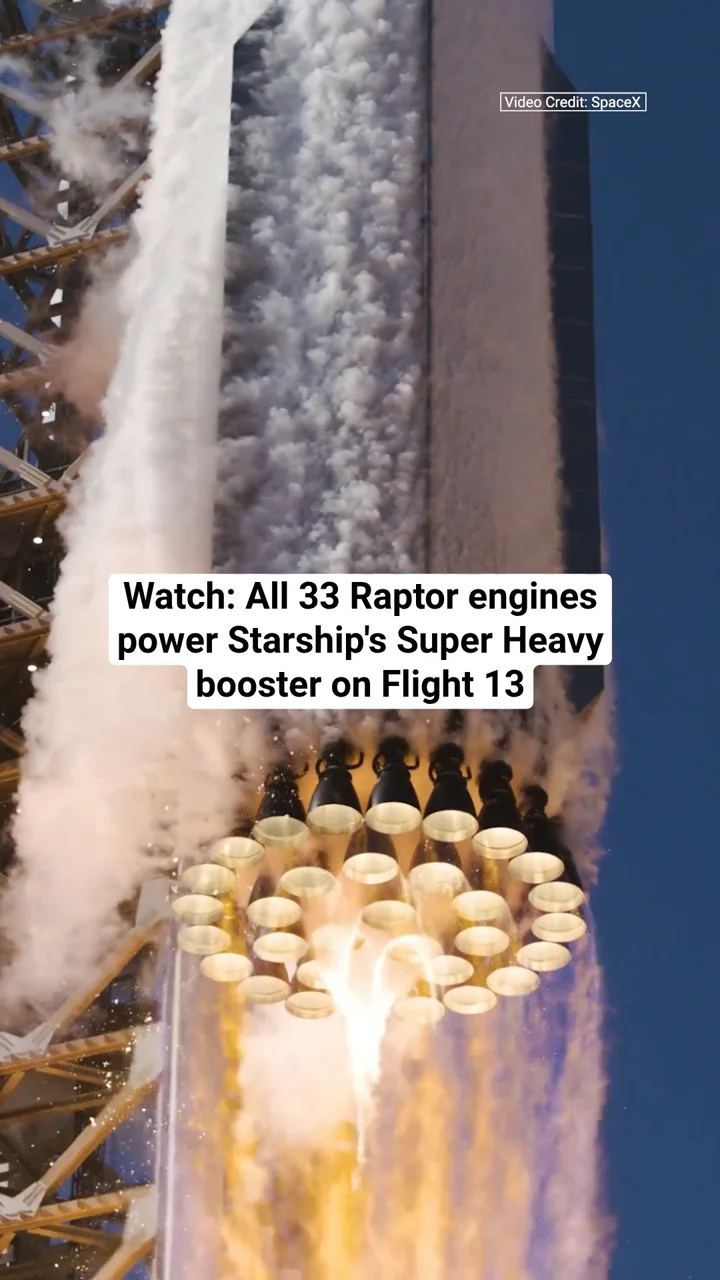
Watch: All 33 Raptor engines power Starship's Super Heavy booster on Flight 13
Powered by 33 methane-fueled Raptor engines, Starship's Super Heavy booster produced roughly 16 million pounds of thrust during liftoff of Flight 13 from Starbase, Texas, on July 24. Video Credit: SpaceX
 0:56
0:56
Watch: SpaceX Starship Flight 13 completes "softest splashdown" ever
SpaceX launched Starship Flight 13 from Starbase, Texas, deploying next-gen Starlink V3 satellites and testing an in-space Raptor relight — after two delays, on July 16 and July 23. Both stages completed controlled splashdowns. Video Credit: SpaceX
 0:46
0:46
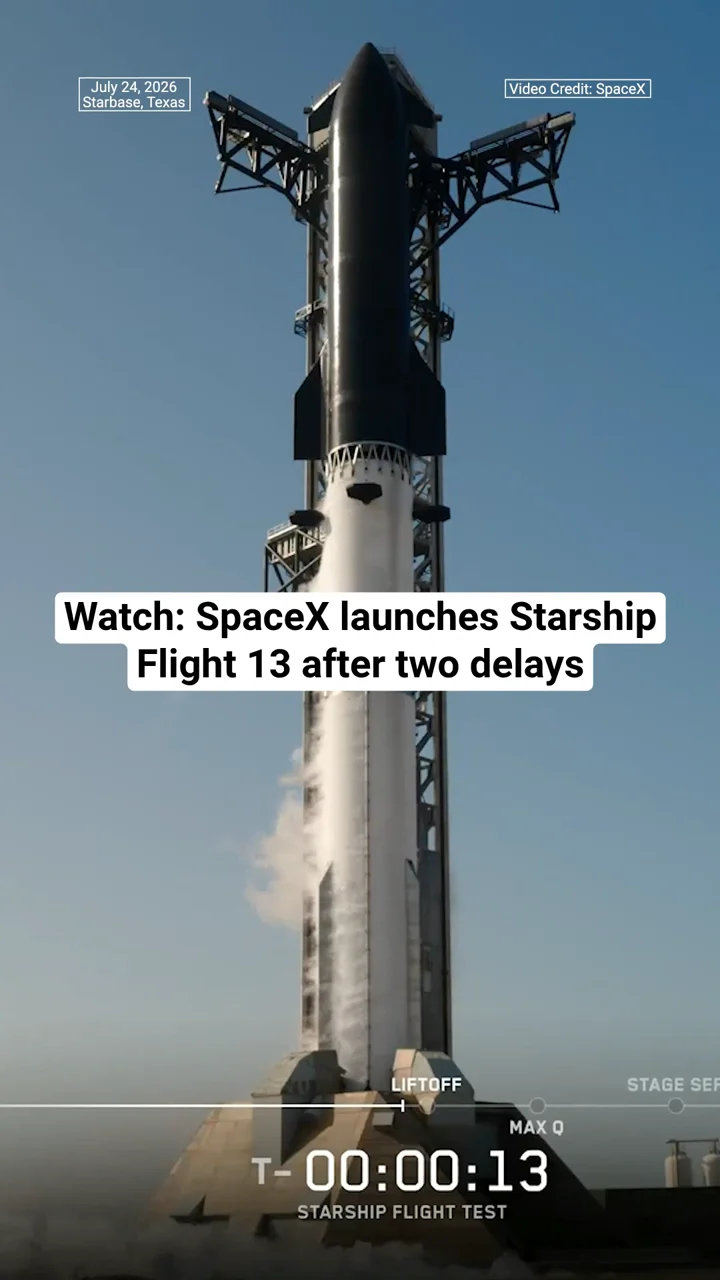
Watch: SpaceX launches Starship Flight 13 after two delays
SpaceX launched Starship Flight 13 from Starbase, Texas, with Booster 20 and Ship 40 on a mission to deploy next-generation Starlink V3 satellites and test an in-space Raptor engine relight. The mission comes after two earlier delays—a last-second engine abort on July 16, when several Raptor engines failed to ignite, and a weather-related postponement on July 23. Video Credit: SpaceX
 0:40
0:40
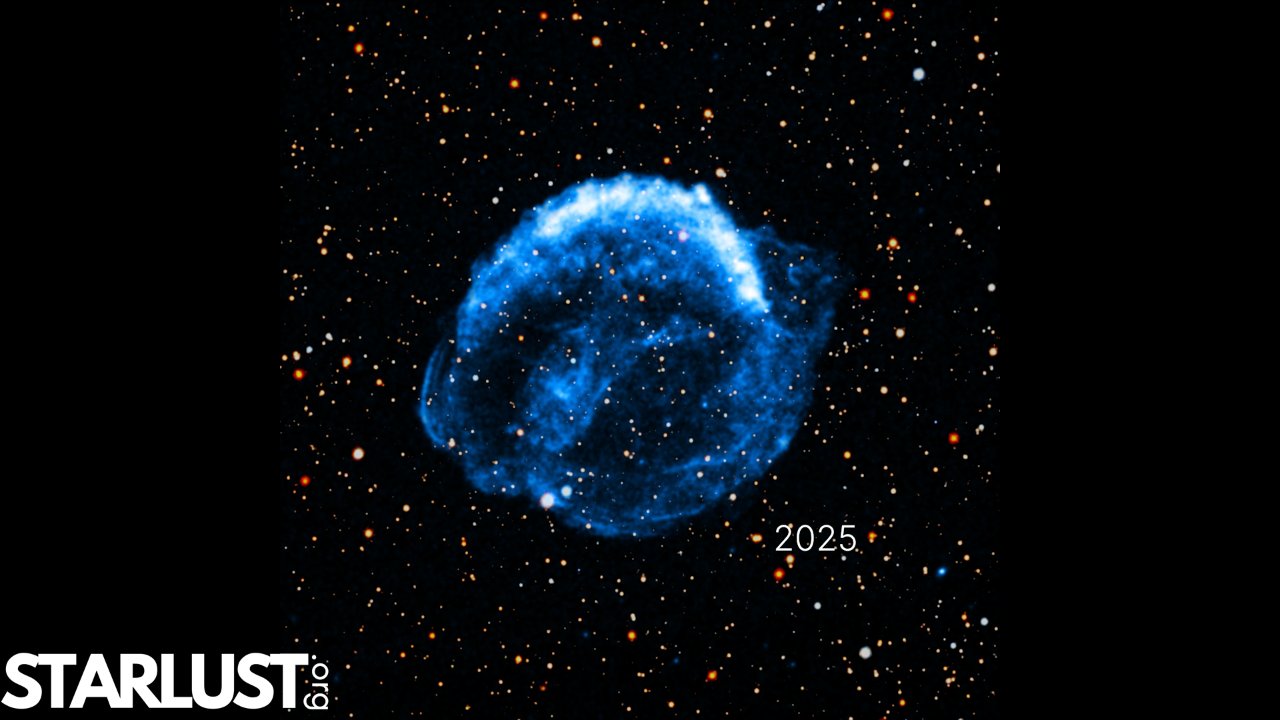
NASA's Chandra creates a 25-year timelapse of an expanding supernova remnant
NASA's Chandra X-ray Observatory combined data from five separate observations — spanning 2000 to 2025 — into a single timelapse showing Kepler's Supernova Remnant expanding over 25 years. Located about 17,000 light-years away, the remnant is what remains of a white dwarf star that exploded after exceeding its critical mass. Video Credit: NASA/CXC