Strangest objects spotted in our own Solar System
Strangers in our own cosmic backyard
The universe is replete with mysteries, and despite the progress of human civilization and science, the vast majority of the observable universe remains unexplored. Such is the vastness of space that even in our own cosmic backyard, the Solar System, scientists continue to encounter anomalous objects that force us to change our understanding of the universe. Here are some such celestial objects that we have discovered in our own Solar System.
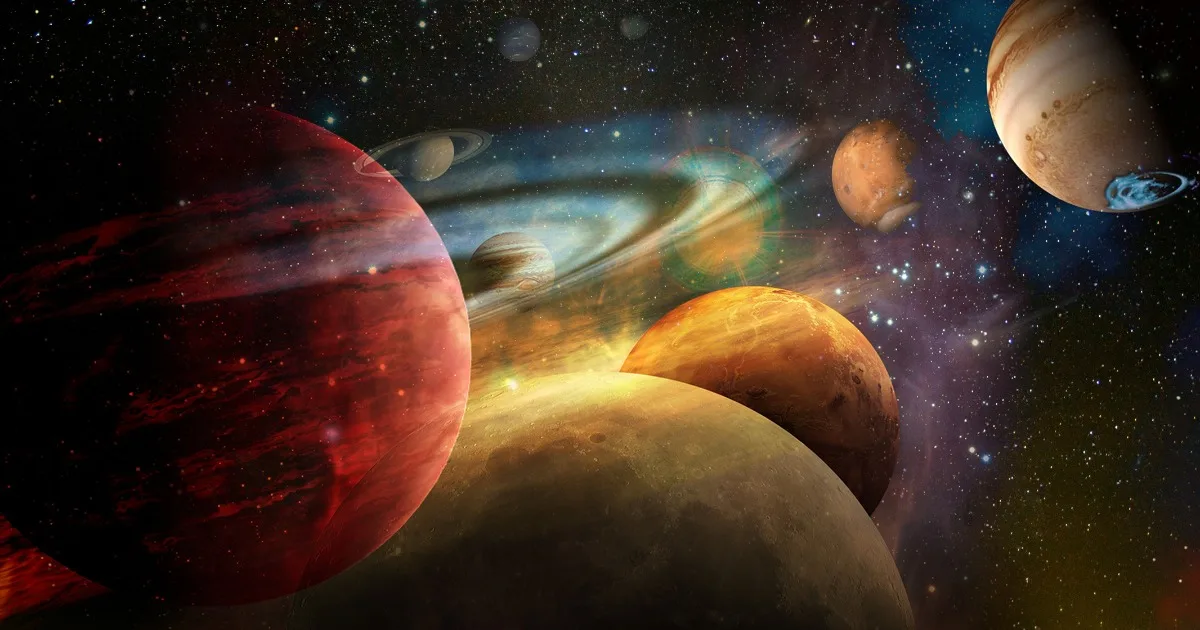
This illustration depicts planets in space. The elements visible here have been furnished by NASA.
Comet 3I/ATLAS
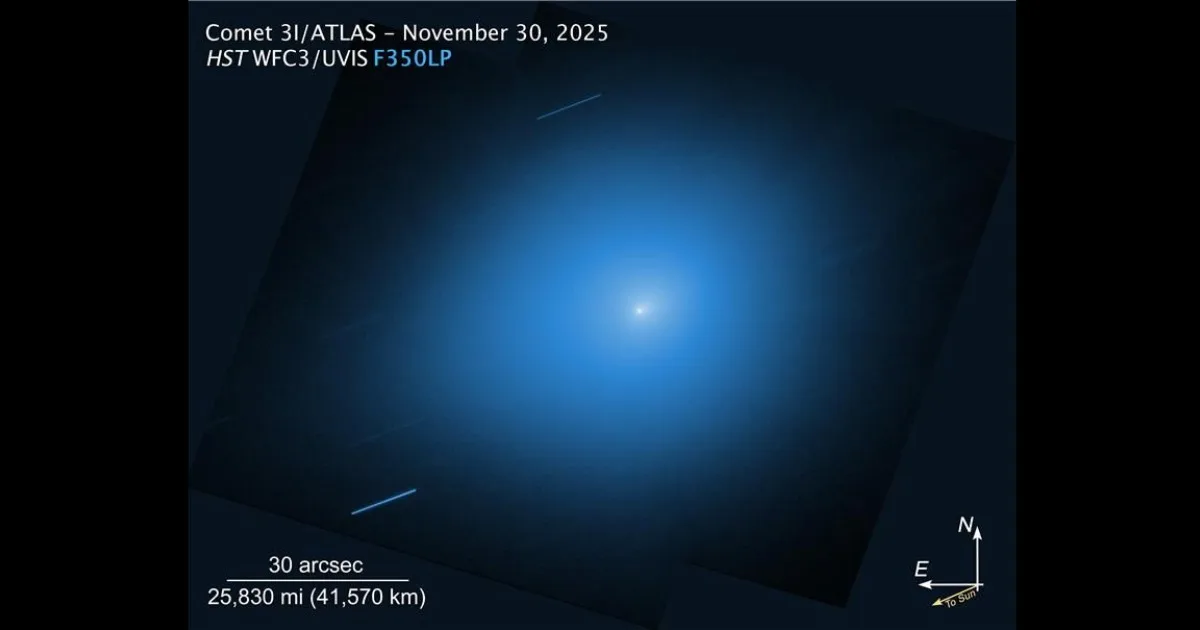
In July 2025, astronomers discovered the comet 3I/ATLAS. After detailed study, 3I/ATLAS was found to be an interstellar object, which originated from a very cold and isolated environment in our Milky Way galaxy. Scientists also estimated that the interstellar comet was 12 billion years old and was composed of water, carbon dioxide and monoxide, methane, cyanides, sulphides, alongside free-floating iron and nickel atoms. The presence of high carbon dioxide levels compared to low ammonia also helps confirm the object’s origin outside of our Solar System. 3I/ATLAS is only the third interstellar object found after 1I/'Oumuamua and 2I/Borisov.
This image shows an observation of the interstellar comet 3I/ATLAS, captured by NASA's Hubble Space Telescope on November 30 using its Wide Field Camera 3 (WFC3). This follow-up imaging provides a detailed view of the comet as it travels through our solar system from interstellar space.
Saturn’s walnut-shaped moon Iapetus
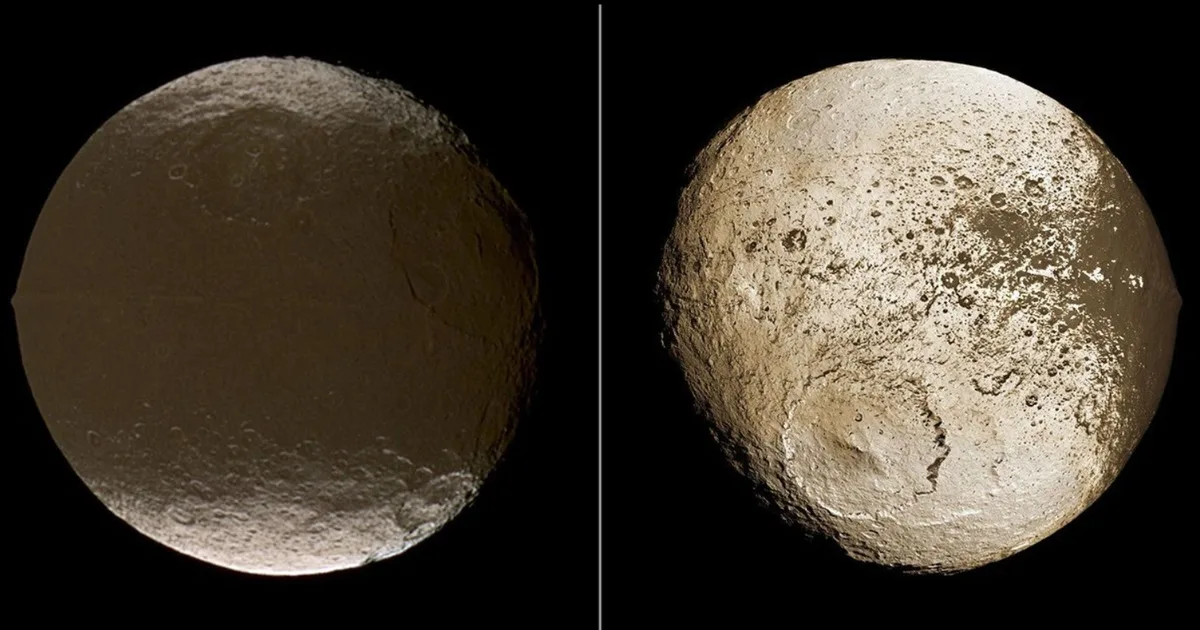
Saturn’s third-largest moon, Iapetus, was discovered by Giovanni Cassini on October 25, 1671. However, when the Voyager I and Voyager II probes produced images of Iapetus in 1980 and 1981, some very interesting features were revealed. Having a mean radius of 457 miles, the moon’s leading hemisphere has an extremely dark albedo of 0.03-0.05. In contrast, the trailing hemisphere is a lot brighter at 0.5-0.6. Iapetus is also called the ‘Walnut Moon.’ This is because a chain of mountains, reaching up to 20 kilometres (12 miles) high, runs across Iapetus’ equator, making it look like a walnut. While there are no concrete explanations as to how the ridge was formed, scientists have come up with a couple of possible theories. Some have predicted that the ridge was created earlier when the moon had a comparatively faster rotation. Others, however, believe that the origins of the ridge can be credited to a collapsed ring.
These two global views of Iapetus highlight the striking contrast in brightness across the surface of Saturn’s unusual moon. The left panel displays the leading hemisphere, while the right panel reveals the trailing hemisphere.
'Oumuamua
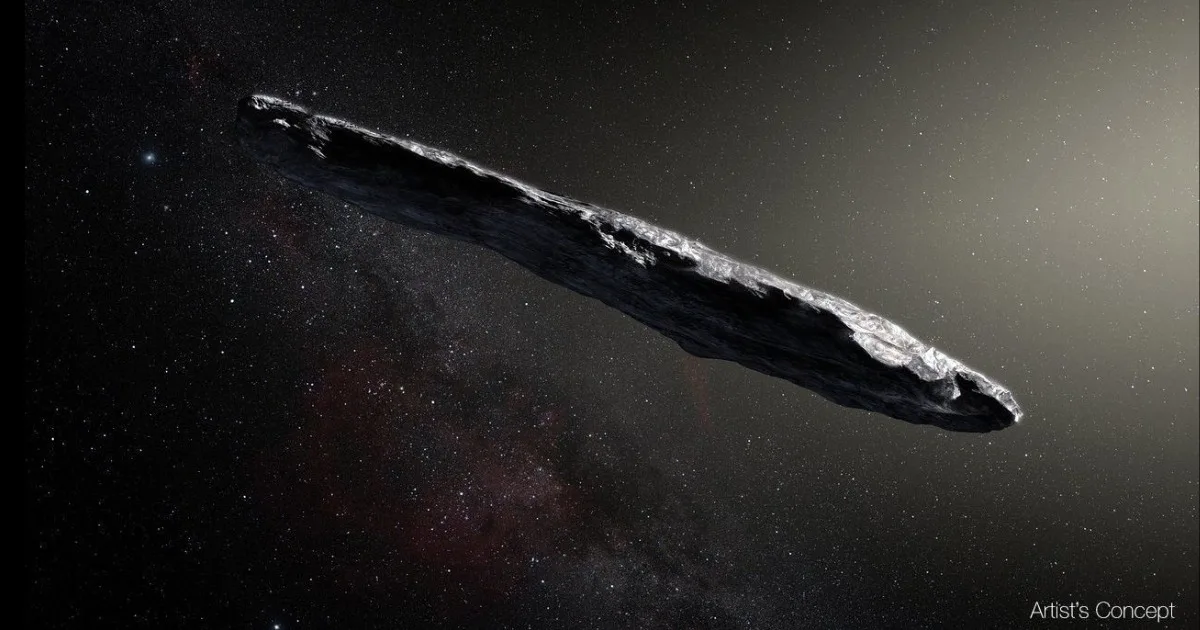
'Oumuamua was the first known interstellar object spotted in our solar system. It was discovered in October 2017, when scientists saw an elongated rocky object gliding through space. The interstellar object is up to 400 meters long and appears to be unusually elongated, with an estimated length about 10 times its width. Additionally, the ISO followed a hyperbolic trajectory, with a blistering peak speed of 196,000 mph. It thoroughly baffled researchers because it behaved like an outgassing comet—accelerating slightly on its way out of the solar system—yet it visually looked like a dry, rocky asteroid without any hint of a tail or coma. Owing to its unique characteristics, there were speculations about Oumuamua possibly being an alien probe. However, there is still no evidence that it was artificial.
This image shows an artist's conceptual illustration of the interstellar interloper, 'Oumuamua.
Jupiter's moon Io
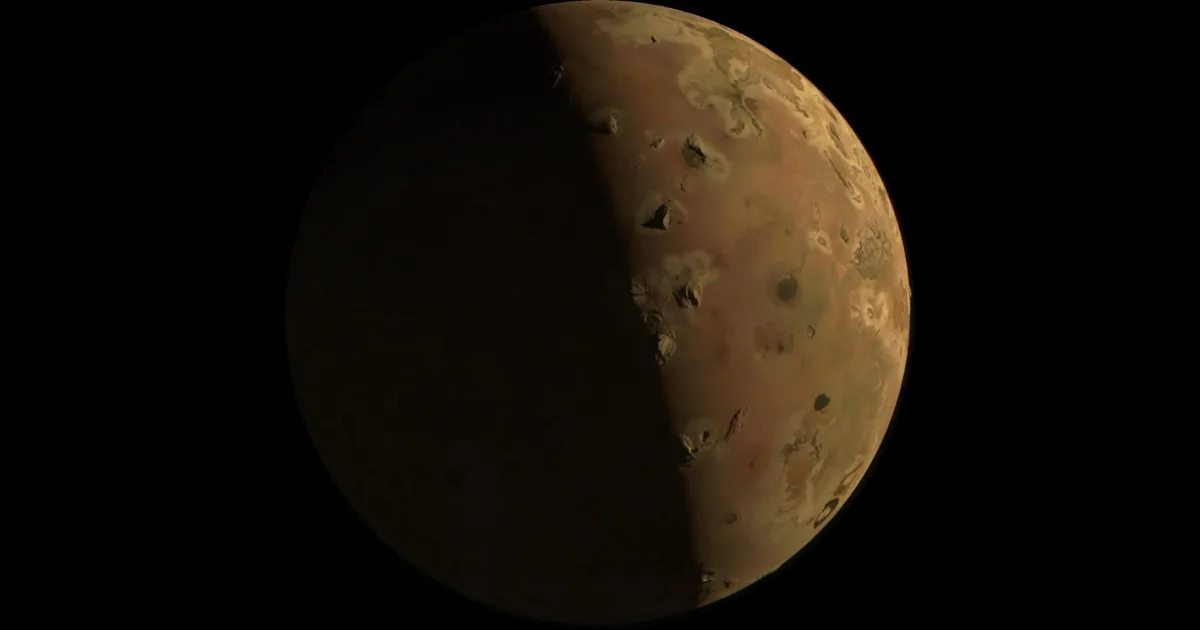
Jupiter’s moon, Io, was discovered by Galileo Galilei in January 1610. The discovery marked the first known instance of a moon orbiting a planet in our solar system other than the Earth. Further studies revealed that Io has the highest level of volcanic activity in the solar system. Hundreds of volcanoes erupt fountains of lava dozens of kilometres high. It is due to these high levels of sulfur and sulfur dioxide eruptions that the surface has yellow, orange, black, and red splotches, making it appear like a mouldy pizza.
This image shows Jupiter's volcanically active moon, Io, as captured by NASA's Juno spacecraft during a close approach on December 30, 2023.
Saturn's moon Hyperion
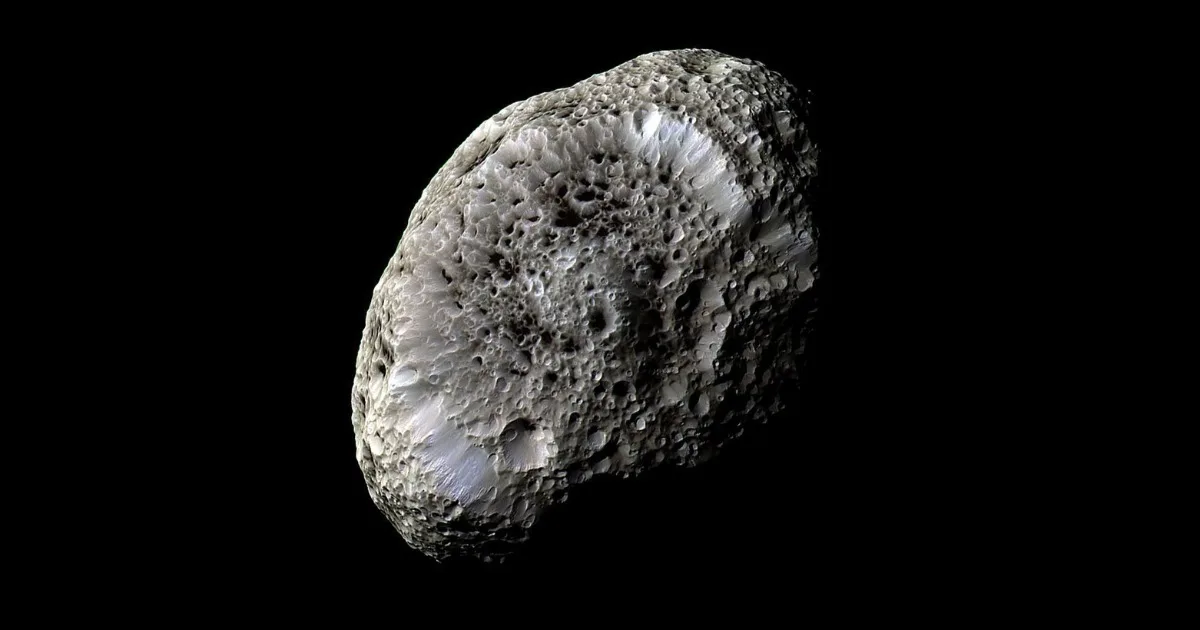
Since it was discovered in 1848, Hyperion has intrigued scientists. The potato-shaped object is the largest among all the non-spherical moons of Saturn. Hyperion has a unique shape with a mean radius of 83.9 miles. Its diameter along three axes stands at 255 x 163 x 137 miles. While orbiting Saturn at a mean distance of 933,000 miles, the moon rotates in a chaotic manner. Given its irregular structure, Hyperion is presumed to be the shattered remnant of a larger moon, destroyed by a catastrophic impact.
The image shows a false-color view of Saturn's moon Hyperion, revealing its distinctly sponge-like surface. The data for this image was obtained during a close flyby by the Cassini spacecraft on September 26, 2005.