Chinese startup Sustain Space tests robotic arm for orbital re-fueling in space
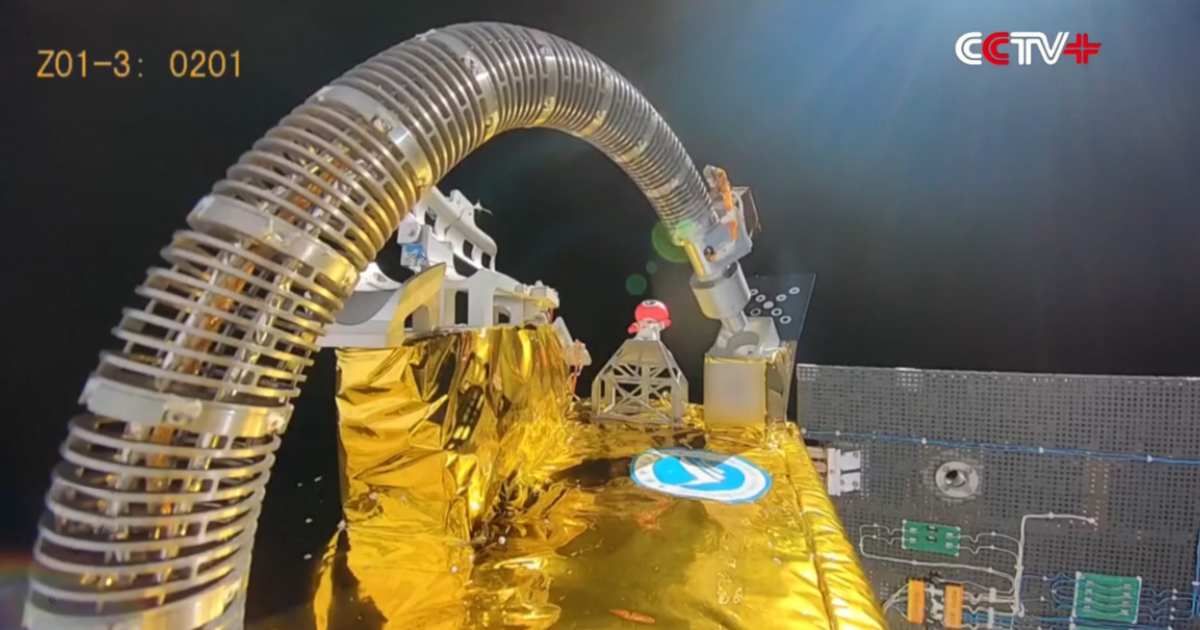
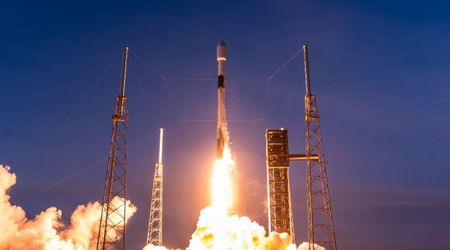
The Chinese commercial satellite Yuxing 3-06 has successfully demonstrated the efficacy of its flexible robotic arm for refueling in Earth’s orbit, per Xinhua. Designed by the Suzhou-based aerospace startup Sustain Space in eastern China, the arm carried out highly complex in-orbit operations, including autonomous programmed refueling simulation, ground-controlled refueling simulation, and vision-guided servo refueling simulation. The end goal of this ability, developed by a team from Tsinghua University's Shenzhen International Graduate School, is to extend the life of spacecraft in orbit. Yuxing 3-06 was launched from the Jiuquan Satellite Launch Center in the northwestern Gansu Province of China aboard a Kuaizhou-11 rocket on March 16, 2026.
Because it needs to rendezvous with other spacecraft it is meant to service, it must be extremely precise in its operations. Even slight shaking can compromise the entire operation. In fact, during a thermal vacuum test that simulated the extreme environment of space, the arm suffered “uncontrolled shaking." This was learned to have been caused by small changes in temperatures and consequent effects, but was resolved in three days, according to the school responsible for the arm’s development. As far as the build of the arm is concerned, the school says that it is composed of a series of spring-like tubes that are linked to each other and has motors that pull on cables. This arrangement allows the robotic arm to be bent, curled up, or twisted in a variety of configurations so that its nozzle-like tip can be precisely guided into place. The satellite is currently in sun-synchronous orbit at an altitude of about 330 miles.
Wang Xueqian, who led the research team at Tsinghua University, likened the need for this technology to a car breaking down: "What do you do when a spacecraft breaks down in space?" Xueqian, a veteran of space robotics technology for over 10 years, added, "Space robots can perform extravehicular operations, and even refuel and repair spacecraft as well as clear space debris." These abilities exemplify the strides the Chinese aerospace industry is making in completing complex tasks in the vacuum of space—something that is also being pursued by its counterpart in America.

SpaceX is known to have proposed the idea of in-space refueling for their Starship HLS moon lander as well, possibly for Artemis III and beyond. As for China, it has carried out similar demonstrations before, with one of them being that of the Shijian-25 satellite in January last year.
More on Starlust
China launches its mysterious reusable ‘space plane’ into orbit
China sets new space record with three Long March rocket launches within 19 hours