How to easily spot the constellation Lynx in March's night skies

The constellation Lynx is best observed during March evenings in the Northern Hemisphere, right when it's high up in the sky. Its stars may not be too bright, but the constellation contains many interesting deep-sky objects, including the Intergalactic Wanderer, a globular cluster.
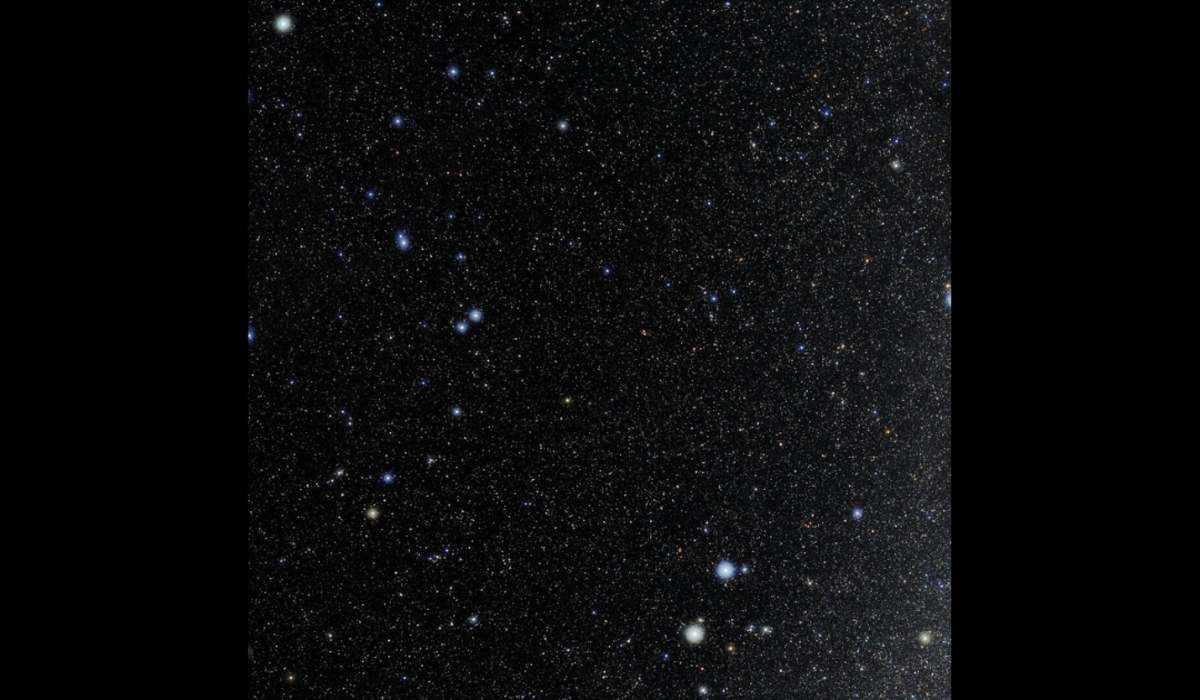
While Lynx itself may be faint, its position among other brighter, well-known constellations makes it easier to spot. To spot it, first locate Ursa Major (the Great Bear) and Auriga the Charioteer. Between them is a relatively dark area in the sky, which is where the Lynx resides. Looking at Ursa Major as a literal bear, Lynx sits in front of its nose and front paws. On the opposite side, the dim constellation can be seen near Gemini’s bright stars Castor and Pollux, per EarthSky.

Two of Lynx's brighter stars are easy to spot once the correct reference points are located. At a magnitude of 3.14 and 222 light-years away from us, the star Alpha Lyncis lies close to the constellation Leo, above its head. 38 Lyncis, located 122 light-years away, is another Lynx star seen just above Alpha Lyncis, with a magnitude of 3.82.

Beyond individual stars, the constellation Lynx is known for several galaxies that are totally worth observing. Its brightest galaxy, NGC 2683, lies about six degrees from Alpha and 38 Lyncis, in the direction of Castor and Pollux. Nicknamed “the UFO Galaxy,” it can be seen with a telescope, at least medium-sized or bigger. To spot it, extend a line from the Beehive Cluster in Cancer through Iota Cancri, and it will be right across the border in Lynx. The nearly edge-on spiral NGC 2683 has a magnitude of 9.69 and is located 16 million light-years away. NGC 2537 can be seen near the center of the Lynx constellation, although it’s a very faint dwarf galaxy with a magnitude of 11.7. It resembles a half-circle shape with a line sticking out of it, giving it the nickname “the Bear Paw Galaxy.”

The Intergalactic Wanderer (NGC 2419) is one of the most unusual deep-sky objects held by Lynx. It’s a globular cluster—a massive grouping of stars that are gravitationally bound to a galaxy and rotate around it. While most globular clusters orbit close to the Milky Way’s center, NGC 2419 is extremely farther away from it, even more than some satellite galaxies like the Magellanic Clouds. Astronomers consider NGC 2419 to be close to the theoretical limit for globular clusters bound to our galaxy. With a magnitude of 10.4 and a distance of nearly 300,000 light-years, NGC 2419 can be observed about seven degrees north of the star Castor, in the direction of Polaris, with a large telescope.
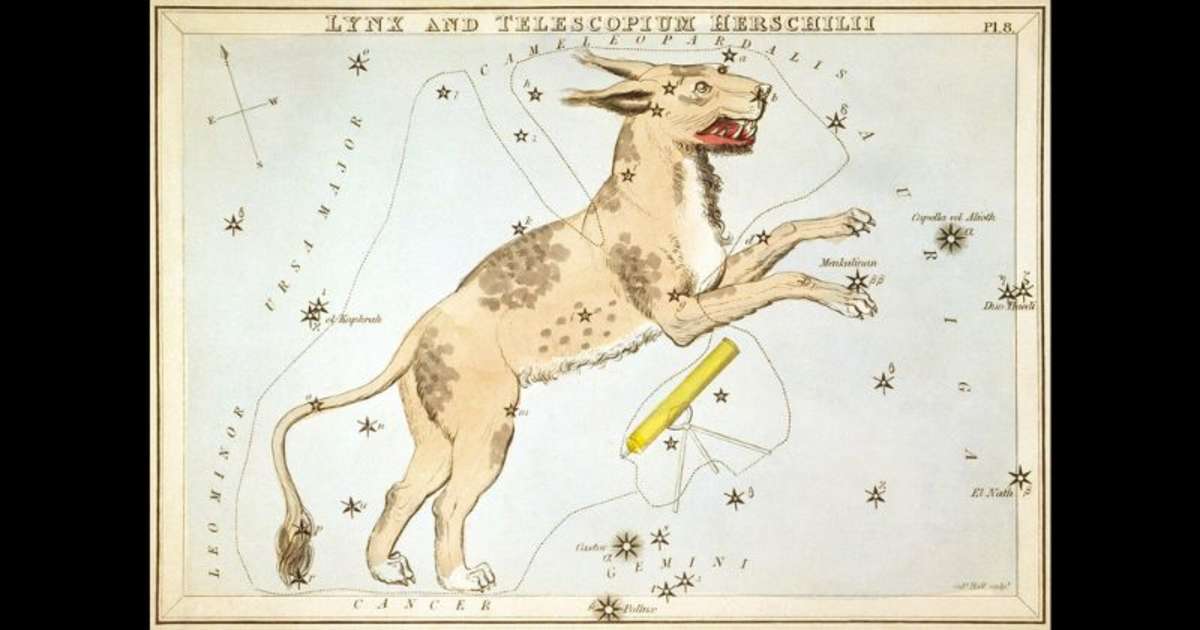
Astronomer Johannes Hevelius created the constellation Lynx in 1687 to fill an empty, darker portion of the sky between larger star patterns. Lynx gets its name from the fact that it’s so faint that only the lynx-eyed (those with sharp eyesight) would be able to recognize it. It belongs to the same group of faint constellations as Lacerta and Leo Minor. Despite its lack of brightness, spotting the constellation high in the sky in March is something no stargazer would want to miss.
More on Starlust
Here's why March is the best month for viewing the aurora
March 2026 skywatching guide: Blood Worm Moon, planetary conjunctions and the equinox