Why haven't we found aliens yet? 5 strange possibilities that might explain the Fermi paradox
What if aliens don't need planets?
In the search for life beyond Earth, scientists usually scour different planets. But a 2024 paper in the journal Astrobiology proposed a surprising alternative: what if alien civilizations could survive without a planet at all?
For perspective, human astronauts can live aboard the International Space Station for days or even months in orbit. Similarly, extraterrestrial life could theoretically construct its own space-based habitats. The researchers hypothesized that an entire free-floating colony—spanning roughly 330 feet across—might dwell inside a protective shell. This layer would act like a shield against cosmic radiation, the vacuum of space, and other hazards.
Could entire civilizations be hidden beneath ice?
Scientists generally study the surface of a planet while searching for potential life. But alien life might actually be flourishing under thick ice sheets. Contrary to popular belief, extraterrestrial life won’t necessarily resemble what is shown in the movies; rather, it might take the form of microbial life thriving in subterranean, lightless oceans.
Reflecting on this possibility, Southwest Research Institute planetary scientist Alan Stern shared an interesting observation. He told Space.com that for a civilization under these icy sheets, factors like supernovae, solar flares, and atmospheric hazards might not have any adverse effects. NASA’s Europa Clipper will soon investigate the habitability of the ocean under the ice sheets of Jupiter’s moon, Europa, which will help scientists understand if this theory might hold true.
What if we're looking for the wrong kind of alien?
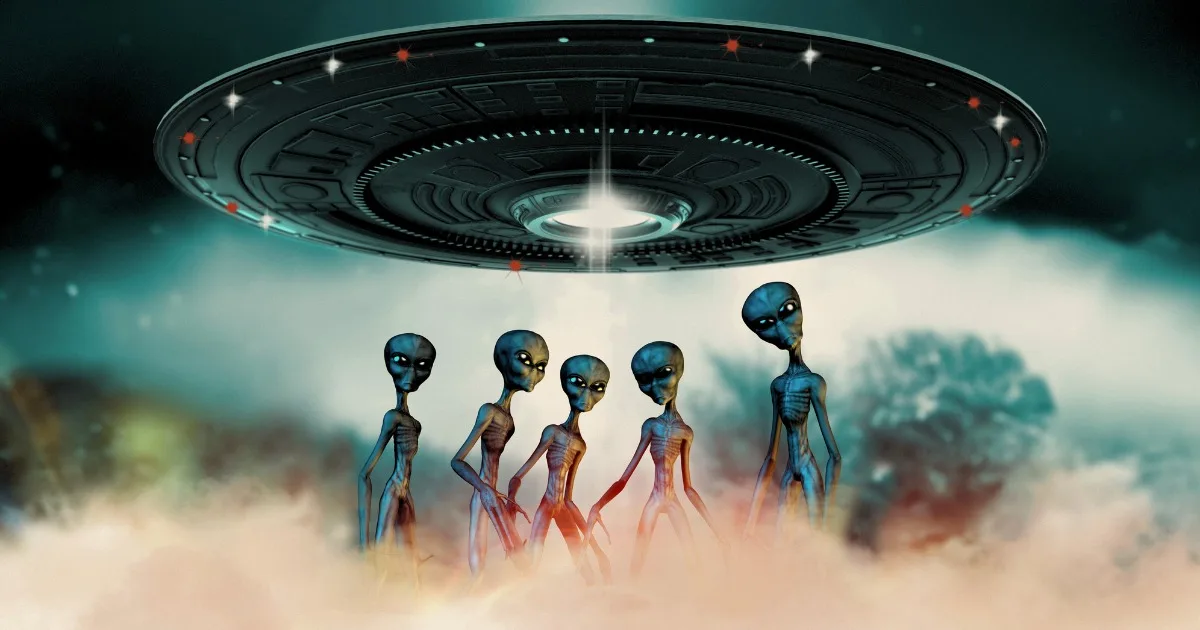
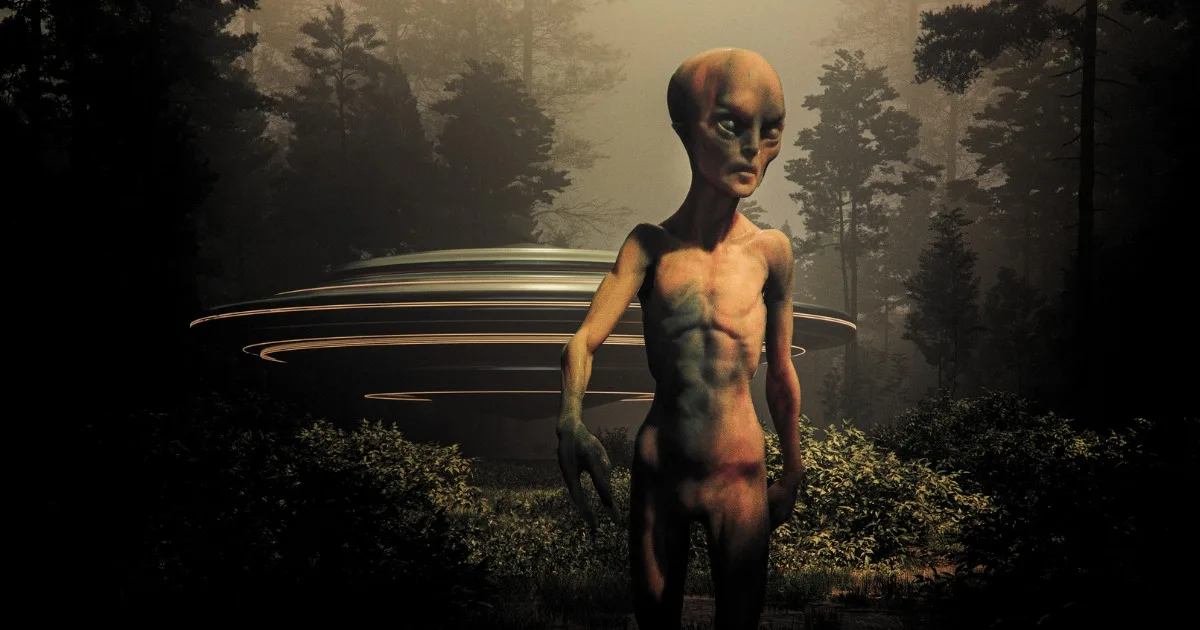
In science-fiction movies, aliens are frequently projected as humanoid beings with elongated heads and big eyes. Unfortunately, if extraterrestrial life does exist, it might look vastly different from what popular culture presumes.
As per the University of Edinburgh’s Valentina Erastova, life outside of Earth might evolve underground as fungal-like networks to escape surface radiation. Other theories suggest that extraterrestrial life could take forms that are completely unrecognizable to us, ranging from underwater microbes to even dark matter. Because we are so heavily biased by Earth's biology, finding aliens might be a far more complex task than expected.
Did alien civilizations destroy themselves?
Aliens might have just destroyed their own civilizations. As any advanced society makes progress, it tends to use its natural resources for growth. But sometimes, overwhelming consumption leads to the complete exhaustion of those planetary resources. Such a scenario would pose severe threats, similar to the climate crisis on Earth. It is entirely possible that even if alien civilizations existed, they probably depleted their resources and triggered their own doom long before we could ever make contact.
What if humans are the real aliens?
The controversial Panspermia hypothesis states that humans (or at least our earliest ancestors) might be aliens. The hypothesis proposes that life on Earth did not originate from the Blue Planet itself. Rather, meteors carrying microscopic organisms could have crash-landed on Earth billions of years ago. A fringe variation of this theory also suggests that tardigrades and octopi, too, were not originally part of Earth's evolutionary tree. However, as intriguing as the hypothesis might sound, there’s a huge counterpoint. Skeptics point out that traversing the harsh radiation of deep space would likely destroy any biological material, and we have yet to find any direct evidence of microbial life originating elsewhere in our solar system.