How a late-night road trip turned into one of history's most chilling UFO mysteries
A road trip that changed everything
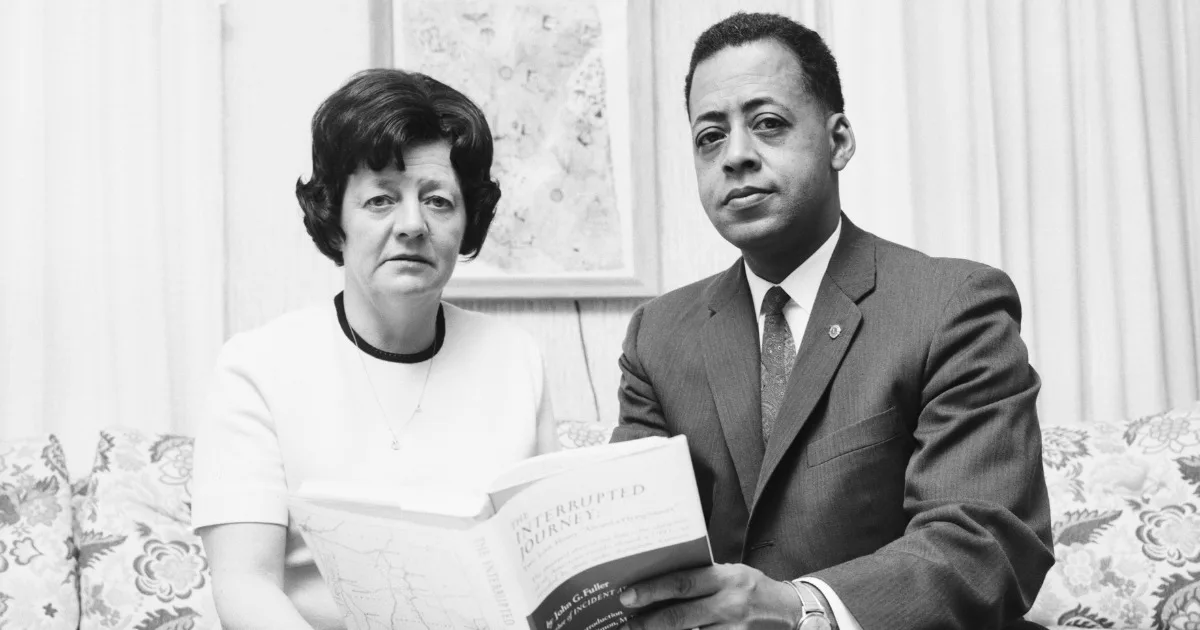
Life outside of our planet has been a topic of significant interest, and over the years, scientists have tried to find signs of alien life. While nothing concrete has been discovered yet in space, reported instances of UFO sightings on Earth have often captured public interest. One such incident from the early 1960s revolves around American couple Betty and Barney Hill, with their story being widely documented in newspaper reports and books such as 'The Interrupted Journey' (1966) by John G. Fuller.
Barney and Betty Hill's remarkable and bizarre story began with a simple road trip to Canada to take their minds off work. While on their way back, the couple were driving through the White Mountains in New Hampshire en route to Portsmouth, when they encountered a strange light that would change their lives forever.
The light that wouldn't stay still
The date was September 19, 1961 when the Hills were driving back home to Portsmouth, but the journey proved to be far from normal. According to public records based on the Hills' testimonies, at around 10 p.m., Betty saw a mysterious bright light outside of her car window. While Barney initially shrugged it off as a satellite, the light appeared to move and also change its course. This inexplicable movement piqued Betty’s interest, prompting her to step out of the car and observe the strange light with the help of Barney’s binoculars. When they resumed their journey, Betty was surprised to see that the light seemed to be following them on Route 3.
As the couple took another pit-stop near Cannon Mountain, the unthinkable happened. The light abruptly changed its course from north to west in the sky and headed straight towards them.
The missing hours
As the flying disc approached them, the Hills hastily got back into their car and started to drive away. But to their dismay, they could feel the vehicle shaking with strange vibrations as a tingling sensation within their bodies made them slip into a daze, like an altered state of consciousness. When the duo regained their senses nearly two hours later, they were surprised to see that they were still driving, only this time, they had strayed 35 miles south from their last location near Cannon Mountain.
They did not have any memories of what happened in between. Initially, the duo decided to keep the experience private. However, soon they reported the details of their experience to Pease Air Force Base in Portsmouth. Surprisingly, Air Force officials later confirmed that their radar had indeed picked up an unexplained object on the night of September 19. Now, while the story is already quite chilling, the subsequent investigations would cement the case in UFO lore.
This image shows Barney and Betty Hill holding a book that recounts their extraordinary experience.
Hypnosis and the recovery of lost memories
Within a year, Barney’s health began to deteriorate. He experienced high blood pressure and ulcers due to immense anxiety. Both Betty and Barney also had hallucinations, which they believed stemmed from their encounter. It was then that the duo were advised to seek Dr. Benjamin Simon’s help. Using hypnosis to relieve their mental trauma, Dr. Simon uncovered some startling details about their bizarre experience.
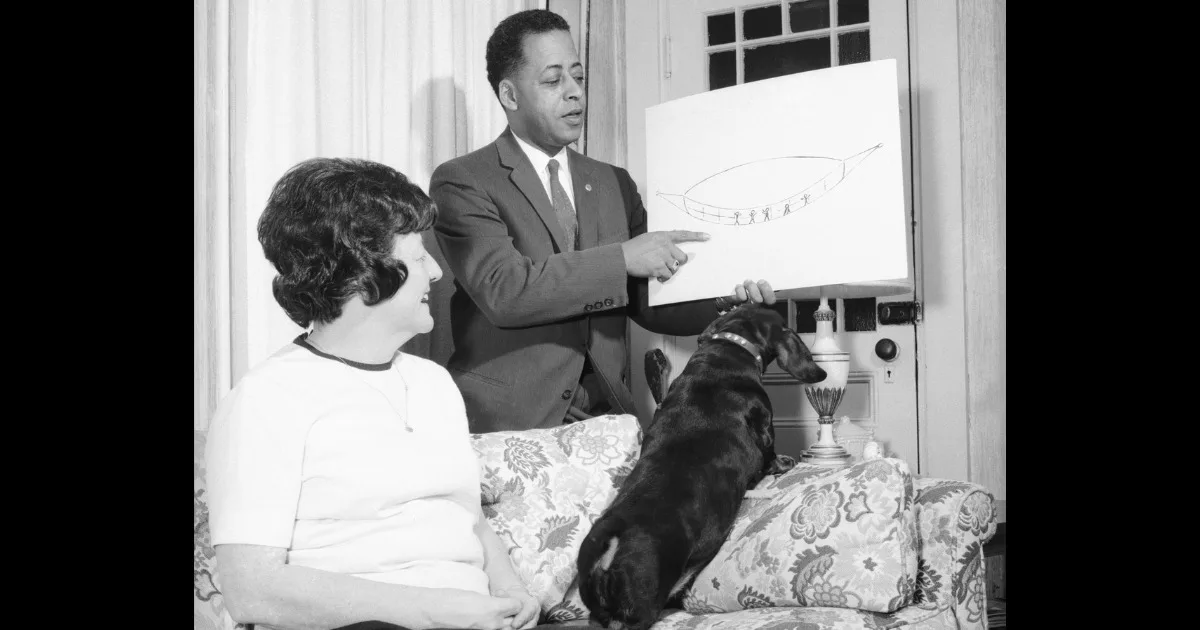
During the session, Barney narrated how alien beings with slanted eyes subjected them to invasive physical examinations aboard the craft, extracting skin, nail, and hair samples for their experiments. He also remembered those beings inserting a long needle into Betty’s stomach.
Both Barney and Betty Hill maintained their accounts for the rest of their lives. Barney Hill passed away in 1969 from a stroke, while Betty died from lung cancer in 2004.
This image shows Barney and Betty Hill describing their experience of alien abduction with a diagram.
The Zeta Reticuli hypothesis
Another hypnosis session with Dr. Simon in 1964 had Betty illustrating a map from her memory. However, by the time she finished drawing, things took a fascinating astronomical turn. When her sketches were reproduced in books and magazines, an amateur astronomer, Marjorie Fish, tried to match the map to a real star system by constructing a 3-D model based on the star catalogs available at the time. After extensive analysis, Fish found what she believed to be a match. She concluded that what Betty drew was a star map and the supposed aliens belonged to the Zeta Reticuli system. The viewpoint was found to be slightly above the Zeta 2 Reticuli star.
After the chilling accounts by the Hills were brought to their attention, the Air Force added their case to its already-running investigation into unexplained domestic UFO sightings known as ‘Project Blue Book.’
A star map or a trick of the brain?
While Marjorie Fish concluded that the aliens probably came from Zeta Reticuli, Carl Sagan and research associate Steven Soter presented a rigorous counterargument. Sagan argued that the claimed match between Betty Hill’s star map and the stars near Zeta Reticuli was not convincing evidence, noting that the comparison relied on choosing only certain stars, the best viewing angle, and the drawing of connecting lines that made the patterns appear similar. "The argument on 'The Zeta Reticuli Incident' demonstrates only that if we set out to find a pattern correlation between two nearly random data sets by selecting at will certain elements from each and ignoring others, we will always be successful," was Sagan and Soter's assertion.
On the other hand, Terence Dickinson suggested that Fish did not simply pick any pattern; rather, she built several 3D models with up to 256 nearby stars and conducted her study testing hundreds of viewpoints. The connection was made based on a specific vantage point that yielded a seemingly logical network of Sun-like stars. Dickinson further pointed out that extra dots were not chosen randomly, but because Betty Hill herself shared that those dots were more noticeable.
As for Fish herself, she defended her hypothesis at the time. Her obituary states that she later found her own hypothesis to be unlikely after modern satellite data proved the older star catalogs she used contained inaccurate distance measurements.