5 weirdest planets found by NASA
The quest for alien worlds
It was 1992 when an exoplanet, aka a planet outside of our solar system, was discovered for the first time by astronomers Aleksander Wolszczan and Dale Frail. However, it was not orbiting a Sun-like main-sequence star but a pulsar.
Since then, scientists have tried to unveil the worlds lying beyond our solar system in the observable universe. While they have confirmed more than 6,000 exoplanets, scientists believe that there are still billions waiting to be unveiled. Among the planets discovered so far, a few of them exhibit features that seem beyond imagination. Let's take a look at five such spectacular exoplanets discovered by NASA.
HD 189733 b: The planet that rains glass
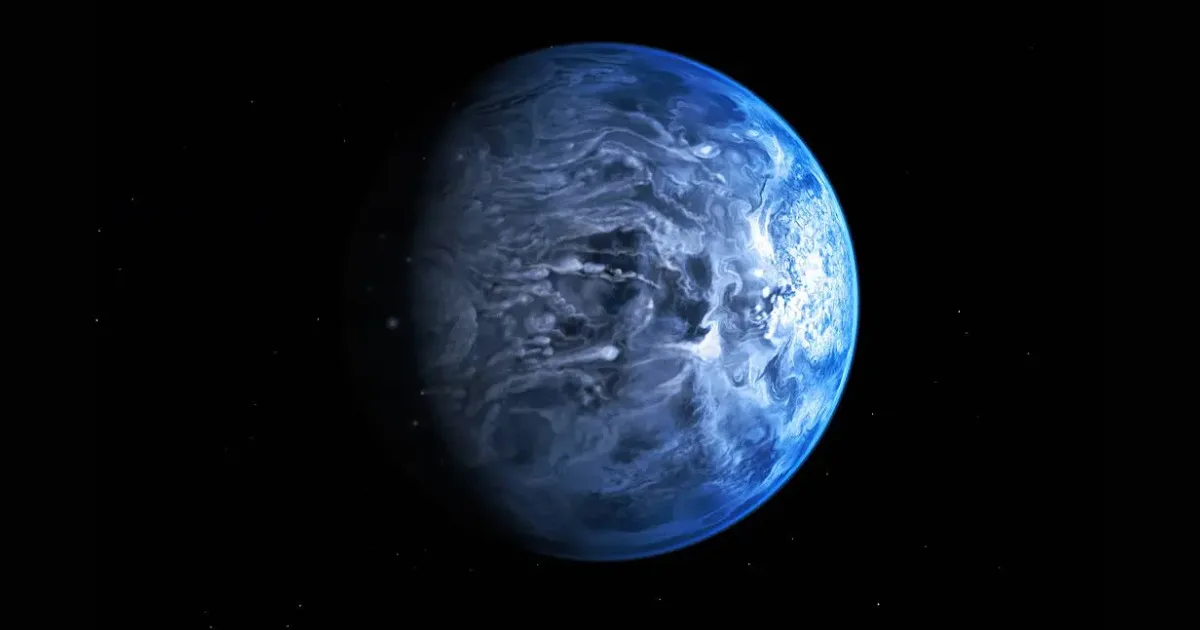
This bright blue exoplanet, called HD 189733 b, might appear as beautiful as our home planet. But one must not go by its appearance, as it's dangerously deceptive. Despite its striking appearance, the planet has extreme environmental conditions. In fact, it is one of the most hostile planets beyond our solar system. It is surrounded by a hazy atmosphere filled with high-altitude clouds containing silicate particles.
This exoplanet experiences powerful winds racing at speeds of up to 5,400 miles per hour (which is seven times the speed of sound). Such relentless winds have the potential to sweep anything caught in them around the planet. Adding to that, one of the most astonishing possibilities about HD 189733 b is that it may experience sideways rain made of glass.
GJ 504b: The pink exoplanet that still glows
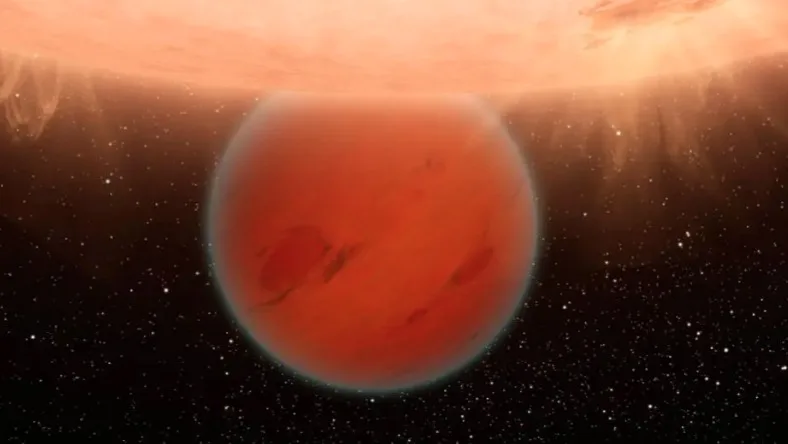
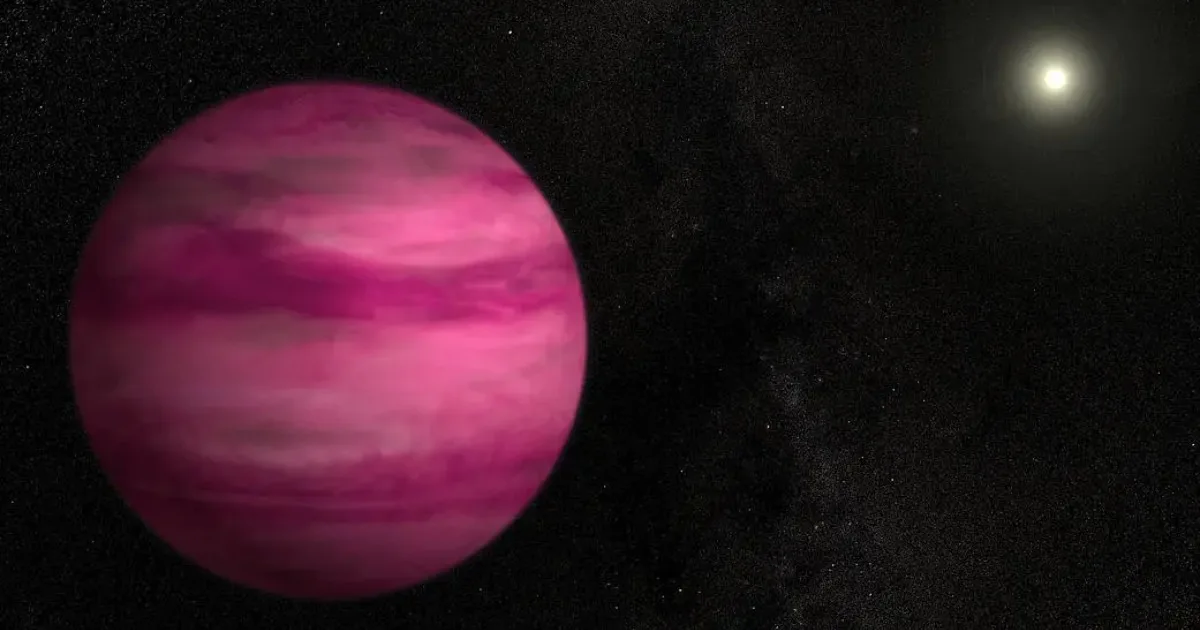
This exoplanet still glows from the leftover heat of its formation. GJ 504b was discovered in 2013 using infrared observations from the Subaru Telescope in Hawaii and is of a deep, dull magenta color, which NASA refers to as the shade of "dark cherry blossom."
While we know Jupiter as the gas giant of our solar system, this exoplanet is about 4 times the mass of Jupiter, although similar in size. GJ504 b orbits the G0-type star GJ 504, which is slightly hotter than our Sun. The exoplanet has an effective temperature of around 460 degrees Fahrenheit (237 degrees Celsius). It is this heat that gives this gas giant its distinctive pink glow.
GJ 436b: The planet that defied planetary chemistry
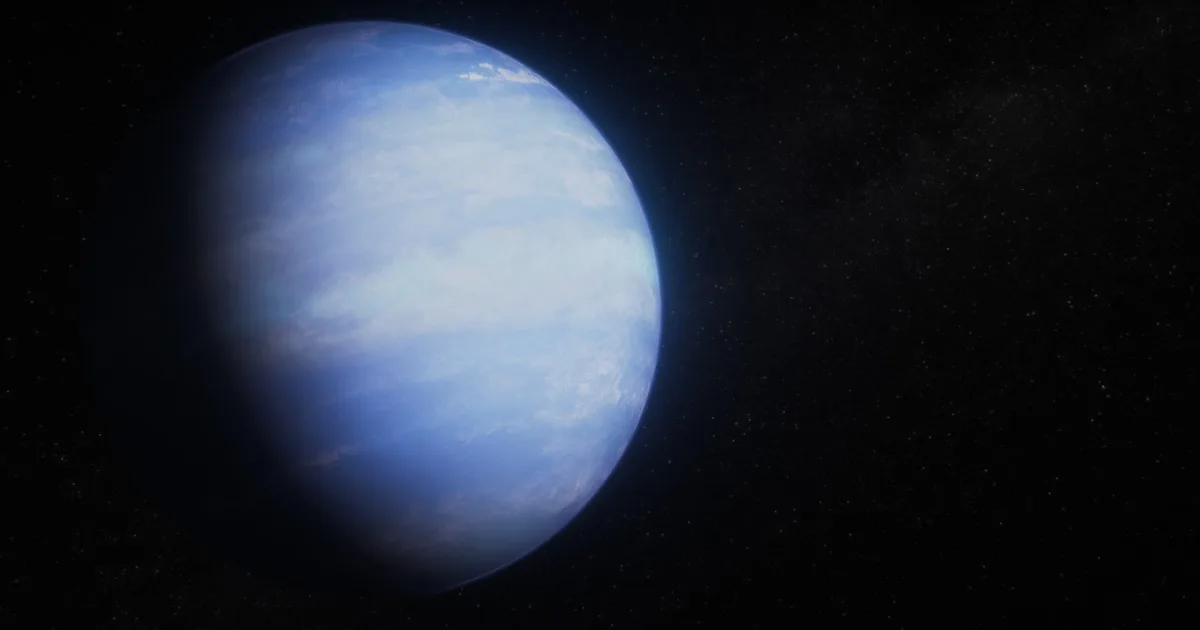
This giant exoplanet in the constellation Leo has surprised astronomers. Generally, a planet with the common combination of hydrogen, carbon, and oxygen, and a temperature of up to 1,000 Kelvin (1,340 degrees Fahrenheit), should have a large amount of methane and a small amount of carbon monoxide. But the discovery of GJ436b turned out to be unexpected because at 800 Kelvin (or 980 degrees Fahrenheit), it exhibits a different chemical composition.
“It’s a big puzzle,” said Kevin Stevenson, a planetary sciences graduate student at the University of Central Florida. “Models tell us that the carbon in this planet should be in the form of methane. Theorists are going to be quite busy trying to figure this one out,” he added.
WASP-107 b: The cosmic marshmallow
WASP-107 b, discovered by NASA, is one of the least dense planets known to date. This particular planet has a volume that is more than three-quarters of Jupiter's. But it has less than one-tenth of Jupiter’s mass. Due to its lower density, the planet is often termed the ‘warm Neptune’ and has been compared to a marshmallow.
Trying to explain the interesting aspects of the planet, Arizona State University’s Luis Welbanks stated in a paper published in Nature, “Based on its radius, mass, age, and assumed internal temperature, we thought WASP-107 b had a very small, rocky core surrounded by a huge mass of hydrogen and helium.” Welbanks also pointed out that it's hard to understand how the planet’s small core accumulated so much gas but stopped growing before becoming as massive as Jupiter.
WASP 12-b: The dying planet torn apart by its own star’s gravity
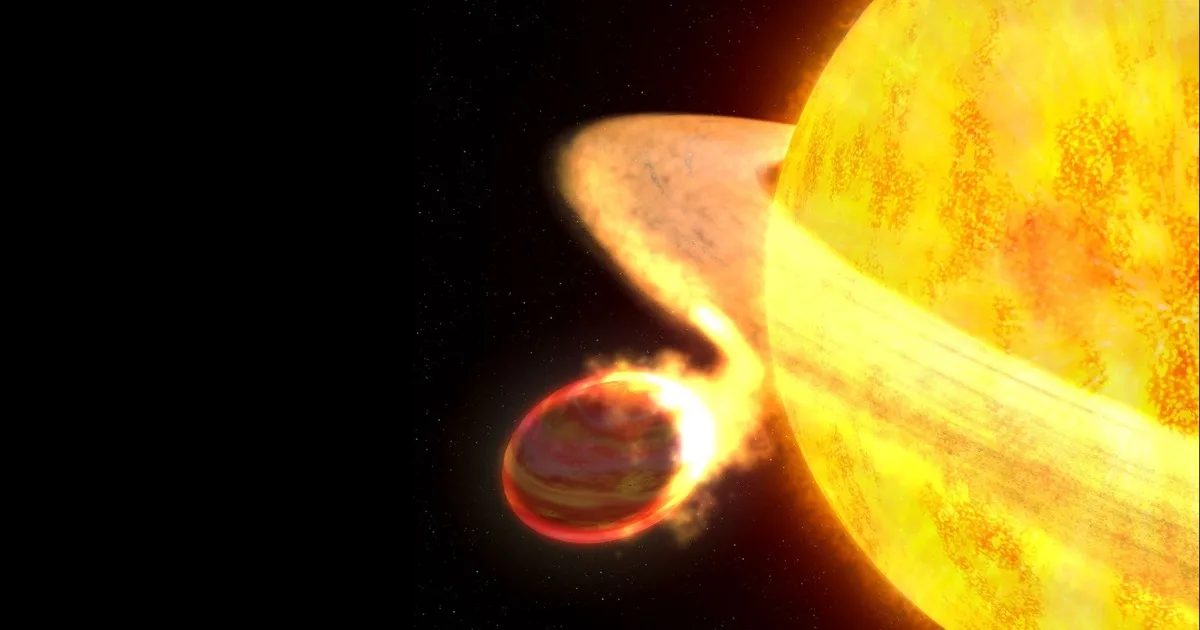
Scientists were taken aback when they observed the egg-shaped planet, WASP 12-b, using NASA's Hubble Space Telescope. Discovered in 2009, this planet has been found to orbit its star 1200 light years away in the Auriga constellation. The planet has 1.4 times Jupiter’s mass and 1.8 times Jupiter’s radius. However, the exoplanet lies so close to its star (2 million miles away) that it experiences extreme conditions.
The temperatures soar to 2210 degrees Celsius (4,000 degrees Fahrenheit) during the day. The close proximity to its star results in the planet’s material being pulled by the star. Furthermore, extreme tidal forces caused by gravity have resulted in the planet getting stretched into an egg-like shape. According to NASA, this ‘hot Jupiter’ will be completely consumed by its star in about 10 million years.