5 surprising facts about the Moon that most people don't know
The Moon is slowly drifting away from Earth
NASA has explained that the tidal friction between the Moon and Earth transfers angular momentum. As Earth rotates faster than the Moon orbits, our planet's tidal bulge is constantly dragged slightly ahead of the Moon, creating a gravitational tug-of-war that pushes the Moon outward. Currently, the Moon is drifting away by approximately 3.8 centimetres per year. While this won’t have an immediate impact on Earth, over a much longer period (millions of years), the Moon will appear more distant in our sky. Additionally, this outward drift steals rotational energy from our planet, which is slowly increasing the length of Earth days.
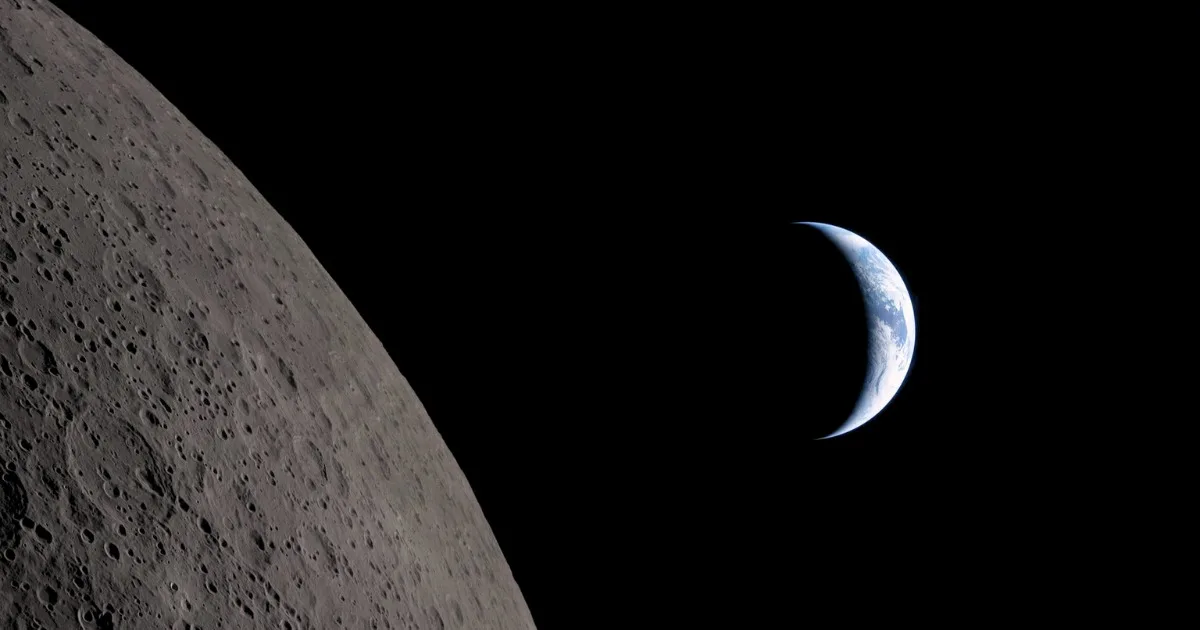
In this image, Earth can be seen in its crescent phase from the Moon. The image was captured by the Artemis II crew during their lunar flyby, just six minutes before Earthset.
A cosmic coincidence makes the Sun and Moon look exactly the same size from Earth
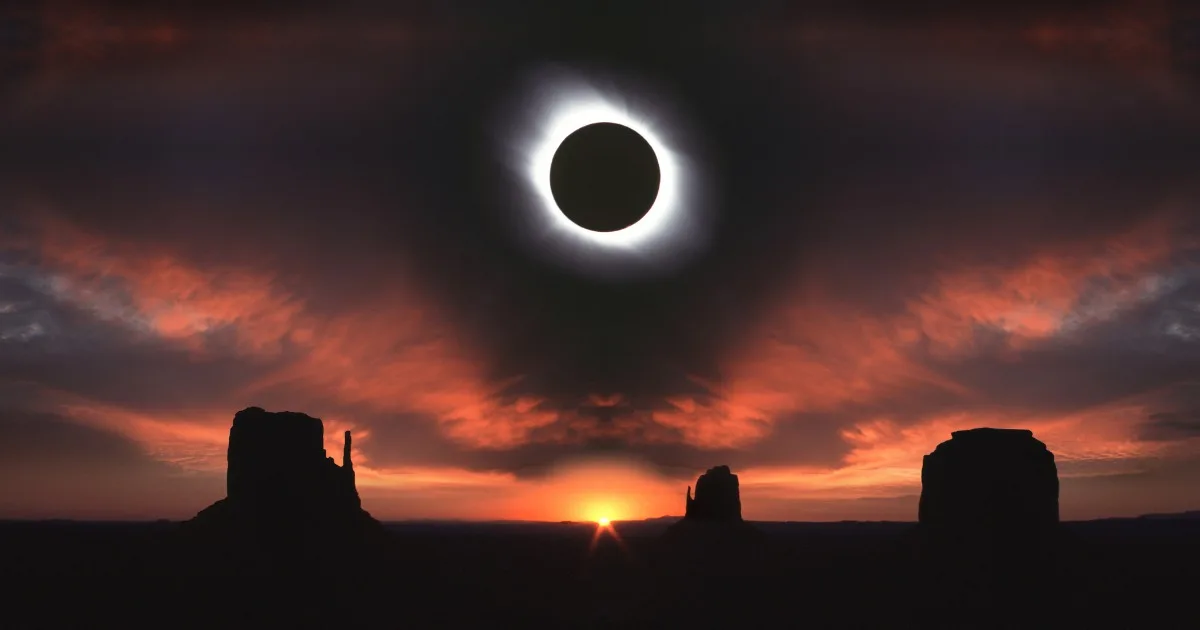
The Sun is roughly 400 times larger in diameter than the Moon. Surprisingly, despite such a vast mismatch in size, both the Sun and the Moon appear to be the same size in our sky. This is caused by pure cosmic coincidence. While the Sun is 400 times wider than the Moon, it also happens to be located 400 times farther away from Earth. Such cosmic geometry gives us the optical illusion that both celestial bodies are identical in scale. Moreover, it is due to this coincidence that Earth witnesses total solar eclipses.
This image shows a total solar eclipse during sunrise in Utah, USA.
Moonquakes reveal the Moon is still geologically active
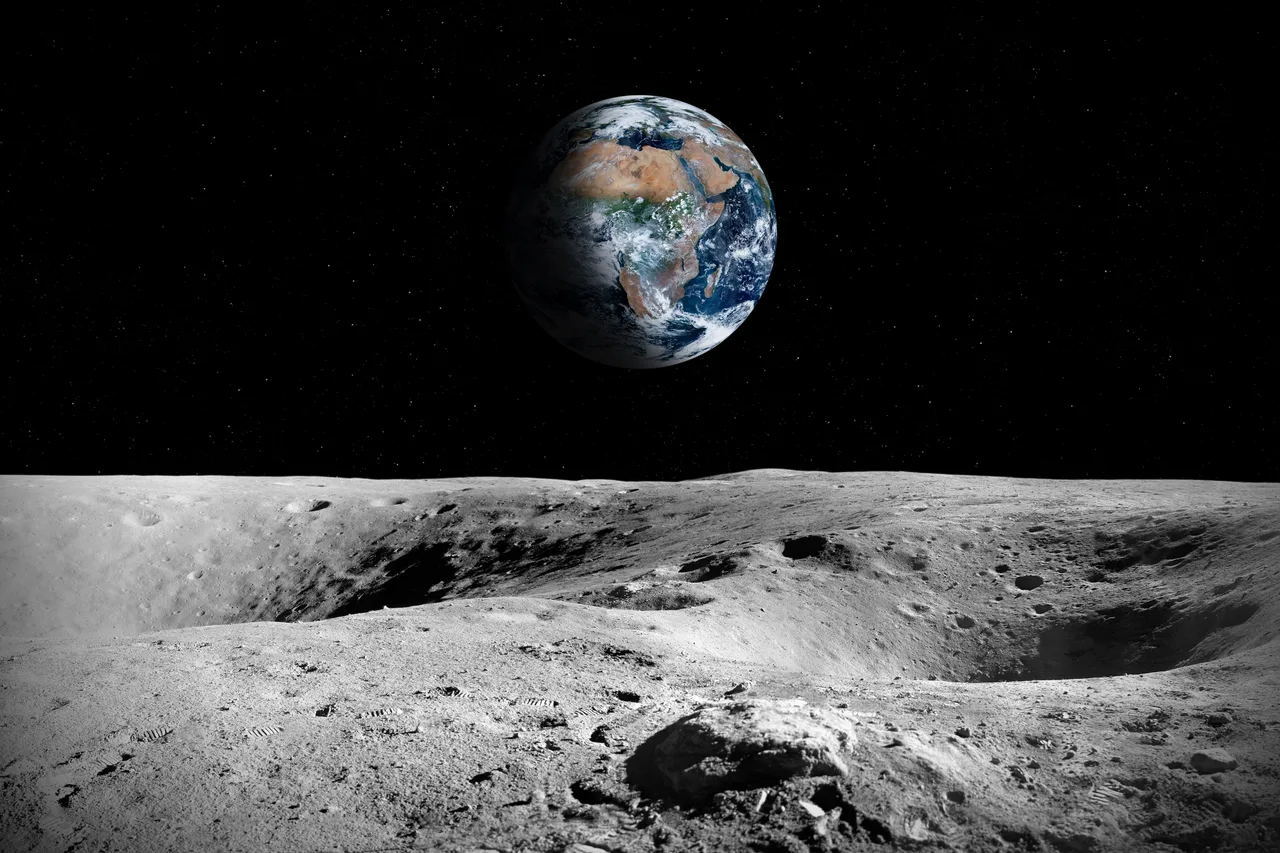
Just like earthquakes on our Blue Planet, the Moon also experiences tremors beneath its surface, known as moonquakes. Deep moonquakes happen because Earth’s gravitational pull constantly strains and flexes the Moon’s interior. Another scenario—shallow moonquakes—happens because the Moon slowly shrinks as it cools. This cooling process began nearly 4.5 billion years ago when the Moon was first formed.
This image is a stock photo portraying a view of our Blue Planet from the lunar surface.
How a massive collision gave birth to the Moon
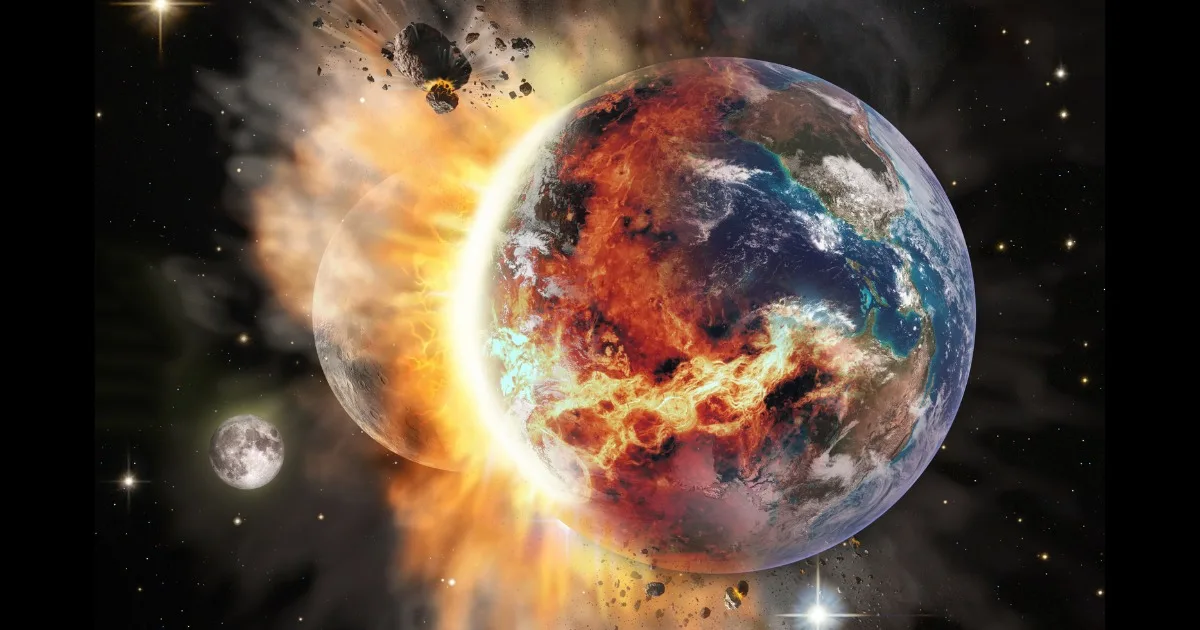
The Moon is believed to have been created from a giant collision. Widely known as the ‘Giant-impact hypothesis,’ it proposes that a protoplanet the size of Mars, often named Theia, collided with the early Earth about 4.5 billion years ago. This catastrophic collision resulted in a massive cloud of debris, which eventually coalesced to form the Moon.
The image is an illustration depicting a large celestial body colliding with Earth.
Scientists found water trapped in lunar dust
Back in the late 2000s, ISRO’s Chandrayaan-1 and NASA’s Cassini and Deep Impact missions made a fascinating discovery: they found traces of hydration on the Moon. However, for a long time, scientists could not definitively tell if the chemical signature was water (H2O) or hydroxyl (OH). Finally, in 2020, NASA’s SOFIA mission confirmed that the sunlit part of the lunar surface does indeed contain water. Rather than pooling in liquid form, the H2O molecules are embedded within the lunar surface or trapped inside tiny glass granules of lunar dust.
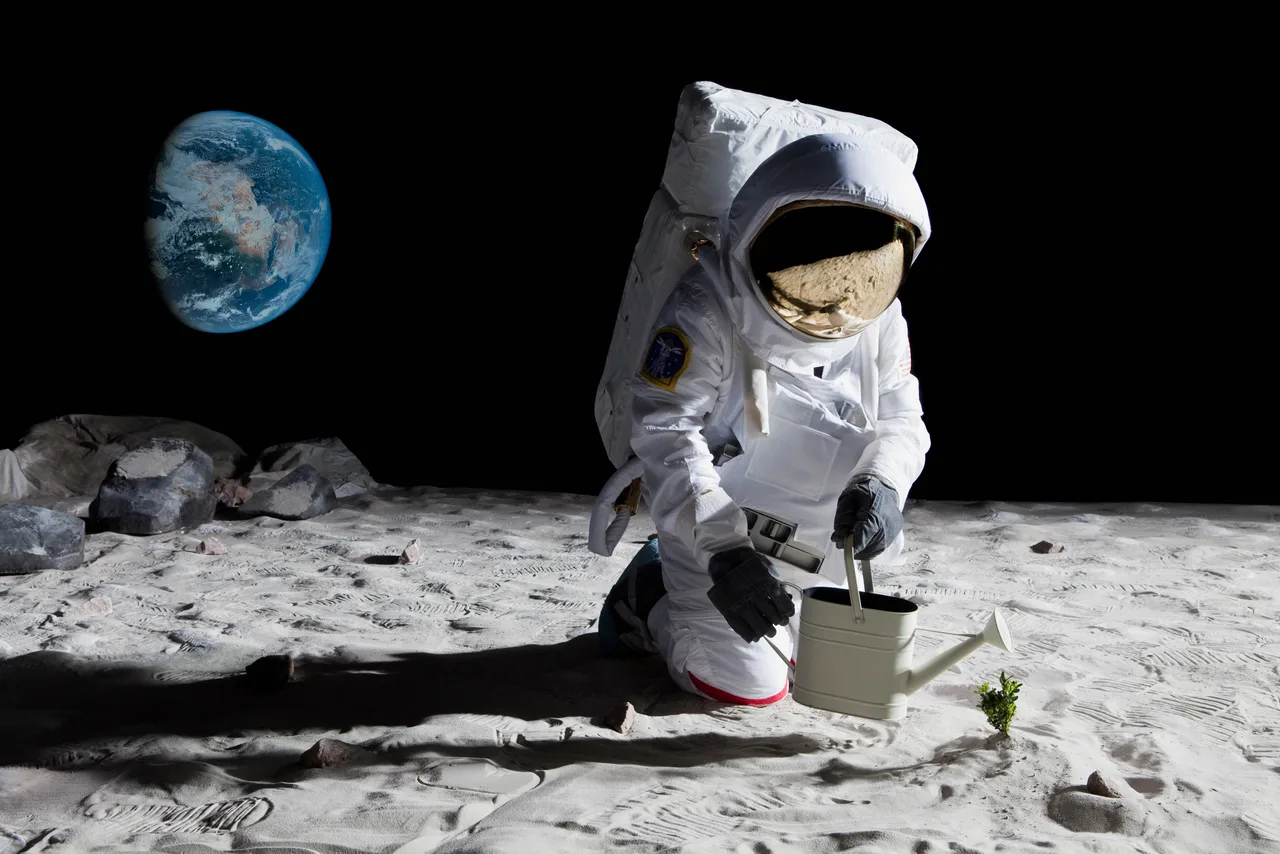
This stock image shows an astronaut gardening on the Moon.