NASA's James Webb finds farthest fast radio burst came from a dwarf galaxy far smaller than expected
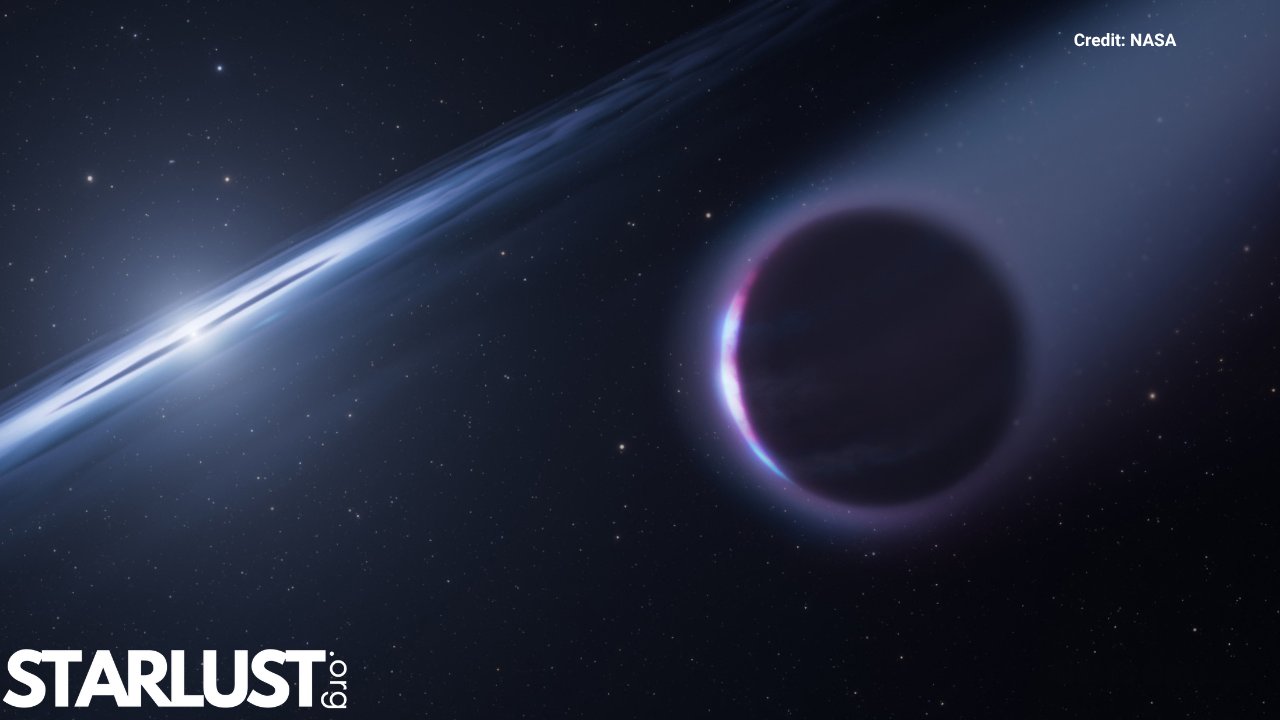
NASA’s James Webb Space Telescope pinpointed the host galaxy of FRB 20240304B, the most distant fast radio burst seen to date, according to a study published on October 8, 2026, in Science. MeerKAT detected the burst on March 4, 2024, but no ground-based telescope could see its galaxy, so Webb’s NIRCam found a small, star-forming dwarf galaxy and NIRSpec measured a redshift of 2.148, placing the burst just 3 billion years after the Big Bang. The galaxy was about 1,000 times less massive than expected, leading lead author Manisha Caleb of the University of Sydney to say it is very unlikely the burst came from a merger of two neutron stars, which could point instead to a young magnetar.
Credit: NASA, ESA, CSA, STScI, T. Nanayakkara (USYD), J. DePasquale (STScI), N. Bartmann (ESA/Webb)