NASA's Nancy Grace Roman Space Telescope launch and postlaunch news conference: Live updates – as it happened
Catch live updates of the Roman telescope launch and NASA's postlaunch news conference right here.
Started Aug 30, 2026·21 updates
What we know so far
NASA's Nancy Grace Roman Space Telescope launched atop a SpaceX Falcon Heavy rocket at 7:26 am EDT on Aug. 30 from the Kennedy Space Center in Florida.
Named after NASA's first chief astronomer, the observatory will study billions of cosmic objects, including exoplanets, supernovae, and black holes.
It will also help answer essential questions on dark energy and dark matter.
This was the sixth NASA primary mission with SpaceX to fly on a Falcon rocket from the Kennedy Space Center.
This was the first and third flight for the two side boosters on the rocket.
How Roman will pave the way for the Habitable Worlds Observatory
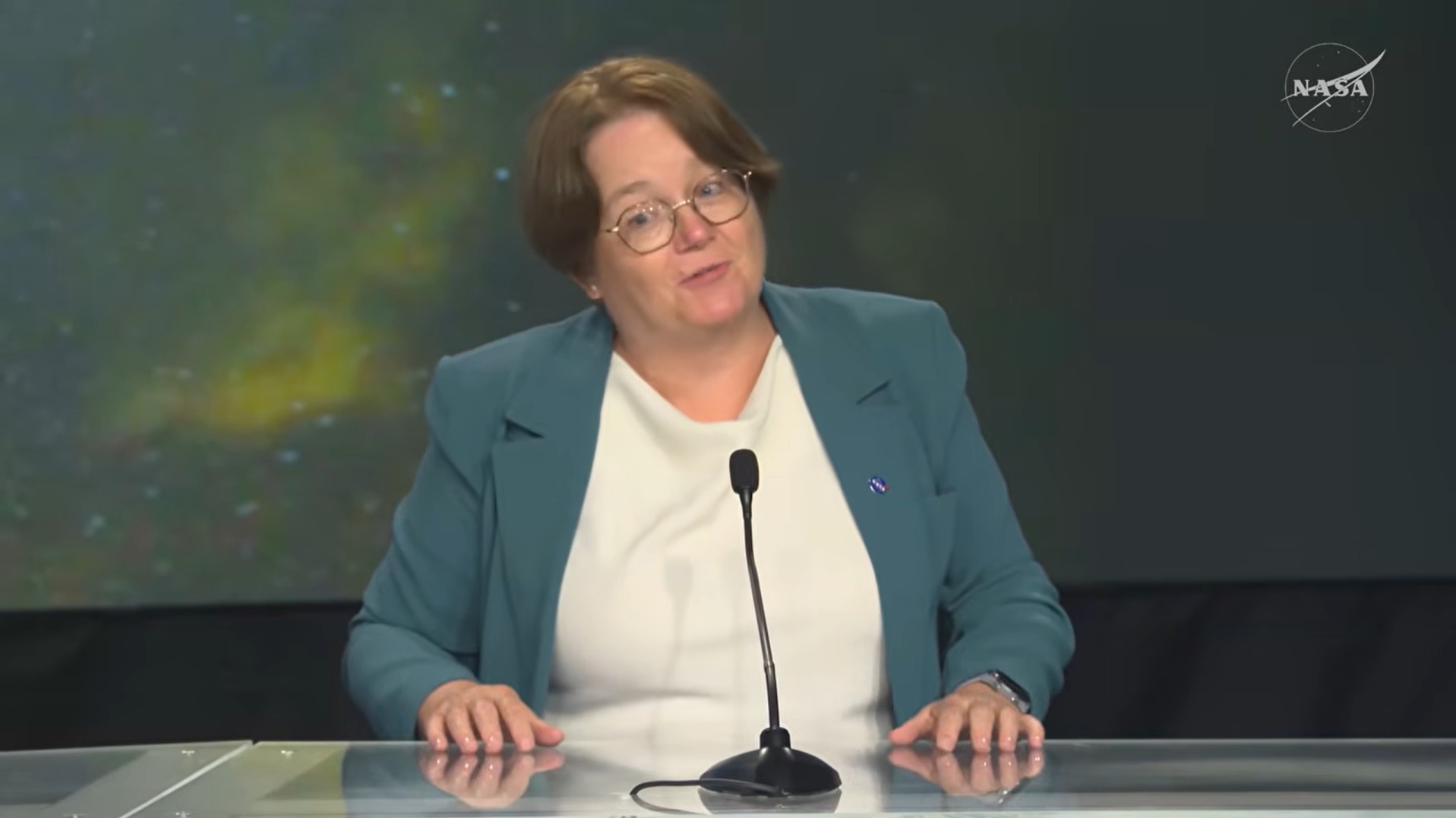
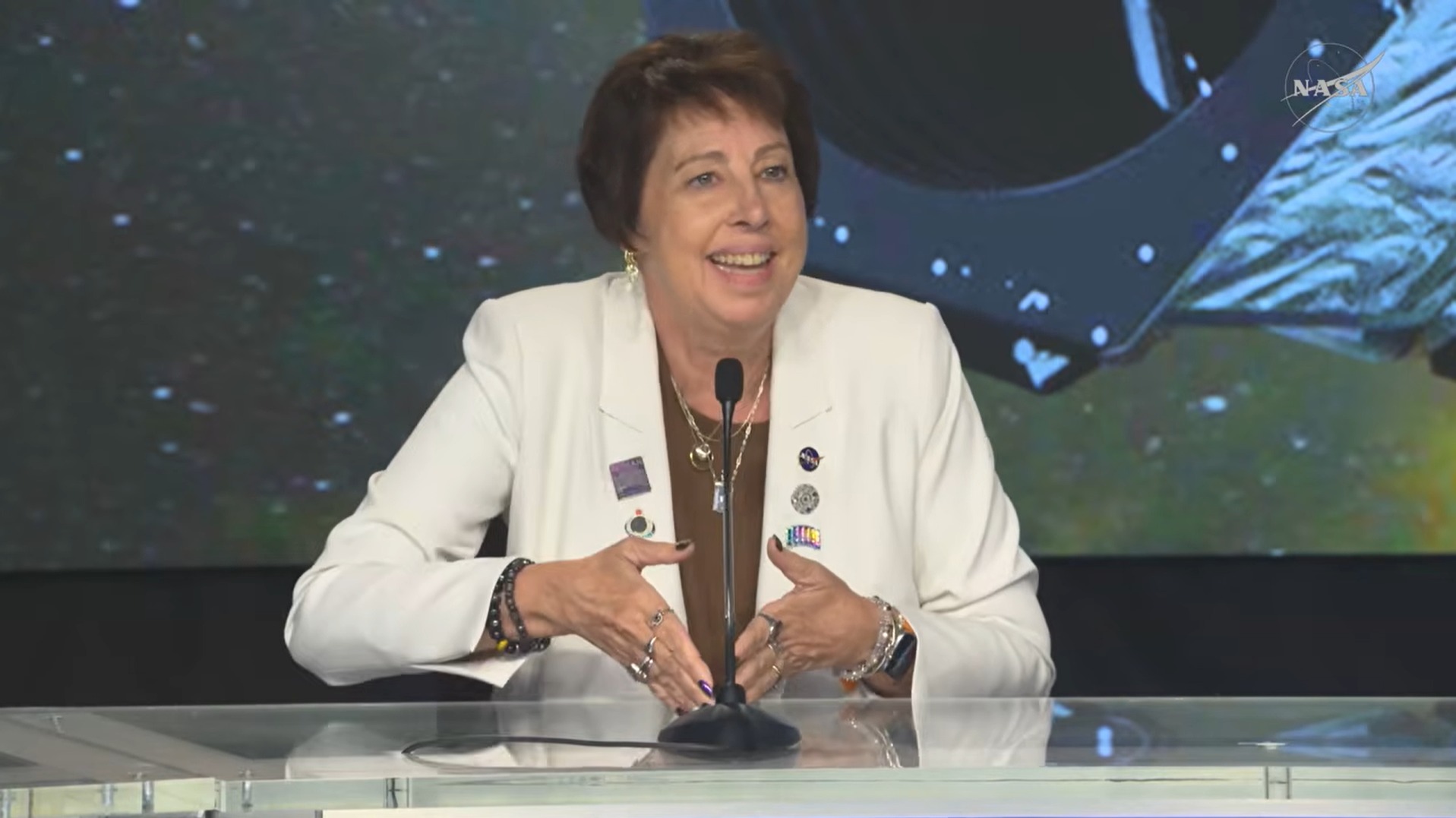
Nicky Fox, the associate administrator of NASA's Science Mission Directorate, sees Roman's images as the first step towards the Habitable Worlds Observatory (HWO)—the world's first telescope designed specifically to find life around other stars. "The coronagraph and all the data is really going to set us up," she explained. "Also, finding these possible 100,000 new exoplanets is what really gives the Habitable Worlds a catalog to go in and really do that detailed study."
Nicky Fox, associate administrator, Science Mission Directorate, speaks at the Roman postlaunch news conference. (NASA)
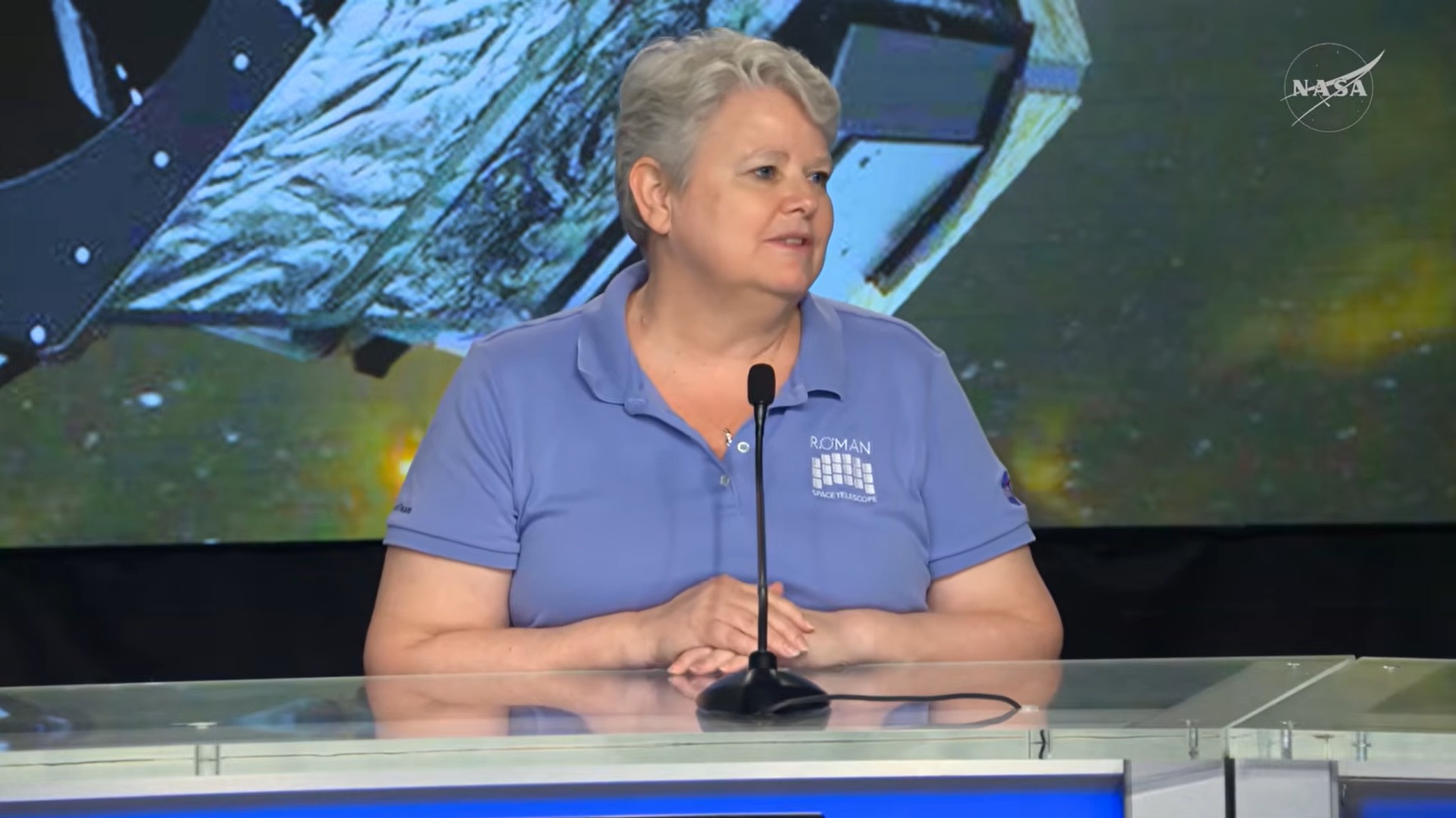
Roman telescope senior project scientist Julie McEnery said that Roman will find thousands of new exoplanets within just a year from now and make measurements of the number of those that no longer orbit their host stars. "We will be making new precise measurements of supernovae," she added. "Those same observations will allow us to catch the unexpected."
Julie McEnery, Roman telescope senior project scientist, speaks at the postlaunch press conference on Aug. 30. (NASA)
U.S. President Donald Trump congratulates the Roman team
President Donald Trump phoned in mid-conference to express his appreciation of the Roman telescope mission.
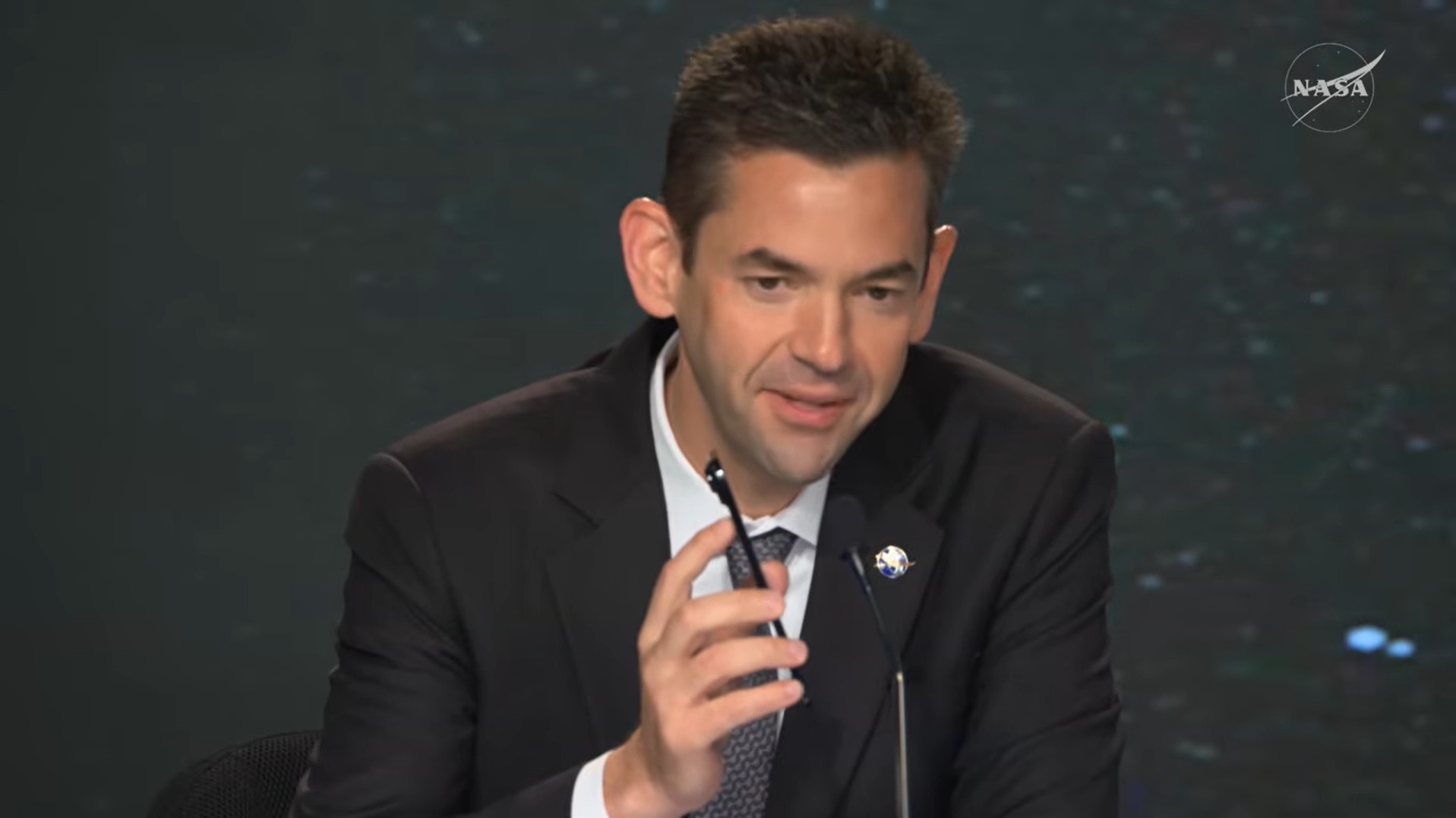
"I just want to thank everybody and congratulate you. Boy, it (the launch) looked beautiful on television," he said. "I just called Jared to find out if there is anything negative that I should know about, like it will never be able to return, little things like that. He said, 'No, it's looking great. It couldn't be better.'"
NASA Administrator Jared Isaacman holds his phone to a mic with President Trump on the line during the Roman telescope postlaunch news conference. (NASA)
Roman's five-year extension is 'definitely on the table'
Speaking to a reporter at the news conference, the Roman telescope project manager, Jackie Townsend, said that the observatory's five-year extension is "definitely on the table," even though there is no confirmation yet. "My flight dynamics people would not promise me anything yet, but I think tomorrow, after the mid-course correction burn, we should have an answer for you," she said.
While Roman has a five-year primary mission span, it has the capability to operate for another five years, with fuel being the limiting factor. And while NASA does not have the capability to service spacecraft at L2 yet, the observatory is designed as refuelable.
Roman telescope project manager Jackie Townsend speaking at the postlaunch news conference on Aug. 30. (NASA)
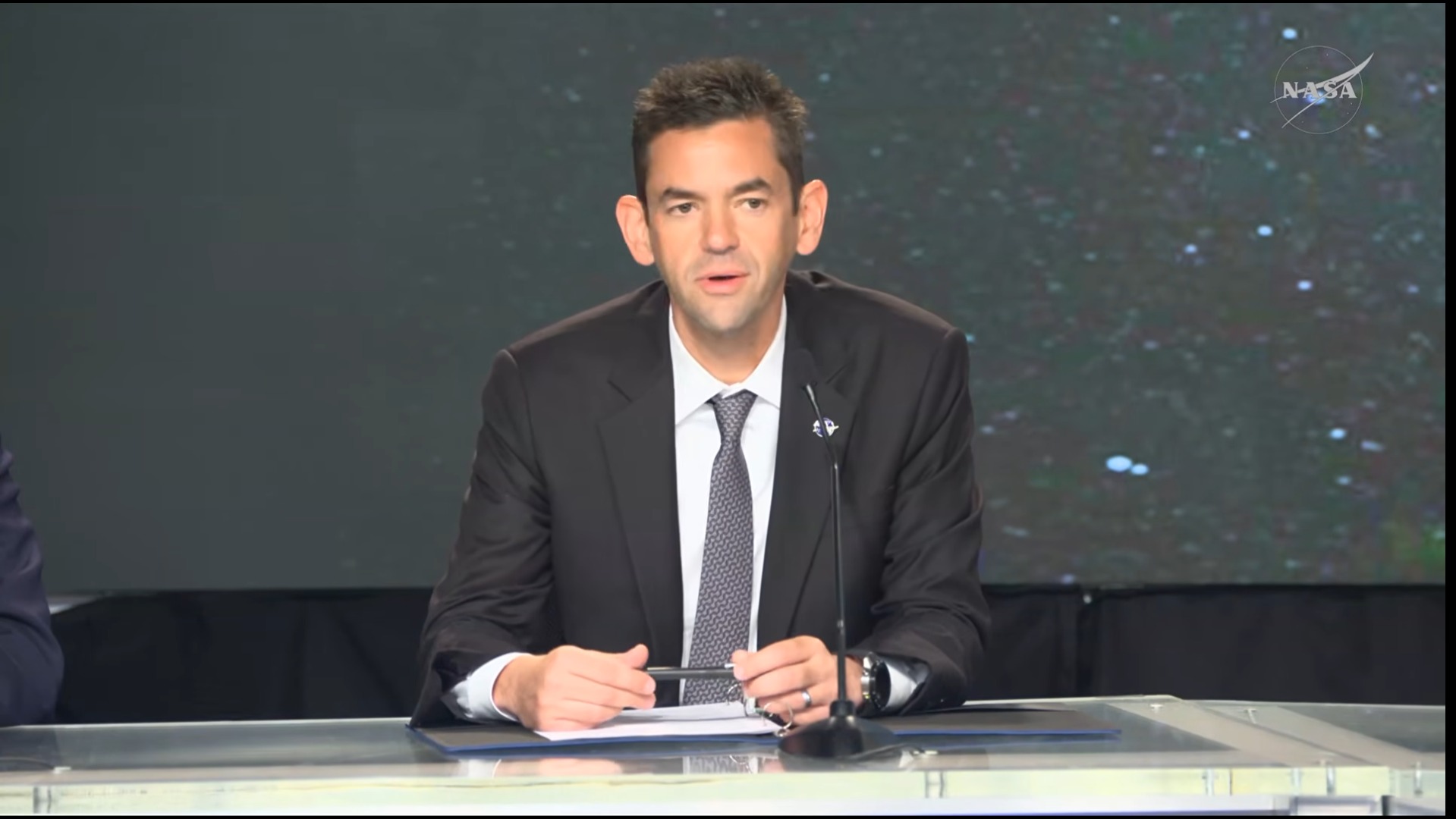
NASA Administrator Jared Isaacman said that the solar panels and Lower Instrument Sun Shade (LISS) aboard Roman have been deployed successfully following the observatory's separation from Falcon Heavy. Consisting of two deployable panels, the LISS is designed to protect the observatory from sunlight. "Ground controllers at NASA Goddard have been receiving telemetry data from Roman, and apparently all systems are nominal," Isaacman added.
The high-gain antenna, which will be the primary means of communication between Roman and the ground, will deploy tomorrow.
NASA Administrator Jared Isaacman speaks at the Roman telescope postlaunch news conference. (NASA)
With the Nancy Grace Roman Space Telescope on its way to the second Sun-Earth Lagrange point, NASA is gearing up for a postlaunch interaction with the press.
The conference will begin at 9:30 am EDT and will feature the following participants:
NASA Administrator Jared Isaacman
Nicky Fox, associate administrator, Science Mission Directorate, NASA Headquarters
Jackie Townsend, Roman telescope project manager, NASA Goddard
Julie McEnery, Roman telescope senior project scientist, NASA Goddard
Denton Gibson, launch director, NASA’s Launch Services Program, NASA Kennedy
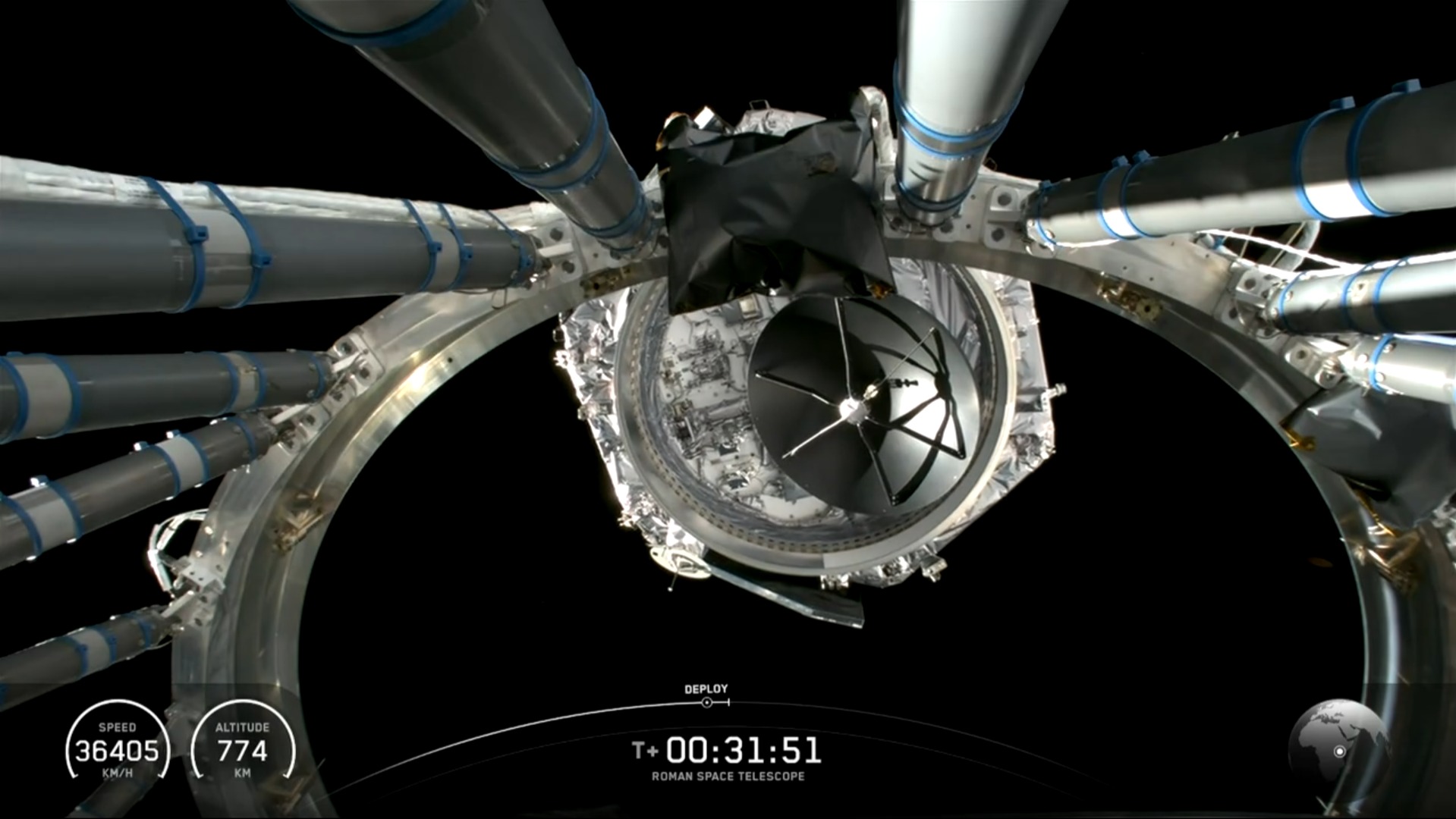
The Nancy Grace Roman Space Telescope has disengaged from Falcon Heavy following two successful second stage burns.
The mission team will now deploy Roman's solar panels and point them towards the Sun and execute a mid-course correction over the next day or so. The latter will help keep the observatory on the right track towards the second Sun-Earth Lagrange Point (L2), about 1.5 million kilometers from Earth, where it will be stationed for the duration of its mission.
NASA's Nancy Grace Roman Space Telescope separates from the Falcon Heavy second stage. (SpaceX)
Flight enters coast phase as Roman reaches initial orbit
SpaceX's Falcon Heavy has successfully put Roman into its initial orbit. The flight is now in its coast phase, and the observatory will be deployed 31 minutes and 31 seconds into the mission.
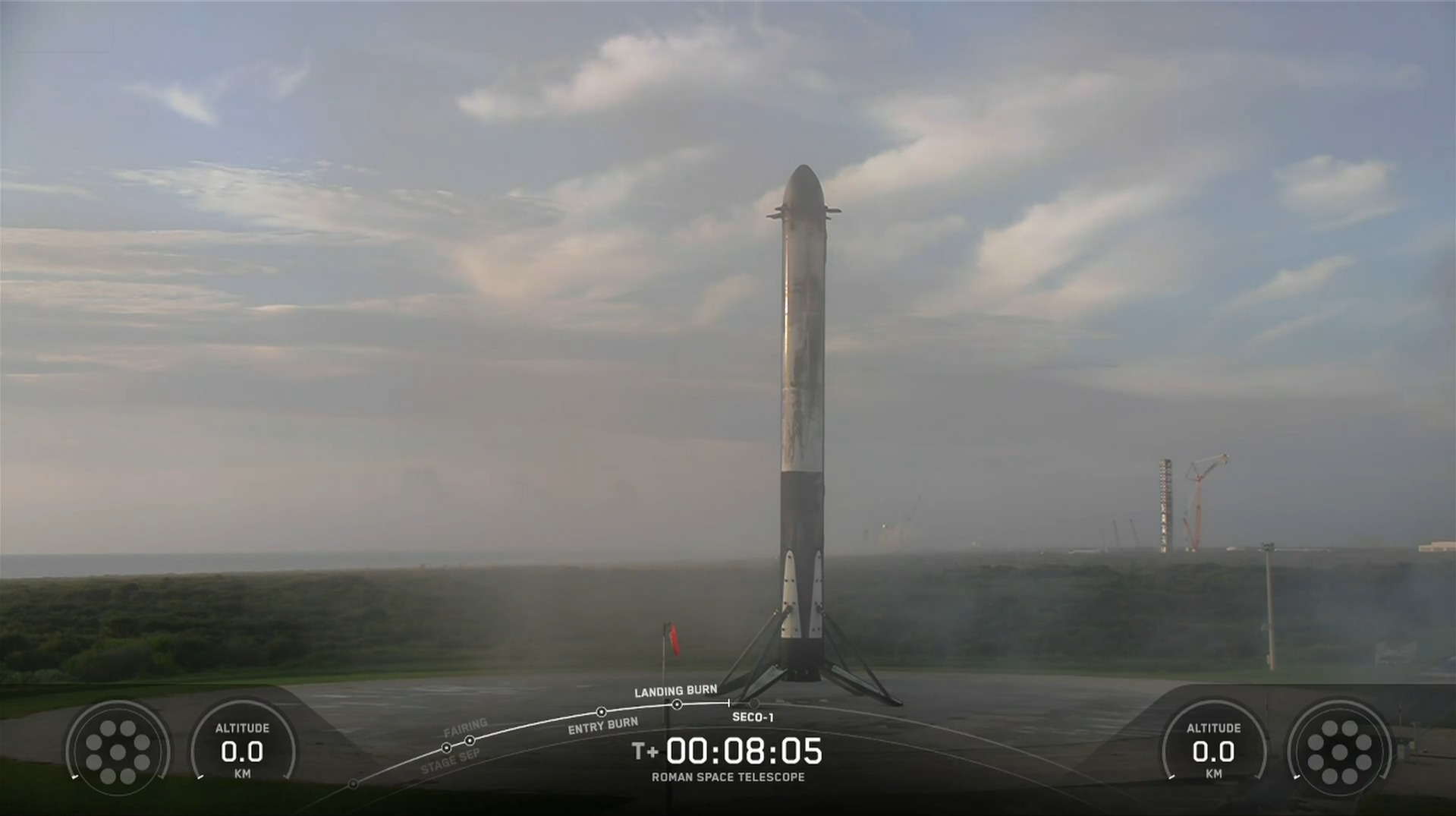
SpaceX confirmed that both of the Falcon Heavy boosters have achieved successful landings in Landing Zones 2 and 40 at the Cape Canaveral Space Force Station in Florida. The livestream, however, showed the landing of only one booster.
One of the two Falcon Heavy side boosters pictured after achieving a successful landing. (SpaceX)
The Falcon Heavy side boosters have completed their respective entry burns and are on their way to SpaceX's Landing Zones 2 and 40 at Cape Canaveral Space Force Station, Florida.
The fairing that enclosed the Roman telescope has disengaged from the rest of the Falcon Heavy rocket. Its function was to protect the observatory from acoustic vibrations, aerodynamic pressure, and heating when the rocket made its journey through Earth's atmosphere.
Roman telescope achieves liftoff atop SpaceX Falcon Heavy
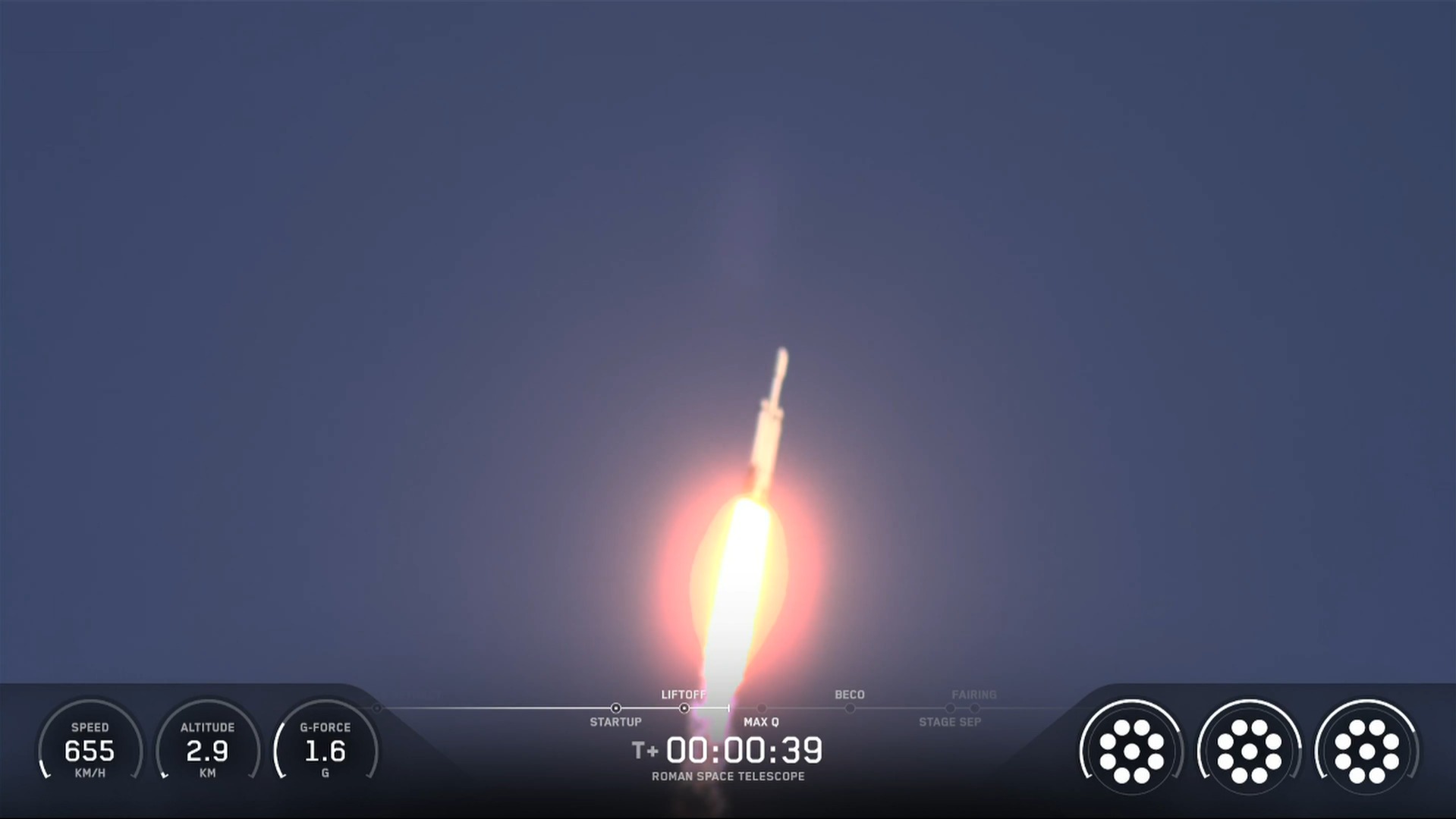
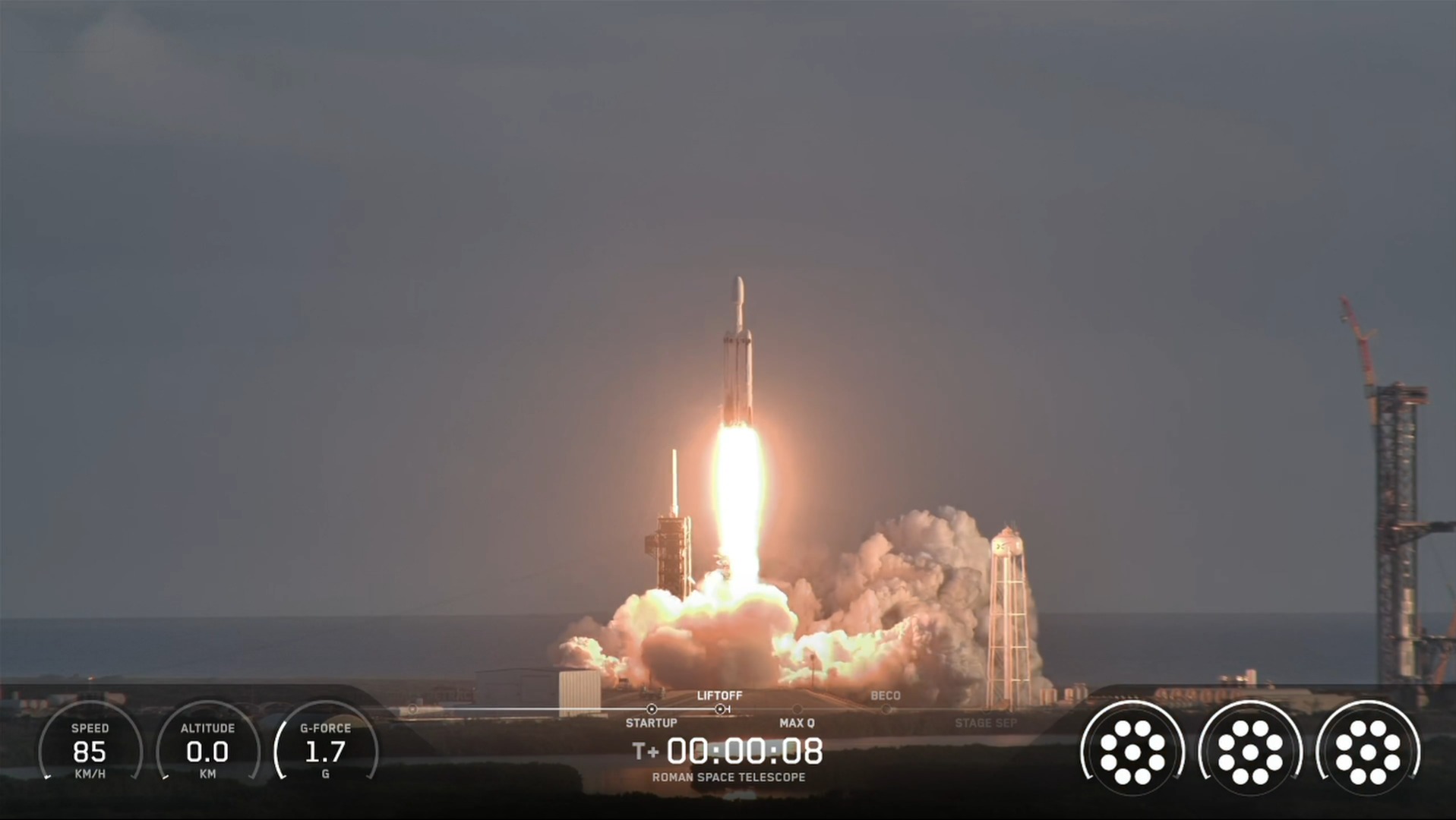
NASA's Nancy Grace Roman Telescope has taken flight atop SpaceX's Falcon Heavy rocket! The launch took place on time at 7:26 am EDT from the Kennedy Space Center in Florida. Roman will now travel to the second Sun-Earth Lagrange Point (L2), about 1.5 million kilometers (930,000 miles) from Earth, where it will have a relatively unobstructed view of the cosmos. L2 is also where NASA's James Webb Space Telescope is stationed.
SpaceX's Falcon Heavy heads into space with NASA's Nancy Grace Roman Space Telescope. (SpaceX)
SpaceX has finished fueling the Falcon Heavy first stage with rocket-grade kerosene. Engine chill is also underway. The launch is expected to take place in about 5 minutes.
SpaceX has begun loading liquid oxygen into the second stage of the Falcon Heavy rocket. First stage propellant loading, meanwhile, is nearing completion.
SpaceX has begun loading rocket-grade kerosene into the second stage of the Falcon Heavy rocket. Everything remains on track. Liquid oxygen loading will begin around 18 minutes and 30 seconds ahead of launch.
Falcon Heavy gets 'go ahead' for propellant load, weather 70% favorable
SpaceX will soon begin loading the Falcon Heavy vehicle with rocket-grade kerosene and liquid oxygen. The launch probability has also risen from 50% to 70%. There was some concern surrounding clouds in the area yesterday, but thankfully the weather has started to clear.
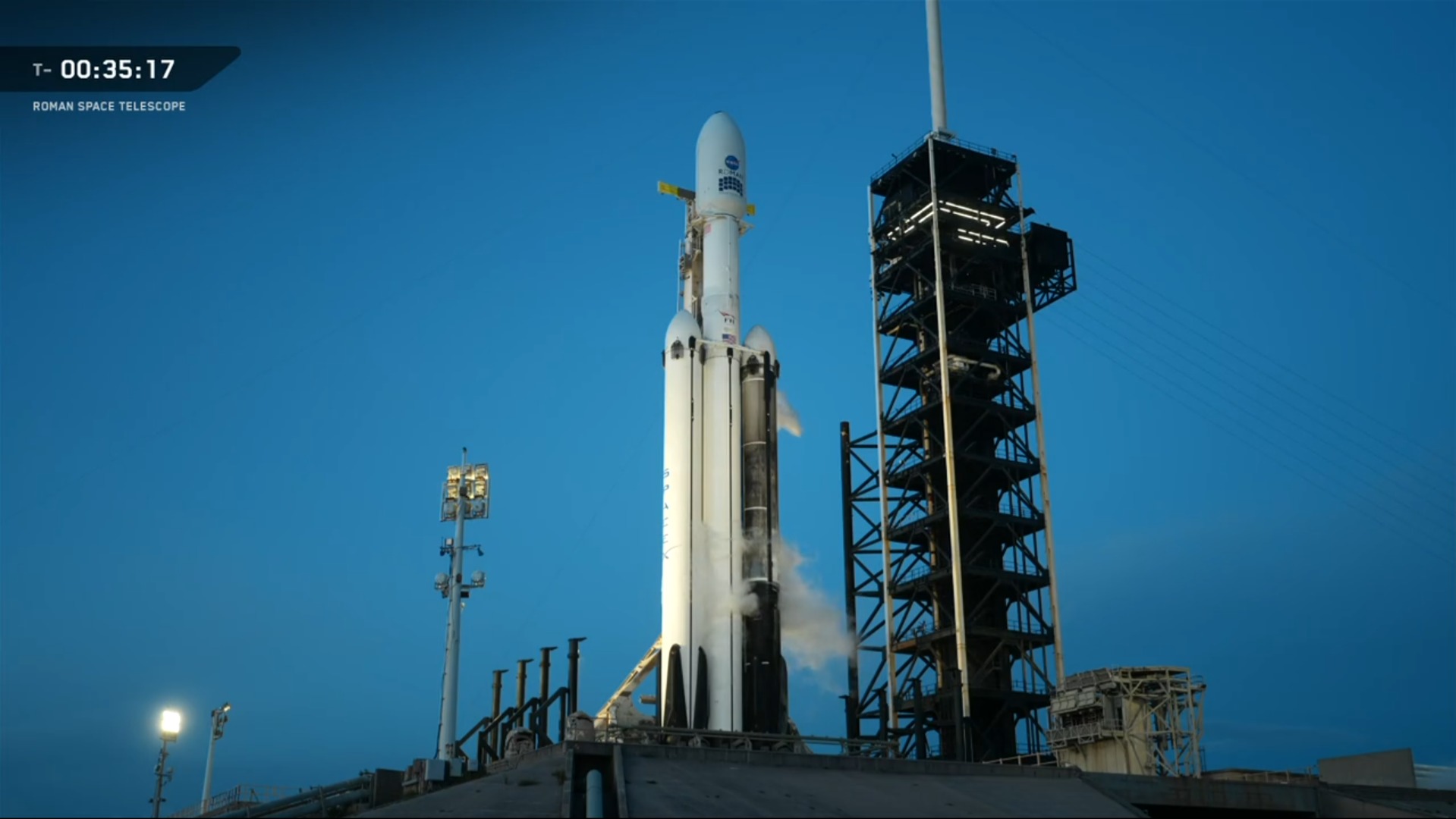
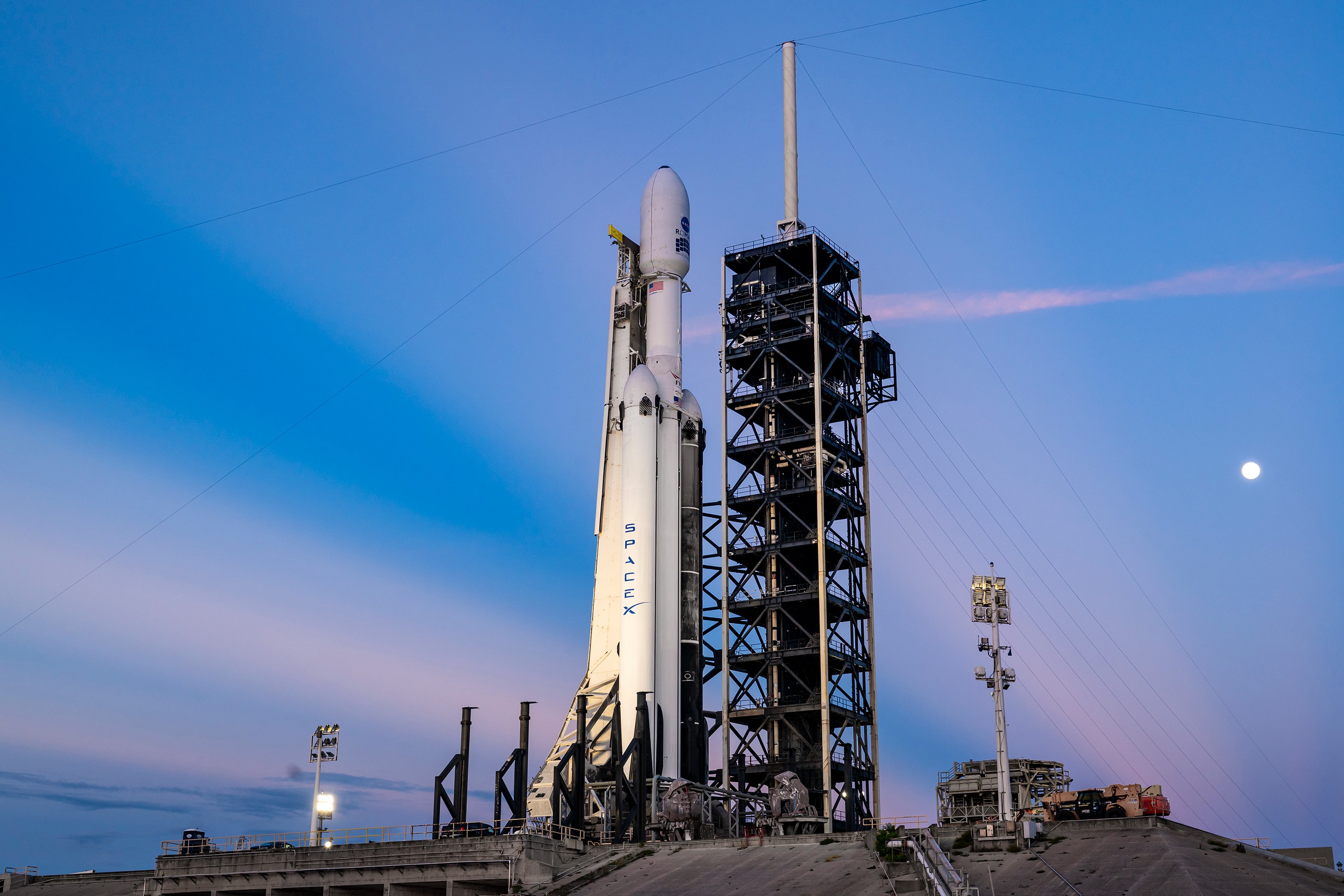
With Roman's launch being targeted for 7:26 am EDT today, the SpaceX Falcon Heavy rocket assigned for the mission is vertical at pad 39A at NASA's Kennedy Space Center in Florida. The weather is 50% favorable.
SpaceX's Falcon Heavy rocket stands at pad 39A at NASA's KSC ahead of the launch of NASA's Nancy Grace Roman Space Telescope. (SpaceX)
Named after NASA's first chief of astronomy, the observatory will combine a large field of view (100x larger than the Hubble) and a crisp infrared vision to study billions of cosmic objects, including exoplanets, supernovae, and black holes. It will also help astronomers answer essential questions on dark matter and dark energy.
 Saubhagya Mukherjee