What would happen if Earth got too close to a black hole? NASA has a terrifying answer
How black holes can stretch, flatten, and tear stars
Since the 18th century, scientists had speculated about the existence of "dark stars" whose gravity is so intense that light cannot escape. However, it was not until 1964 that astronomers detected powerful X-rays emanating from Cygnus X-1, a binary system in the Milky Way that provided the first observational evidence of what we know as a 'black hole'. Because these collapsed stars possess an intense gravitational field, any planet or star or other object wandering too close to it is subjected to extreme physical distortion, and squeezed, flattened, or violently stretched.
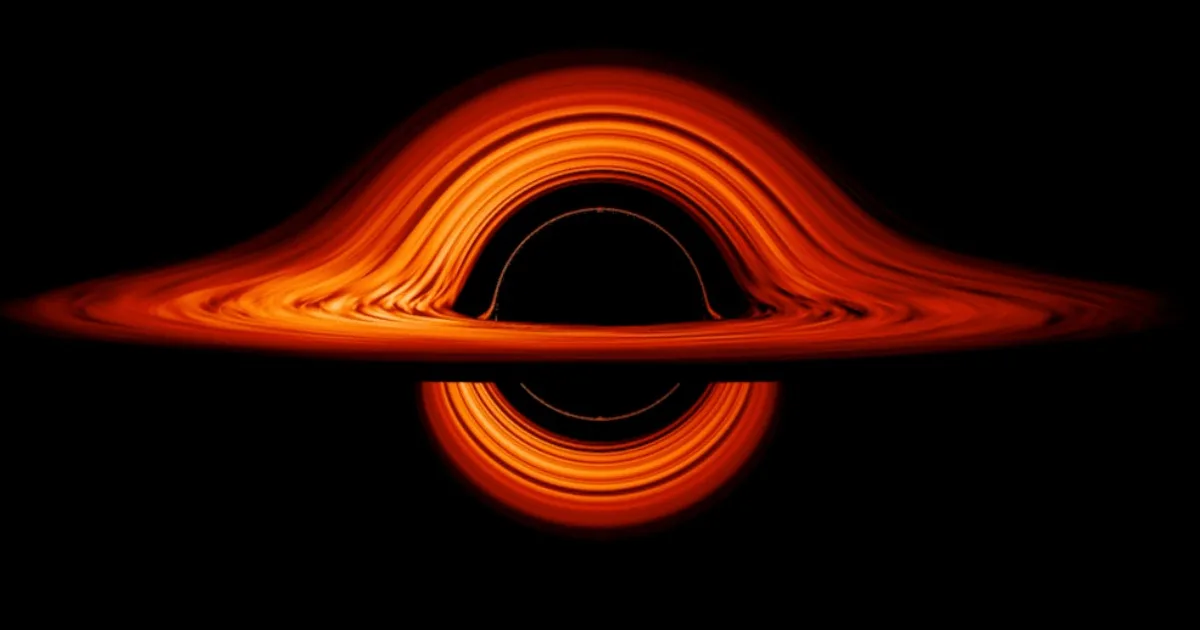
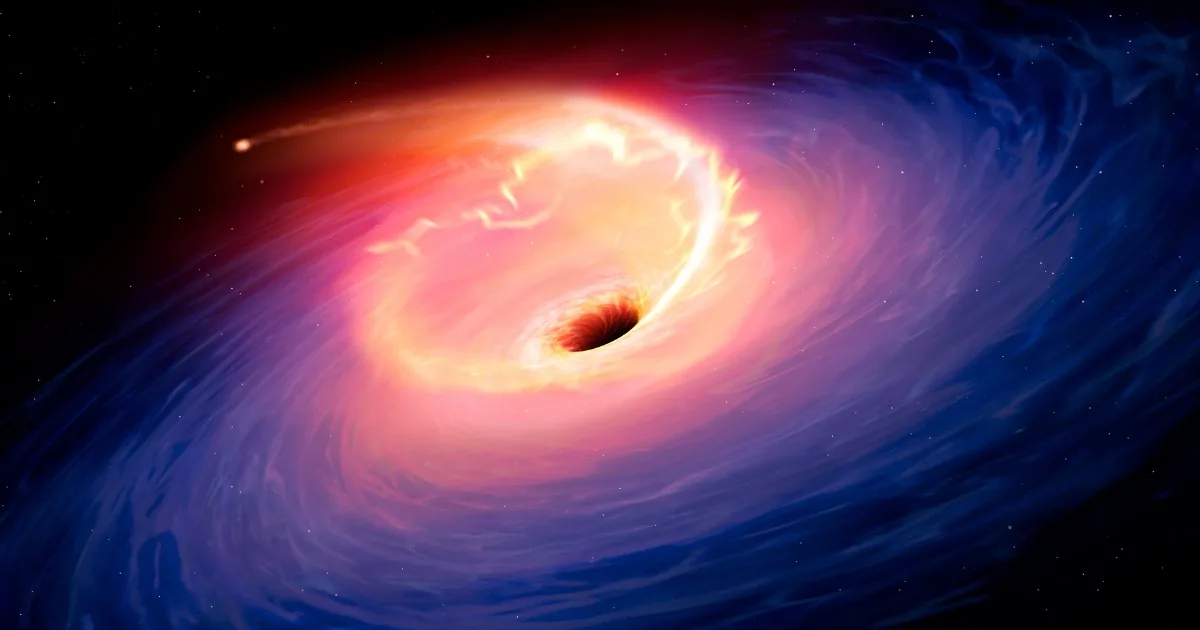
The illustration shows a turbulent disc of gas around a black hole forming a double-humped appearance due to intense gravity.
What would happen if Earth got close to a black hole?
Although scientists have made major strides in their understanding of black holes following the discovery of Cygnus X-1 in 1964, the event horizon of a black hole—the boundary beyond which no light can escape—makes direct observation of these cosmic monsters notoriously difficult. To work around this, scientists therefore study the devastating impact black holes have on their surrounding matter, which naturally leads to a terrifying, hypothetical question: What would happen if the Earth were to be in the proximity of a black hole? Well, our home planet would become subject to violent tidal forces born from a black hole's immense gravity, and would eventually and inevitably reach the point of no return—the event horizon. Earth would also eventually be stretched and ripped apart in a process called spaghettification, but whether this takes place inside our outside the event horizon would depend on the mass of the black hole.
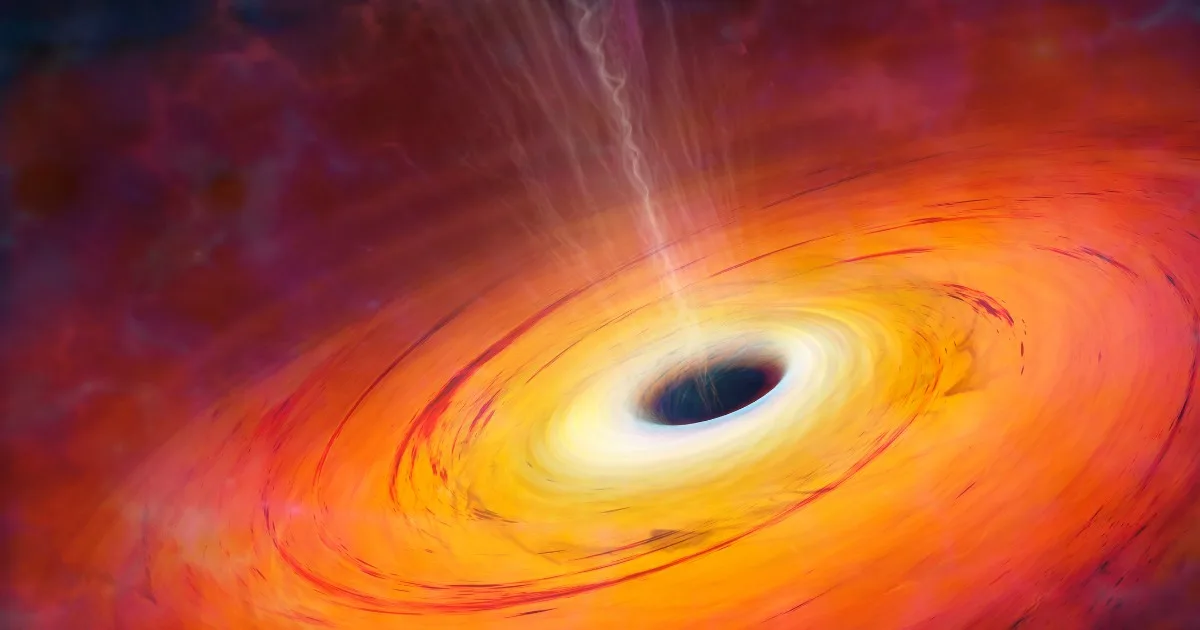
The image shows a computer-generated model of a black hole.
What the Earth's journey towards a black hole would look like
The specific effects of a black hole on its surrounding matter depend largely on its mass, which can range from a few times the mass of the Sun to many billions of solar masses. Generally speaking, however, when an object gets close enough to a black hole, it crosses a critical boundary where maintaining a stable orbit become impossible. Past this point, the object thus enters a rapid plunge phase, falling past the event horizon and down towards the singularity—the center of the black hole where matter is crushed to a point of infinite density and where our current laws of physics break down.
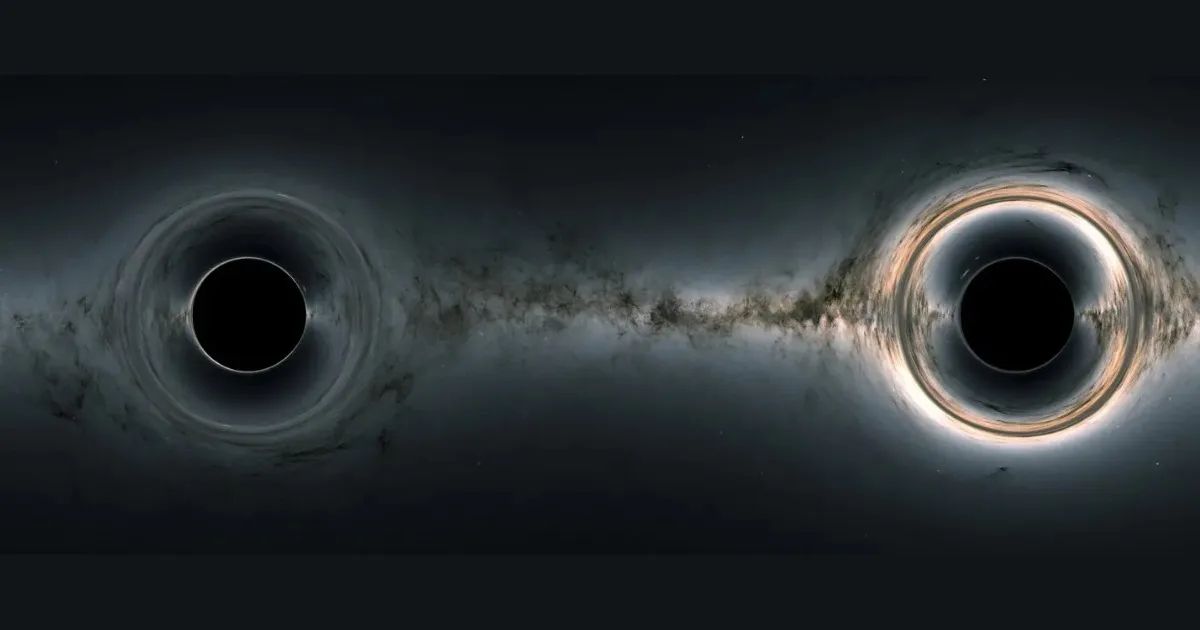
The image released by NASA shows an illustration of a black hole.
Tidal forces from a black hole would rip apart the Earth
Tidal forces occur because gravity weakens at a distance and the side of an object close to a massive body feels a stronger gravitational pull than the side facing away. This can be seen on Earth, where the Moon's gravitational pull is gentle enough to just shift the oceans, causing high and low tides. Near a black hole, however, tidal forces become far more violent.
The closer an object gets to a black hole, the stronger these effects become. As it approaches, the side of the object closer to the black hole feels a much sharper gravitational pull than the side farther away. This difference creates extreme tidal forces that simultaneously stretch the object lengthwise and crush it sideways. While these destructive forces can tear a planet like Earth apart, exactly where this happens depends on the black hole's mass: stellar-mass black holes can spaghettify objects as they approach the event horizon, while supermassive black holes are likely to swallow objects whole and destroy them inside, as they approach the center.
This image shows an illustration of a black hole.
How gravity slows time near a black hole
According to Albert Einstein's theory of relativity, near a black hole, time passes at a different rate. The black hole’s extreme mass and its immense gravity warps the fabric of space and time, causing time to move more slowly the closer you get to it—a phenomenon known as time dilation.
Because time is relative, an traveler falling into a black hole would feel time passing perfectly normally. However, to an outside observer watching from a safe distance, the traveler would appear to move slower and slower as they approach the event horizon. Right at the boundary, the traveler would seem to become frozen in place, and this frozen snapshot of the object would eventually fade to black due to a phenomenon known as gravitational redshift, which stretches the light coming off the falling traveler in this case.
This image is an illustration portraying a black hole shredding a star in a 'tidal disruption event,' capturing the moment the star gets torn apart by extreme gravity.
How would Earth behave in a black hole accretion disk?
Many black holes are surrounded by an accretion disk—a swirling halo of gas and dust. As this material spirals inward toward the event horizon, it accelerates to near-light speeds, and the consequent immense friction between these orbiting particles superheats the disk to millions of degrees, causing it to emit X-ray radiation. Thus, if Earth were to enter an active accretion disk around a black hole, the planet would not survive long enough to undergo spaghettification. Before tidal forces could even begin to tear Earth apart, the sheer kinetic energy and frictional heat within the disk would instantly vaporize our home world.
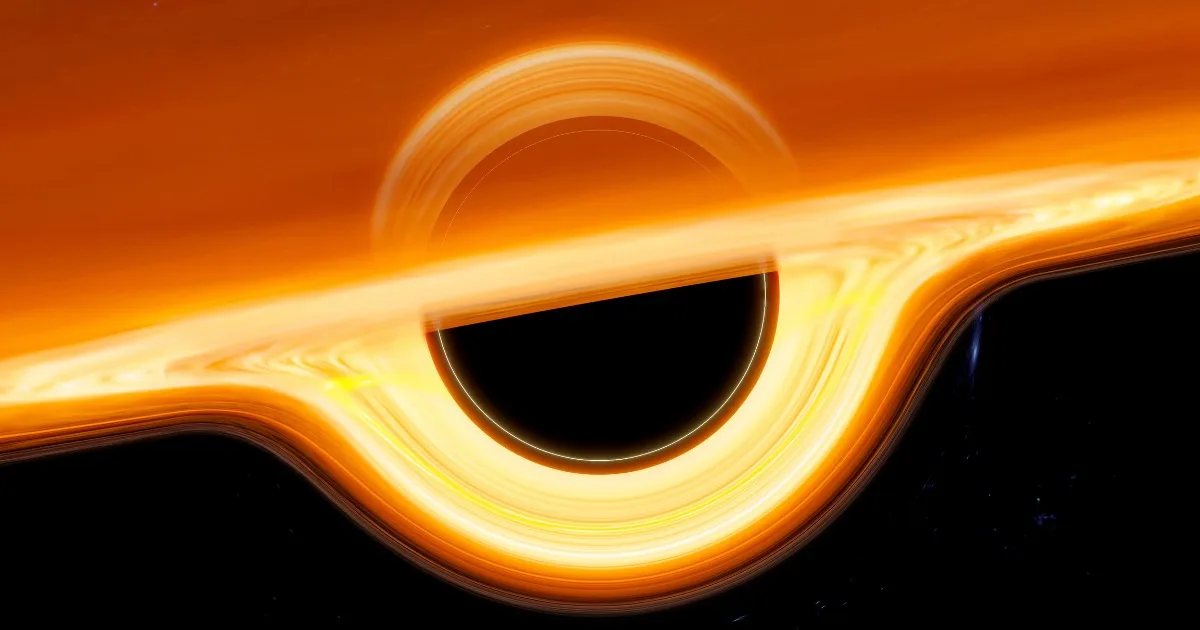
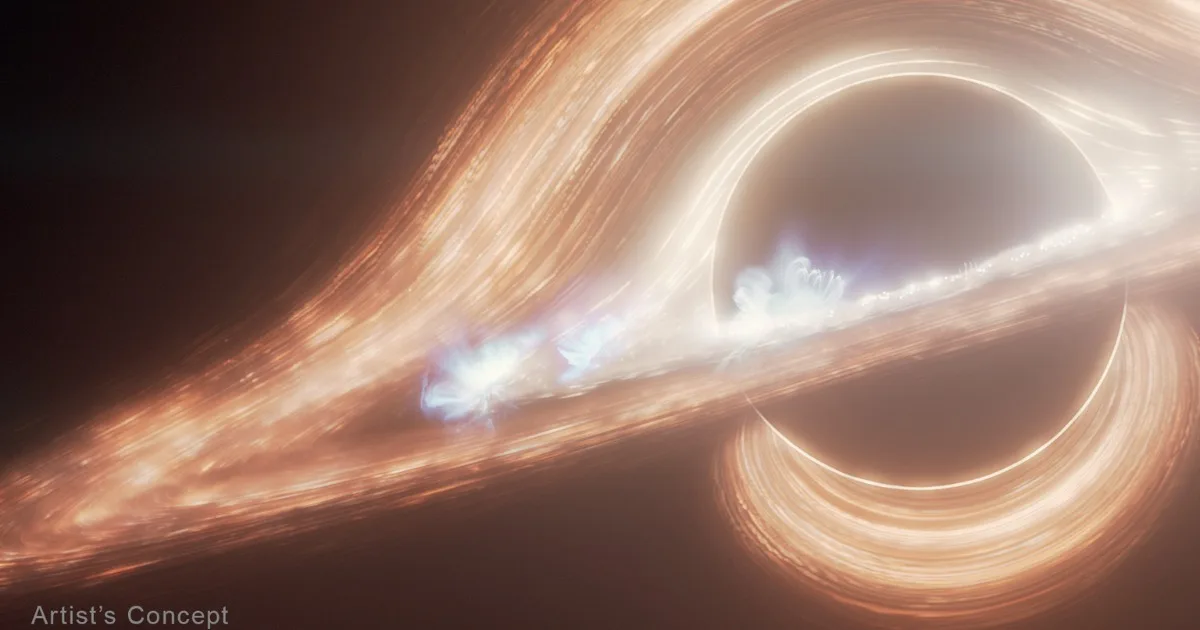
This image is an artist’s concept portraying Sagittarius A, the supermassive black hole at the center of our Milky Way. The black hole’s intense gravity bends light from the far side of its accretion disk, making it appear to fold above and below the shadow. NASA’s James Webb Space Telescope (JWST) recently detected a constant stream of flares coming from this disk.