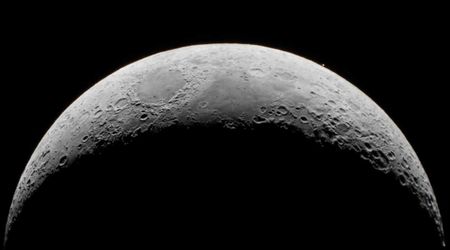
Today's Moon phase in Phoenix
Discover today's Moon phase in Phoenix with accurate details on illumination, visibility, and lunar events. Stay connected with the cosmos daily on Starlust.org
UPDATED 6 HOURS AGO
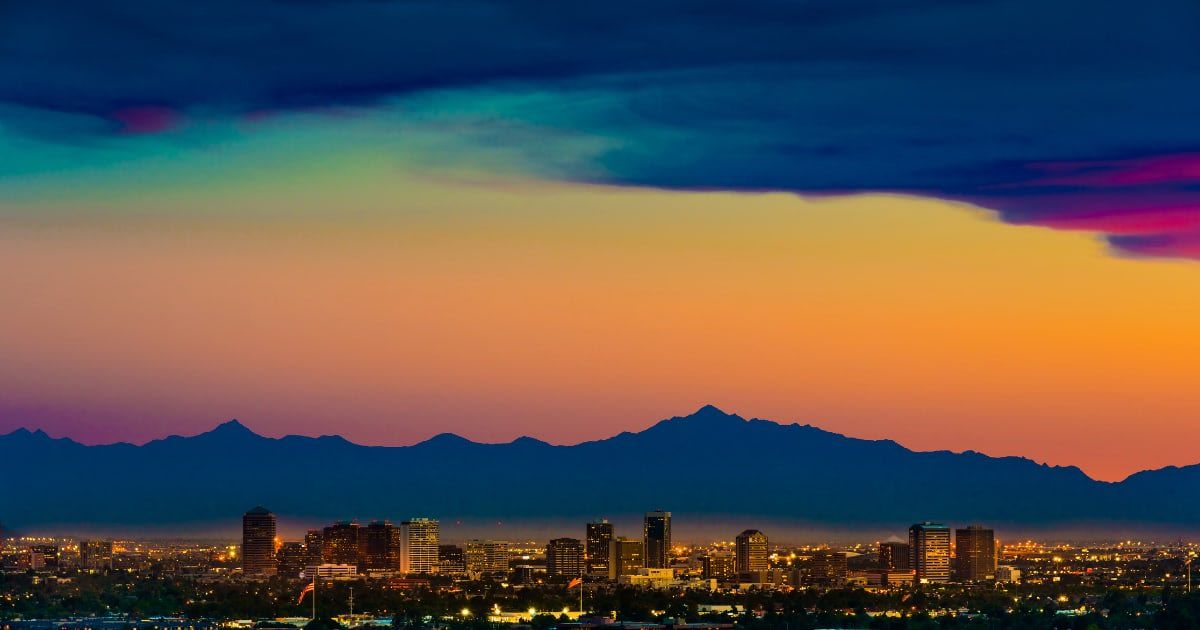
Phoenix skyline under a dramatic sunset as seen from Scottsdale. (Cover Image Source: Getty Images | dszc)

Today's Moon phase in Phoenix

Today’s lunar phase in Phoenix is the Full Moon phase 🌖, with 99% illumination and an age of 14 days. The current distance between Phoenix and the moon is 373122291 kms.

What is a Moon phase?

The Moon appears in different shapes each night, ranging from a fully illuminated disk to only a thin crescent of light. These observable lunar shapes that we see at different times of the month are called the Moon phases. They result from the changing perspective of the Moon as it orbits the Earth.

Types of Moon phases

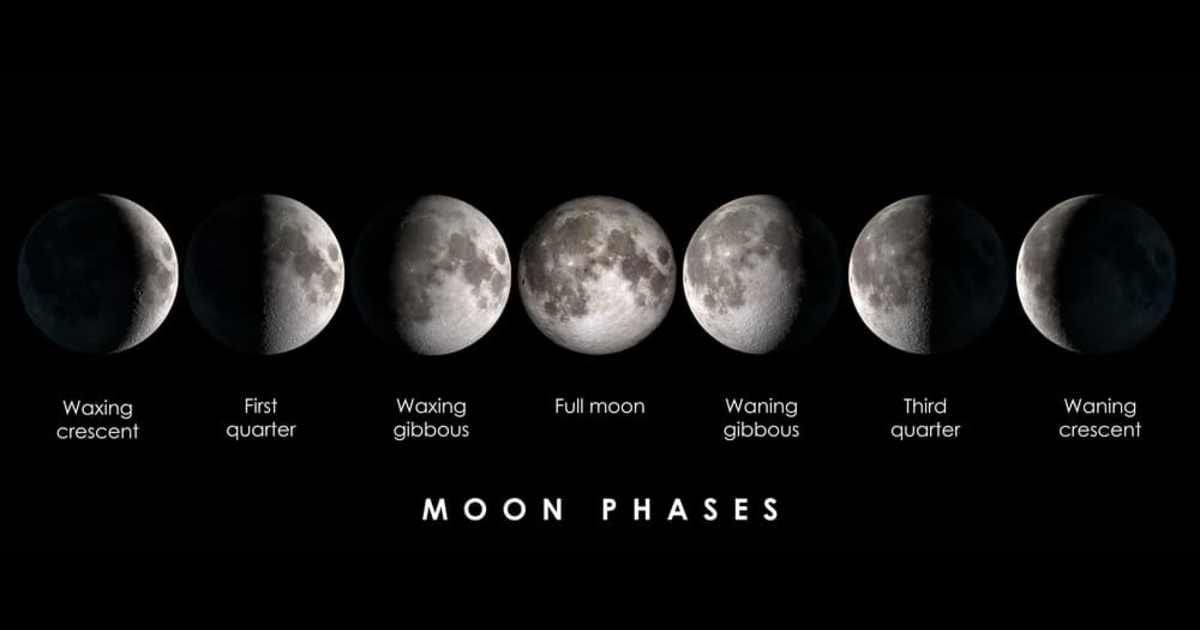
There are mainly eight lunar phases that are displayed throughout the 29.5-day Moon cycle in the following order: New Moon, Waxing Crescent, First Quarter, Waxing Gibbous, Full Moon, Waning Gibbous, Third Quarter, and Waning Crescent. Read more about the Moon phases here.
How Moon phases affect skywatching events

For skywatchers, tracking Moon phases becomes the key to planning the best viewing experience. For example, the Full Moon can actually make it difficult to spot dimmer celestial events in the night sky due to intense moonlight. On the other hand, during the New Moon, the absence of the moonlight creates a darker sky, making it an ideal time for observing deep-sky objects like galaxies or star clusters. Each phase offers unique opportunities - the Waxing Gibbous serves as the best time to spot the features on the lunar surface, whereas, during the Waxing Crescent Moon, stargazers often find it easier to observe planets such as Venus and Mars, as they shine brighter in the twilight sky.

What does the Moon look like today?
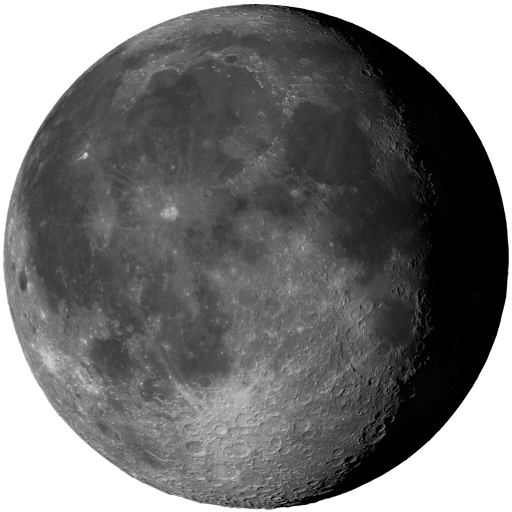
Full Moon
Full Moon

Sources:
https://moon.nasa.gov/moon-observation/daily-moon-guide/?intent=011

MORE STORIES

All full moons are opposite the Sun from Earth, but the Buck Moon arrives when Earth is also at its farthest point from the Sun (aphelion).
Jul 8, 2025
The Buck Moon is set to illuminate the night sky at 4:37 p.m. Eastern Daylight Time (2037 UTC) on July 10.
Jul 8, 2025
Astronomers suggest waiting a few nights for the Moon to move to clearly see the Teapot asterism under dark skies in the same general area.
Jul 7, 2025
The first quarter moon phase, expected to display the distinct lunar 'X' and 'V' shapes, will occur when sunlight hits specific craters at a particular angle.
Jul 2, 2025
Typically, 12 full moons occur each year; however, a 13th full moon, known as a Blue Moon, emerges approximately every 33 months.
Jun 28, 2025
Only those located in western Peru, Ecuador, western Colombia, and Clipperton Island will have prime viewing of Mars as it disappears behind the lunar disk and later reappears.
Jun 25, 2025
Astronomers with NASA recently observed cloud convection in the Northern Hemisphere of Titan, Saturn's largest moon.
Jun 23, 2025
Discover today's Moon phase on June 13 in Los Angeles with accurate details on illumination, visibility, and lunar events.
Jun 12, 2025
The 'Strawberry Moon' of 2025 rose over the skyline at its lowest point in twenty years, a sight that will not return until 2043.
Jun 12, 2025
The low-lying 'Strawberry Moon' is not expected to occur again until 2043.
Jun 11, 2025